Journals, Binders, Blogs
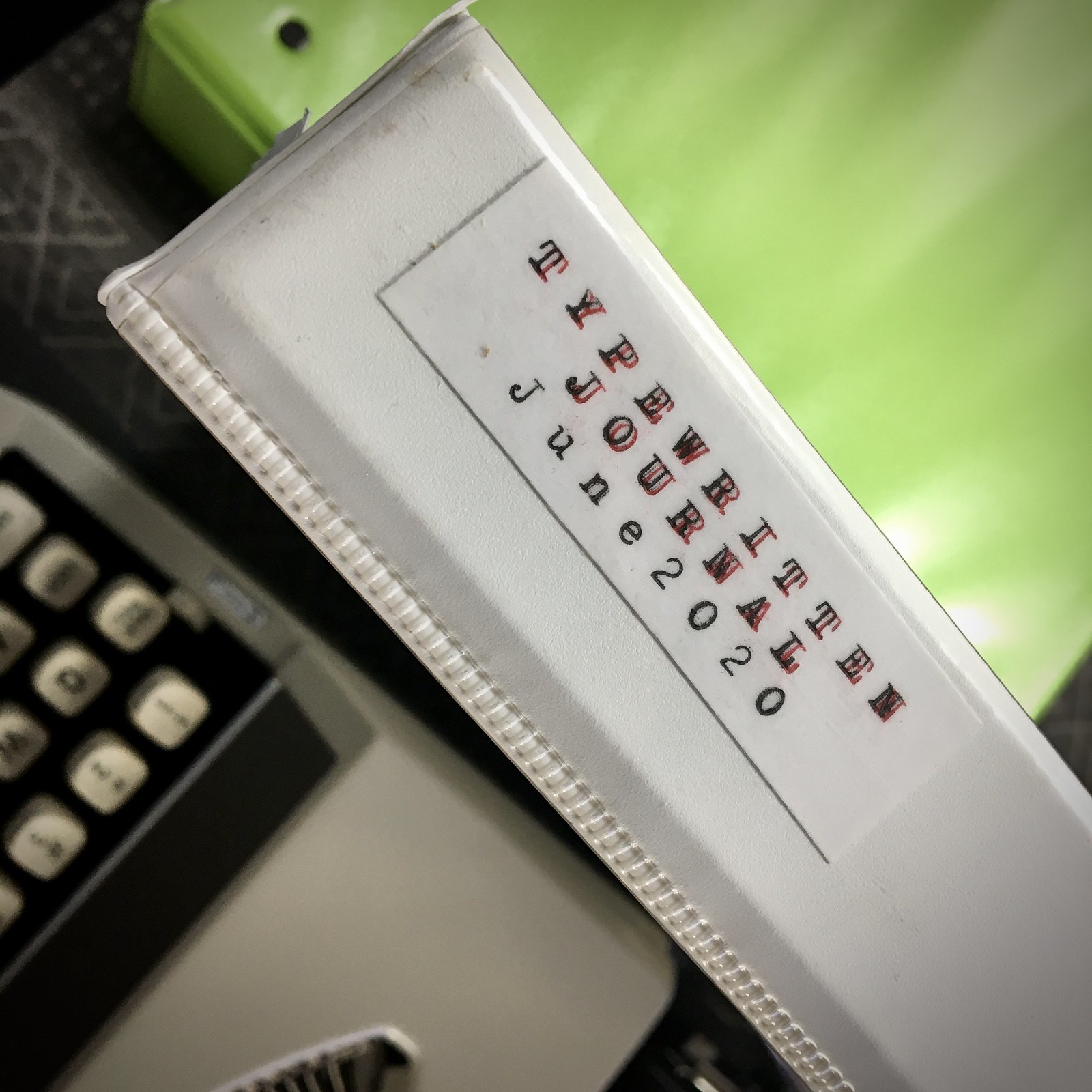
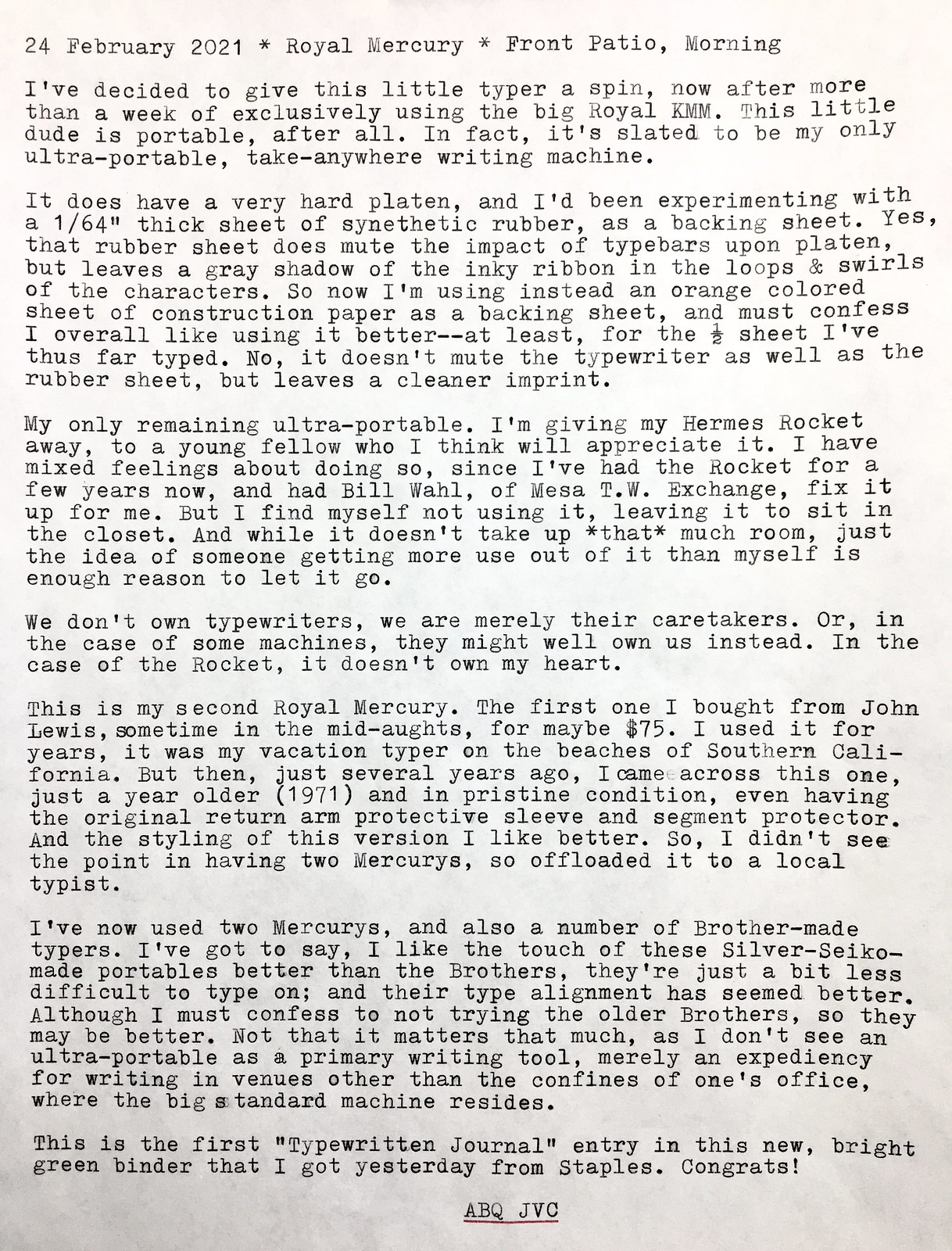
It was about time to start a new 3-ring binder, after the old one, started in June of 2020, was full up. This piece goes into the start of that new binder. I organize my writings into one binder for personal journal entries and One Type Page (OTP) entries; and another binder for my own blog's articles (like this one). And that other binder of blog articles is fat, with articles dating back to 2016, itself soon needing to be replaced.
Once they're full, I store them either in my office closet, or in plastic storage boxes, stacking up from the weight of decades' worth of writings and photography.

The old binder, now full, was a freebie, acquired last year when I was in the waiting room of my optometrist and noticed they had a stack of binders they were tossing out. So naturally I came home with, not only new glasses, but some extras. But this time, I went to my neighborhood big-box office supply retailer and specifically chose this bright green binder, to stand out amongst the drabness of my office bookcase. A typewritten adhesive label or two later, and it was all ready to go.

I don't look through the old writings often enough. It's fun to not only read what I was thinking back then, but look at what paper I was using (I tend to frequently mix up my choice of typing paper), and also what machines were in use. It was interesting, looking through that fat binder of archived blog articles, to see machines being used that I don't even have any longer. This kind of "metadata" I find just as interesting as the writing itself.
Naturally, this begs the larger question of how best to archive one's personal writings. It's a sticky issue, because most of us aren't blessed by tenure at some institution of higher learning, where our work might be archived in some institutional archive; nor have most of us achieved some significant professional stature as a published author and thereby acquired some archivability of our work through reputation alone. If you're like me, you're a struggling writer, in that in-between space squeezed by one's job and family responsibilities on the one hand and some innate creative urge, just bursting to get out, on the other.
When you mention archives, many people immediately think you're talking about computer data backups. There is that, but what I'm talking about is bigger than data backup. Many of us creatives have amassed significant volumes of work on paper. Work that, sure, could be archived digitally, but what would be the point? Would that hard drive or thumb drive survive long enough to mean something down the road, or be tossed in a drawer or box to be forgotten, then discarded?
The point is the future reader. Is it good enough for someone to read, down the road, when you've shed your mortal coil? If not for some stranger with passing interest, is it interesting enough for family offspring to keep? Maybe. Depends, on your relationships, and on the work itself. Many of us have accumulated mounds of what others might call "clutter," but you might call the priceless offspring of a life's worth of creativity. You'd like for someone to keep it all, but down deep know that's unlikely. Personally, I'd expect much of my stuff to be tossed into the recycle bin.
One could, if one were proactive (gosh how I tire of that business-speak term), cull out the best of one's personal work and cudgel it into some self-published tome, to leave to one's offspring as the distilled essence of your creative thoughtlife in book form. A single volume, a condensation of one's work, small enough to likely survive that great paper-tossing-to-the-curb event, come your demise. Leave behind one, maybe two, good books for them to read. It'll probably outlast that archived hard drive or USB stick.
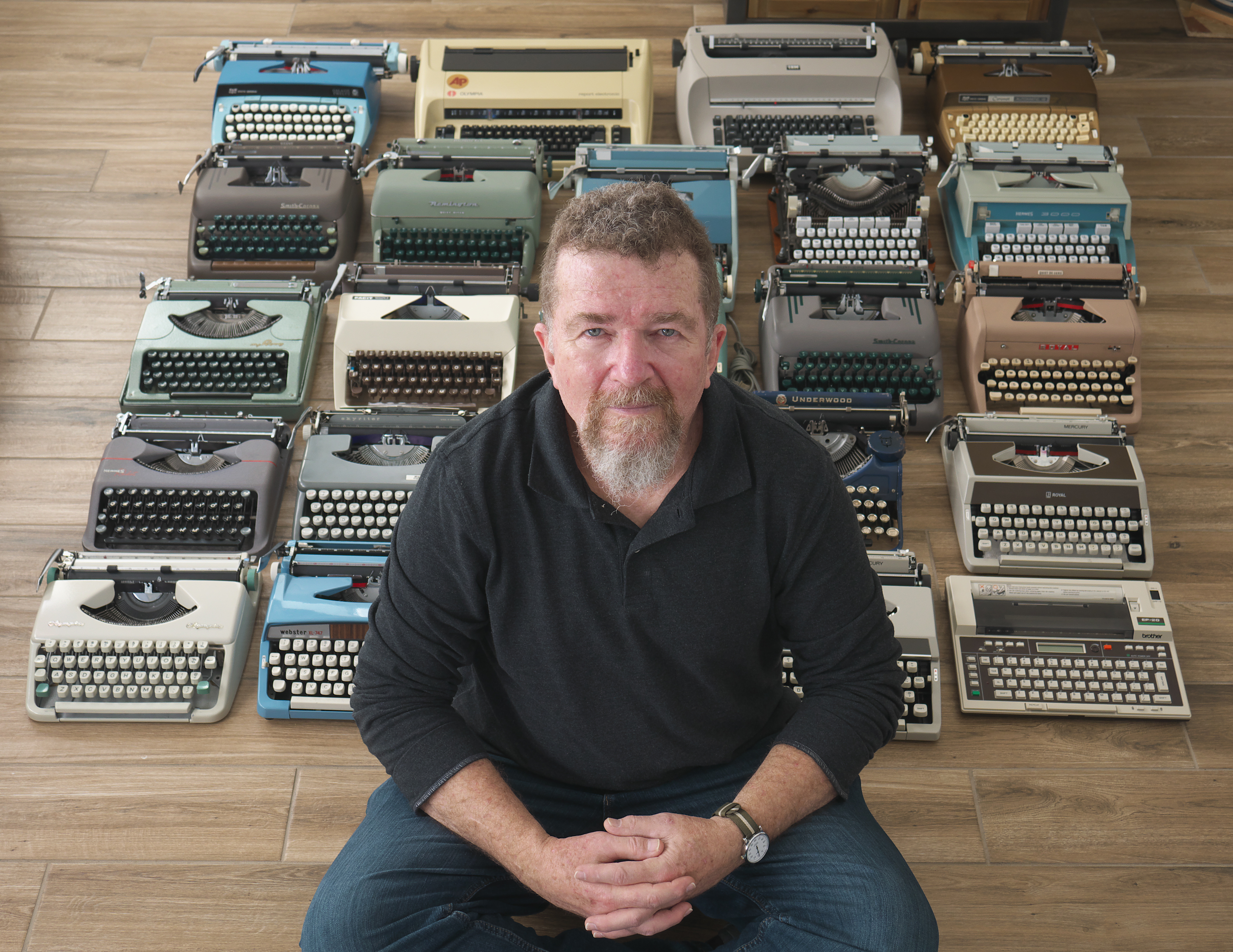
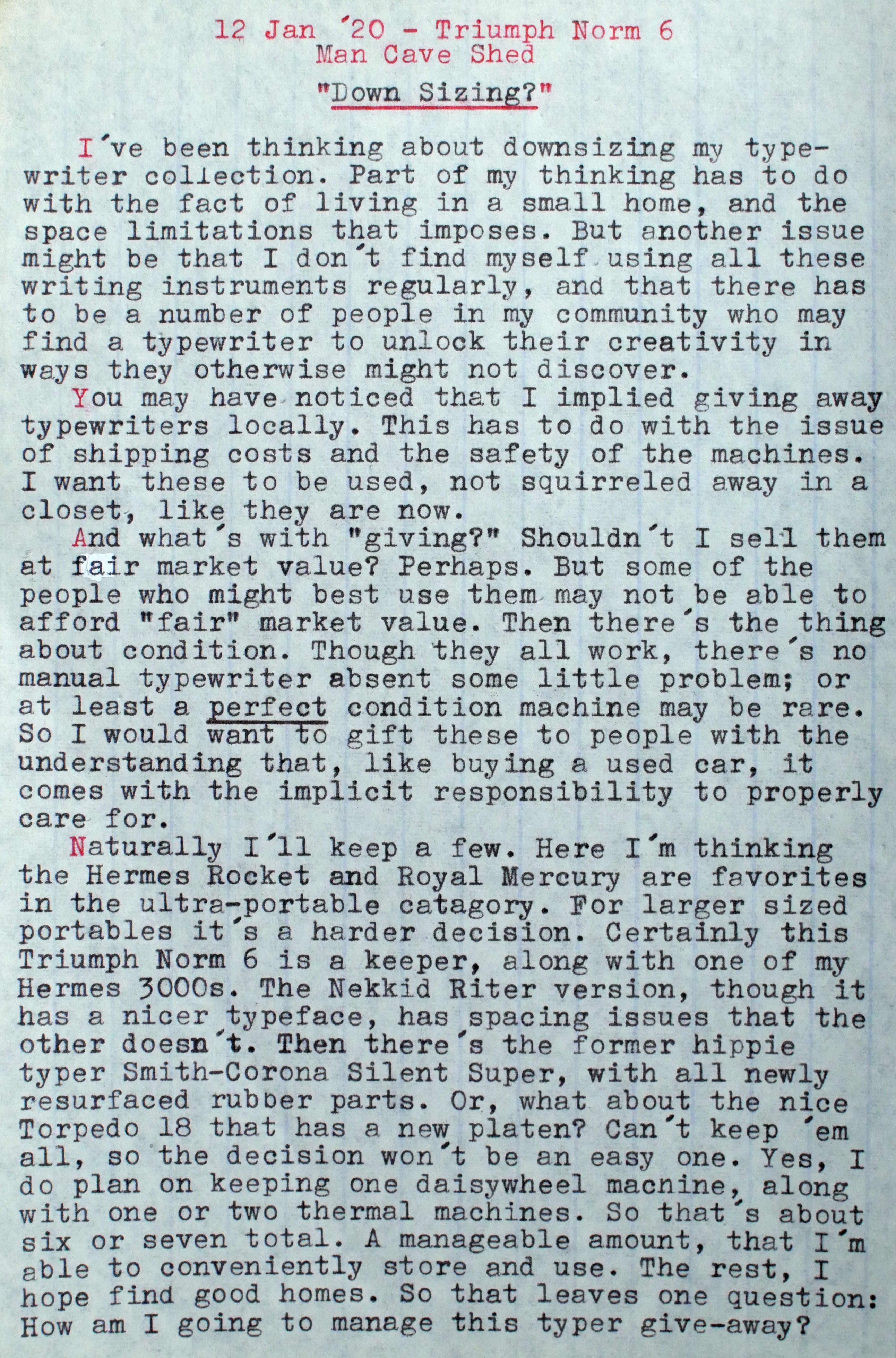
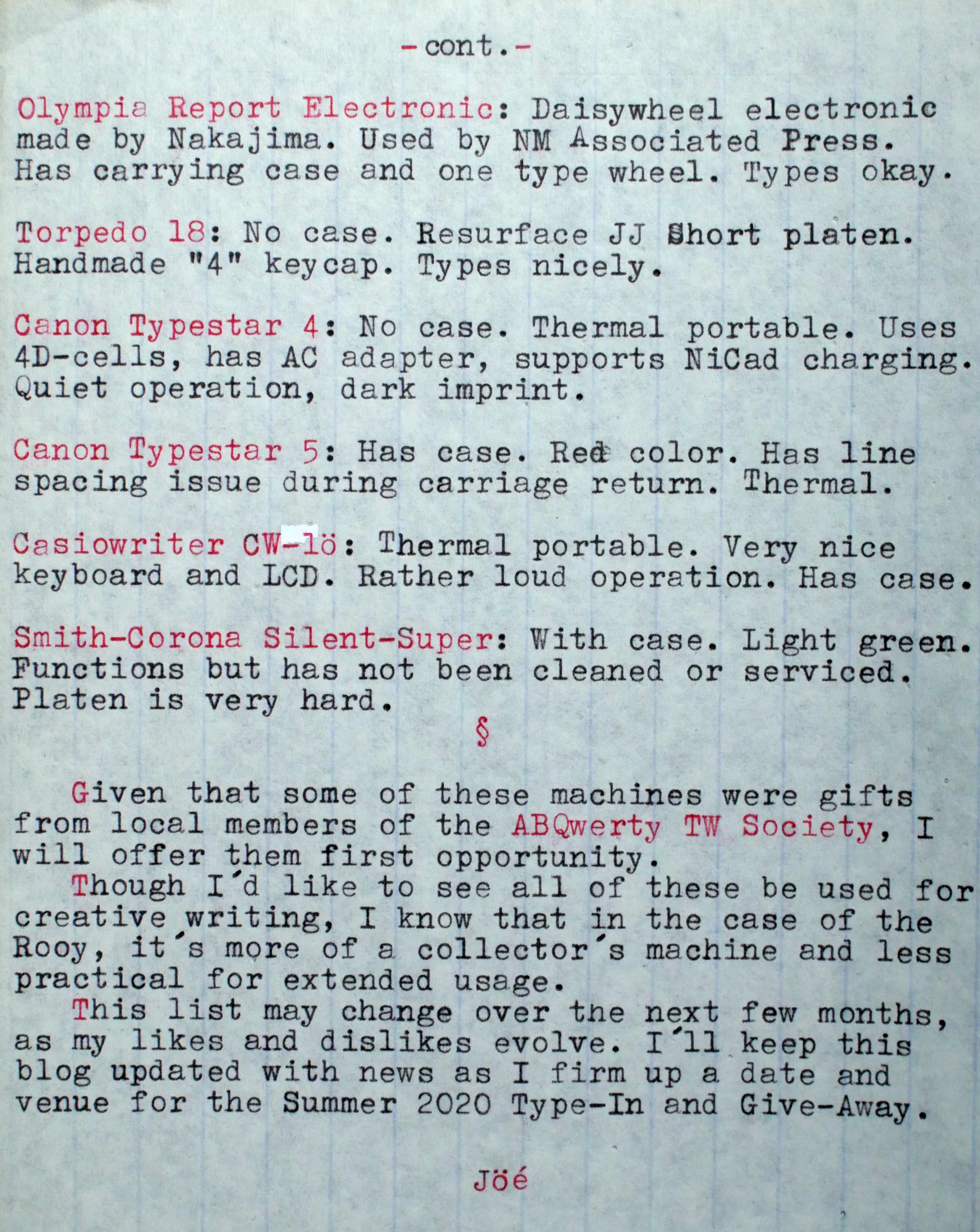
While we're on the subject of culling, I just today shipped off the Hermes Rocket, to a kid in California who will probably get more use out of it than I. And just a few days ago I gave the Groma Kolibri back to Kevin, from whence it came, as again I wasn't using it much, and he'd enjoy it, I'm certain. But don't mistake this for some kind of personal valor, because, you may recall, I've also acquired the massive yet wonderful Royal KMM, which sits prominantly in the office on its typing stand, ready to do battle at a moment's notice.
That leaves this Royal Mercury as my only remaining manual ultra-portable (not counting the handful of thermal ultra-portables). And I still have a good number of medium-sized portables, better suited for longer writing sessions than any ultra-portable, yet still luggable if the need arises.
Here's a video about this subject. Enjoy.
Labels: archiving, creative writing, downsizing, typewriter collecting
posted by Joe V at 8:39 PM
5 comments