Wednesday, December 06, 2017

Testing the Lumenbox
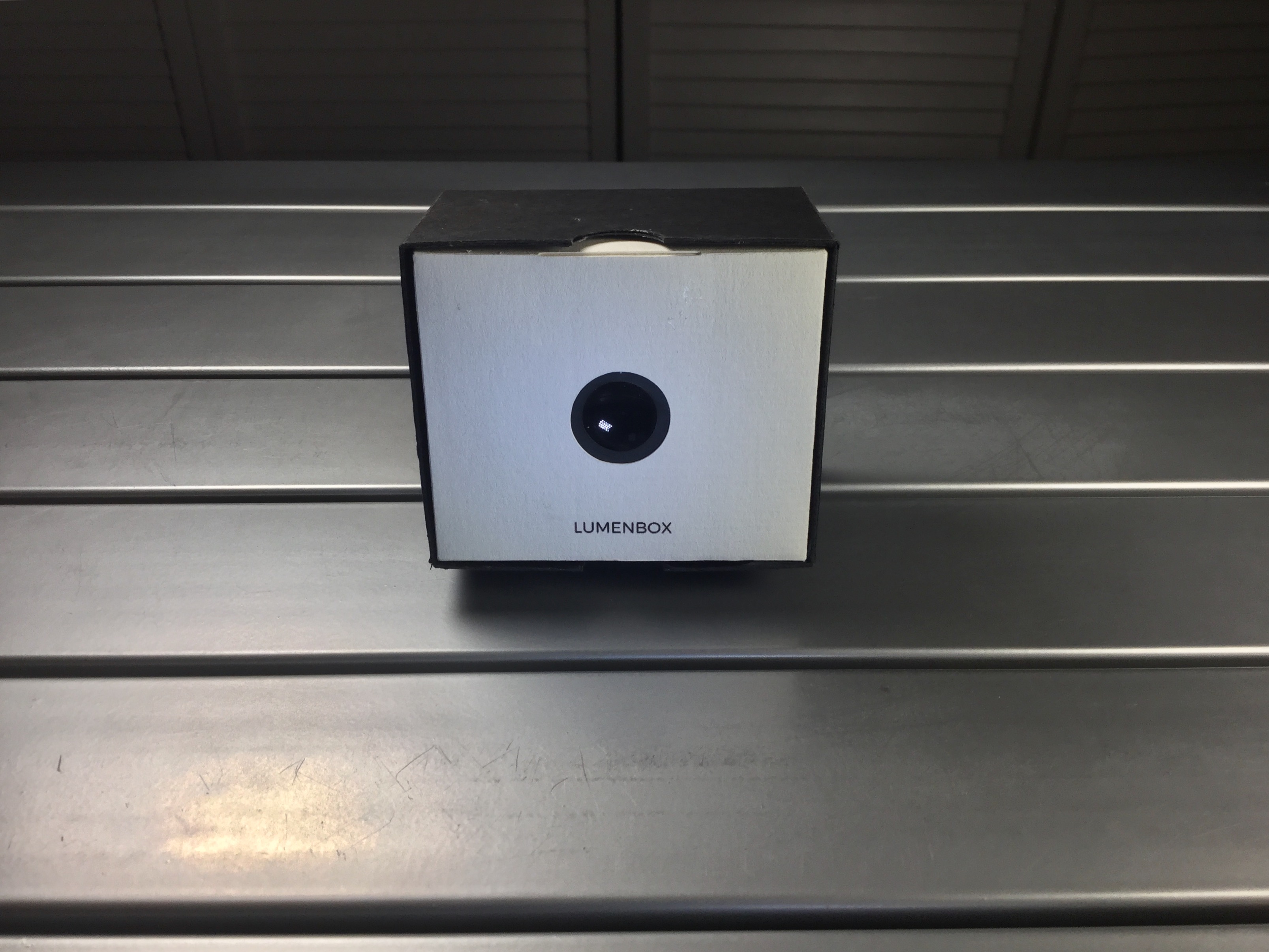
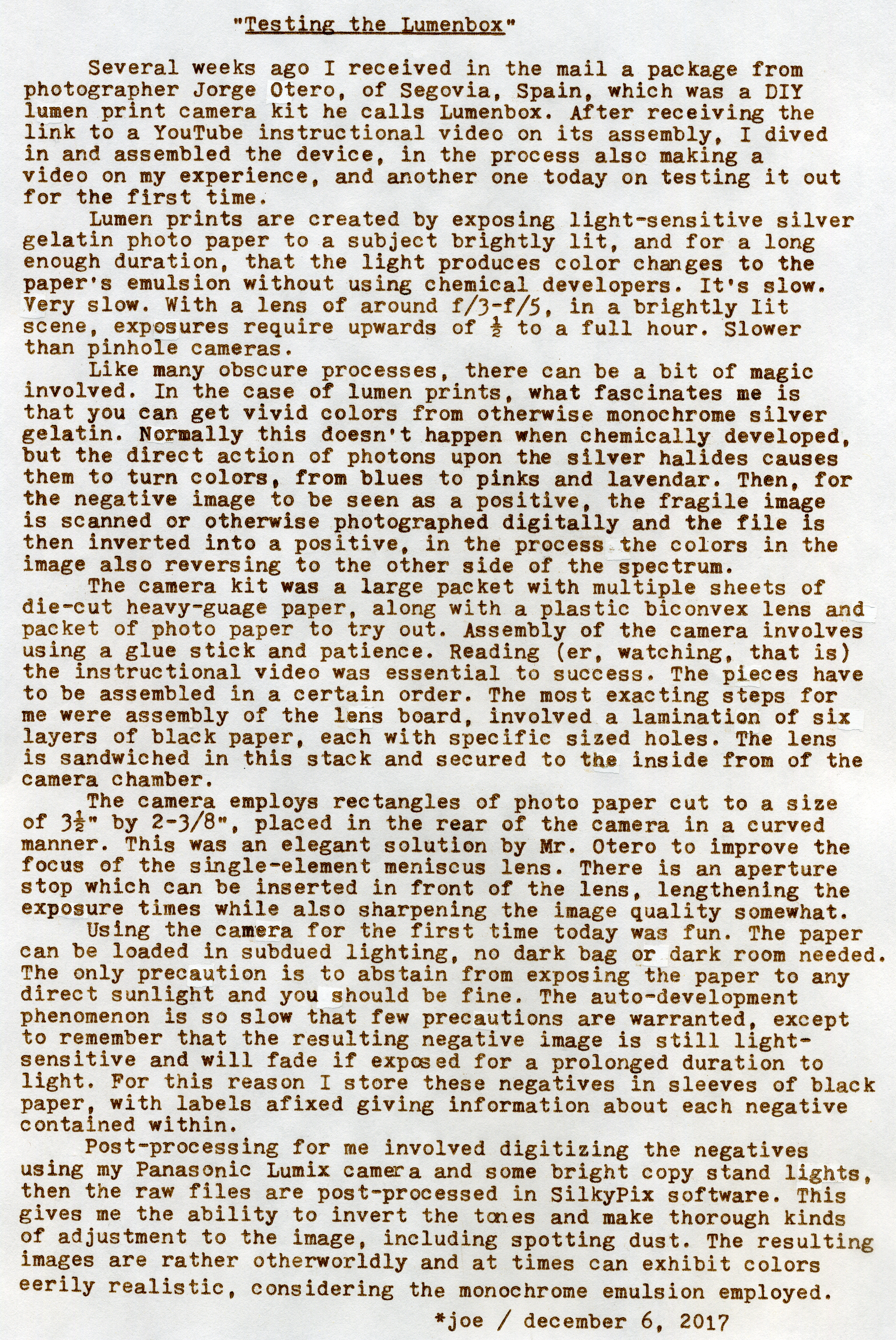
Lumenbox Camera
Typecast013

Post-Script: This first image was 1/2 hour exposure in morning light with the aperture stop in place. The image was rather faint on the paper negative, but after digitization the tones were expanded in software using the curves and contrast adjustment tools.
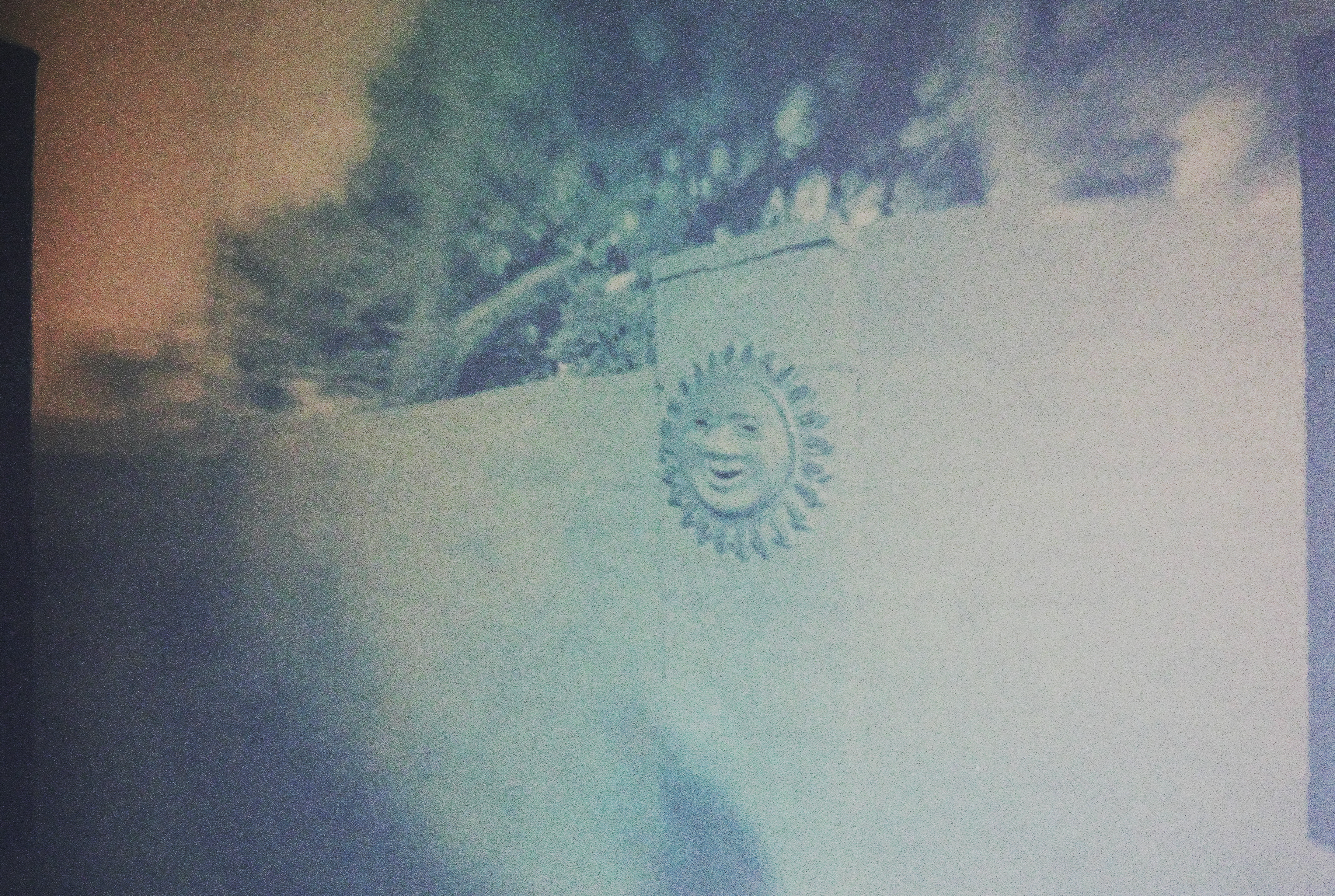
P1030712

Note the interesting colors. The cyan tones on the trees appear almost realistic, and the sky in the upper left corner resembles the martian landscape via NASA imagery. Reminds me of an artifact from my formative years in the 1960s, when many Americans still only had black-and-white television, of a colored plastic overlay attached to the screen, that had three color zones, blue on top, brown in the middle and green in the foreground. It looked eerily realistic for certain televised baseball shots of the infield.

This next image was taken this afternoon, in my front courtyard in brighter sun. Another 1/2 hour exposure, this one minus the aperture stop, so the lens was wide open and hence producing a slightly softer image.
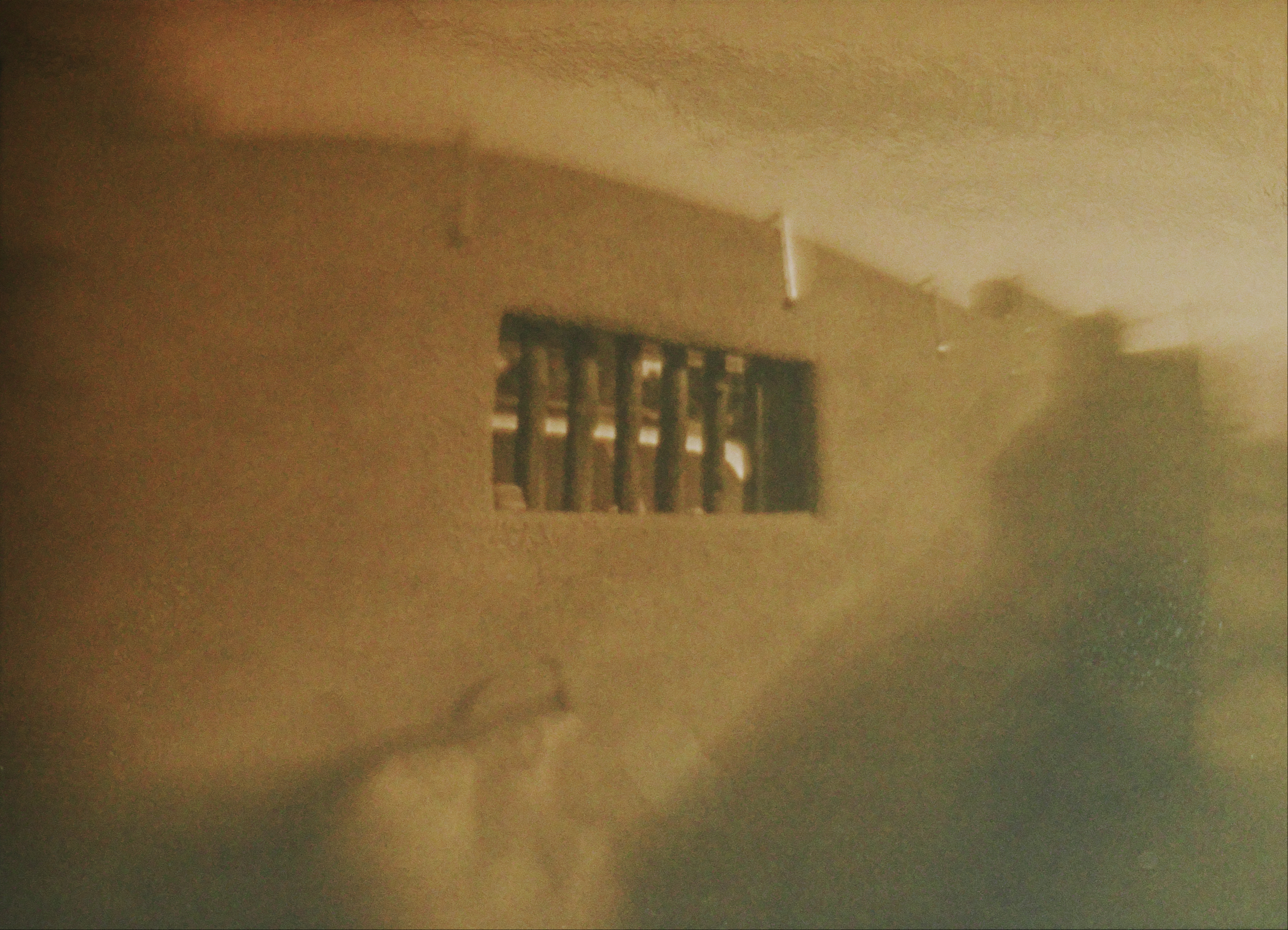
P1030722

Given that the courtyard walls are sand brown colored stucco, there is a certain eery resemblance to reality here.

Making lumen print images is a fun hybrid process. Making the paper negative requires little else but time, no additional chemical processing needed. Like a slow negative polaroid without the chemical pod. Most of the work is in post-production, where you can apply your creative vision to the tonal curve in order to get the contrast to your liking. The colors kind of fall where they may, as they are an inversion of the negative's original tones, appearing on the opposite side of the color wheel spectrum.

This process isn't really complete unless these images are printed in delicate color tones upon textured art paper via digital printer. Since I lack such a printer, that will have to wait for the future.

See the description field in the videos for details on Jorge Otero's Lumenbox project.


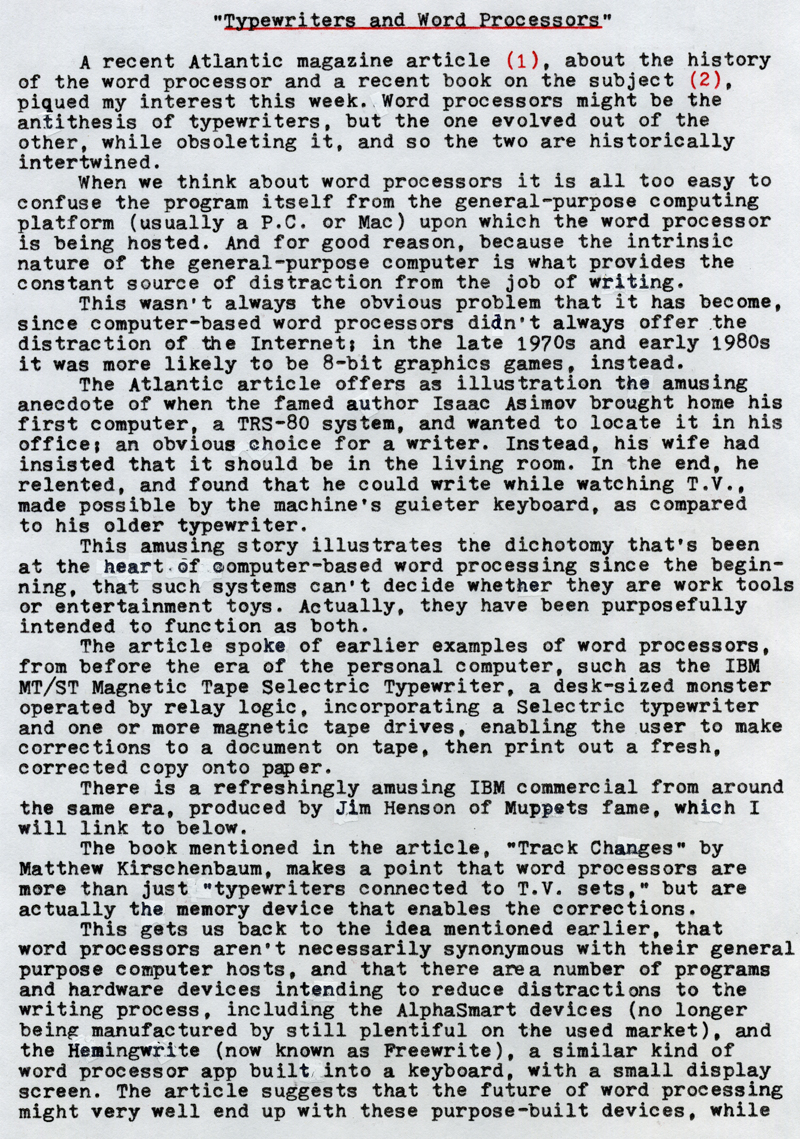
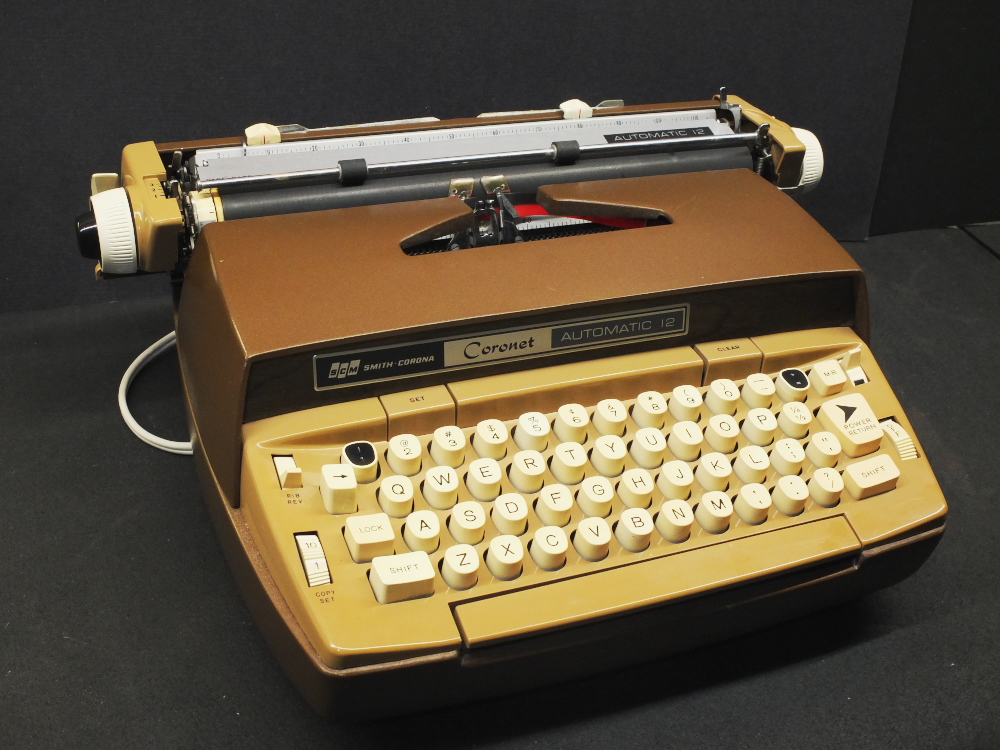
Typecast via Jitters, the coffee-and-chocolate colored electric Smith-Corona, sporting a brown ink ribbon.
DSCF4927a

Labels: , ,

Tuesday, July 05, 2016

Typewriters and Word Processors


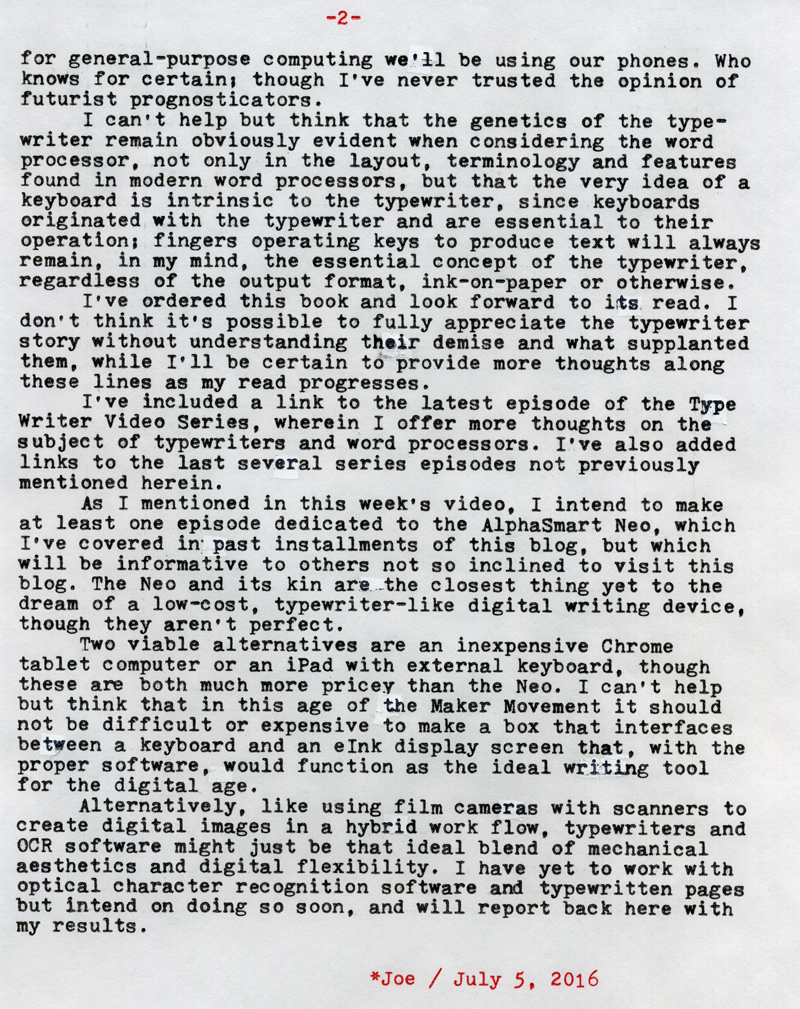
Typewriter Video Series Episode 23: Typewriters and Word Processors

Typecast179
(1)The Atlantic article
(2)Track Changes by Matthew Kirschenbaum


"Paperwork Explosion" by Jim Henson

Typecast180

Post-Script: Here are links to several past episodes of the Typewriter Video Series that I might not have mentioned herein.

Episode 20:


Episode 21:


Episode 22:


Should you be interested in photography and video, there are also newer videos on those subjects as well. Thank you for your readership.

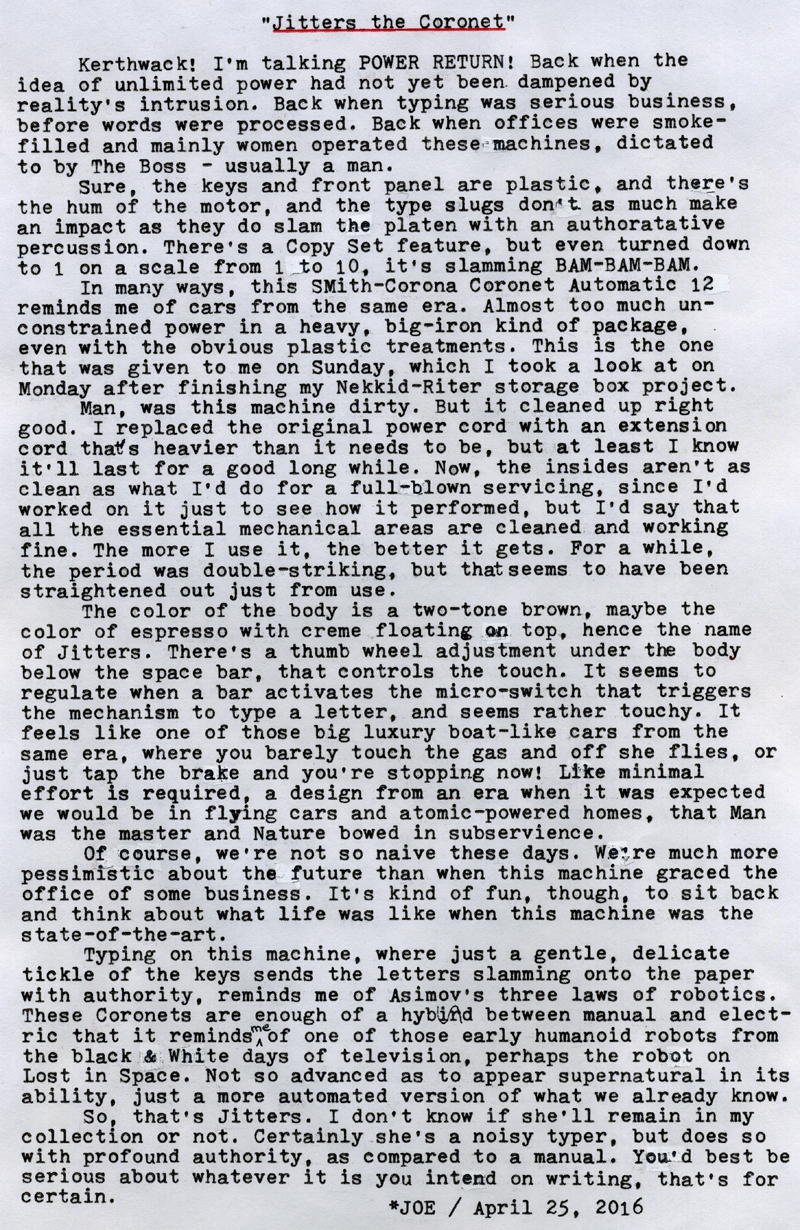
Typecast via (appropriately enough) Smith-Corona Coronet Automatic 12.

Labels: , , , , ,

Tuesday, April 26, 2016

Jitters the Coronet, or Calligraphy with a Jackhammer

DSCF4927a
Typecast165

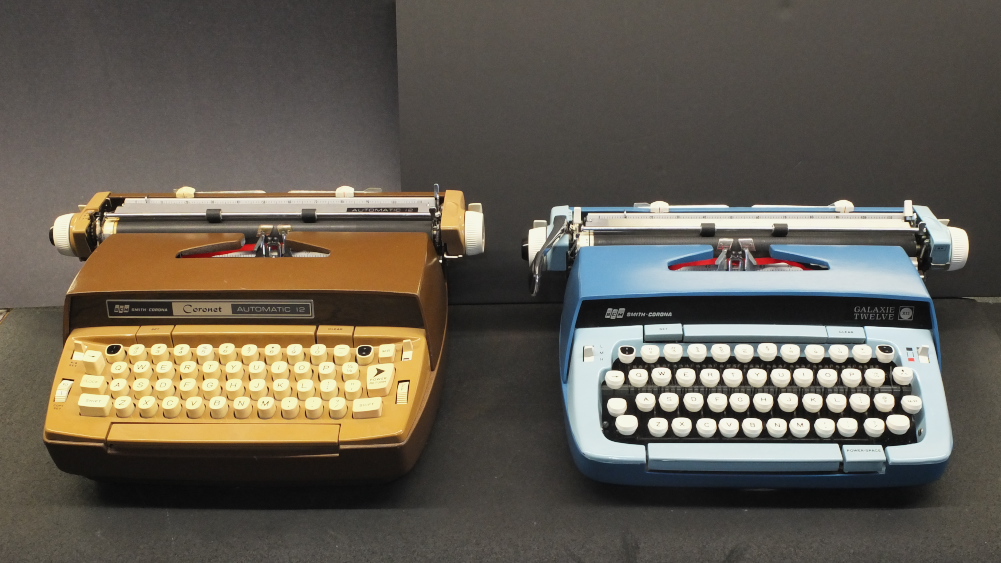
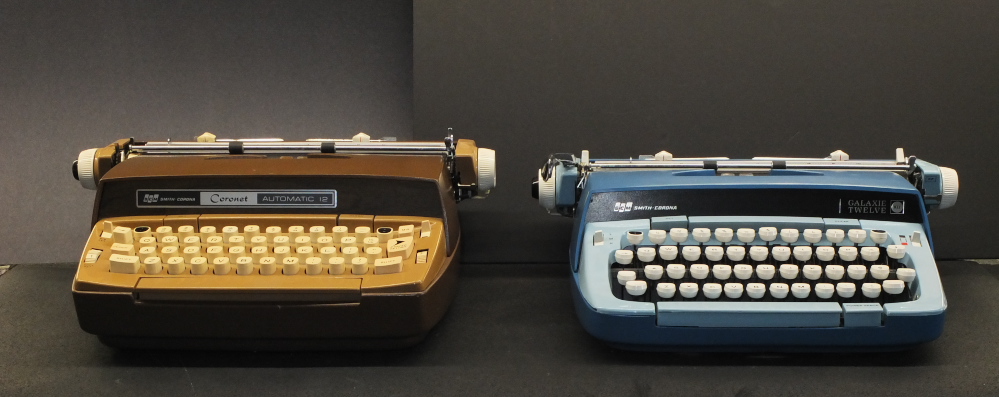
Post-Script: These hybrid typewriters are very interesting, for they serve to remind us of the best and worst things about manual typewriters. I have a Galaxy 12 very much like this electrified Coronet and of the same era, and while I'd consider the Galaxy as a medium sized typer, it still has all the attributes of what I like about manual machines, which is their relative quietness, and the subtle, personal, direct nature of their operation.

DSCF4928a
The electric Coronet and manual Galaxy 12, side-by-side

I can carry the Galaxy 12 virtually anywhere (its weight is not that bad, even in its case), set it up and be typing away, no electricity needed. In comparison, not only is the Coronet needing a power source, but it gets rather warm with just its motor idling. Then there's the BAM-BAM-BAM of each letter, and the KERTHWACK of the power return, reminding you - and anyone else in the vicinity - that this isn't some subtle, private writing going on. This is like calligraphy with a jackhammer. And did I mention its weight?

With a manual typewriter, one gets that analog experience, like how the quality of experience in driving a stick shift is dependent on one's feel for the clutch. With a manual typewriter, there's an infinite range of intermediate levels of force and speed one can apply to the keys. It's subtle and very personal, even with the largest machine. You feel as if your fingers are directly connected to the type slugs, which they literally are, mechanically speaking.

You don't begin to appreciate this until you try on one of these hybrid electrified manuals, like this here Coronet. The keys are Boolean: OFF/ON - BAM! No intermediate analog grayness here. Even when idle, the thing sits there and hums - HUMS! As if to remind you that every second counts, every second you spend not typing is wasted electricity and wear on the internal parts; that if you have something to say, just say it, don't beat around the bush. Shyte or get off the pot. You can't easily do first-draft writing on these machines, I feel. They're too impatient, like how dare I wake them up, just for me to sit here and think. Thinking should be done elsewhere. We have no time for thinking. This here's a tool for Captains of Industry, not beret-clad writers, smoking their Gallouis.

DSCF4929a

Yes, I'll admit that this Coronet makes a nice, dark impression on paper every time. And I'm a sucker for machines that make dark imprints. And it's fast. It'll go as fast as I can accurately touch-type, with hardly a glitch. But what's most awesome about this machine and others like it is that it really represents the first step away from manual typewriters and toward the computer; you can sense it. It's a genetic hybrid, like the very first proto-land animal that crawled out of the ocean onto some ancient beach, with its subtly enhanced fins. It's not there yet, but you can see where it's going. The Boolean nature of the keys is already present at the outset; it's power-hungry and demands to be tethered to some infrastructure; and it's already become a bit impersonal, just like the damned computer.

If you want to regain your lost love for even the lowliest manual typewriter in your collection, get one of these hybrid electrics and keep it around, just to remind yourself how nice a manual writing machine can be.

Labels: , , , , ,

Monday, April 25, 2016

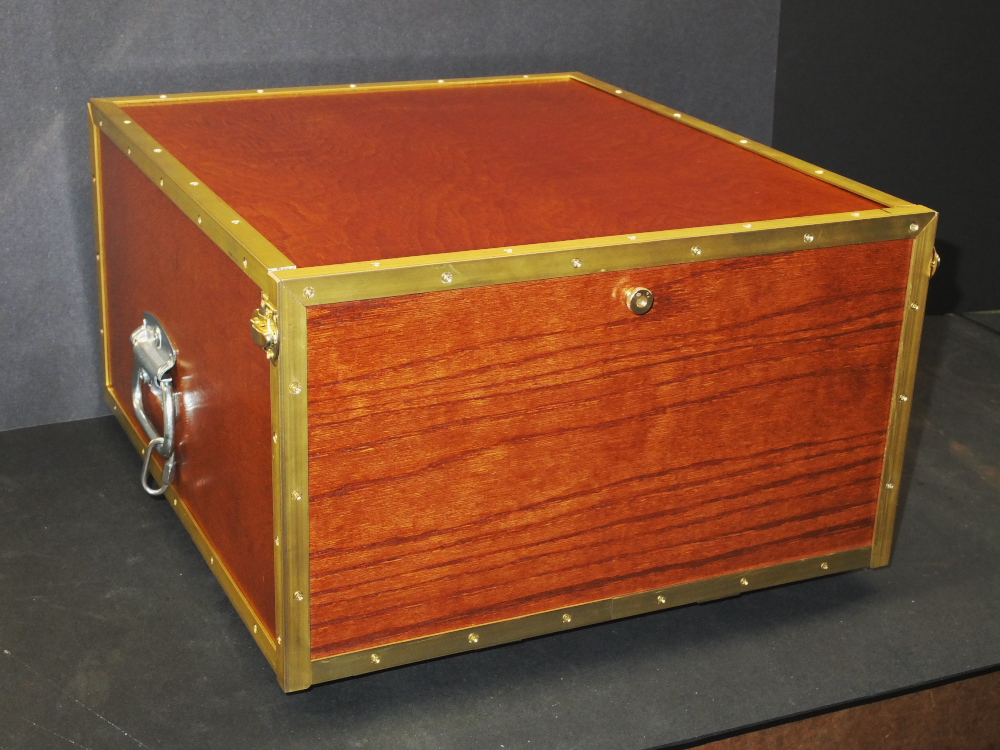
Nekkid-Riter Storage Box + More

DSCF4925a
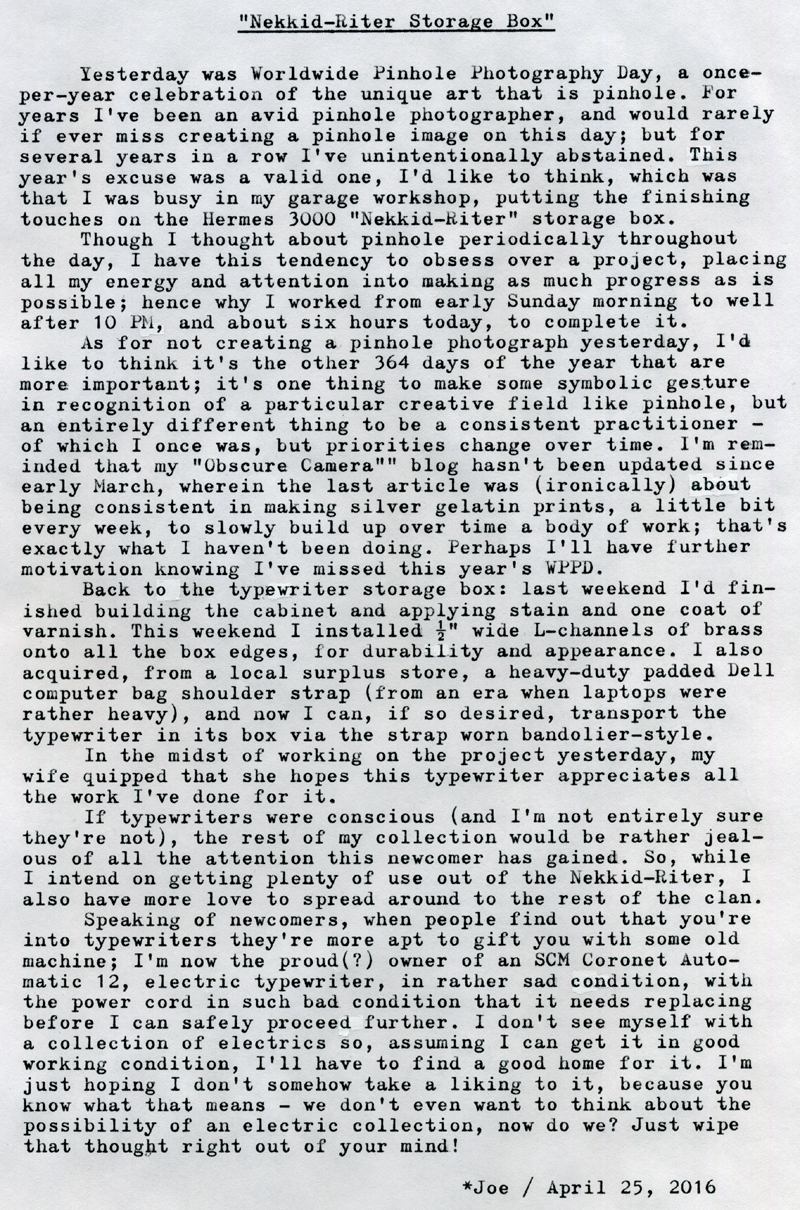
Typecast164

Post-Script: Typecast via Hermes 3000 Nekkid-Riter. I wrote that last paragraph partly in jest, earlier today after having completed the storage box for the Nekkid-Riter. But later on, I decided to take a look at the electric Coronet Automatic 12. I used an old extension cord to replace its original power cord (that was spliced in two places, badly frayed and with an intermittent open near the plug). Upon powering it on, lo and behold it works! I spent the next hour or two cleaning, degreasing and lubricating. The insides are still not entirely clean, since I only hit the critical areas where debris and residue might affect the machine's operation, rather than spotlessly cleaning every surface.

The carriage rails were grinding, so a thorough cleaning, degreasing and re-oiling has smoothed it out nicely. I spent a lot of time cleaning the type slugs with alcohol, swabs and toothpicks, the result being that, with its new ribbon, it types very nicely. The body and storage case were filthy, so plenty of window cleaner, swabs and paper towels were consumed, but the results are enticing.

I'm not certain I like the chocolate-brown color, but I suppose it's less drab than that of my older Smith-Corona Silent. I was originally thinking about calling it the "Brown Streak," from its speedy operation and color, but my wife, in her wisdom, convinced me that this term might be misconstrued as being somewhat scatological. Yes, it's a fast typer; darned if I can't throw words on paper at a speedy clip. This is certainly an office workhorse machine, but it's rather loud; I can only imagine what an office of these machines sounded like, back in the mid-20th century. I suppose if the room were clouded in cigarette smoke (which they often were), it might dampen the racket. Actually, it's not quite as loud as my brother's Hermes 10 electric (that, you might recall, is on permanent loan to the Guild Cinema).

The rear, hinge-side of the case is badly rusted. It looks like it sat up on end in a wet environment. This is one of the few circumstances where I had no qualms about applying some WD-40, followed by a wire brush and plenty of paper towels. It's better than it was, certainly.

So, am I going to keep it? I suppose ... if someone were to twist my arm ... perhaps. I can imagine if, needing to put some high volume of words down on paper at a speedy clip, and the noise were no objection, having one electric typewriter wouldn't be so bad, especially one having the wide carriage and ergonomics of this series of SCM, and with a standard cloth ribbon. But that's it! No electric collection for me, no sir!

Here's a glamor shot of the new clan member. I still need a name for it, something combining its chocolate appearance with speedy operation. It does have that two-tone espresso/coffee look, so perhaps some caffeine-themed name would be appropriate. Jitters? Hmm ... I'll think more about it.

DSCF4927a

Labels: , , , , , , , , , , ,