Typing Mishmash Melange

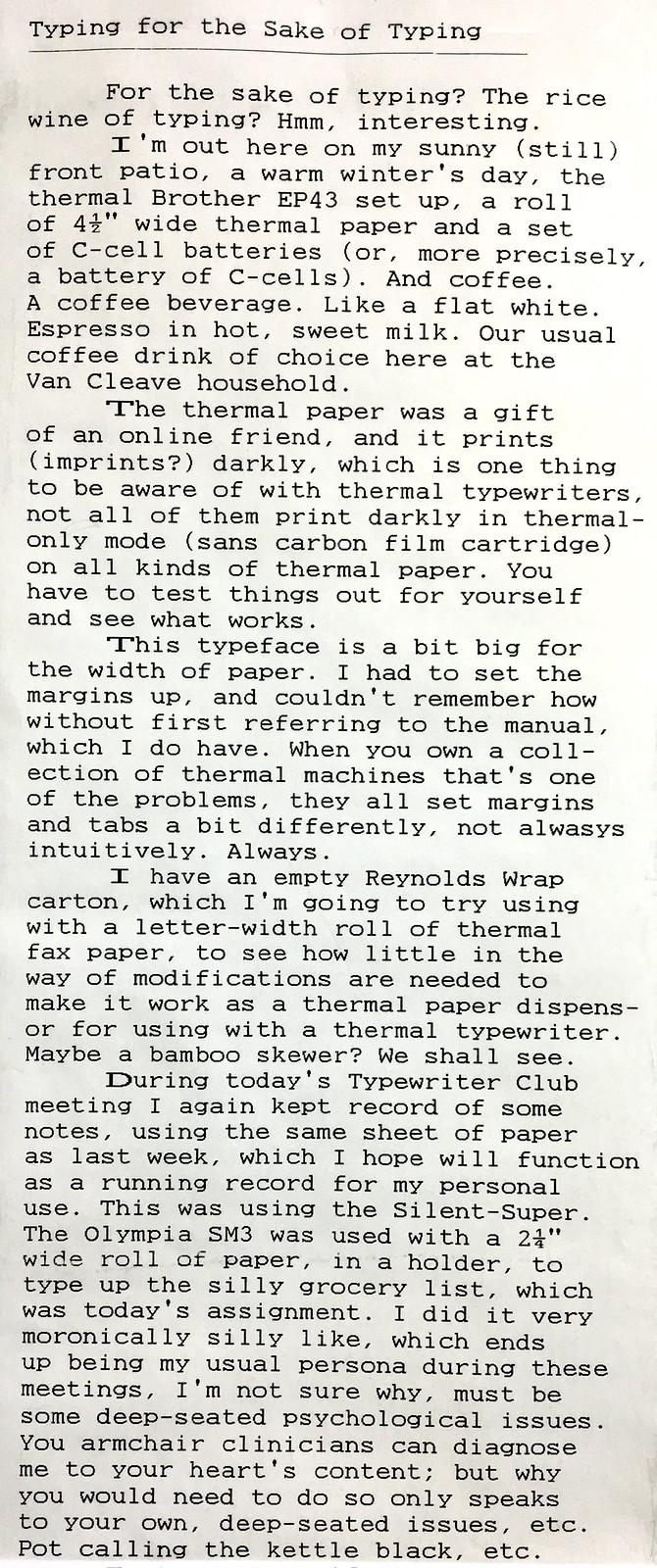
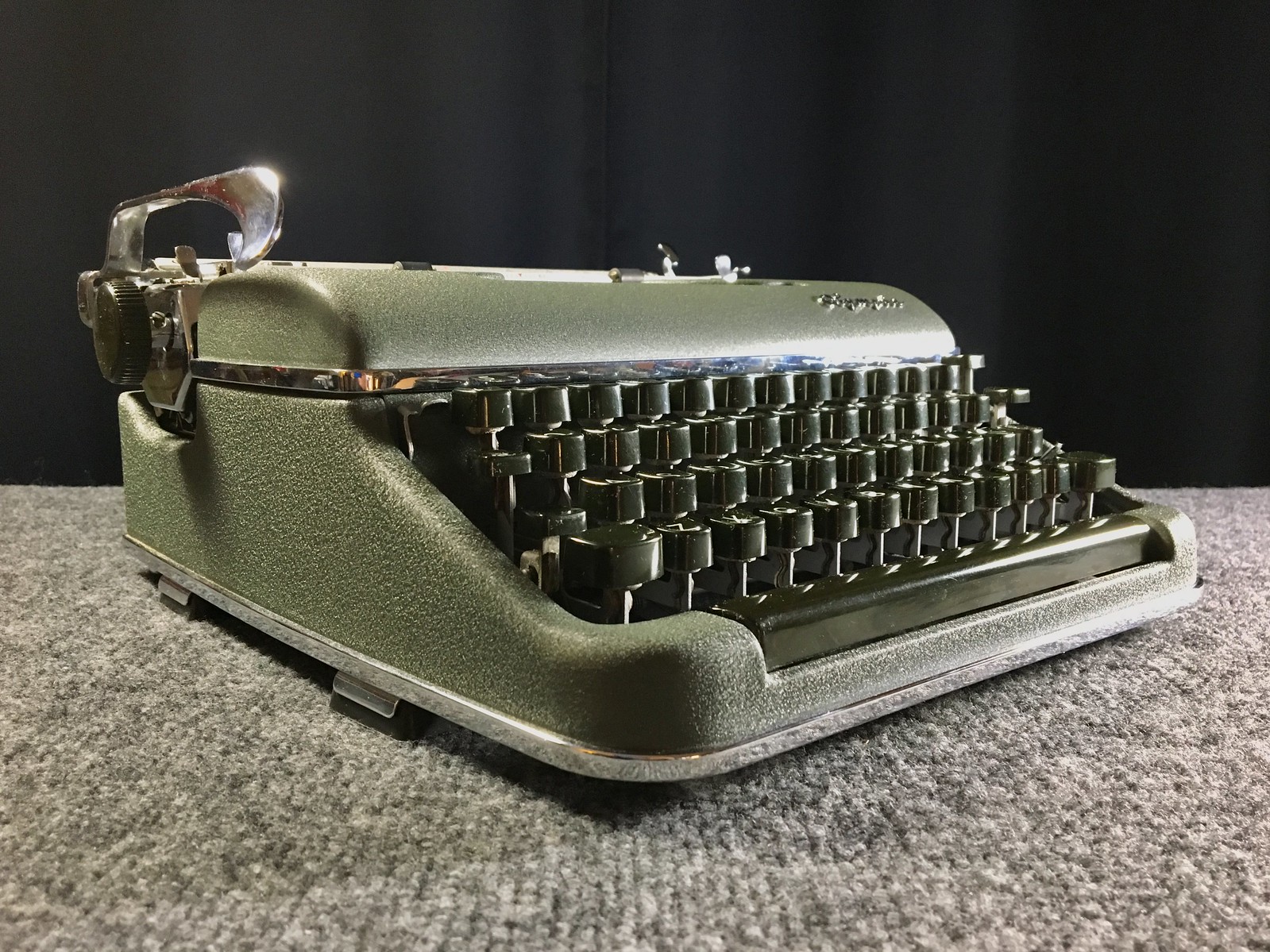
Andrea's SM-3
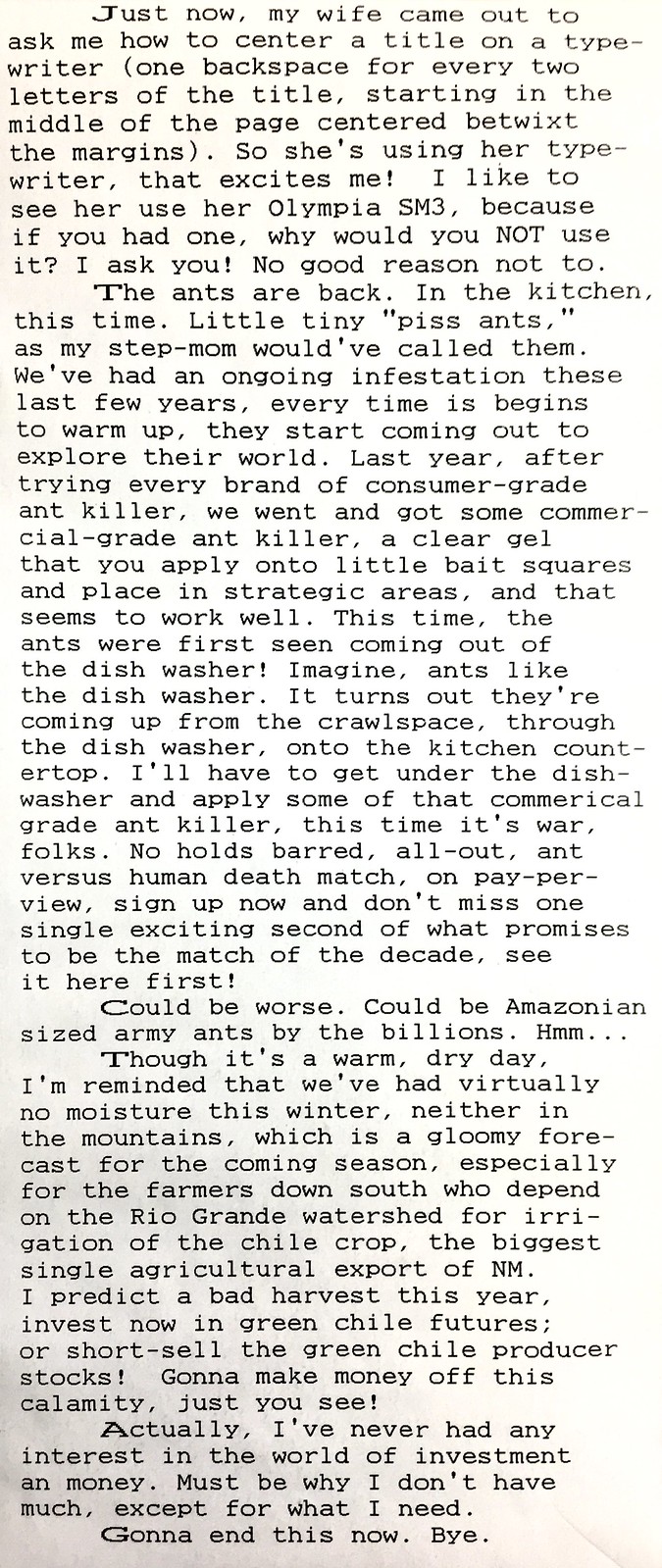
I spent some time over at Kevin's yesterday (some people might say I spent too much time...) and we tinkered some more with his Smith-Corona Poweriter, which is a typebar electric 6-series, with the narrower platen (i.e. not the 12" platen of the Galaxie) and featuring a DC motor with a rechargeable battery pack! It's had a lot of issues, but Kevin is slowly ironing them out.
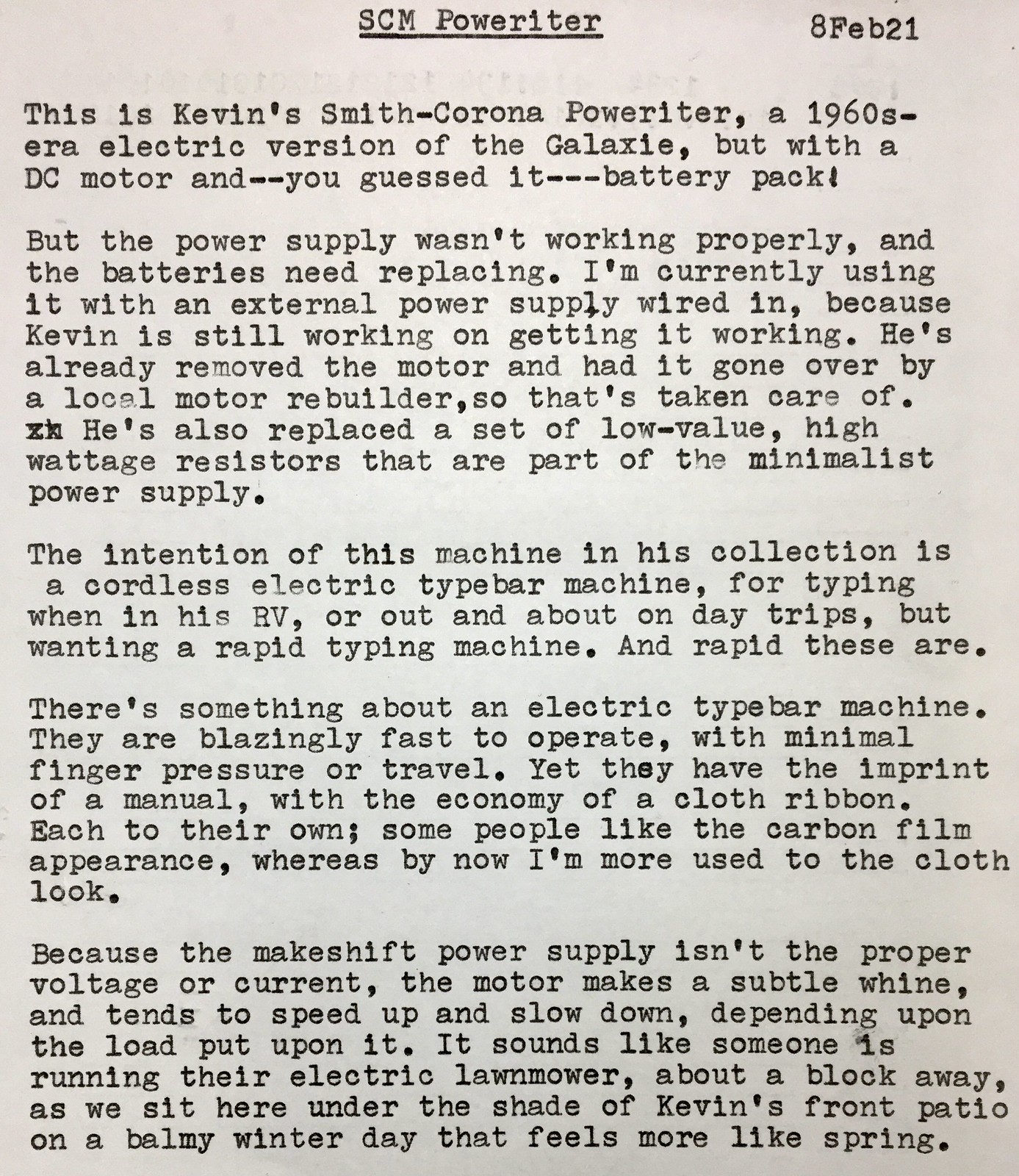
Poweriter test typing
There was an earlier and a later version of the Poweriter. Kevin's is the earlier model, whose power supply requires the battery to be installed in order to run properly from AC current. The power supply is ridiculously simple, composed of a transformer, a single diode and several resistors. Thus far, Kevin has had the motor rebuilt by a local motor shop, and he's replaced the resistors. The diode measures okay, but the 4-cell NiCad pack needs replacing. We're not certain about the transformer, however. And because of that, we were thinking about just installing a more modern power supply in its place.
We were tinkering yesterday with just installing a replacement power supply, from an AC adapter, of the correct voltage and current to both run the motor under load and recharge the cells. We found a particular AC adapter that outputs 9VCD and supplies up to 1.5 amps, sufficient for our needs. We had experimented with several different adapters; the ones with lower voltage obviously ran the motor slower, yet the typewriter performed okay, although the motor made a funny whinning sound as it sped up and slowed down. With the more powerful supply the motor spins faster and really slams the typebars into the platen. So then we installed a 3.3 ohm, 5 watt voltage dropping resistor, and it brought down the voltage under full load to where it should be, with the typewriter performing more normally, and yet with enough voltage to recharge the cells when installed. The nice thing is that the newer AC adapter with add-on resistor will be able to fit nicely inside the machine, which is taller than a conventional 6-series, to accomodate the power supply and batteries.
It will be fun to see how long the machine runs on batteries only. Of course, a person could replace the NiCad cells with Lithium ion cells, which would really boost the run-time of the machine, but then you wouldn't want to have the power supply recharging them (because for safety you need a charger designed for lithium ion cells).
I like the looks of this narrower-carriage 6-series machine, over the 12" version. And of course being a type bar machine they type ridiculously fast, with a featherlight touch.
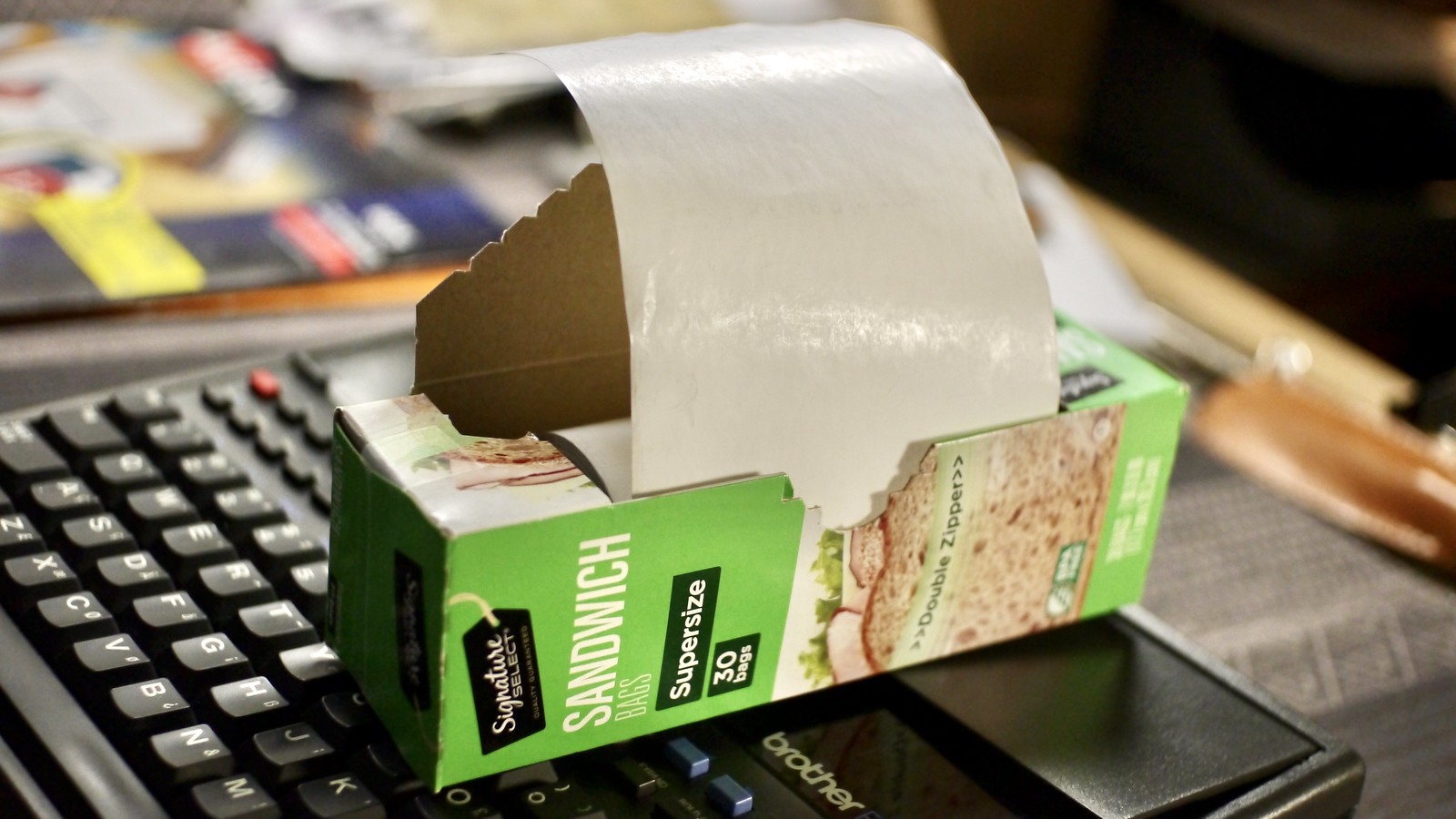
I recently received an Internet Care Package from a viewer, that included several rolls of 4.25" wide thermal fax paper. (Actually, it measures closer to 4-3/8" wide, but in the typecast I said 4-1/2". Go figure.) This is the paper I used for the thermal typecast at the top of this page, with my Brother EP-43. I like the width of this paper for blogging, as the narrower lines means more ledgibility online, especially when reading from a cell phone.
I fashioned a holder for this paper from a discarded cardboard plastic baggie carton (see above), and it fits about perfectly, with just a few modifications around the opening to make the paper easier to remove. I like these easy-to-do hacks using materials that would normally be recycled.
You may have also noticed in the thermal typecast that I made a snazzy little typographic touch by using the EP-43's wide letter mode for the first letter of each paragraph, harkening back to the middle ages and illuminated manuscripts.
This being a hodge-podge of miscellany, here's a video I posted today about more such random subjects.
posted by Joe V at 6:57 PM
10 comments