Tuesday, July 21, 2020

U.J.T.U.

Quarai Ruins, Salinas National Monument, New Mexico
Update Just To Update

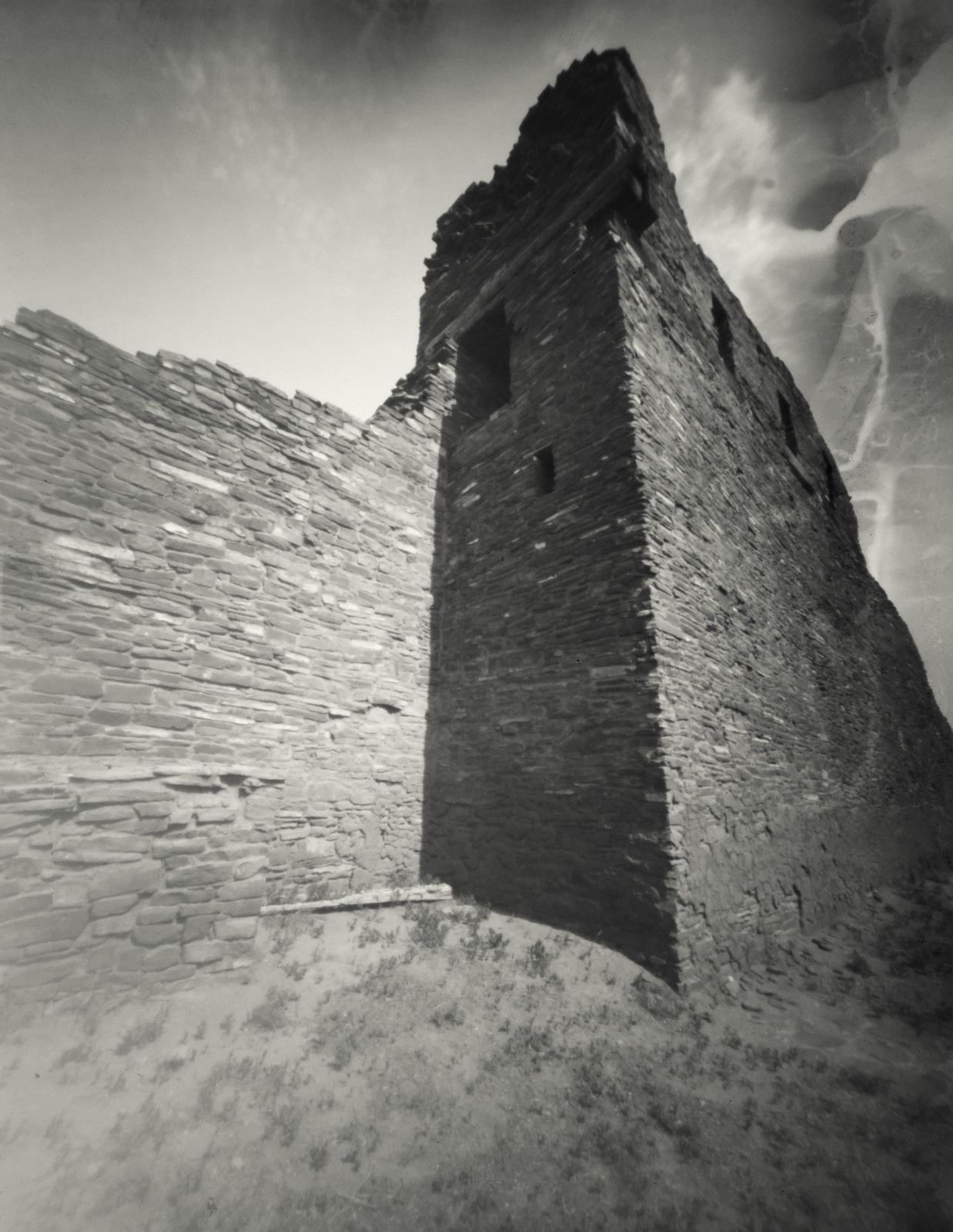
Here's one of the paper negatives from the wide-angle pinhole camera, with "processing artifacts" in the sky.
P1050680

I actually like it, though I can't take credit for an accident. This is one of those examples where a true artist would know how to embrace serendipity in their process; whereas myself, as more of a technician than artist, just sees fault. I think it's important that photographers learn to inhabit that space where the unpredictable arises as a result of a continual process of experimentation. It's all too easy to get wrapped up in the classic 20th century photographic techniques, that were refined more for commercial purposes.

My mistake was sloshing an unmeasured quantity of fresh developer in the tray as a replenishment, which then proved too strong, as the subsequent negative got too dense too fast. Then, to compensate, I pulled the next negative out after only 20 seconds and let it sit face-up, in an attempt at compensating development (where the shadows continue processing but the highlights slow down), but this resulted in the uneven tones.

As I mentioned in the typecast, today I did a controlled experiment, using only 50mL of used developer, merely enough to barely submerge a 4x5 negative in a 5x7 tray, and with sufficient agitation (intermittent but thorough) the result was rather nice.

P1050687

Note the compensating effect, as the sky retains some detail that might otherwise be lost. This technique certainly deserves more testing.

Here's another iPhone image I like:

Quarai Ruins, Salinas National Monument, New Mexico

Here I purposefully exposed for the clouds to retain some detail (since digital sensors can so easily over-expose the highlights), then pulled up the shadows and adjusted the tones afterward.

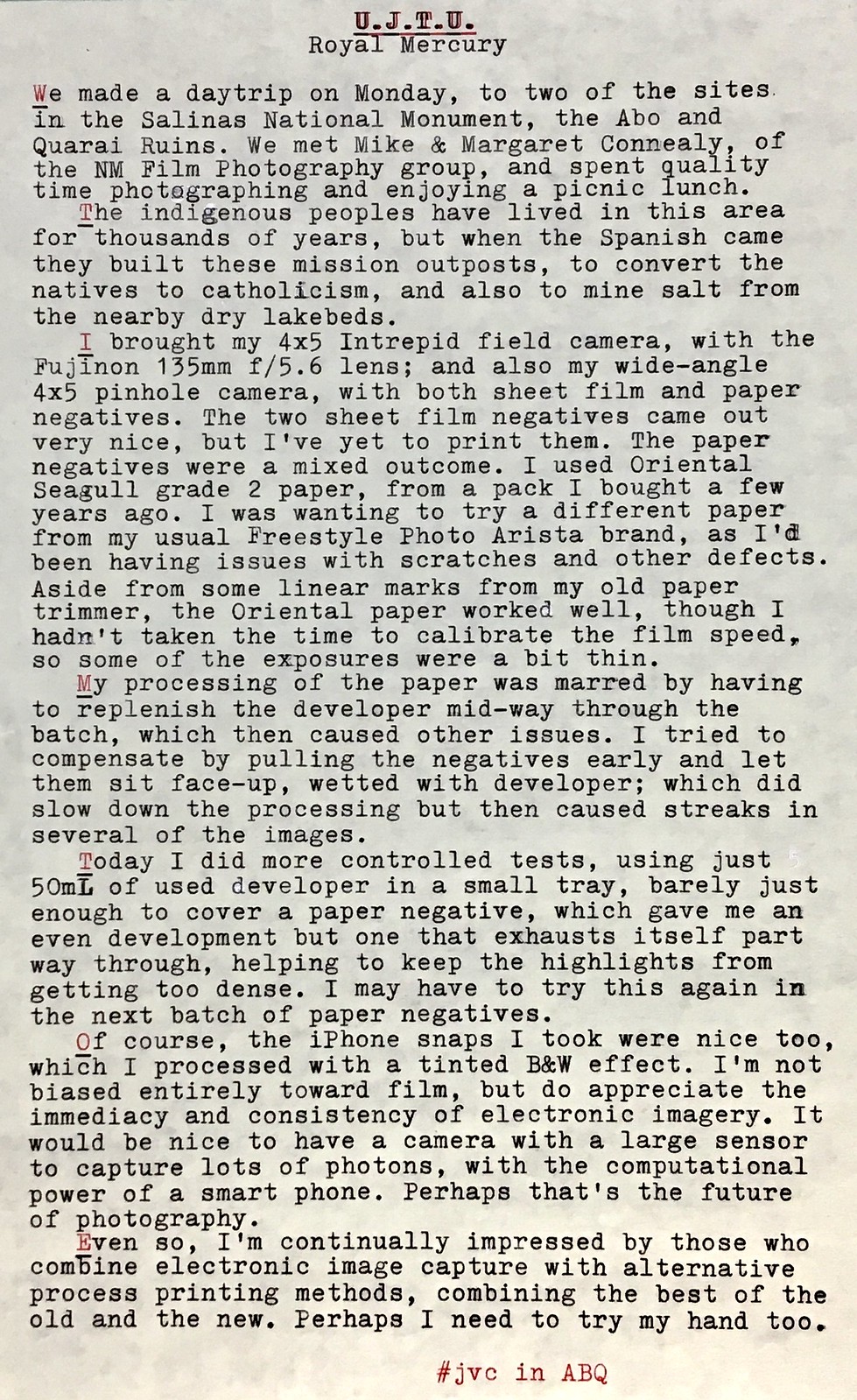
Typecast via Royal Mercury.

Labels: , , , ,

Sunday, March 22, 2020

How is Everyone?

Evolution
P1050019a
P1050018a
P1050020a

Using your time well implies always having something to do -- or does it? Perhaps in order to maintain a healthy mindset we must also schedule time to do nothing -- or nothing specific. Goofing off is a form of adult play, and play is absolutely essential.

This implies a schedule -- of activities and also free time, undefined.

I have some things to do this weekend. There's my Afghan Box Camera project, it needs a new paper safe and an internal battery-powered light source for contact printing. Then it needs to be put to practice, to see if these "up-" grades do indeed go the right direction.

I also have an urge to create at least several videos. I want to do a typewriter-themed video, and also something more like a video poem or essay, something less categorical.

Just in the time it's taken me to craft this article, I've been helping my grandson set up his new GoPro kit for vlogging, showing him the best settings for his camera, tips on battery usage, etc. I've also been giving him tips about framing his shots in terms of both composition and timing; giving enough space on both ends of the clip for editing, while ensuring he has just the right amount of headroom in his selfie-shots. But the real learning curve for him will in be the editing, it's an entirely other kind of skillset from videography. But I think he'll have fun with it, and perhaps all those films he's seen will inform his movie-making.

The notebook shot above was after I'd visited Ethan Moses last week and we put his new paper trimmer to work. It will cut a phonebook's worth of paper in one swipe, so will be great for making professionally finished notebooks like this one, my first hand-stitched book, that now is almost too precious to use -- but use it I will, as soon as I finish my little stapled version, that is.

I try to start these articles with an opening image that somehow relates to the subject matter. I'm not sure this one does, unless you dive deep enough into your inner psychology. I'll leave it up to you to figure out. In the meanwhile, stay well and take care.

Typecast via Brother EP-43 thermal typewriter.

Labels:

Monday, October 07, 2019

Overdue Update

1962 Torpedo De Luxe
Recently acquired 1962 Torpedo De Luxe, featuring the wonky 5 & 6 keycaps, and decades of grime.

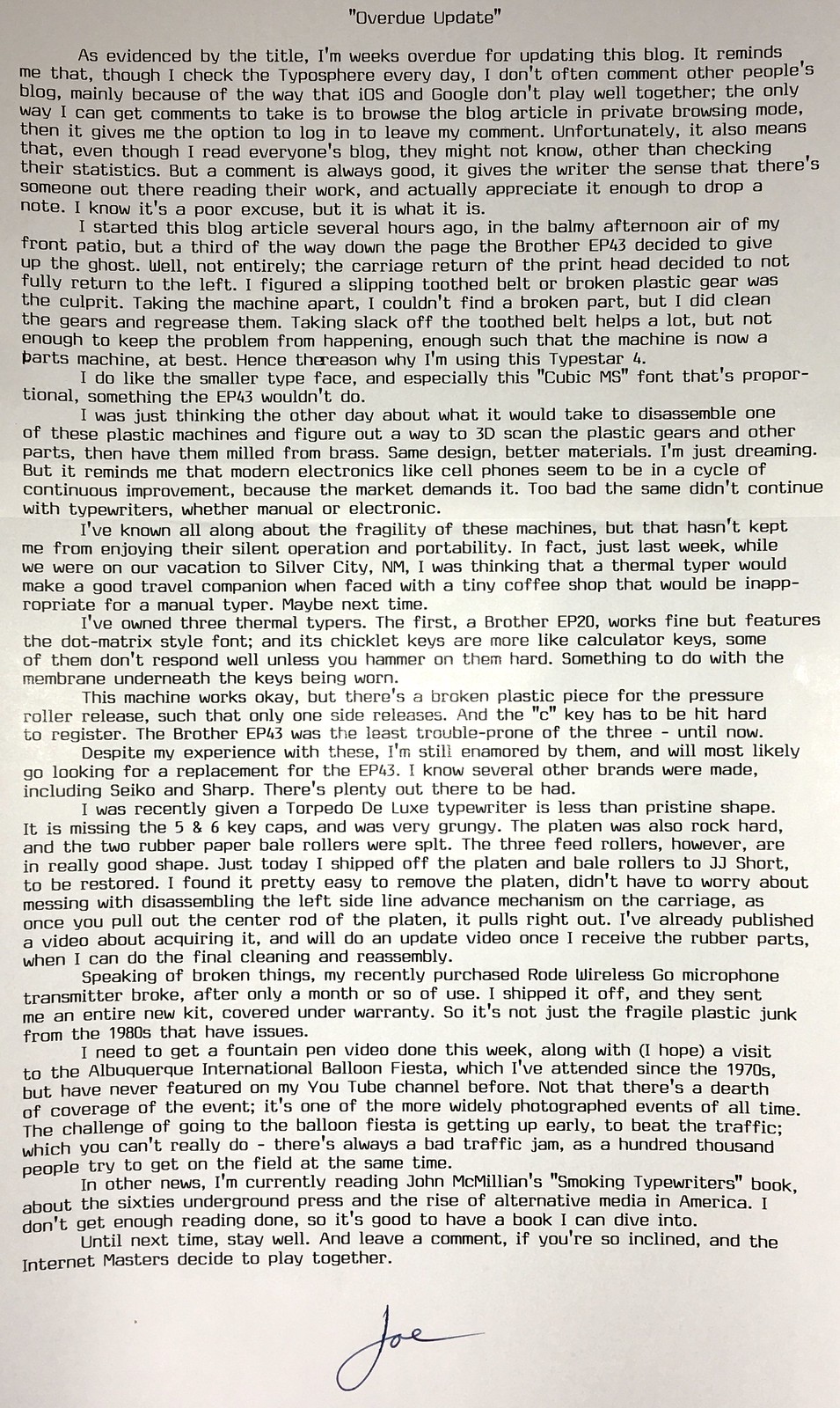
“Overdue Update”

I've been tinkering some more with the citric acid / hydrogen peroxide reversal process for direct-positive prints from silver gelatin photo paper exposed in-camera. Here's a recent still-life.

Owl, Citric Acid + H2O2 Reversal Process, Fujinon 135mm @ F/5.6, 45 second exposure, 4x5 format Arista RC grade 2 paper

I've found better results by processing the print face-down in the citric acid and peroxide bleaching solutions, and also do two passes, before the second exposure and development.

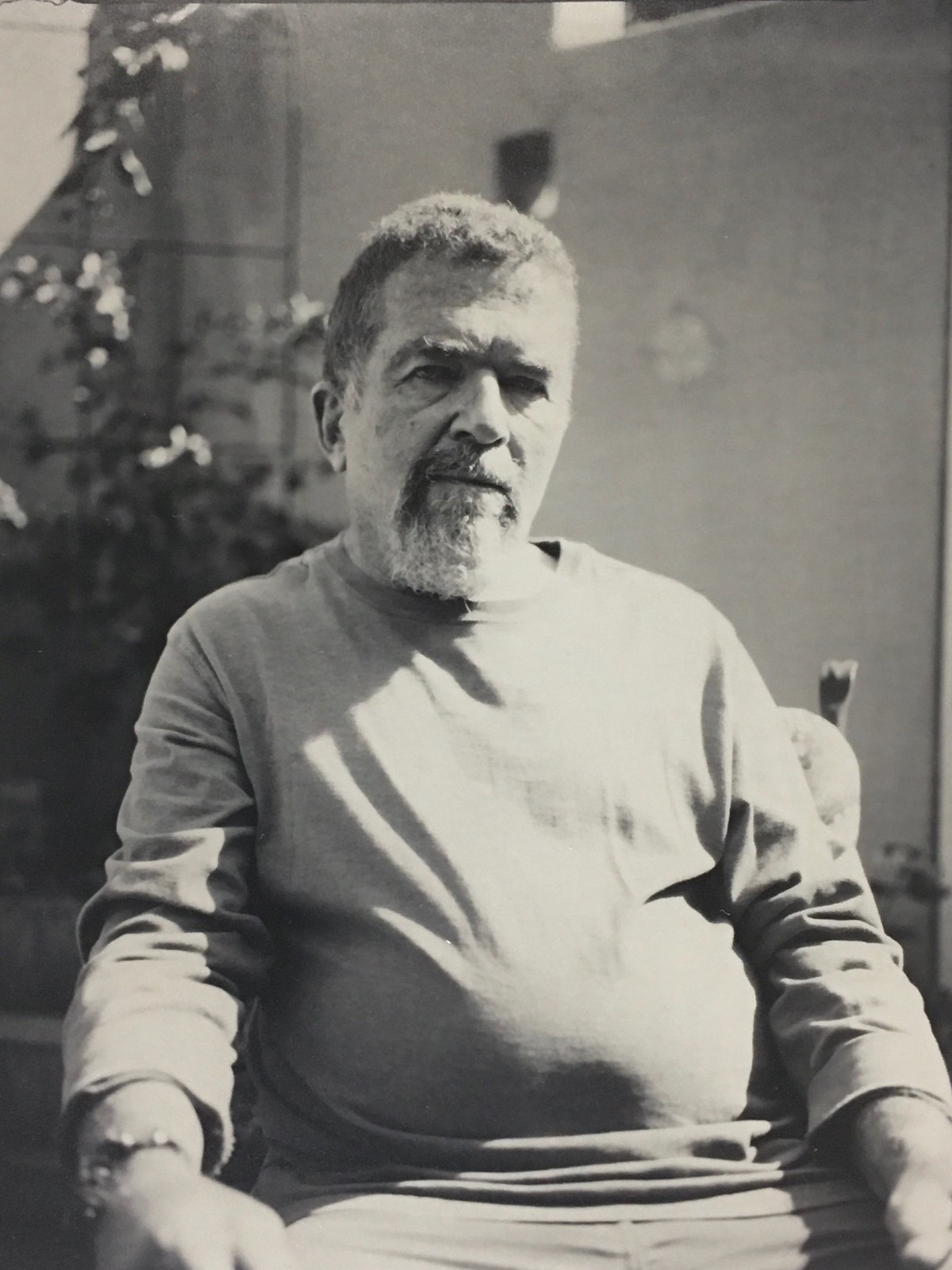
While up till today all of my reversal tests have been under shaded daylight, the multi-seconds-long exposure times were not compatible with the possibility of seated portraits. So today I made a series of test exposures in the bright morning sun of my front patio, with Your's Truly as subject. For focus I used a test card tied to the camera with a string. I use a yard stick to stretch the target out in front of the camera until the string is taught, then focus the camera on the target. Then I approximate the composition, based on my experience, and once the exposure is determined via light meter and set on the lens, I sit down in front of the camera, long shutter release cable in one hand and focus target in the other. I assume my pose, bring the target up to my temple and adjust my fore-aft seating position to tighten the string; then slowly lower my arm and trip the shutter.

I thought the results were rather fair, given the harsh light; and the 1/2 second exposure time at F/5.6 was quite adequate for seated portraits.

Self-Portrait, grade 2 RC paper, direct reversal using citric acid + H2O2 process, 1/2 second exposure at F/5.6

I have the 8x10 sliding box camera, currently fitted with a Fujinon Xerox machine lens, 240mm at a fixed F/4.5 aperture. Fast glass, but no possibility of a variable aperture. And the box camera is fixed at a landscape orientation, whereas I'd like to use it for portraits. Perhaps I can rebuild the camera so the cross-section is square instead of rectangular, and the sliding rear portion could therefore be inserted into the front half in either orientation - dark slide facing to the right for landscape orientation, or facing up for portraits. Of course, for accurate exposures with sub-1 second times I can't rely on the accuracy of a lens cap shutter, so perhaps an ND filter can lengthen the exposure times to around 1 second in bright sun - long enough to be timed accurately by hand, while short enough to reduce the chance of motion blur. Always another project!

I'm still using the same batch of citric acid and H2O2, so I don't know how long I can go before they expire. Thus far it's proven to be a very economical process, as long as I ensure consistency in everything I do.

Labels: , , ,

Tuesday, July 16, 2019

U.J.T.U.

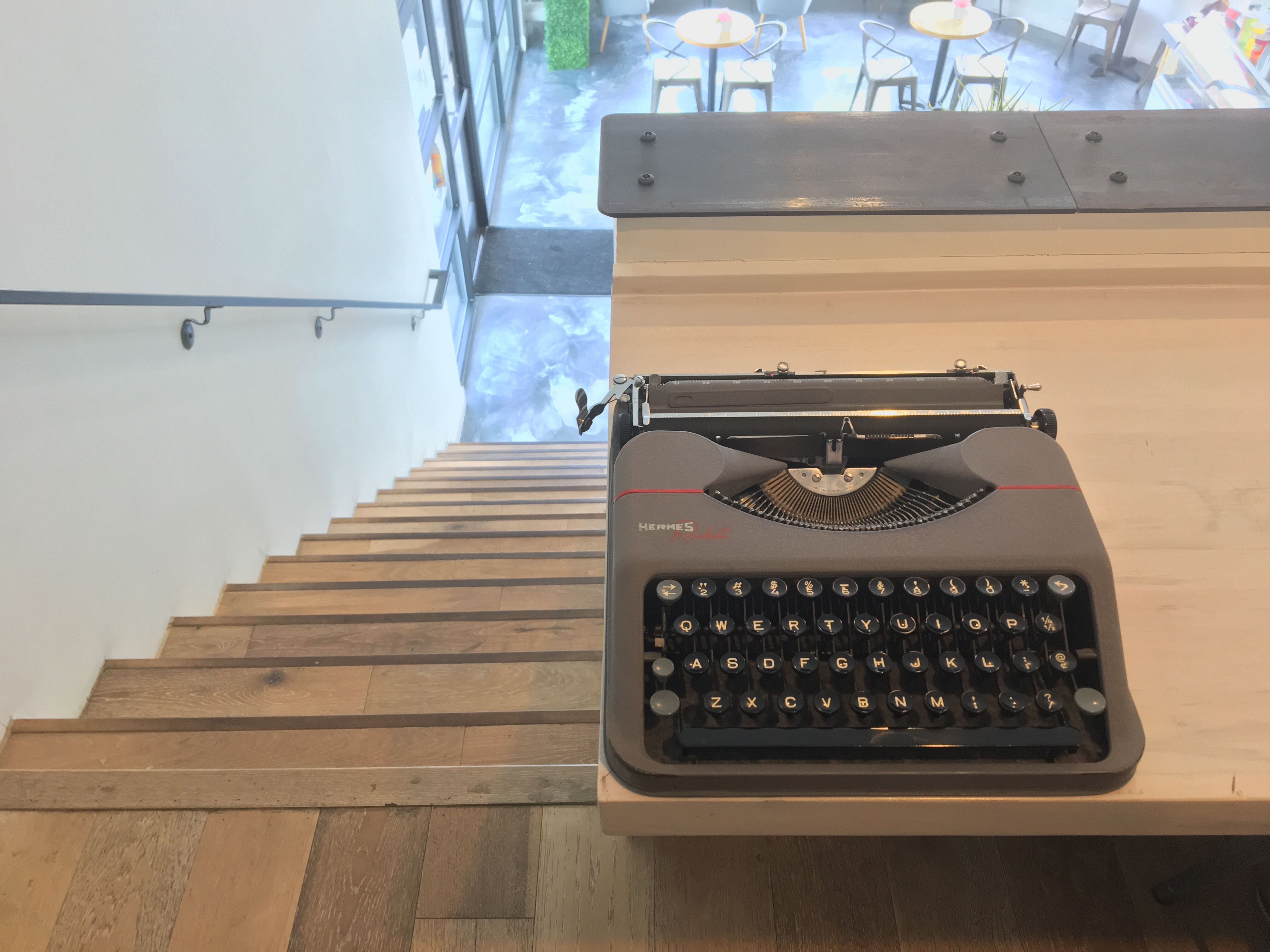
Hermès Rocket at Sweet Cup Coffee
Typecast083

Post-Script: The feed rollers on my Rocket grip good enough, but when I fold this thin paper in half lengthwise it tends to feed wonky. This 13 CPI typeface needs a short line to be readable on mobile devices. Maybe I should just break out the adding machine paper roll for when I'm blogging on the Rocket?

I'm liking the idea of more frequent blog updates, perhaps on more mundane subjects. The "work flow" is still a bit tedious (it isn't work, neither does it flow!) Firing up the scanner - had to reset it once; getting the cropping, light & dark points and contrast set properly; then the full res scan; uploading to Flickr, etc. I'm still not pleased with how my iPhone takes photos of typecasts, especially the field curvature near the edges of the frame. I want to fill the frame with the long side of the piece for good resolution, but then the iPhone's field curvature makes the edges of the page wonky. Yes, there are aftermarket photo apps that permit adjusting field curvature, maybe that's the solution.

I've been thinking about how else "typecasting" can be used with social media, besides blogging. Obviously, many people shoot photos of their poetry and writings and post them to the various Facebook typewriter-themed groups. But today I was thinking about discussion forums (on whatever topic). Instead of replying to a thread via computer keyboard, one could type out a quick reply, upload to Flickr and link the image to the forum. This might be fun to do, especially on discussion forums that aren't specifically typewriter-themed; like RFF (Rangefinder Forum), for instance. The idea is to further infiltrate the digital world with the presence of typewriter-generated imagery.

I enjoyed my visit to Sweet Cup Coffee. This time of year, when the summer monsoons begin (the flow of moist air from the Baja peninsula up through the American southwest), the air is humid enough that evaporative coolers (like what I have at home) don't cool as well; the AC at Sweet Cup was, well, sweet! Another reason to write in coffee shops.

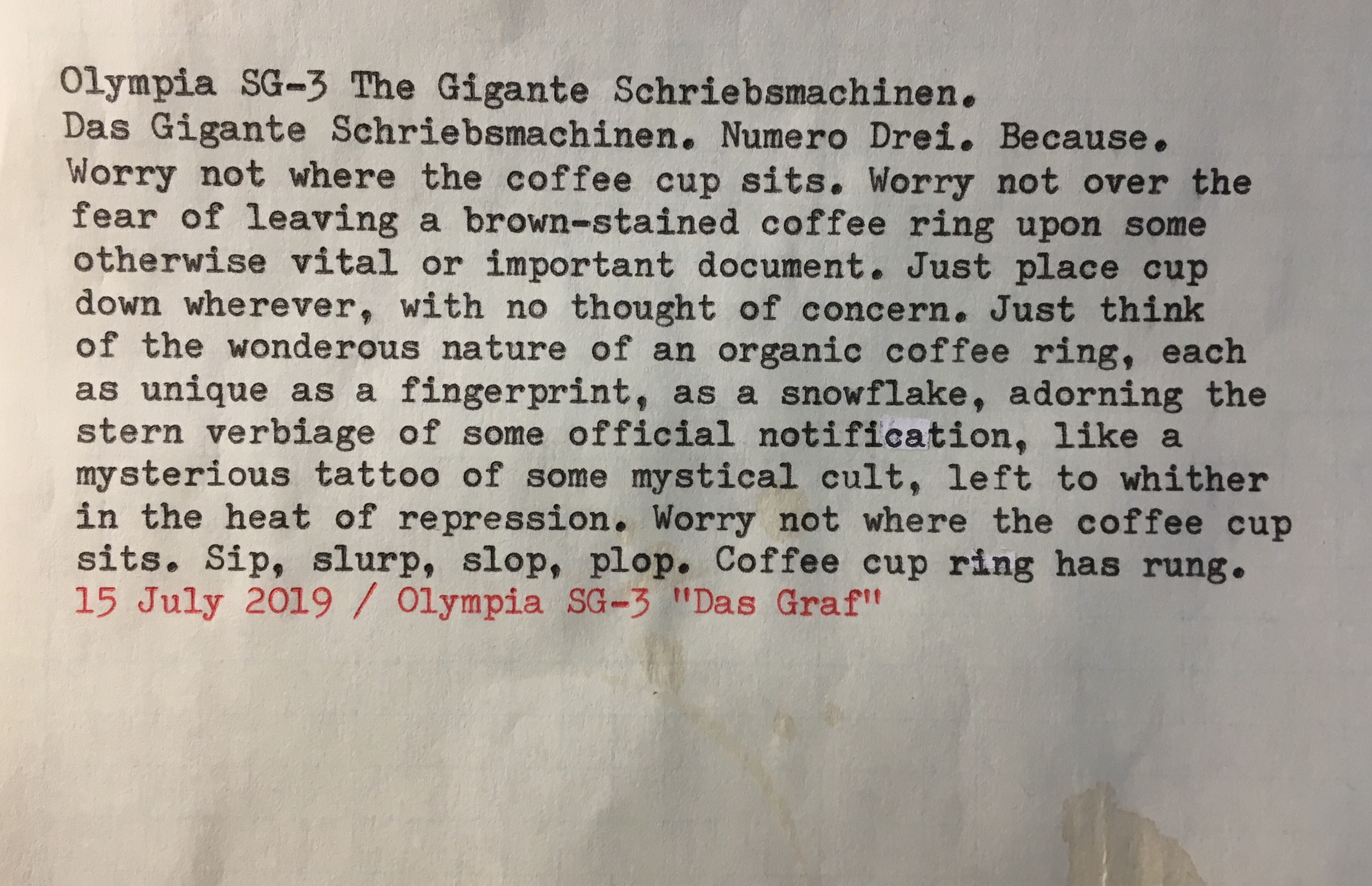
Olympia SG-3 Inspiration

The piece above was an impromptu typing on my Olympia SG-3. It does this to me, inspires me to just bang out these sudden little inspirations. They don't matter all that much, individually. It's in the aggregate, when they begin to accumulate, that the impact is felt. I don't know why this machine inspires me like it does; perhaps it's the size and heft; or the confidence it inspires to work flawlessly; or the pleasingly dark imprint.

I like to collect these little gleanings. Sometimes they're just a sentence or paragraph amidst a larger amount of dross, in which case I'll circle it with a pen for emphasis. I don't know what will become of them, but I hope they function as inspiration for some new work, down the road.

Finally, a video Kevin and I made, about the Maritsa 11.

Labels: , , , , ,

Wednesday, August 29, 2018

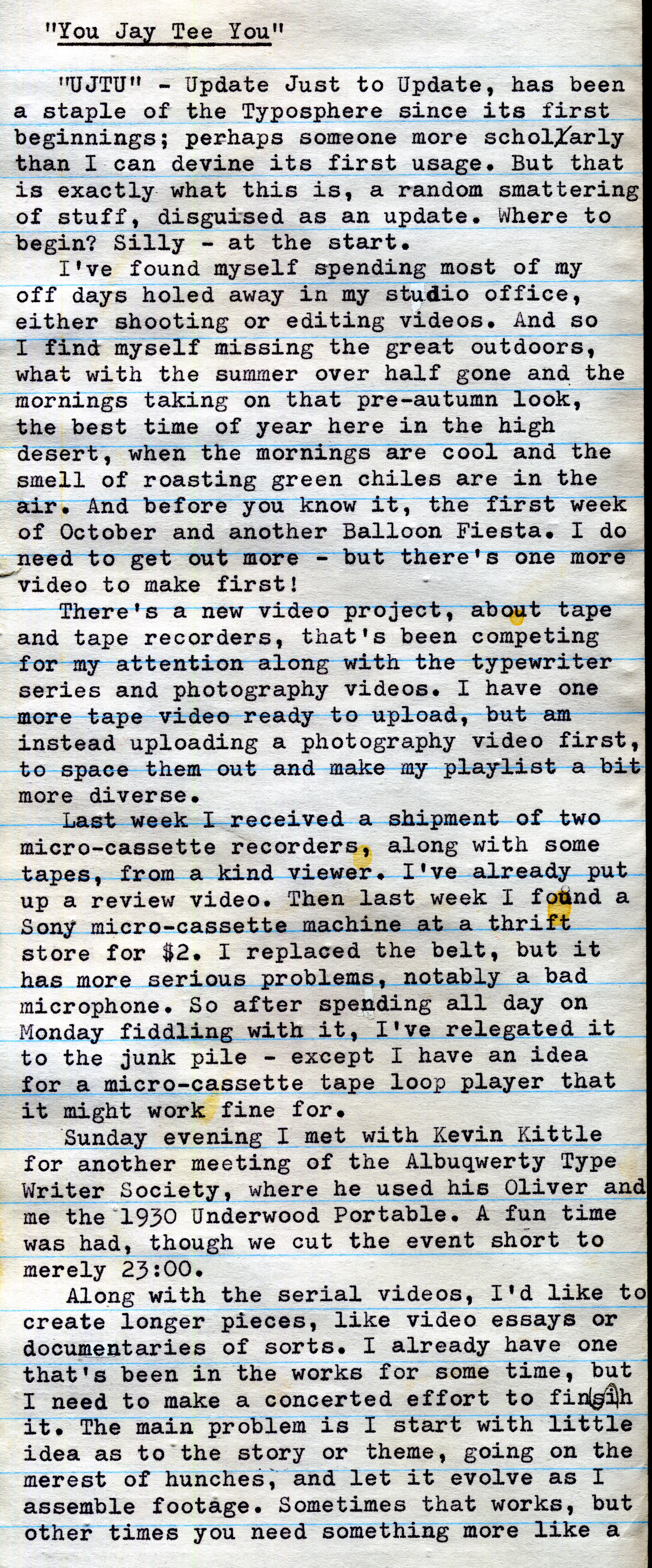
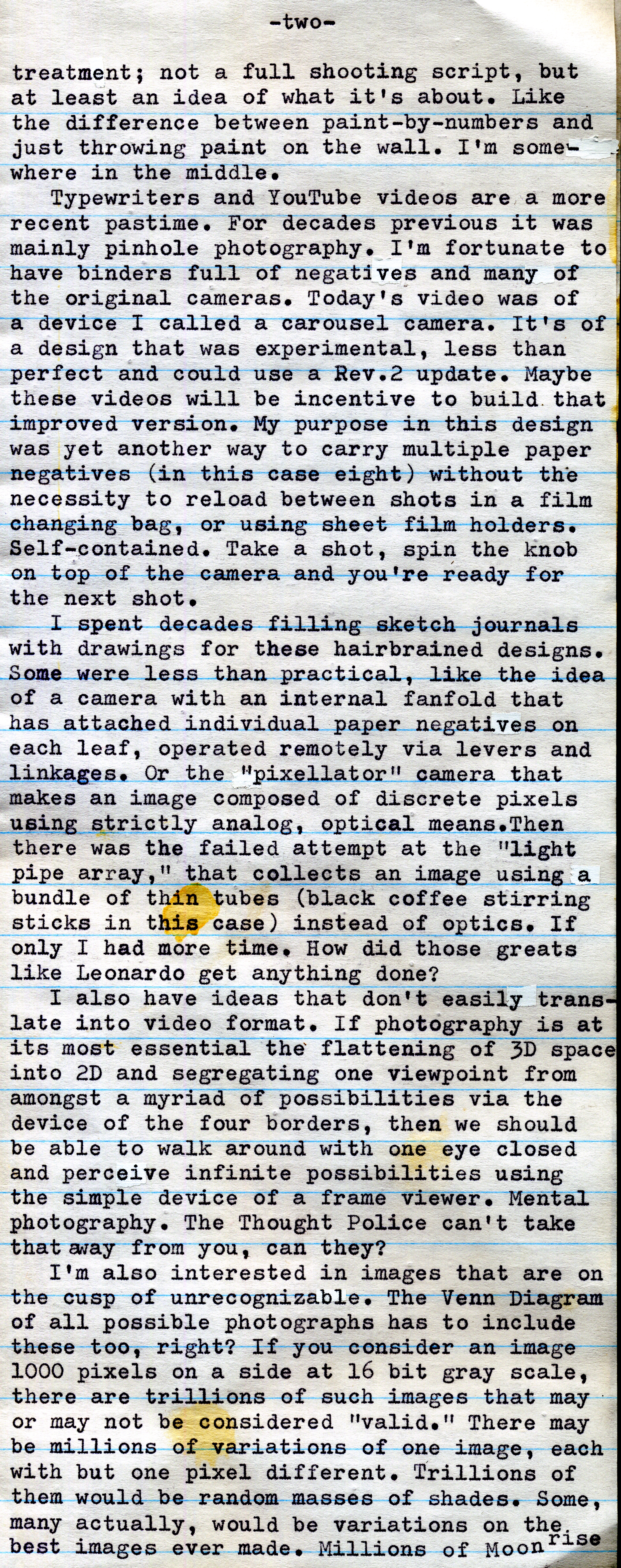
"You Jay Tee You"

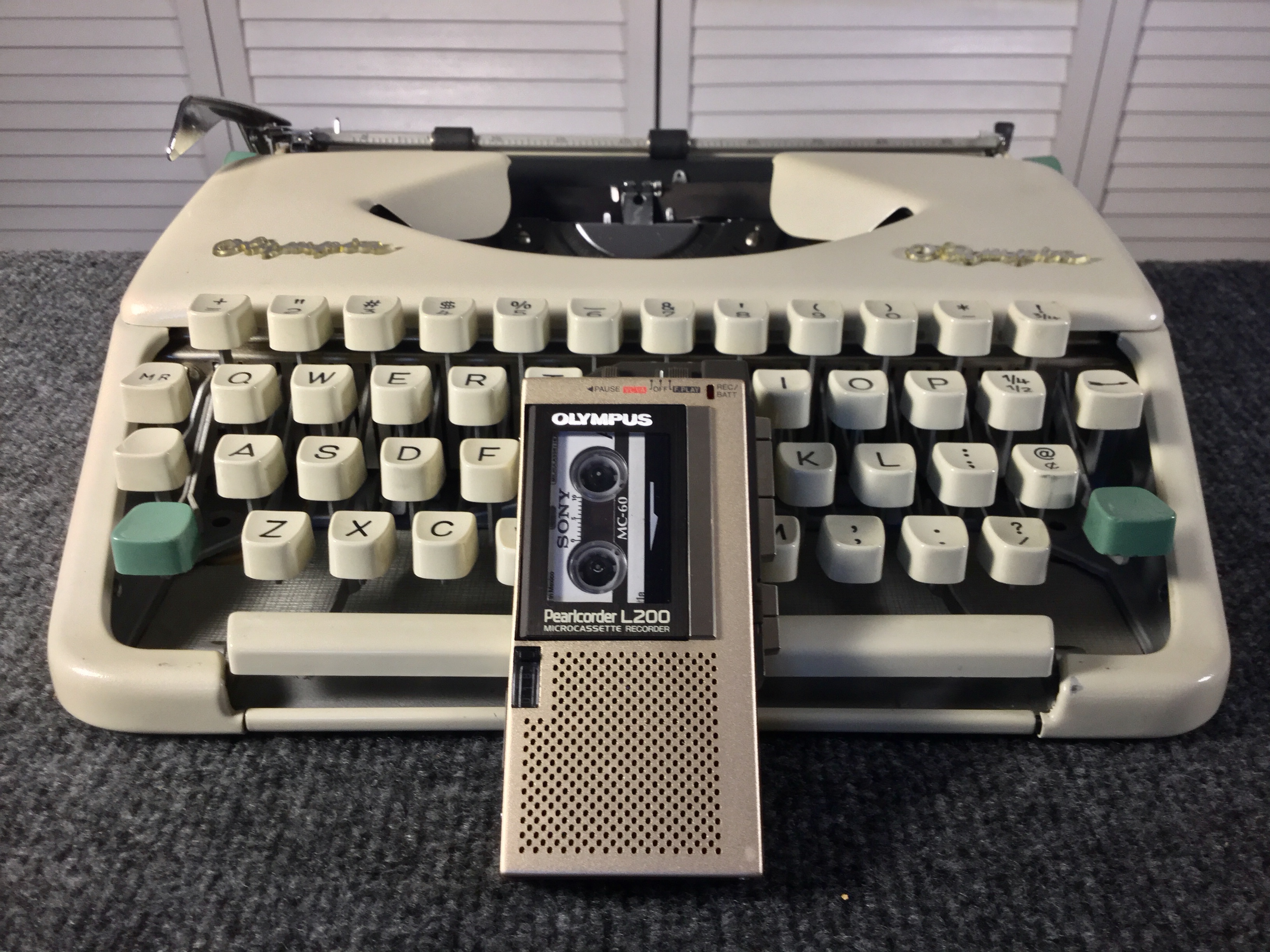
Olympia SF and Olympus Pearlcorder L200
Typecast042
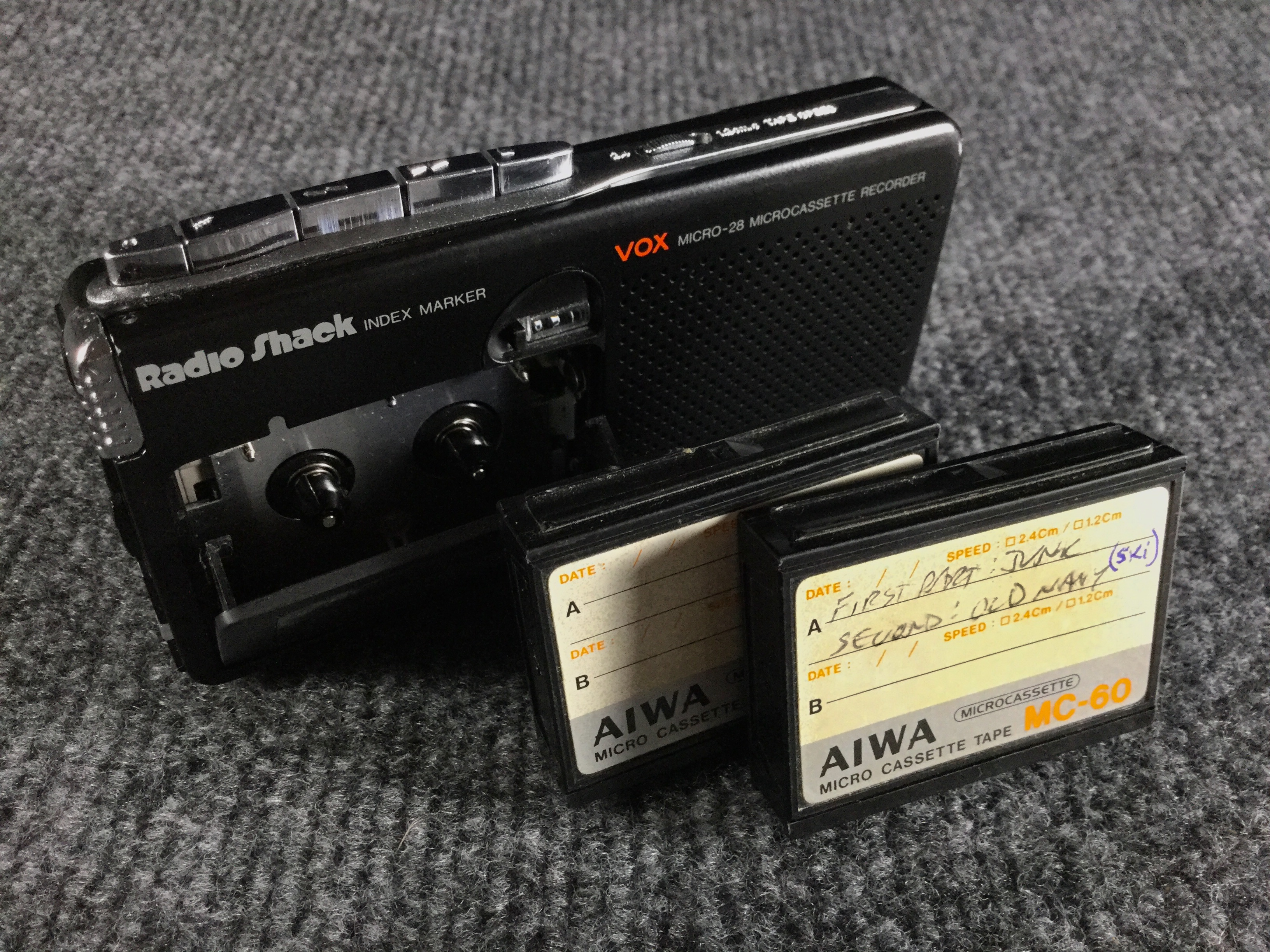
Micro-28 Recorder and Aiwa Tape
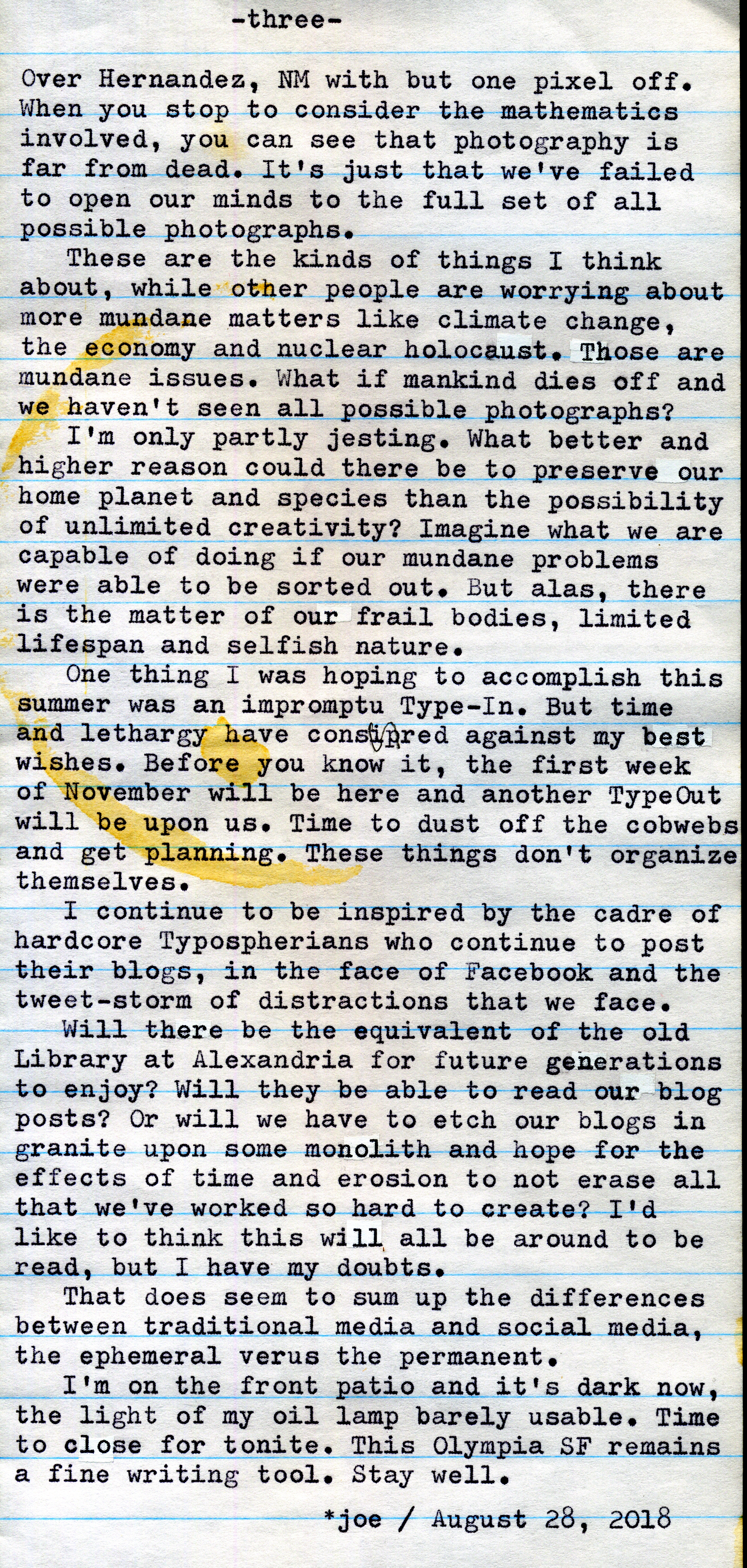
Typecast043
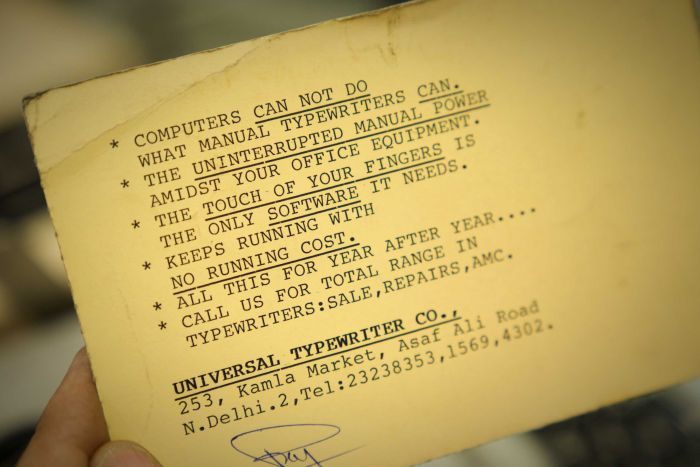
Universal Typewriter Co Slogans
Typecast044

Post-Script: I didn't mention that I've been collecting Albertsons grocery store receipts. Because the backsides are clear of any adverts, making for "free" (ignoring the cost of groceries) narrow-column typing paper for poetry and prose alike, particularly with the new old-stock silk ribbon in Adobe Rose, the Royal QDL, whose elite font works well for the 3-1/8" wide thermal paper.

Typecast033

Since this is a UJTU blog article, I should mention that I recently finished reading Daniel Ellsberg's The Doomsday Machine. While he's well known for having released the Pentagon Papers, a cache of documents relating to the Vietnam conflict, his original intention was to release a vast trove of documents concerning nuclear preparedness. But in the aftermath of the Pentagon Papers scandal he buried, then lost, that trove of documents. This new book is both a personal history and about what he was able to retrieve, via FOIA documents and through his own personal recollection of having worked as a Rand Corporation contractor in the early 1960s, with access to the highest level of nuclear secrets by any civilian outside government.

What I found troubling was in the early 1960s theater commanders had been given, since Eisenhower's time, permission to initiate nuclear weapons release independent of the President. It was only later that permissive action links (PALs) were developed to, among other reasons, restore control of such weapons back into the hands of civilian leadership.

Ellsberg makes a convincing argument that Hiroshima and Nagasaki were an inevitability, given that mass bombing of civilians was already an accepted reality, such as the massive fire bombings of Tokyo and other Japanese cities in the weeks and months previous. While he credits Britain with starting the policy of engaging civilians in wartime though aerial bombing, he ignores the German Zeppelin bombings of England in WWI, and the bombing of Guernica by Germany during the Spanish Civil War. There's also the long history of laying siege to cities and starving out whole civilian populations. War has never been nice, history shows.

His point is that what we came to know during the Cold War as nuclear terror was the result of policies intentionally created for the purpose of inflicting mass civilian casualties, already in effect since WWII prior to the nuclear age. The intention was already in place within the leadership of the Pentagon, he argues; what the reality of nuclear weapons did was enable that intention on a global scale. Certainly food for thought.

I suspect I already know what Ellsberg's critics will say, charging him with taking sides against his own country. However provocative his views, his is a revision to the conventional history of the nuclear age well worth considering.

Labels: , , , , ,