Tuesday, September 04, 2018

Kissing Cousins or Typer Twins?
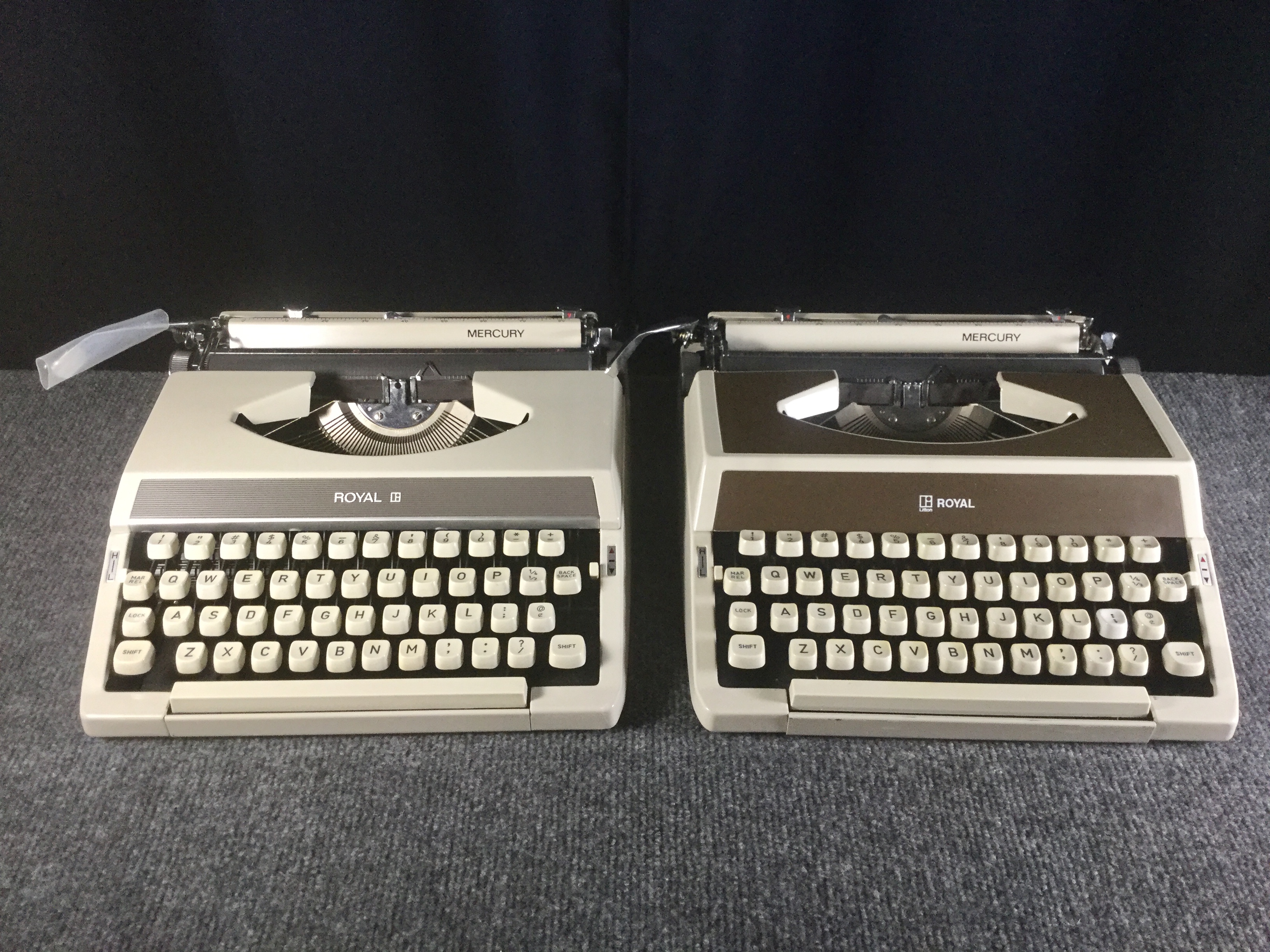
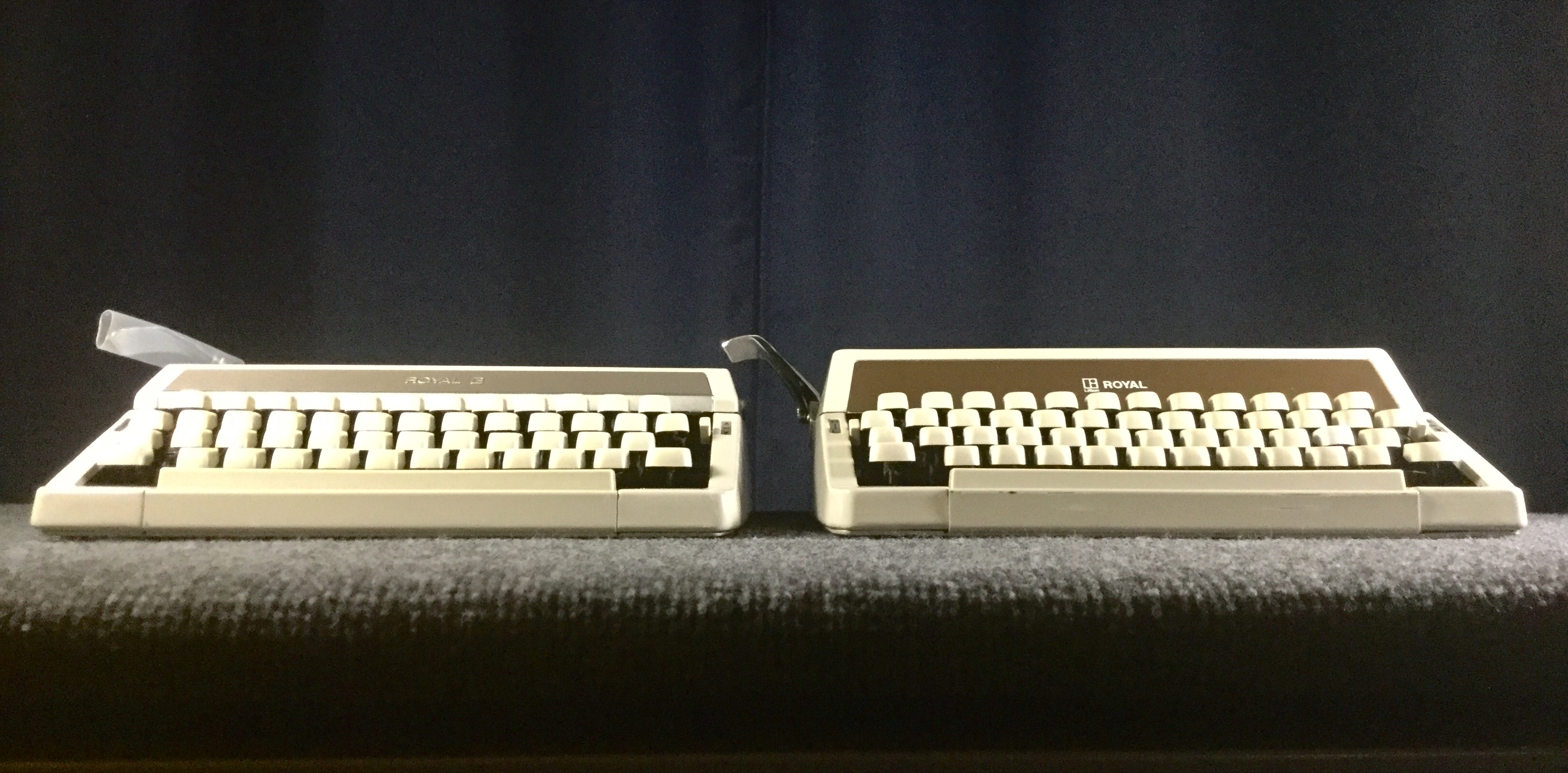
Royal Mercury Kissing Cousins
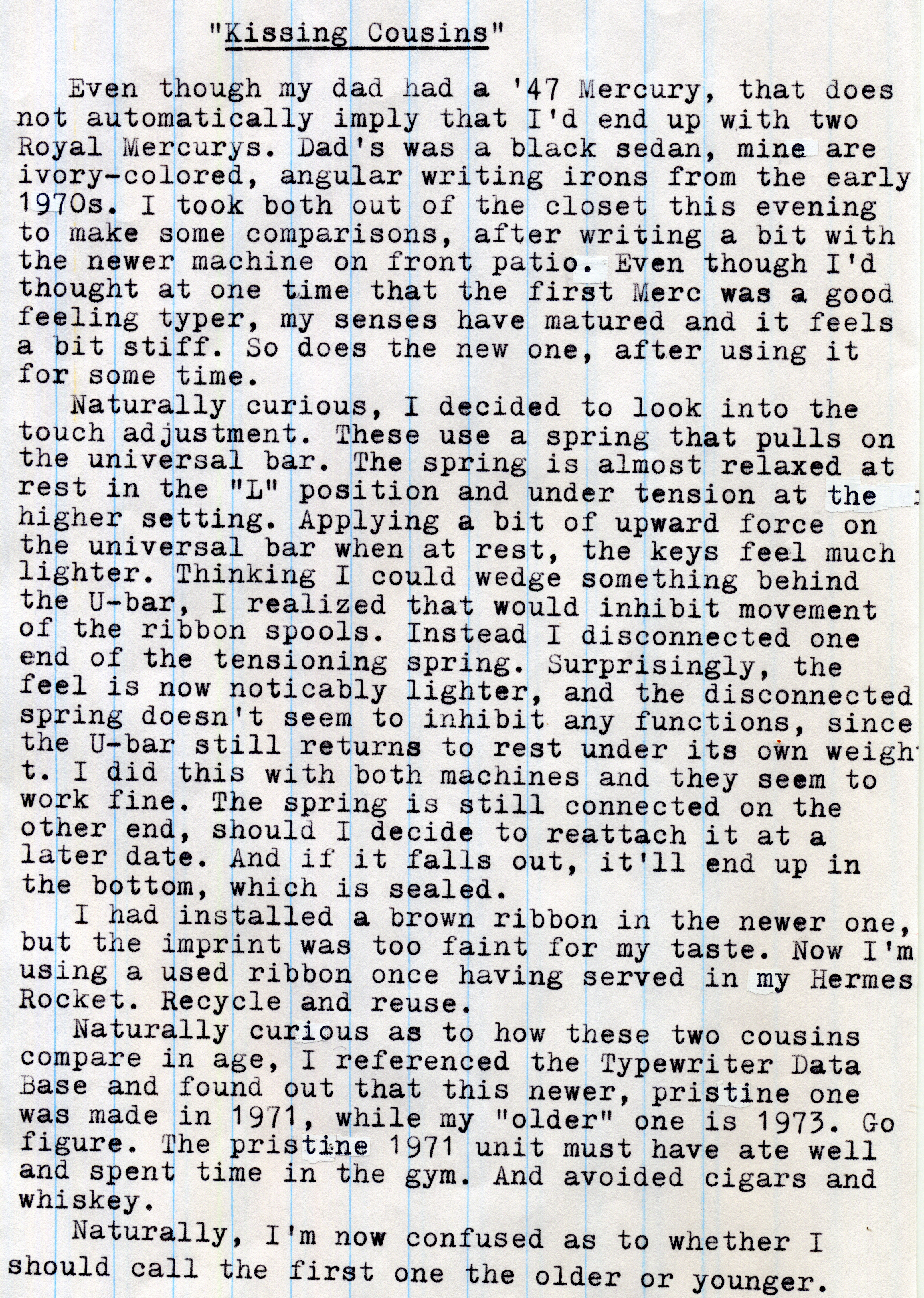
Typecast045
1971 versus 1973 Royal Mercury
Typecast046

Post-Script: I started this twin typer video on Sunday but was interrupted by Labor Day festivities; then had to do some maintenance on my main evaporative cooler unit (replacing the fan bushings and motor). It started out with me breaking out the 1973 Mercury that's been in my collection since the mid-aughts - my "alpha" machine, the first one I can with certainty claim to have acquired because I was getting the typewriter bug and wanted a small portable; which I haven't used very much in the last few years and it needed more attention than I'd realized. I ended up doing a thorough cleaning and degreasing on it, in the process of making the video.

Naturally, a comparison between both machines was in order. The 1971 model, new to me, had a bit easier touch; but now the other one feels better after the attention it's received.

These machines were designed the way they were designed. You shouldn't expect them to have the touch of a different, lighter, machine. But the trick I did to the touch adjustment, disconnecting the spring that attaches to the universal bar, did affect a noticeable change. Which reminds me that my Brother Charger 11, lacking a touch adjustment, always felt a bit lighter in touch than the Brother-made Webster XL747 that has a touch adjustment; perhaps it's due to this same issue, that at the lightest setting the touch system always gives more tension to the universal bar than without. I'll use both of these Mercs for a time and see if I'm happy with them this way.

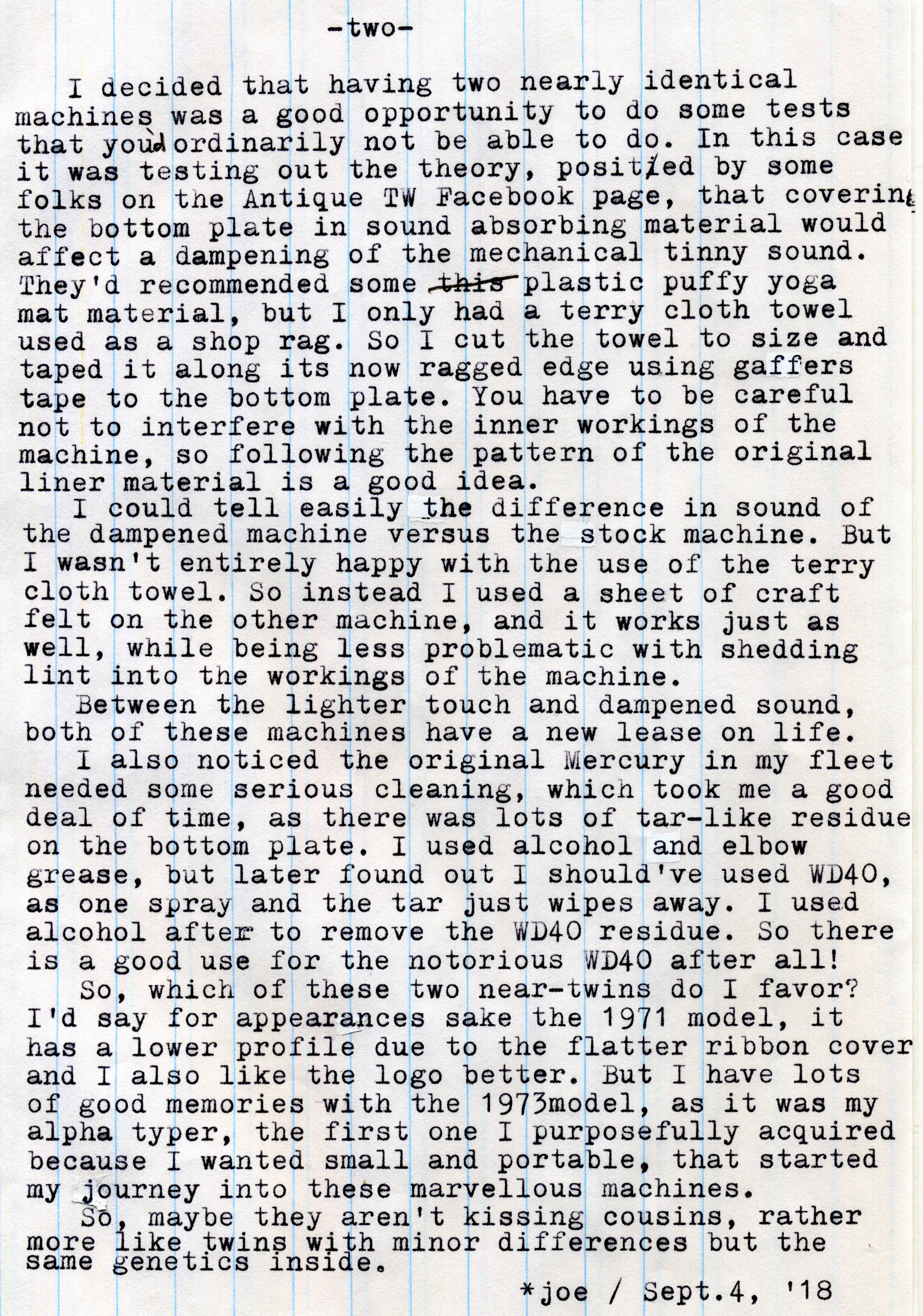
Since I now have these two nearly identical machines, I figured some experimentation was in order. The natural thing would be to compare sound-deadening methods. There has been some recent talk on the Facebook Antique Typewriter Group about using various materials in the bottom of the machine to absorb sound and prevent it from reverberating upward. With the 1973 model I used a terrycloth shop rag, cut to size and taped along its edges to the inside of the bottom panel using gaffers tape. Compared to the unaltered 1971 model I could notice a real difference, more in the muting of the bright metallic sounds, rather than an overall lowering of the volume. Then I used a sheet of craft felt in the bottom of the 1971 model and it seems to have about the same degree of sound deadening. Nothing dramatic, but a real improvement. Since this is an ongoing experiment and easily reversible, I can always take these out and try different materials in the future.

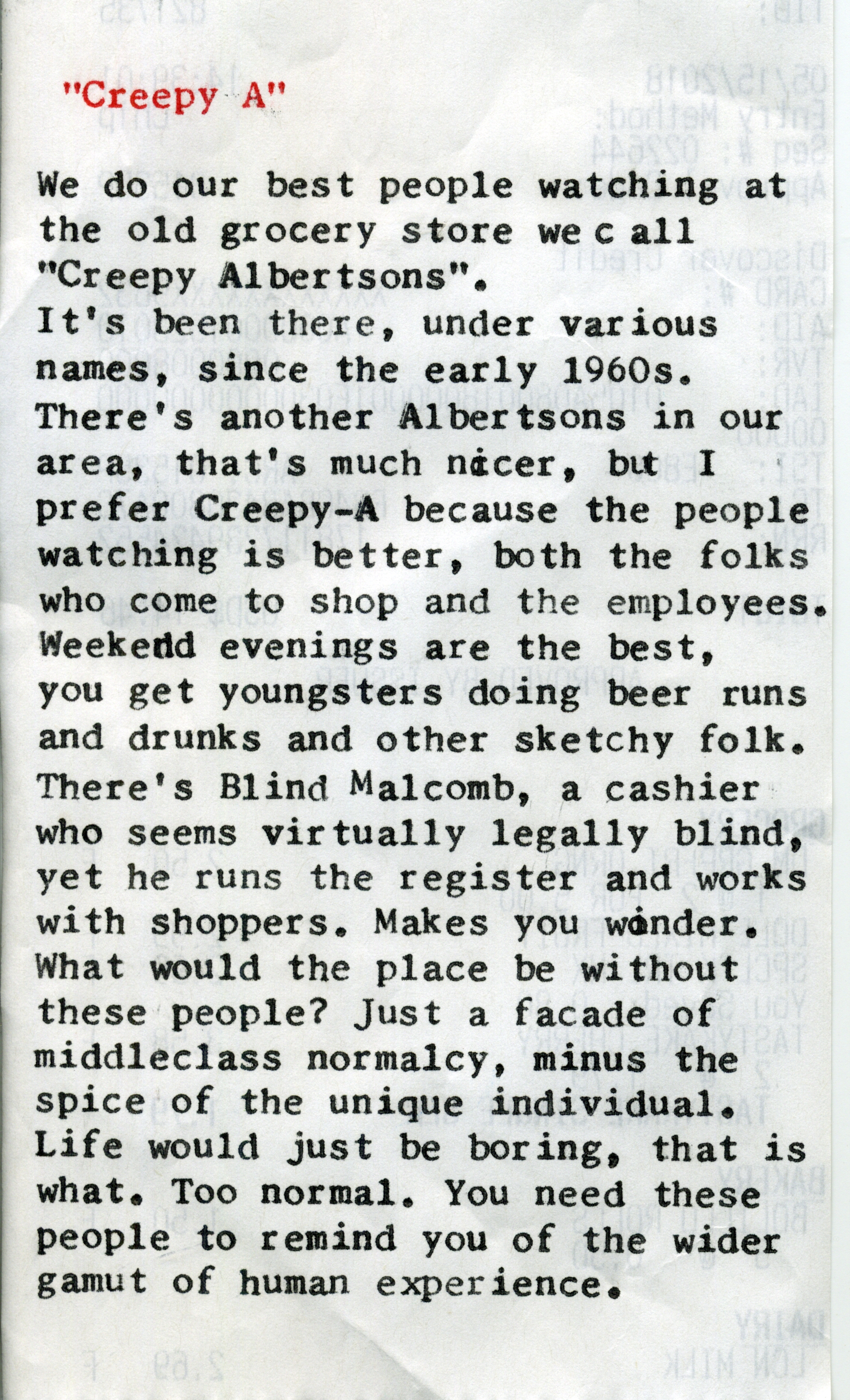
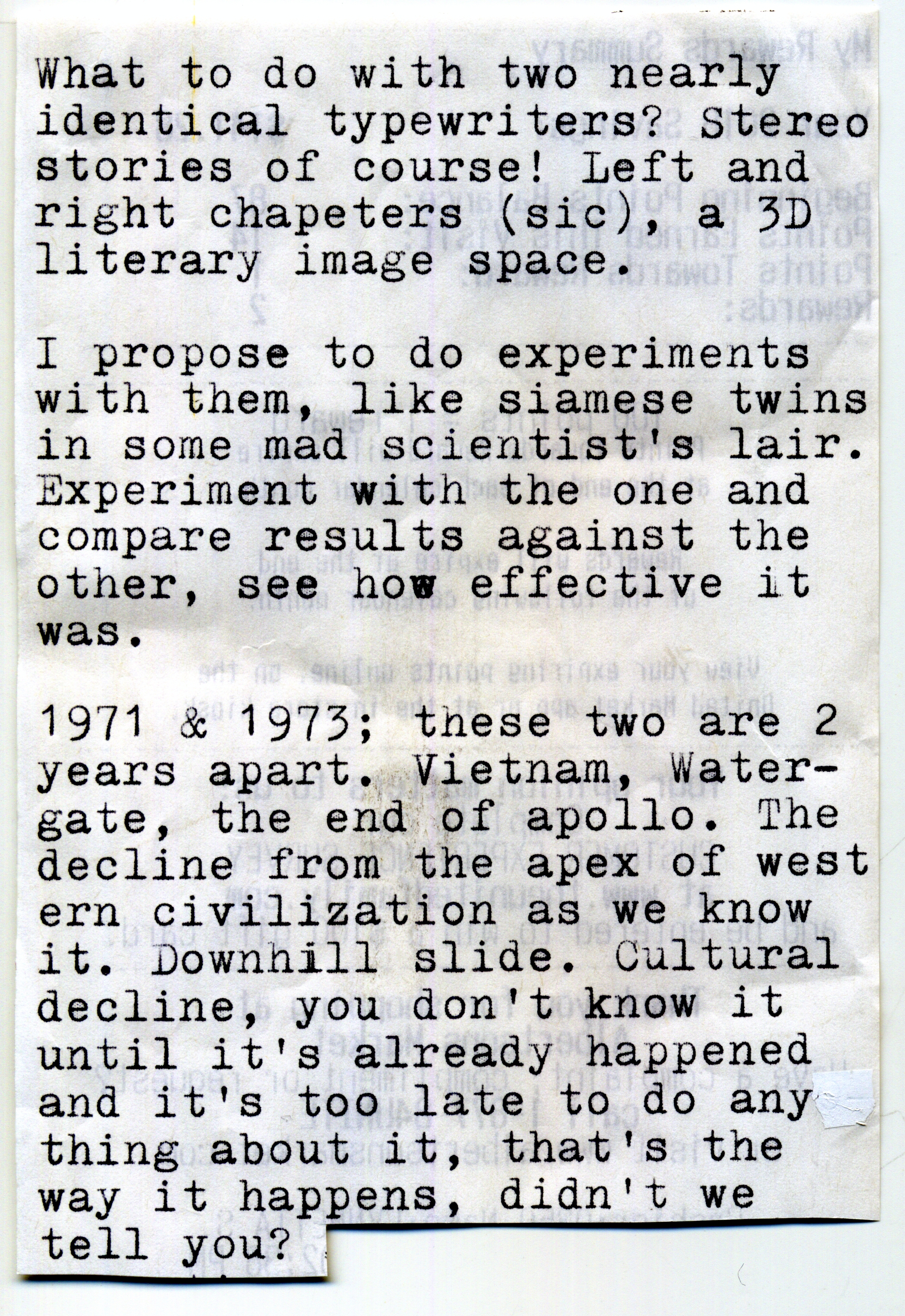
This is the essential tradeoff when you like ultra-portable machines: you have to be willing to accept less than ideal mechanics for lightweight and small. Hence the tinkering with trying to gain back something in the way of better touch and sound. But there's always the fact that these small machines are easy to grab and bang out a quick note on, like the other night when I typed this on the back of an Albertsons grocery store receipt:
Typecast047

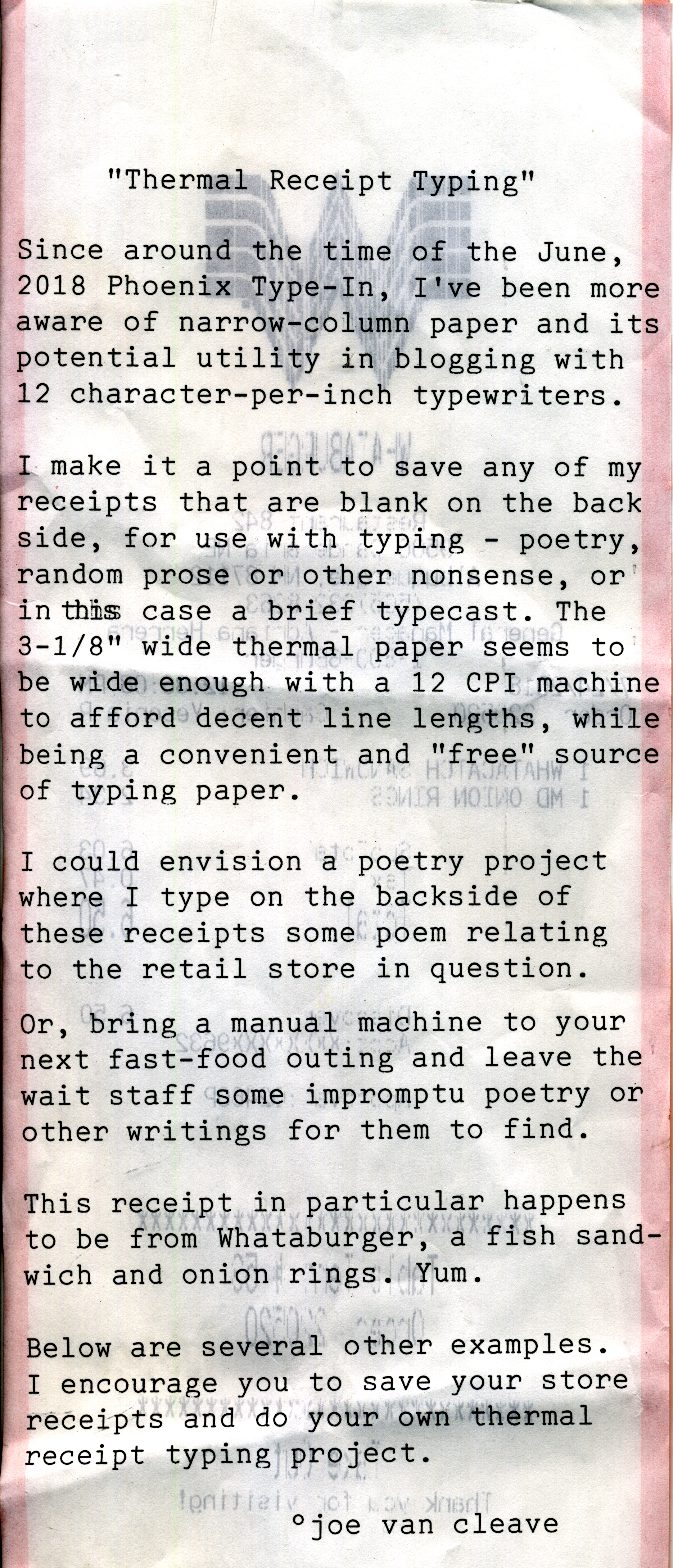
This is getting to be a habit, saving up 3-1/8" wide thermal-printed store receipts that are blank on the reverse side. Free typing paper, for short ditties or poems. Nothing profound or earth shattering, but highly convenient, promoting that stream-of-consciousness creativity that can, on occasion, produce surprising results.

Here's episode 130 of the Typewriter Video Series, on these two siblings.

Labels: , , , , ,

Wednesday, August 29, 2018

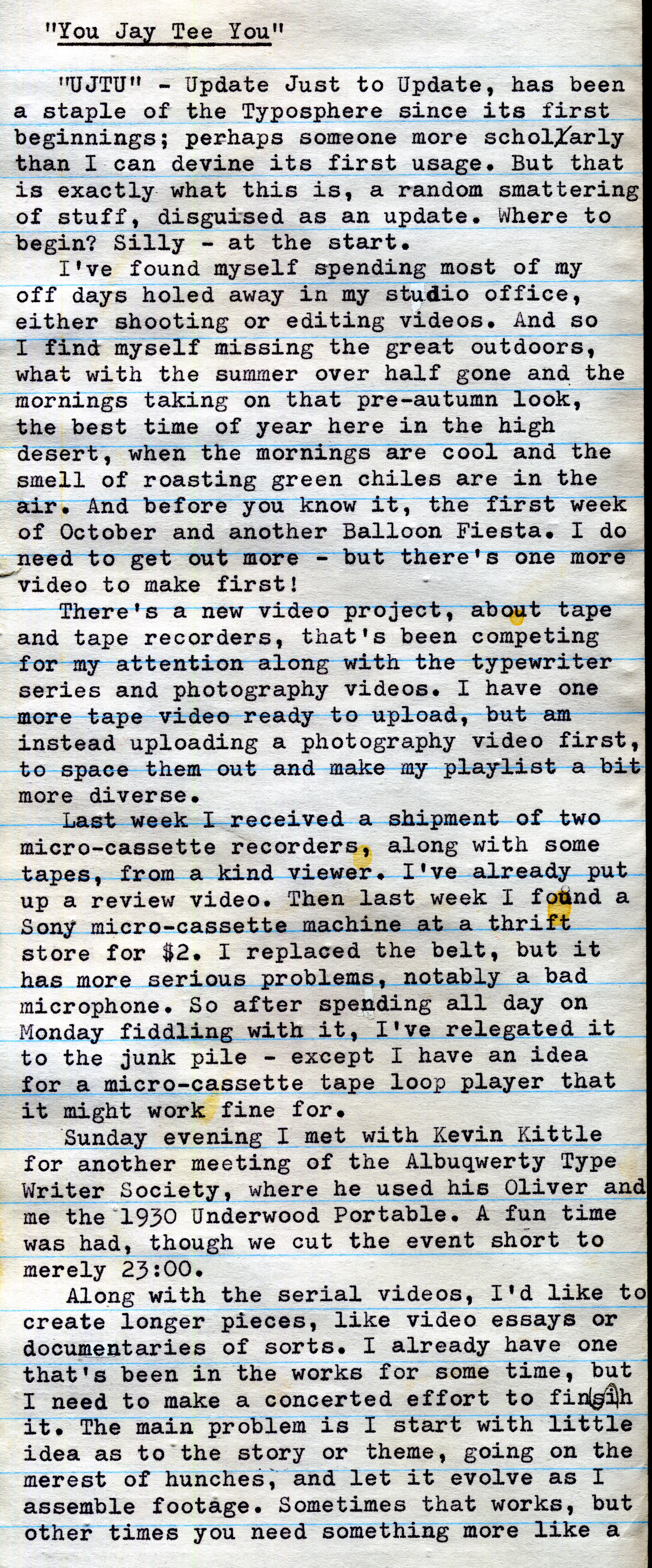
"You Jay Tee You"

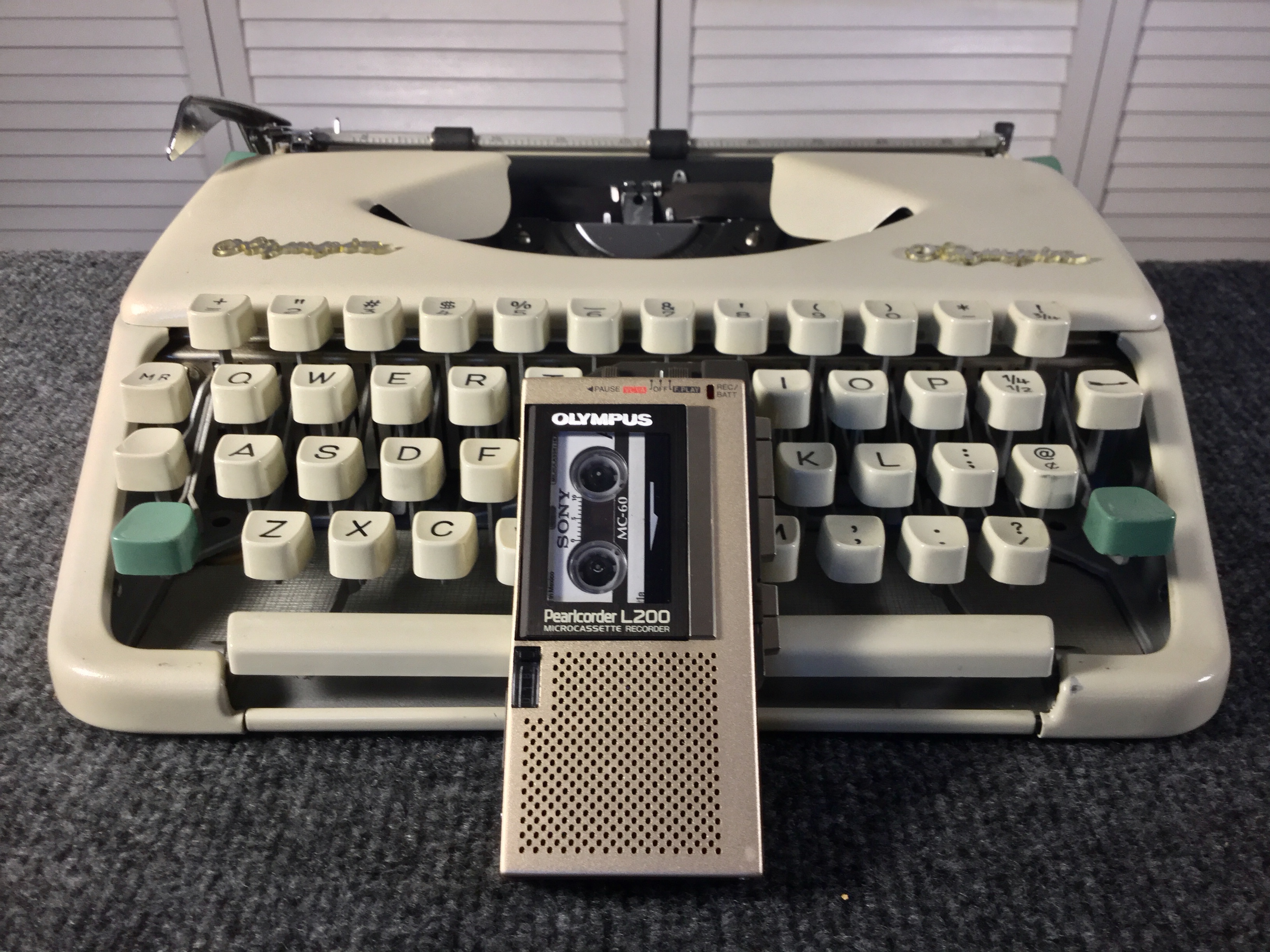
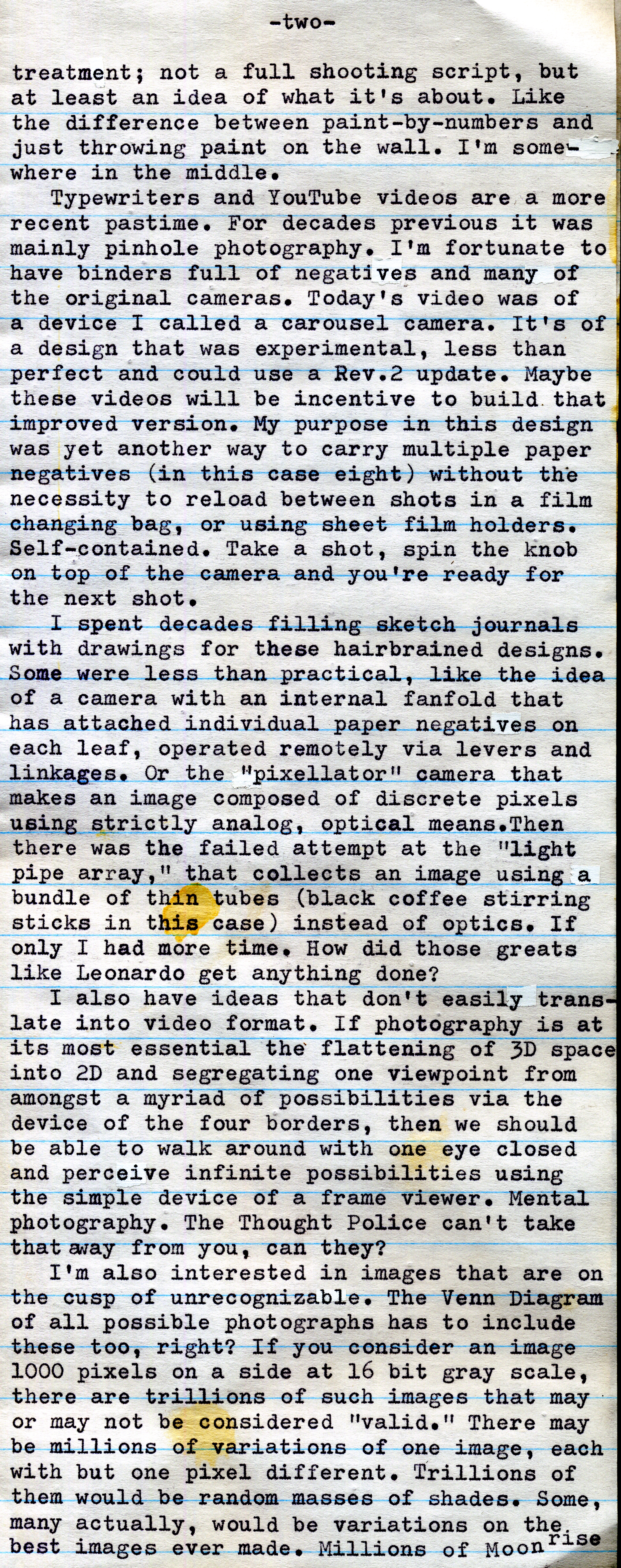
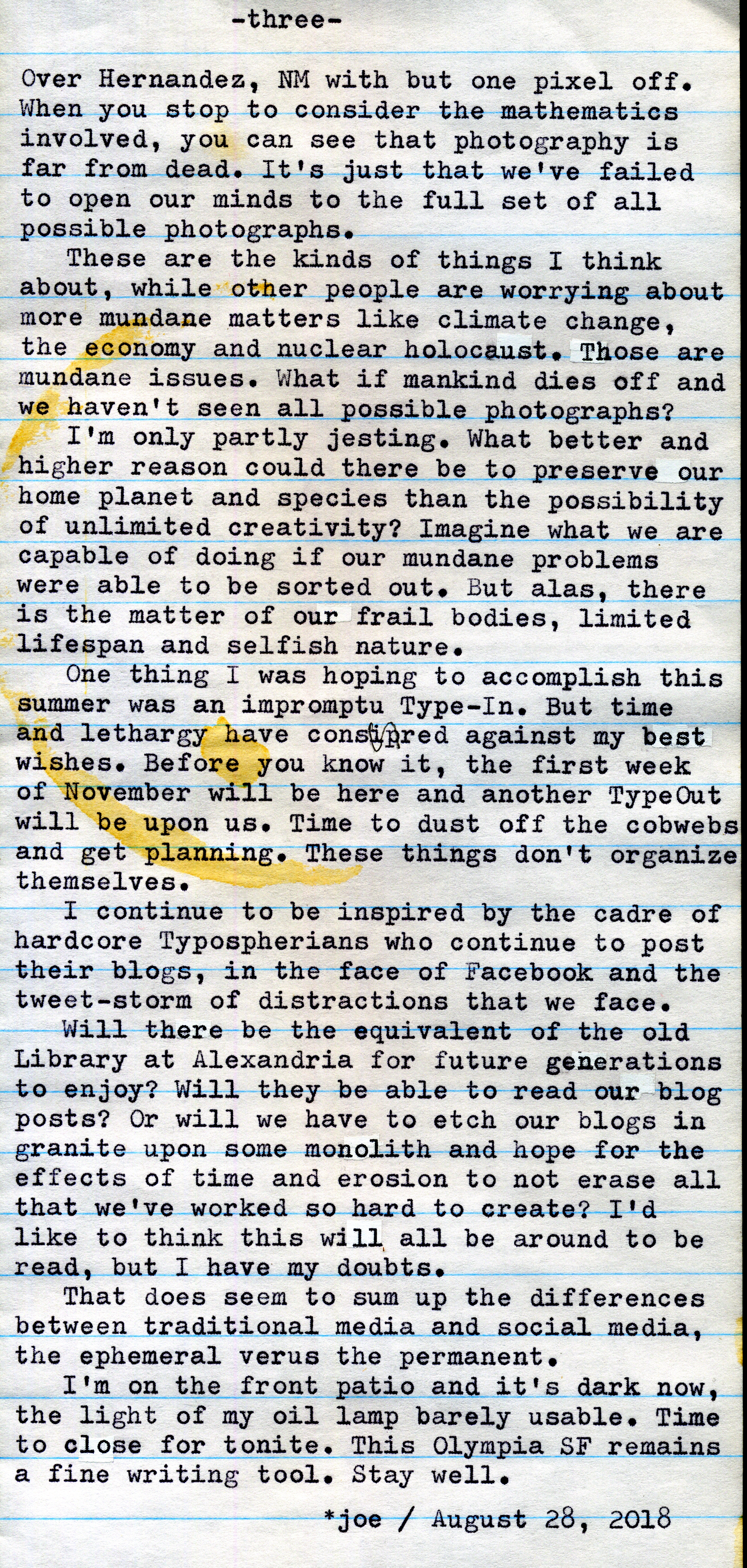
Olympia SF and Olympus Pearlcorder L200
Typecast042
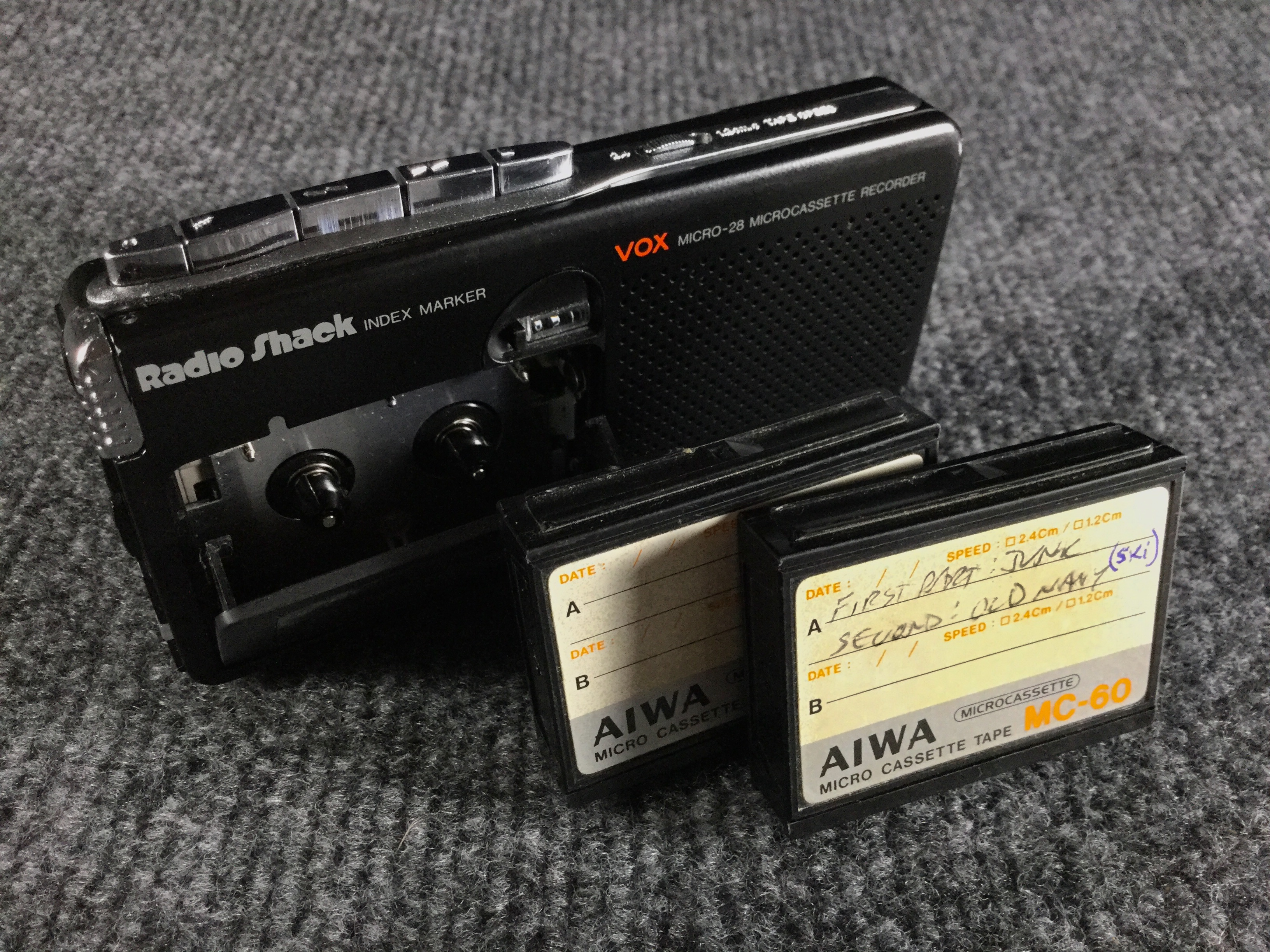
Micro-28 Recorder and Aiwa Tape
Typecast043
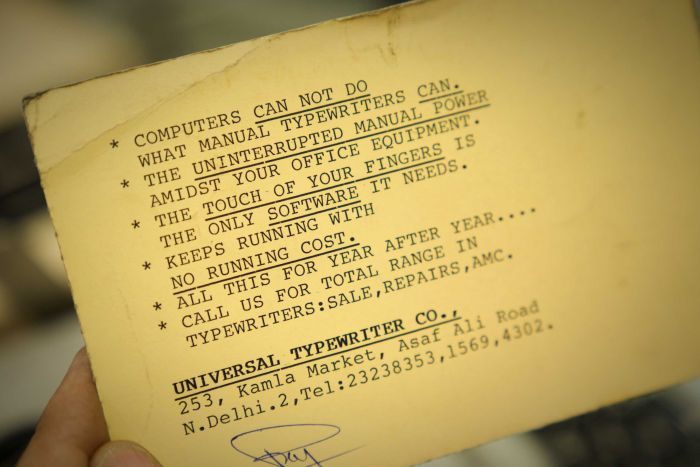
Universal Typewriter Co Slogans
Typecast044

Post-Script: I didn't mention that I've been collecting Albertsons grocery store receipts. Because the backsides are clear of any adverts, making for "free" (ignoring the cost of groceries) narrow-column typing paper for poetry and prose alike, particularly with the new old-stock silk ribbon in Adobe Rose, the Royal QDL, whose elite font works well for the 3-1/8" wide thermal paper.

Typecast033

Since this is a UJTU blog article, I should mention that I recently finished reading Daniel Ellsberg's The Doomsday Machine. While he's well known for having released the Pentagon Papers, a cache of documents relating to the Vietnam conflict, his original intention was to release a vast trove of documents concerning nuclear preparedness. But in the aftermath of the Pentagon Papers scandal he buried, then lost, that trove of documents. This new book is both a personal history and about what he was able to retrieve, via FOIA documents and through his own personal recollection of having worked as a Rand Corporation contractor in the early 1960s, with access to the highest level of nuclear secrets by any civilian outside government.

What I found troubling was in the early 1960s theater commanders had been given, since Eisenhower's time, permission to initiate nuclear weapons release independent of the President. It was only later that permissive action links (PALs) were developed to, among other reasons, restore control of such weapons back into the hands of civilian leadership.

Ellsberg makes a convincing argument that Hiroshima and Nagasaki were an inevitability, given that mass bombing of civilians was already an accepted reality, such as the massive fire bombings of Tokyo and other Japanese cities in the weeks and months previous. While he credits Britain with starting the policy of engaging civilians in wartime though aerial bombing, he ignores the German Zeppelin bombings of England in WWI, and the bombing of Guernica by Germany during the Spanish Civil War. There's also the long history of laying siege to cities and starving out whole civilian populations. War has never been nice, history shows.

His point is that what we came to know during the Cold War as nuclear terror was the result of policies intentionally created for the purpose of inflicting mass civilian casualties, already in effect since WWII prior to the nuclear age. The intention was already in place within the leadership of the Pentagon, he argues; what the reality of nuclear weapons did was enable that intention on a global scale. Certainly food for thought.

I suspect I already know what Ellsberg's critics will say, charging him with taking sides against his own country. However provocative his views, his is a revision to the conventional history of the nuclear age well worth considering.

Labels: , , , , ,

Wednesday, August 01, 2018

Thermal Receipt Typing

Typecast032

I've written previously in this blog about the old Albertsons grocery store down the hill from our neighborhood. It started out in the early 1960s as a Safeway and Skaggs drug store, then became Skaggs AlphaBeta, then AlphaBeta, then Furrs, then Albertsons, as the grocery store industry went through mergers and upheaval. In all of those changes, the store has remained its usual dingy self. There have been repeated attempts at renovation, but it was always done with the store still open, resulting in a perpetual sense of disorganization and clutter. Even today, it seems every month or so some seasonal change results in some category of grocery loses its shelf space and gets split asunder to the "end caps" of various aisles, making it hard to find things. Since many of the store's customers are older, you'd think it would be smart to keep things in the same location. But I keep shopping here because it's convenient, and I enjoy observing the clients and employees. A people watcher's paradise, for certain.

Typecast033

Besides the grocery store, the local library also gives receipts on 3-1/8" wide thermal paper. This one is from the Tony Hillerman library, formerly the Wyoming Branch, behind Hoffmantown Shopping Center in northeast Albuquerque. I've visited this library since I was a kid. Hang out at the library in the hot summer months (I was on foot or bicycle), with its cool air conditioning and cold drinking fountain, then walk across the street to Hoffmantown and have lunch at the Campbell Pharmacy. Conveniently, the book receipt gives room for a brief book review, this being the auto-biography of Michael Moore, which I enjoyed more than I expected. It also helps the aesthetics to have the receipt coffee-stained and wrinkled.

Typecast034

Since all these receipt were the same 3-1/8" width, it was easy to scan, keeping the left edges even on the flatbed. I like the way the front sides of the receipts slightly show through the thin paper.
Typecast via Olympia report electronic. Other receipts typed via Royal QDL (aka Adobe Rose).

Labels: , , , , , , ,

Tuesday, June 12, 2018

Albuqwerty Type Writer Society Meeting

Albuqwerty Type Writer Society Notes

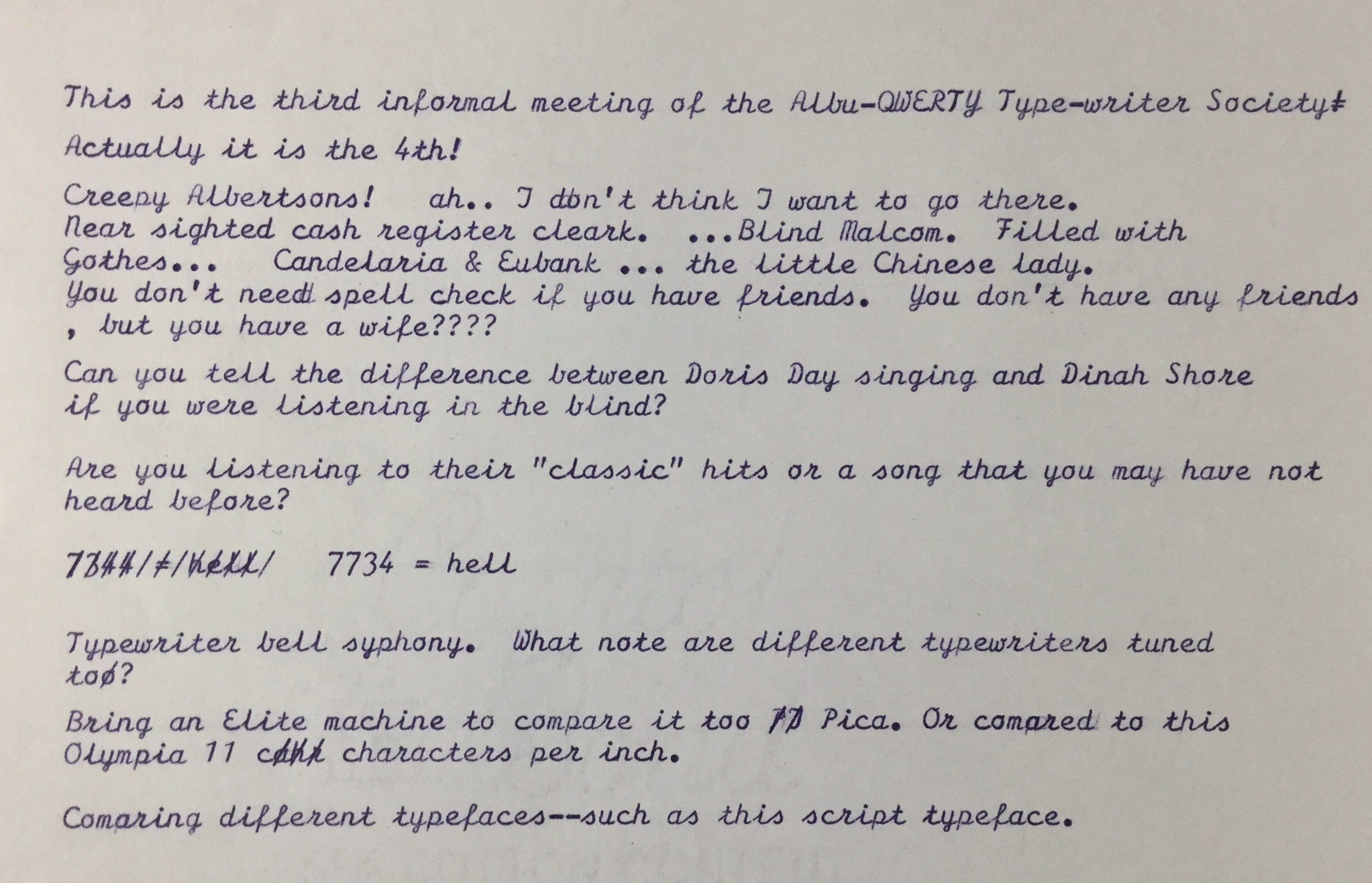
You can't call these meeting minutes. More like rambling, random typings. Scraps salvaged from the aether, as Kevin and I, the two founding (and thus far only) members of the Albuqwerty Type Writer Society have spent a recent evening together on the front porch of his Neo-Victorian mansion, nestled in the north Rio Grande valley of Albuquerque; typewriters, scotch and cigars at hand as we discuss typewriters and whatever else comes to mind.

We have an interesting relationship. Both our wives have the same first name. We both like antique mechanical objects, especially typewriters; although Kevin also has considerable experience with British motor cars. We like geeking-out on these things, while at the same time we seem to avoid controversial topics such as politics, sports and religion. Perhaps typewriters are our religion? Well, I think we both have enough experience with friendships to know there's a certain line you don't want to cross, for the sake of the friendship.

We've met like this on a number of occasions, and it usually follows a similar pattern. We chit-chat, we break out a typewriter or three, we discuss issues we're having, or acquiring new ribbons, or restoring platens - or a plethora of related topics. Then the drink and cigars follow, with more of the same, into the wee hours of the morning. We'll both be in conversation, typewriters at the ready. One of us will be talking intently, the other listening, when suddenly the listener will attack the keyboard and bash out some crucial thought worthy of preservation. It's usually something random, but deemed important enough at the time to document. All the while listening to the other talk. And then the roles will reverse.

We will, over time, swap machines, trying out this one then that one, giving our opinion as to its feel and action. Our typed comments will become a mixture of both our thoughts, an amalgam.

One of these recent evenings we starting talking about forming a local organization dedicated to typewriters. We eventually came up with this name, and Kevin's working on a logo. It's not a formal organization, with Robert's Rule of Order and all that falderal. Just a name to put upon a local community of adepts. Well, I use the term "community" loosely, since thus far there's only us two. But perhaps we will formalize the thing and publicize it, seeking more members. But thus far it's a club of two. Revolutions have been started with less.

The typing shown above is but one example from our most recent meeting. I'd been talking to Kevin about the old grocery store in our neighborhood we call "Creepy Albertsons" (to distinguish it from the newer Albertsons) and the entertainment I derive from late-night visits. He was skilled enough to capture some of the details of the conversation.

Kevin had been playing 78s on his Zenith phonograph when he played Dinah Shore then Doris Day records back-to-back. It was hard to distinguish their voices after all these years.

Then we talked about what key typewriter bells might be tuned to; and if one should use a digital guitar tuner to determine each one's key.

These are the kinds of things that result from our meetings. Nothing earth-shattering. No solutions for world hunger or the ecology. Just good times spent together bonding over common interests.

In the subsequent video I made about our gathering (embedded link below) I discussed the importance of community to our passion with typewriters. Iron sharpens iron, so goes the old saw. Each person brings something new to the discussion, a unique perspective or skill. We all learn from each other. And it's wonderful to fellowship with like-minded individuals.

I'd encourage you, if you're a typewriter aficionado, to seek out others in your local area. Create a club or loose-knit community. Organize Type-Ins. Make you voices (and type bars) heard.

Here's the video mentioned above:

Labels: , , , , ,

Wednesday, April 13, 2016

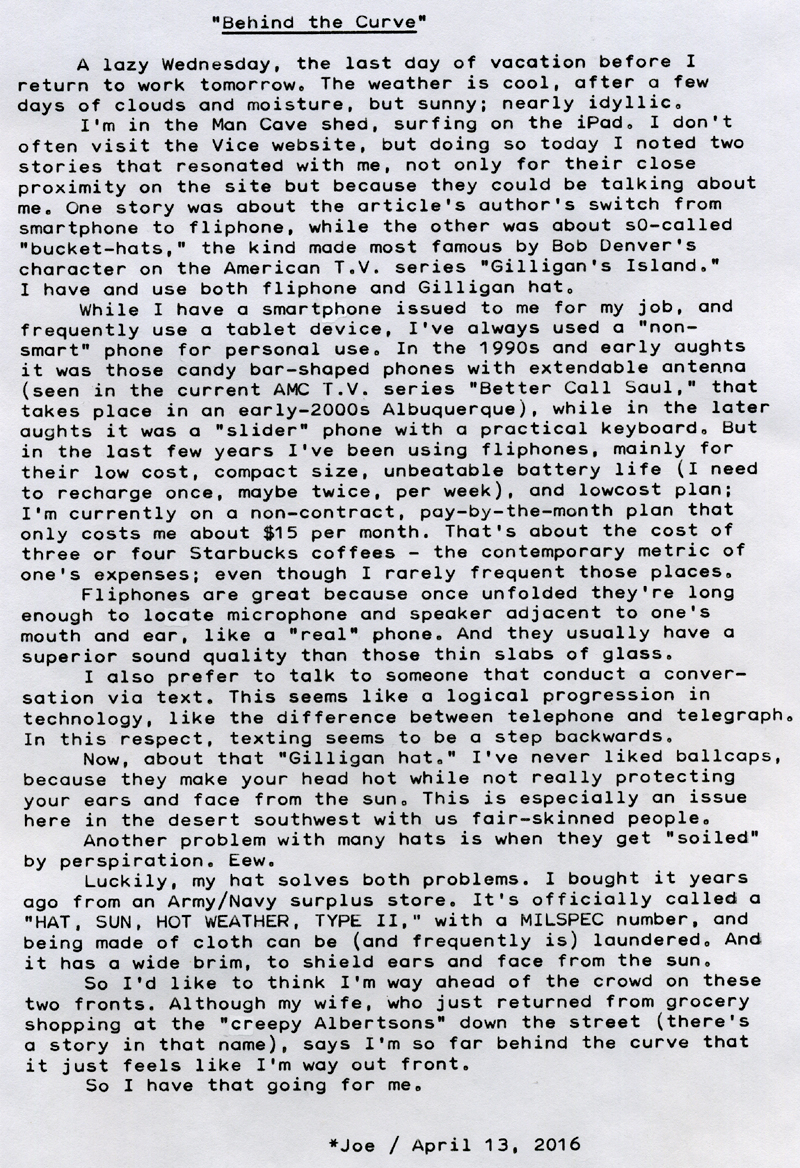
Behind the Curve

DSCF4873a
Typecast160

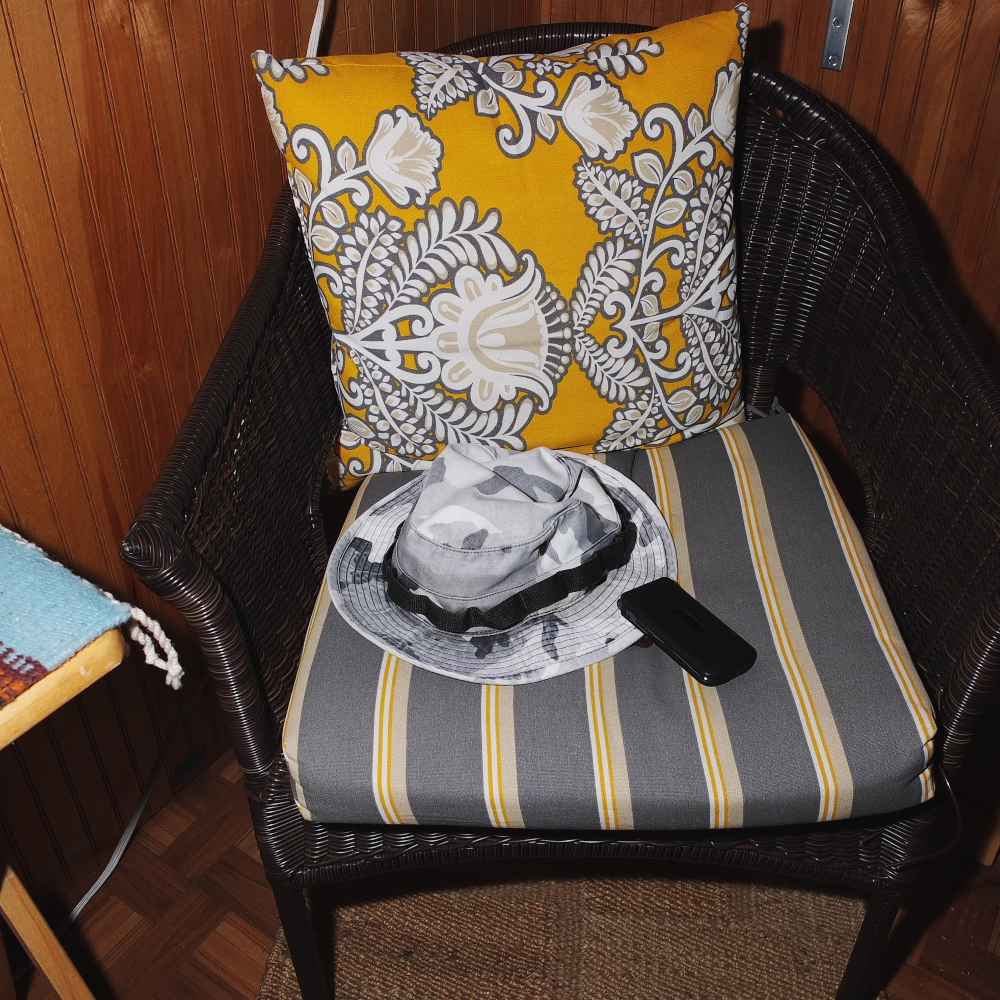
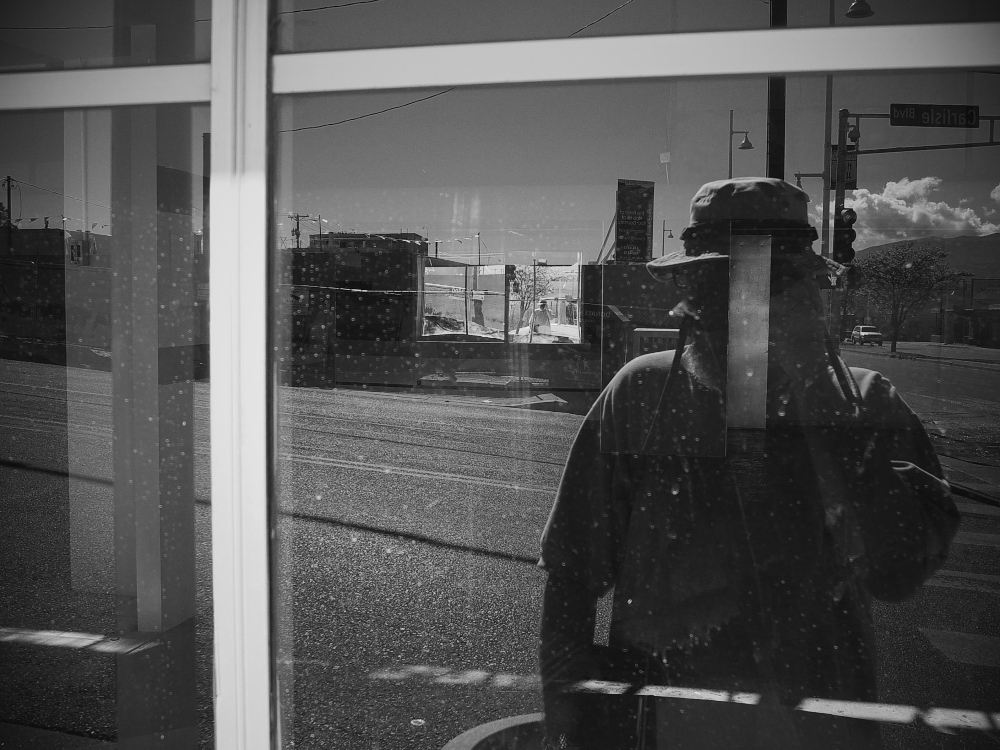
Post-Script: Bonus image of me wearing my sun hat:

DSCF4852a

The story of "Creepy Albertsons" is not about me necessarily disliking that particular chain of American grocery store. It's that this particular store has consistently lacked the upgrades necessary to keep it modern in appearance, while the staff who work the store are an interesting assortment of personalities, as are many of the patrons (like me, for example). The clerks who man the checkout lanes are especially unique and a story unto themselves. For example, there's the guy we call Blind Malcolm, who doesn't appear to wear glasses or contact lenses but has to hold any printed material to within inches of his face to see. He's also one of the slower clerks on staff, along with a short Asian lady, both of whose lanes we try to avoid if possible. This morning, my wife informed me that she finally found someone whose lane was slower than Blind Malcolm's! A new record in customer inattentiveness was set!

I recall late at night on a weekend, some years ago, the only customers in the store besides me were all dressed as goths. So anytime I'm bored and want some cheap entertainment, a short trip to Creepy Albertsons is in order.

This sounds like a first world problem; I should be grateful there are stores aplenty with shelves full of foodstuffs.

Photo via Fujifilm X10, typecast via Hermes 3000.

Errata: Fifth paragraph, "...that conduct..." should read "...than conduct..."

Labels: , , , , ,