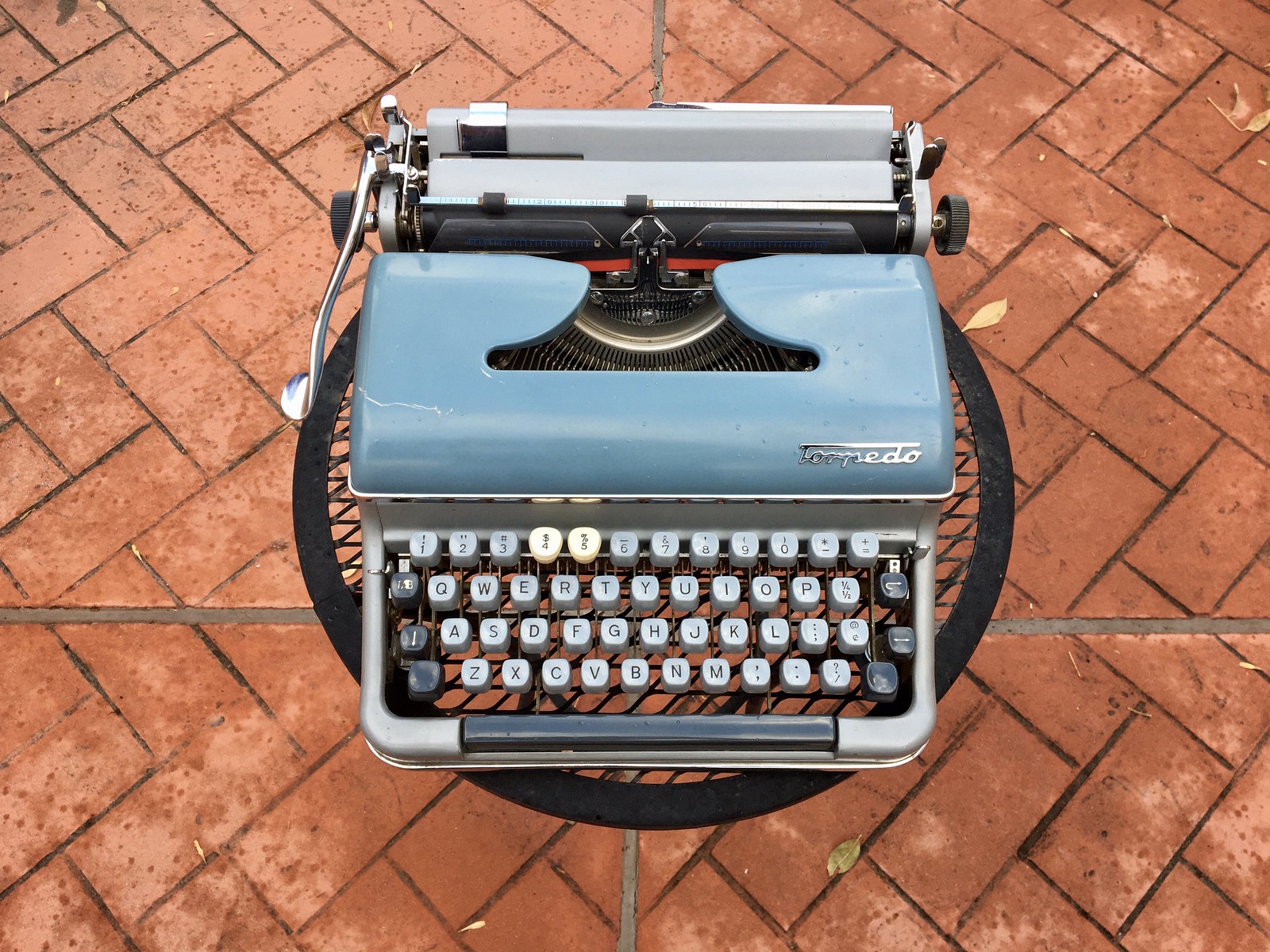
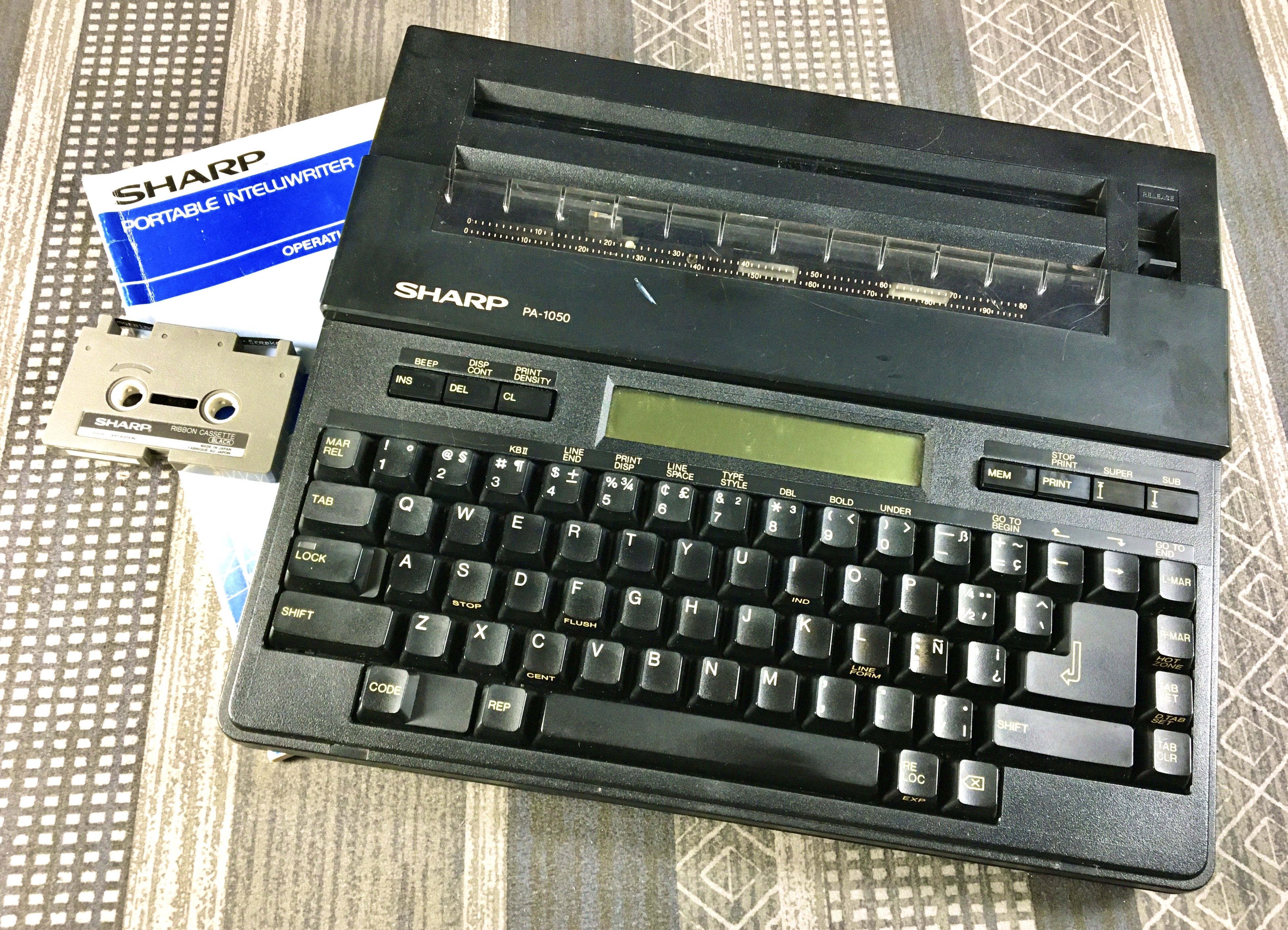
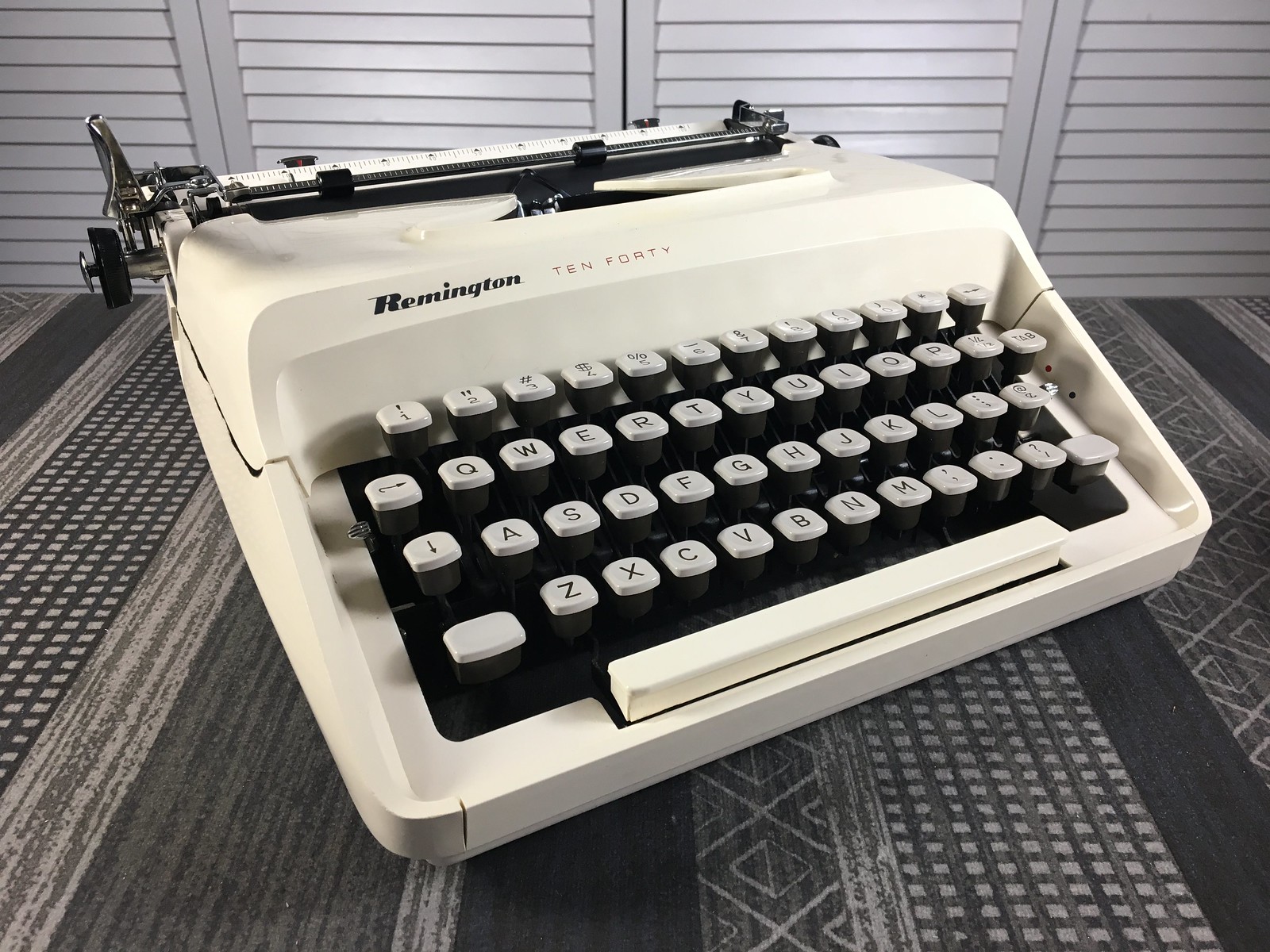
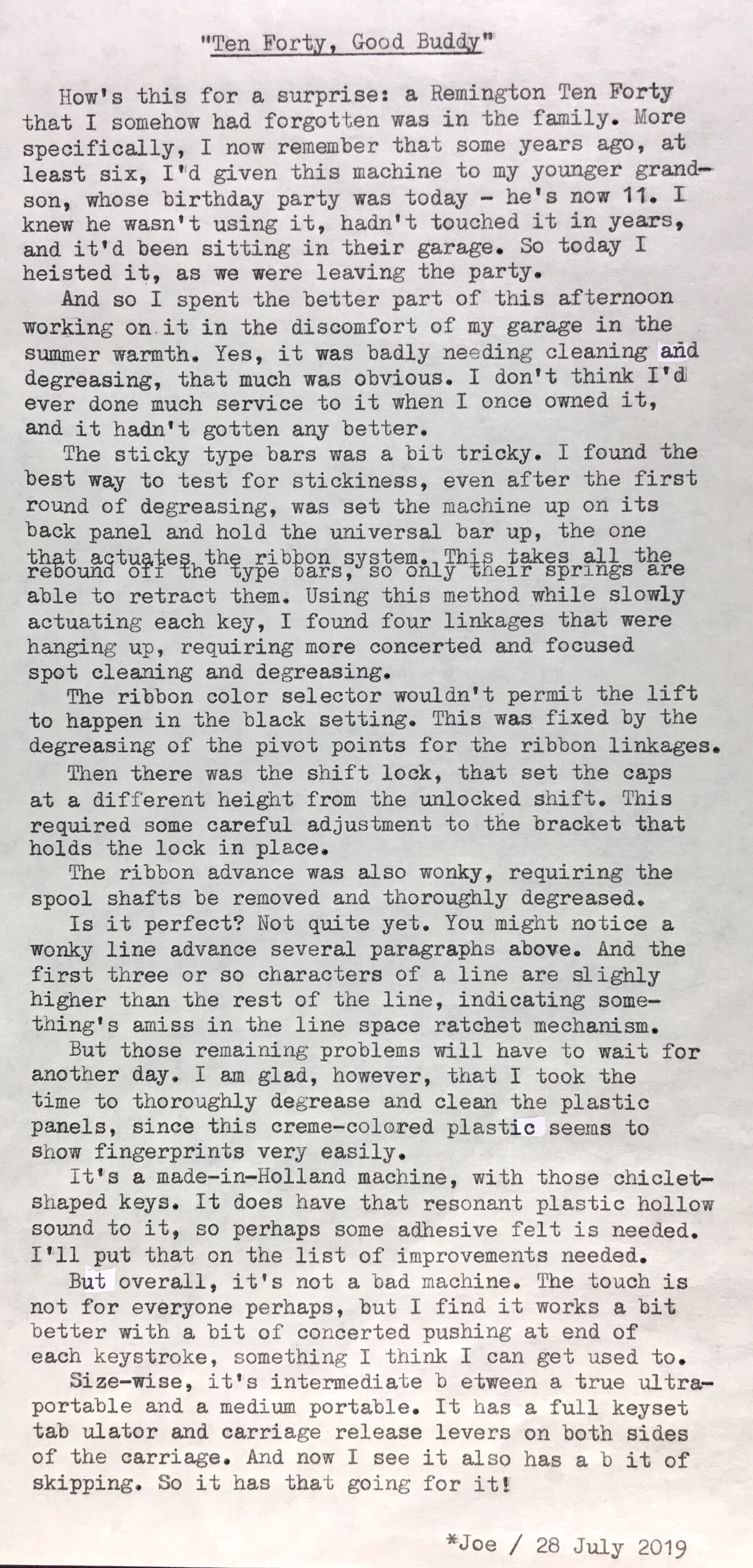
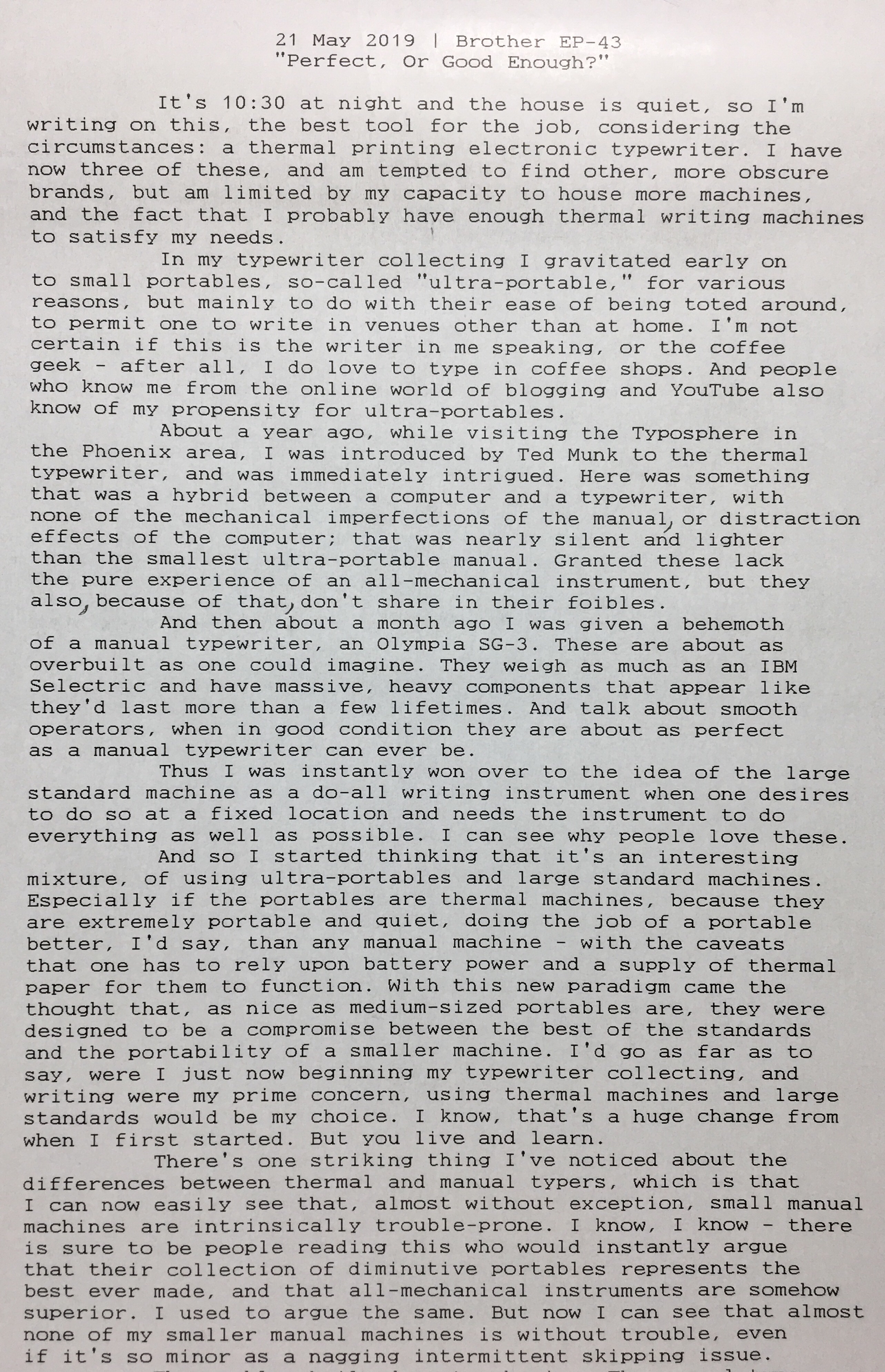
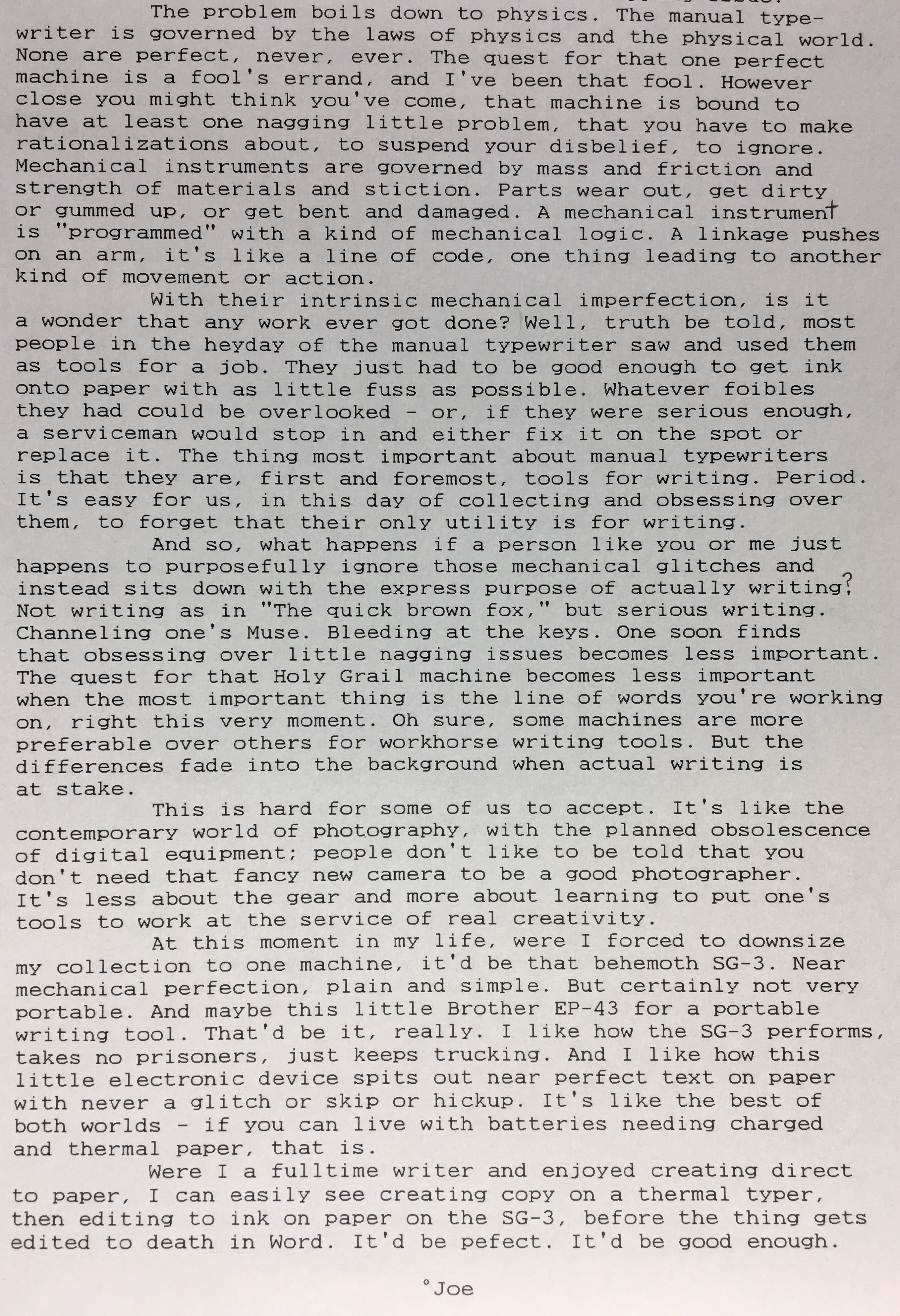
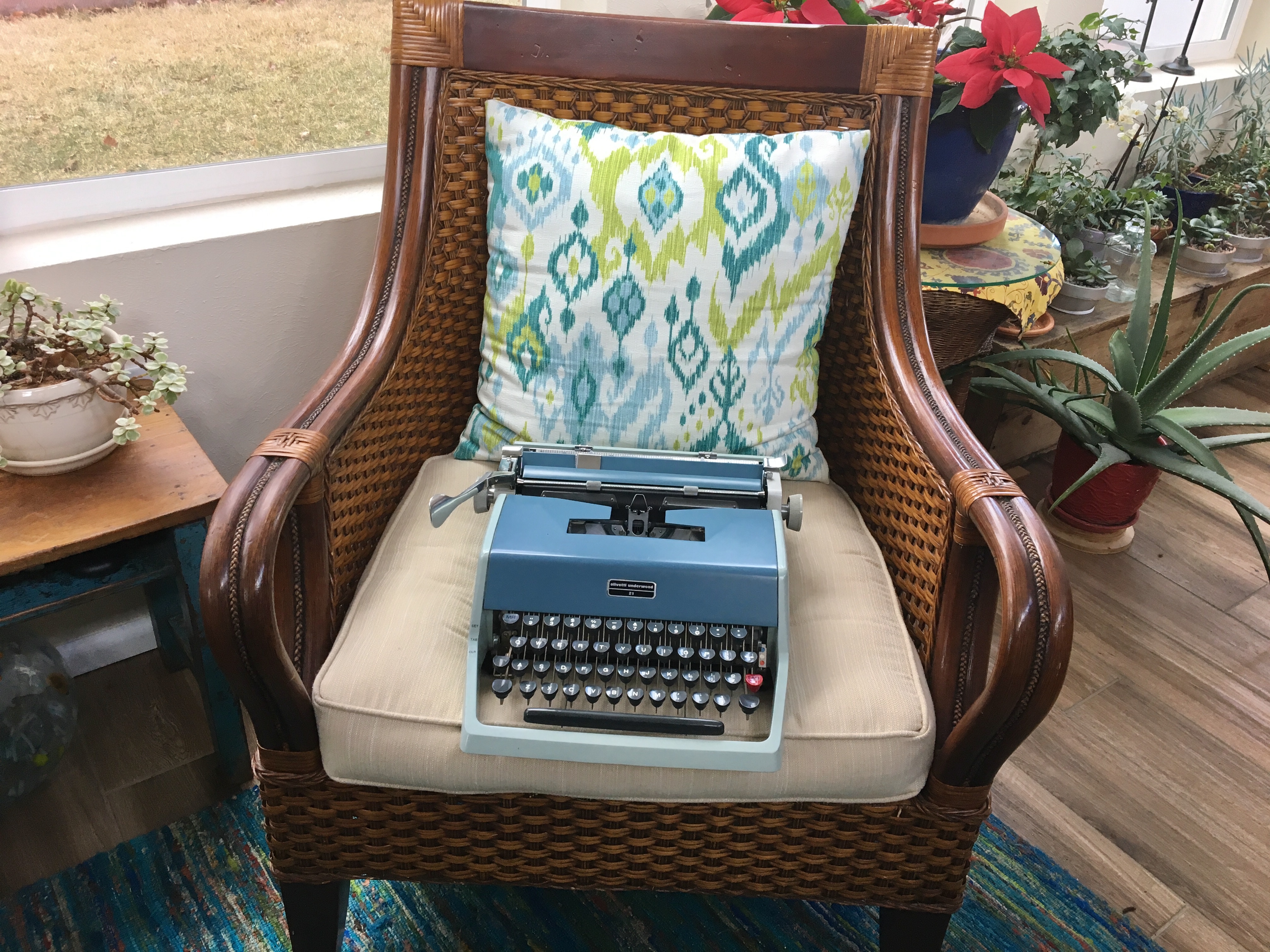
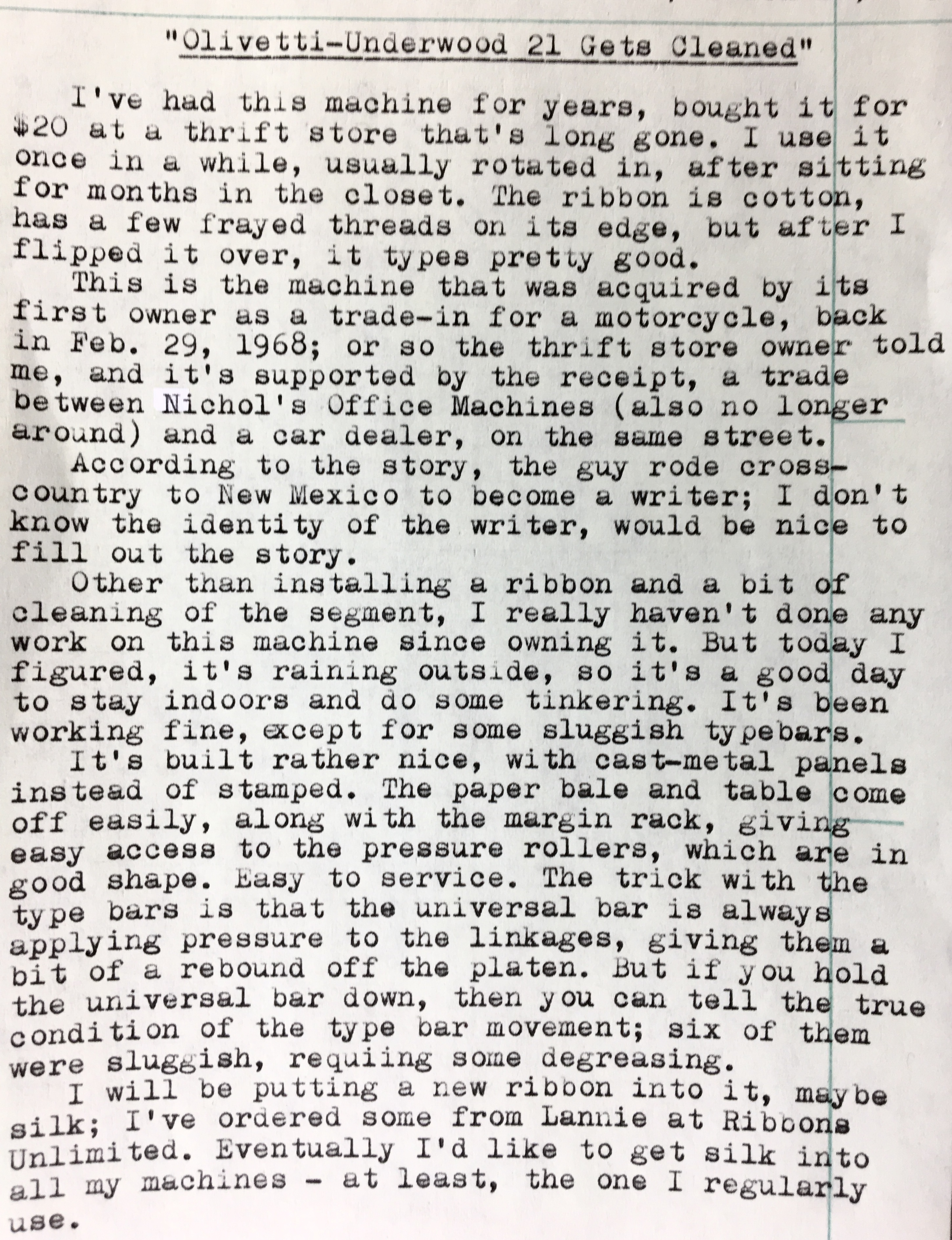
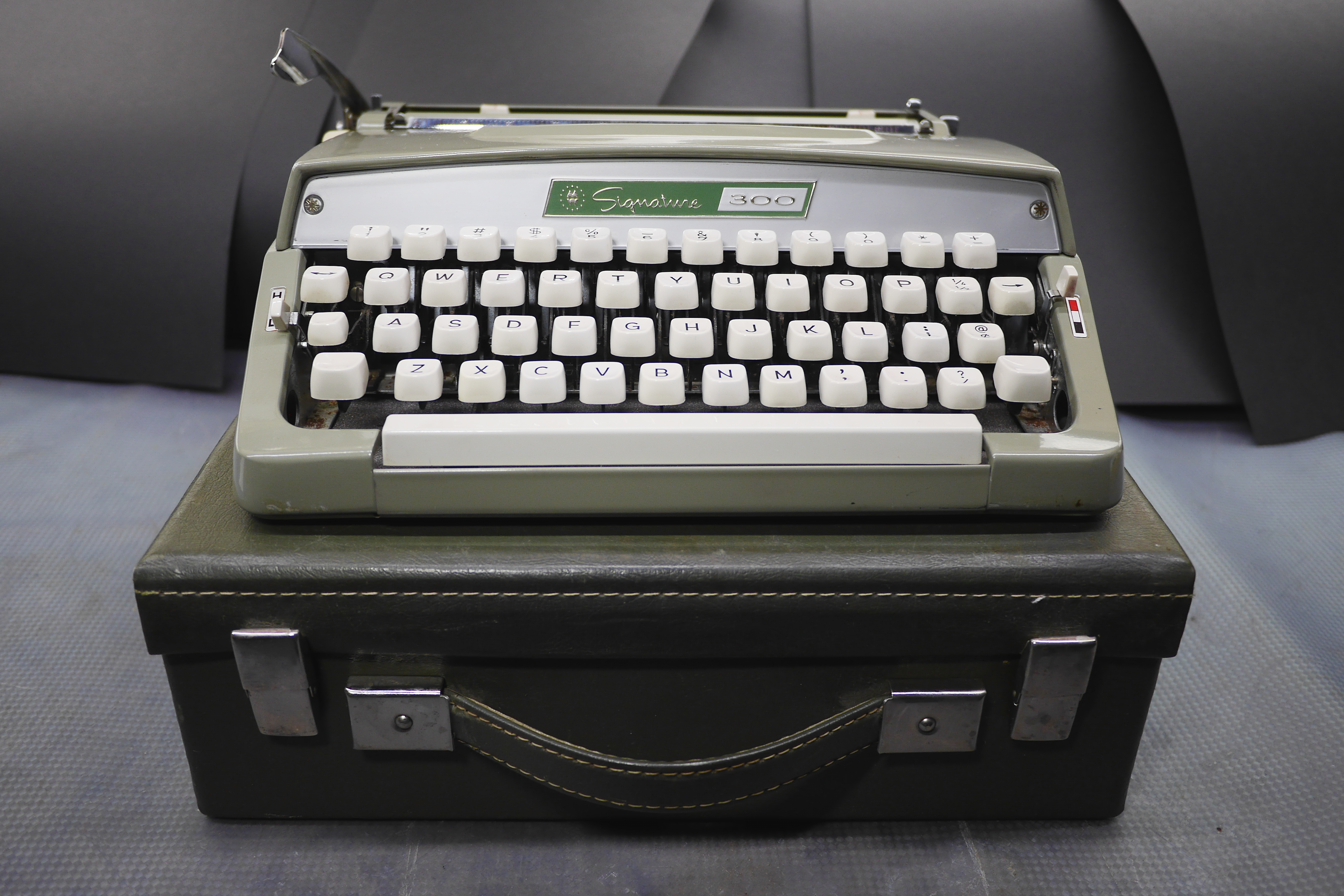
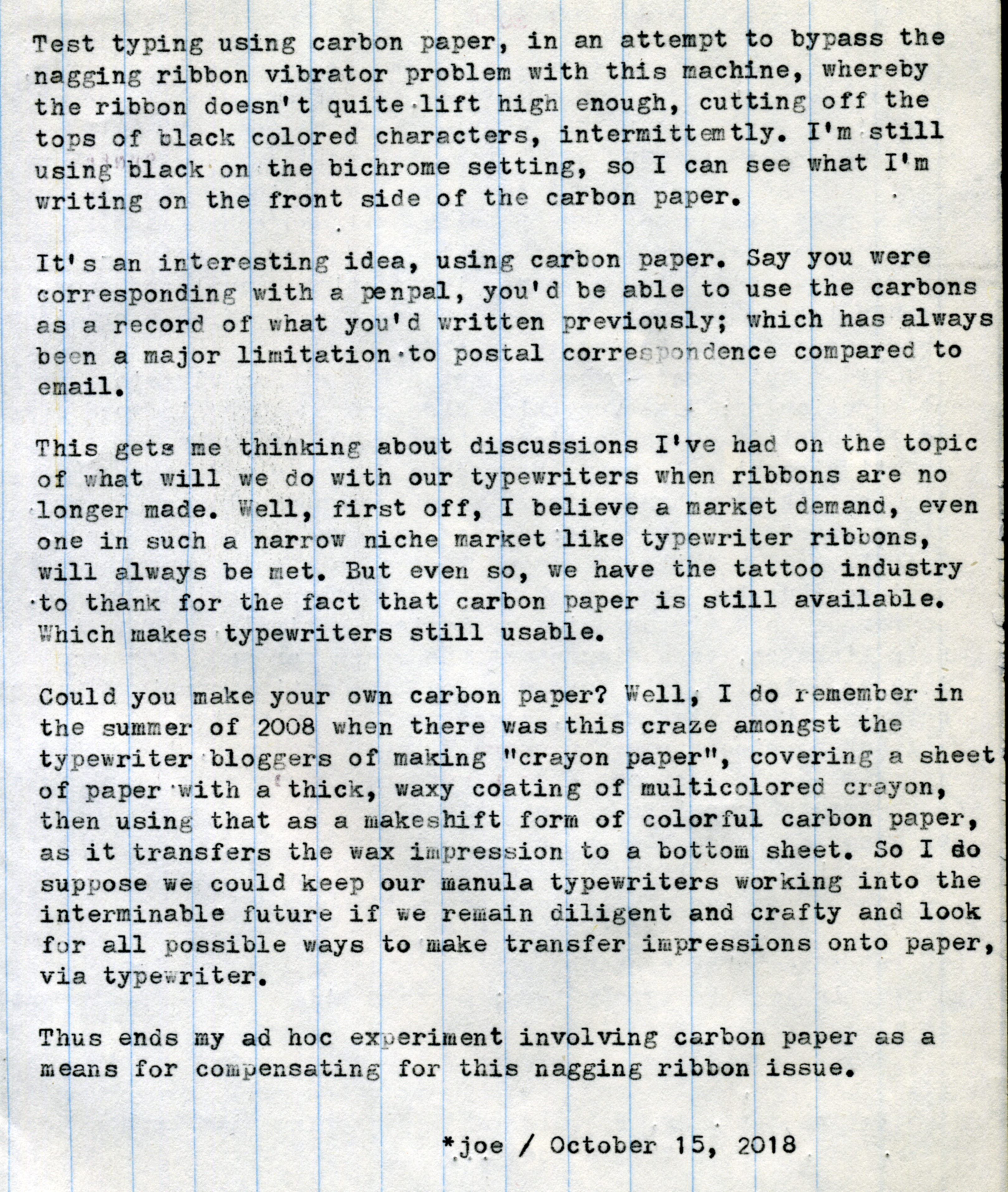
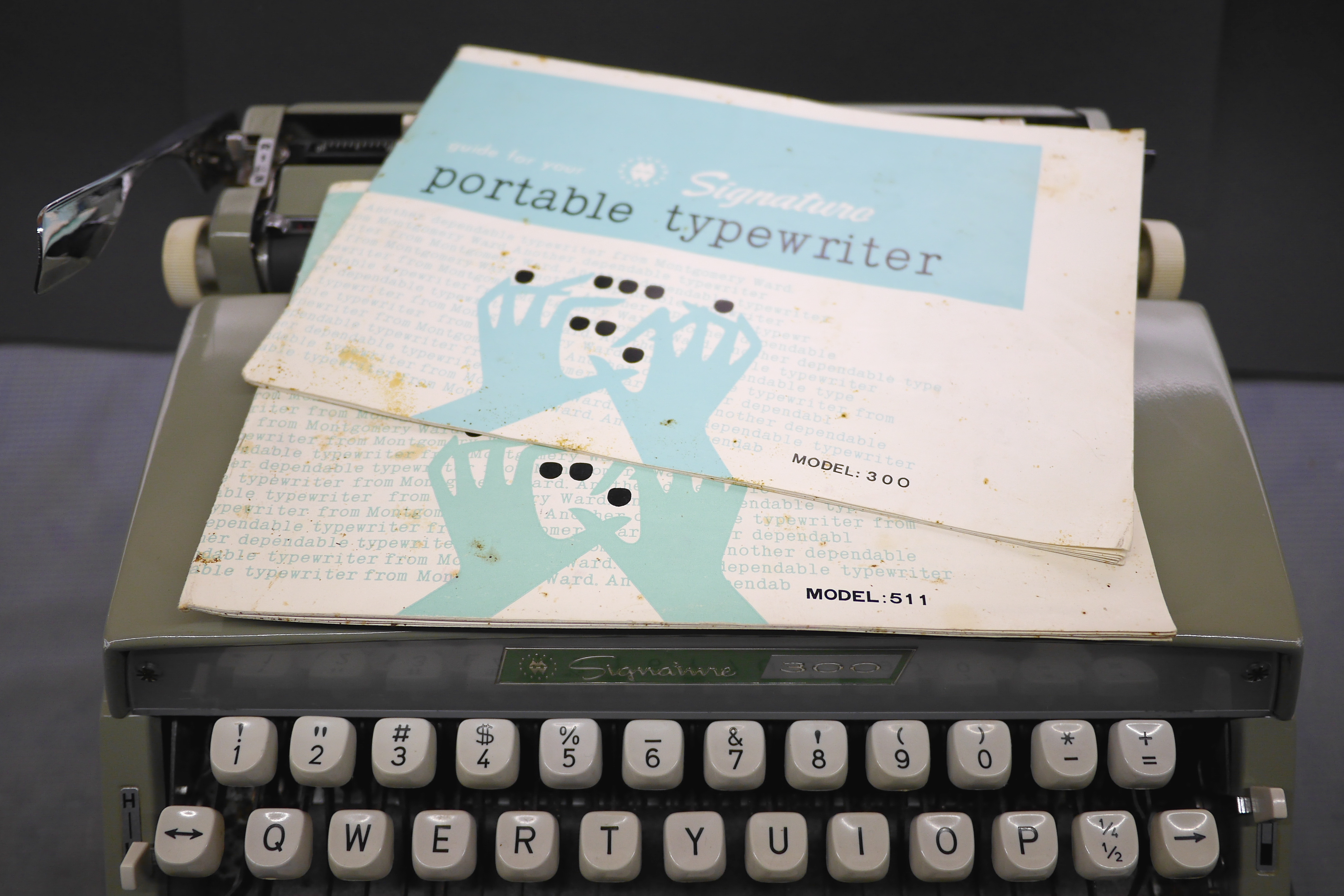
If this wasn't intended as a gift (and if my wife didn't object) I might keep it. No, they're not fancy or elegant, nor do they exude solidity, but they simply work well. Exemplars of practicality. I hope its recipient enjoys it.
I worked on this machine sometime last year, when Kevin owned it, and struggled then with the skipping issues. It also was making a clanking sound, which we thought was something interfering with the bottom plate. There was also some evidence of this because of a spot on the plate with scratches. I tried padding it with foam, then tried shimming the bottom plate with washers, but it didn't really help much. Actually going without the plate ends up being quieter, but then you have the problems involved with interference with the mechanics underneath, unless it's sitting on an absolutely flat surface; forget lap-typing without the bottom cover.
There's an extension arm on the escapement rocker that's operated by the type linkages via an adjustable cam, one of the few adjustments on this machine. But gaining access is difficult, you need a special angled driver and adjustment tool. I've been tinkering with this and can get the skipping to become less frequent, but not go away entirely. Then I tried crimping a thin brass tube, a kind of shim, on the extension arm of the rocker, and that actually helped a whole lot, also making the touch a bit nicer -- but alas the brass piece slipped and I was back where I started. Finally I just put a piece of heat shrink on the arm and it seems to be working good enough for now; I only had one skip during this piece.
There's another arm of the escapement that rides on the bottom edge of the carriage as a dampener, the arm has a rubber sleeve but it's badly worn. I need to get a replacement, probably some thin Tygon tubing, about 1/8" diameter, much smaller than automotive vacuum hose.
I was also seeing some issues with the ribbon not auto-reversing, but I think it's because these new DIN-sized ribbons are shorter than a full sized spool and the sensing arms need to be reformed slightly to compensate for the smaller diameter of the ribbon pack.
That's one thing about the Kolibri, it's a beautiful machine but lacks a lot of built-in adjustments. Things have to be reformed or shimmed to compensate.
As for the clanking sound, it's dampened a bit by just typing on a thick pad, so that's the way I'll go; there's very little clearance between the mechanism underneath and the plate for any internal foam padding.
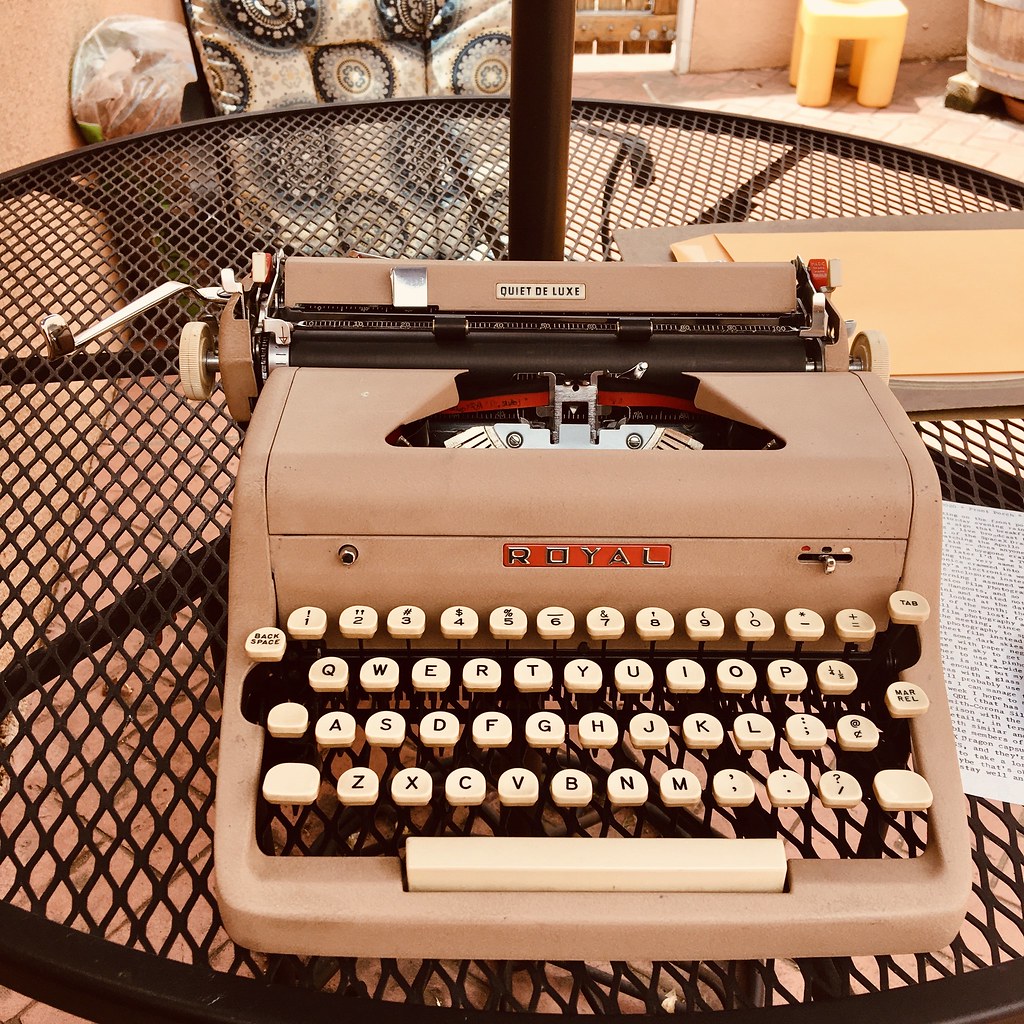
I was thinking the other day about naming this little bird. No, I don't name all my machines. Of course, there's Adobe Rose, the Royal QDL, but she's an exception. We used to have a VW Jetta turbo-diesel that we named Dieter, after the Mike Myers SNL character, but I don't see this little Kolibri as a black-clad Dieter in a German dance club. Maybe it doesn't need a name, it just needs to inspire me to write, and that's good enough for me.
I spent several hours cleaning and adjusting Adobe Rose. I removed the side panels of the carriage to do some cleaning, then removed the platen and feed rollers, scrubbing them with alcohol so as to get a bit better grip on the paper. She'll be needing to get the rollers and platen covered in new rubber at some future date.
I also spent some time doing subtle adjustments to some of the type bars, to help correct some misalignment issues. It's not perfect, but better than before.
TJ is a school teacher in Los Alamos, and I have his typewriter, an early-1950's Smith-Corona Silent. It used to be mine, until I sold it to him (or, more precisely, his school system) for use in his classroom. Sometime last year he told me some of the key levers had been bent, by overly-eager (I'm assuming) students. TJ was able to drop the machine off to me for repairs later in the year, during one of our Sunday ABQwerty Type Writer Society meetings. I easily managed to put the key levers back into good order, but since then it's been difficult arranging for TJ to pick up the machine. And now, with everyone (supposedly) in lock-down it'll have to remain with me for a while longer.
But today I decided to set the machine on my workbench and test it out, to make sure there were no other nagging issues. It does type very well, no mechanical issues of note, even the ribbon is sufficiently fresh. And I'd forgotten how much I like the typeface. But I needed a piece of paper to test-type with, so I grabbed an instruction sheet from a pile of clutter on the bench, for a safari rack that me and my grandson had installed earlier this week on his truck, and I was sufficiently inspired by the word "safari" in the instructions to hurriedly compose this vignette on the reverse side. Afterward, I read it to my wife, and she was sufficiently impressed that she's now encouraging me to continue this story in installments.
No, I don't really know if you can weld broken steel in the bush with a makeshift thermite furnace, but hey, a little exaggeration never hurts! And don't go four-wheeling with that Smith guy, he'll get you in more trouble than you can shake a stick at.
The other day I'd felt sufficiently cinematic (is that a real feeling?) that I wanted to record some B-roll black & white video on my Lumix G7 with one of my Minolta MD lenses. It was snowing lightly, a rather rare occurrence in April (though our mile-high altitude doesn't preclude such an event) and the inclement weather was rather inspiring, since sunny days are rather commonplace. For adapting manual focus lenses to my digital camera I'd already been using the 7Artisans 25mm F/1.9 lens and the Minolta MD 50 F/1.7 at various times, but had never given the 58mm Rokkor lens a real test. After some test shots around my office and outdoors, I decided that the 58mm was at least as sharp as the 50. Naturally I'd need to reduce the light incoming to the sensor if I hoped to use the lens wide open at F/1.2, so I put on a variable ND filter, after futzing around with finding the proper adapter rings.
By itself the Panasonic G7 isn't that big of a camera, but with that big 58mm lens and even wider ND filter hanging off the front it's rather sizable. But it has a reassuring heft, and the haptics are about perfect for manual focusing, since the G7 has focus peaking and the G-series cameras pioneered the "tilty-flippy" screens (that other manufacturers pretend these days they invented), that makes these cameras so convenient to use.
One thing led to another, and before I knew it I was creating a motivational video on creativity and writing during this unsettled period. I thought the B-roll intervals between shots worked pretty well for the video.
Here are the parts to each original foot, with the new foot mounted to the machine:
The rectangular brackets are mounted on the top and bottom of each foot, then mounted to the chassis with both shoulder screws. I was originally hoping to find a square furniture caster with a deep enough recess in the middle that I could use these brackets and screws; but none I could find were deep enough. I'm happy with these round rubber feet, however, and they prove very grippy on smooth surfaces, just like a rubber typing pad. I did have to add some spacer washers between the tops of the rubber feet and the frame of the machine, so the shoulder screws would remain recessed sufficiently so they won't scratch the tabletop.
I'm at the place where I'm more comfortable with typographical errors in my typecasts. I don't know why it's taken me this long. I was probably holding onto some affectation of the typewritten piece as a work of published perfection; whereas in actual fact I'm an imperfect typist (as well as an imperfect writer, thinker and speller) who's learning to embrace the "organic" look of human imperfection. Er, at least that's my excuse.
Actually, I think there's something valid here. In the heyday of the typewriter as a tool for the professional business world, perfect copy was an expectation, administered by professional typists who were compensated to do just that. But in this post-typewriter world, we can hold onto our imperfections as work-in-progress, somewhat akin to how a quick pencil sketch, in its brief roughness, doesn't compare to a finished painting. Typewritten pieces like this one are akin to jottings or doodles - they communicate an idea, but imperfectly so. Their value is in their immediacy. And I like that they reveal something of the process involved.
In fact, one of my favorite blogs is Vinnie McFeats' The Untimely Typewriter. I revel in each posting, as they exhibit the look of an experienced typist who knows his way around a manually typewritten page, replete with corrections in all their glory; no affectations present here. I don't think there's an ASCII character for a double-struck or X'd-out correction; these are markings unique to the manual typewriter. They're like the sound of gears mashing on a non-synchronized manual transmission - it's the way they're supposed to work.
It's been fun digging into these devices, brings back lots of memories of my days, in the 1980s - about concurrent with this machine (circa 1986 according to the date stamp inside the top shell) - when I repaired consumer electronics for a living.
I'll be doing more videos about each of these machines, then eventually a comparison between all five in my collection.
There's a bit of wonkiness to the line spacing in the image of the typecast, that's not the fault of the typewriter but rather my "scanning" technique; I use an iPhone's panorama mode, and irregularities in the movement of the phone during the scan will cause these issues. I'm still thinking about building a slider rig for doing these scans. The typical thermal typewriter output is a long scroll, too big for a conventional scanner - even if I had one!
Post-Script: I think this was a good choice for the young lad, even if he doesn't use it much. And I like the idea that, even though it's "his," I get to share it with folks in public typewriter events. Because sometimes you don't want to take your finest machines out in public and let just anyone fiddle with it, especially in a busy meeting where you can't easily keep an eye on what's going down. Neophytes often are well meaning but can, if not careful, mess up an otherwise fine machine.
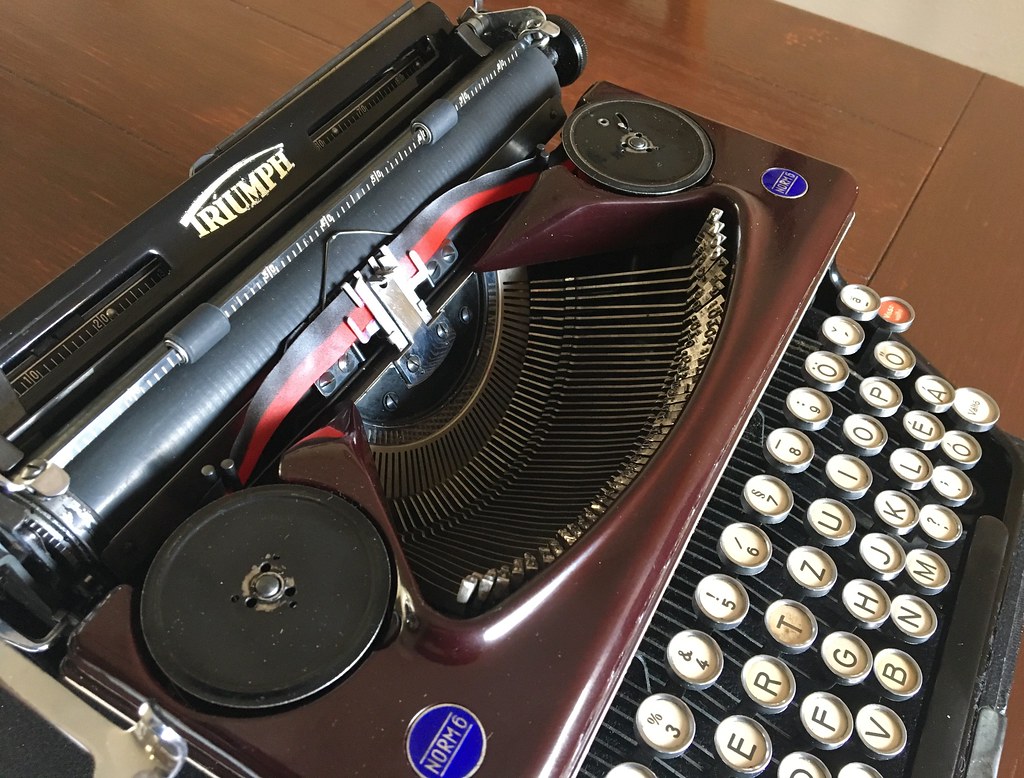
This gets me to the subject of my Triumph Norm 6. It'd been in the closet for a few months, and this week I took it out to do a spell of writing, when I discovered to my dismay that about half the type bars were totally frozen stuck. I brought it out to the workbench in the garage and discovered the frozen type bars were actually rusted. Somehow, moisture had gotten into the segment, unbeknownst to me, and rusted the type bars. It took considerable effort to free them and remove most of the rust. Unfortunately, many of the linkages under the type bars show signs of rust, also. I wonder if some acidic soft drink didn't get spilled inside, as I wouldn't expect water to do this kind of damage, especially in our dry climate where liquids quickly evaporate.
My wife and I were trying to remember when it was last used, but am not certain. Another reason to keep the rare or fragile machines home, and bring more of a beater to public gatherings. Which implies ... you therefore have to assemble a small fleet of beater typers just for that purpose. Just a few weeks ago I acquired another Smith-Corona Silent-Super, just for that purpose - or perhaps to sell to a member of the Society. I haven't yet started on cleaning it up, but it looks like everything is functional, though the platen is rock hard. Which isn't a problem, really, since they're so easy to remove and ship off to JJ Short & Sons. The cool thing about this machine is it came with all the ephemera, including owners manual, typing guide, even the little printed display tag that hung from the return lever via a string. I'll have to scan this stuff and get it sent to the Rev. Munk.
My wife also reminded me that this issue with the Triumph is a lesson to periodically bring out all your machines from storage and give them a good round of testing, then document any issues that need addressing.
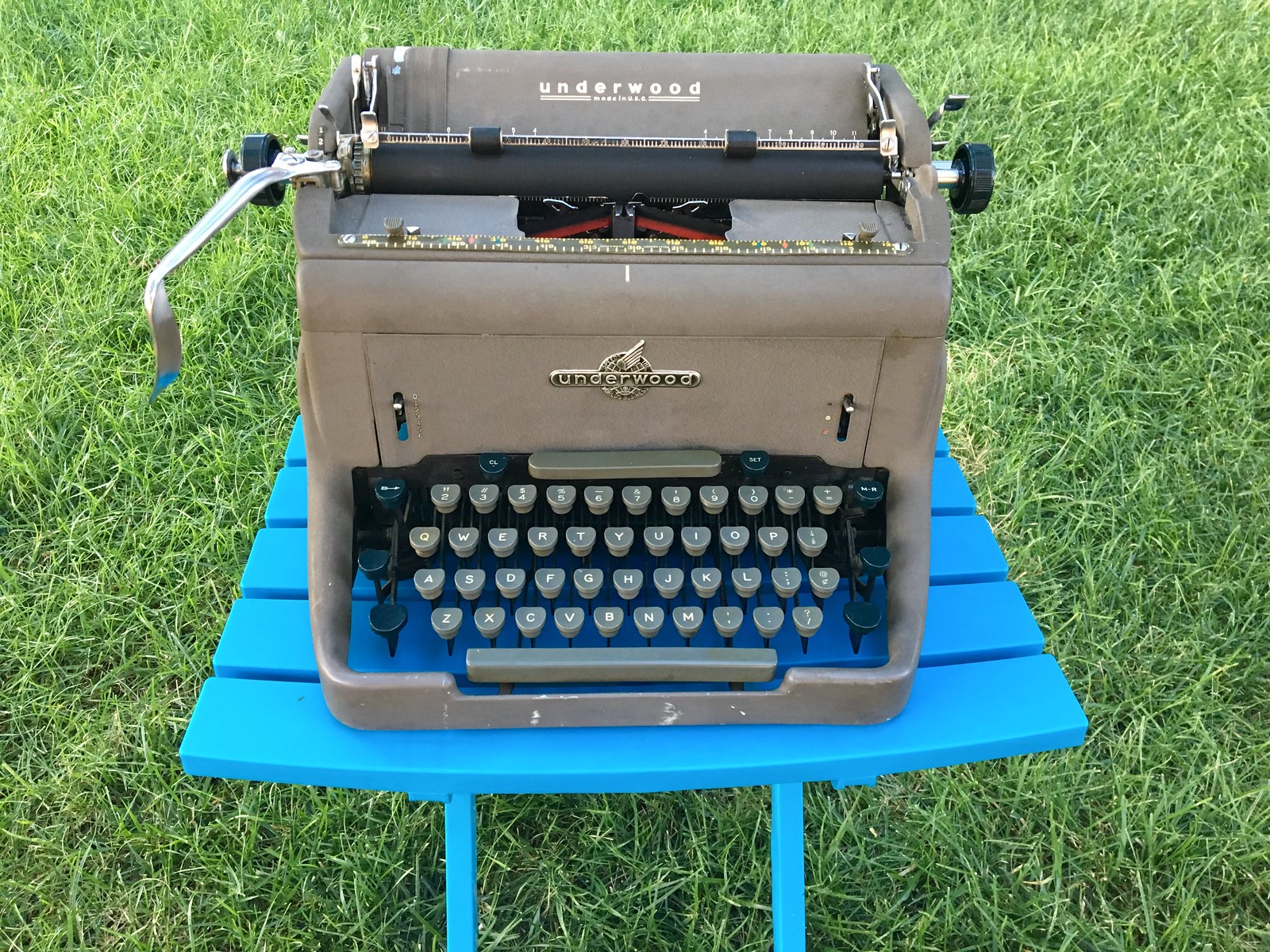
Post-Script: I've spent most of the last few days working on the Underwood. It's working pretty good now. I ended up threading the ribbon directly onto the machine's spool hubs, instead of using a ribbon wound onto their own spools. This is the generation of Underwood that uses the Remington-style spools with the wide center hub and the auto-reverse lever that senses end of ribbon by ribbon slack and causes a little spring-loaded lever to rotate out a slot in the hub, dropping a linkage through the hollow ribbon spindle that engages the drive shaft to shift sideways to reverse the ribbon. It wouldn't work reliably with the ribbon spooled onto Remington-style spools, but works fine directly threaded onto the machine's hubs. But it does tend to wind the ribbon a bit wonky, causing the ribbon to creep up the pack as it's wound. Perhaps something to do with the angle of the ribbon drive shaft verses the vibrator's guides, but I haven't fully figured it out. But at least it works.
Now the final cleaning is in order. I'm using a spray degreaser and gentle application of a Scotch-brite pad on the textured paint, with care it seems to remove the years of nicotine stains pretty well without affecting the paint.
I still have to wind a bit more tension onto the spring motor, as the carriage gets a bit sluggish near the right margin.
I like the easy-to-remove platen feature, a bit easier than a Smith-Corona 5T series to operate.
A major issue will be cleaning and reattaching the ~3/8" thick sound proofing pads. Has anyone had luck washing these pads with water, or do they disintegrate when wetted? I'd like to remove as much grunge and mold as possible.
I think this is going to be a good typer for its owner.
Our ABQwerty Type Writer Society seems to be gaining traction, with several newcomers showing up on Sunday. It's going to be fun seeing where this goes.
Kevin and I had a deep discussion tonite about the future of the typewriter hobby. When we get old enough, I hope we find good homes for our collection. More importantly, I see the need to evangelize the younger folk into learning typewriter repair, to keep the torch burning. There are a finite number of machines out there, despite the fact that millions were manufactured over the years; million were also trashed after their useful life was over. And a number of machines end up getting ruined through improper packing and rough handling during shipping, so it seems that, ironically, our desire to collect and preserve these machines ends up ruining some. It's best to check out a machine in person and personally transport it ourselves; but that isn't always possible.
We've noted that us older guys end up doing most of the typewriter tinkering in our Society. It's important I feel that we get others involved in the hands-on repair and restoration work.
What do you think? How do you plan on passing the torch?
Post-Script: I still haven't found a great way to photograph these long strips of writings with a camera without uneven lighting, or field curvature from the lens. The iOS panorama mode comes closest, but you have to move the camera along the strip of paper with absolute precision in terms of the camera's viewing angle and speed of motion. Perhaps a slider would work. Maybe I'll rig one together.
I was inspired late last night to write this, as I was waiting for my video to upload to YouTube. These thermal machines are great for late-night missives where you want absolute quiet in the house. And it's nice to see the results measured in terms of feet and inches, rather than pages. It feels like progress. In the case of this piece (literally a piece, torn off from a roll of thermal fax paper, after it was completed), it measured nearly 21 inches in length.
Post-Script: Okay, there's one major pressing issue that's been looming for a long time: I need to get my collection of machines registered on the Typewriter Data Base. I initially did this, years ago; but in the interim period of time have gotten lazy. So I'm going to be making a concerted effort to get the job done. Hopefully with pictures and perhaps typeface samples, too. Because the TWDB is too valuable of a tool not to use it, especially for one such as I who has been involved in typewriter collecting as long as I have.
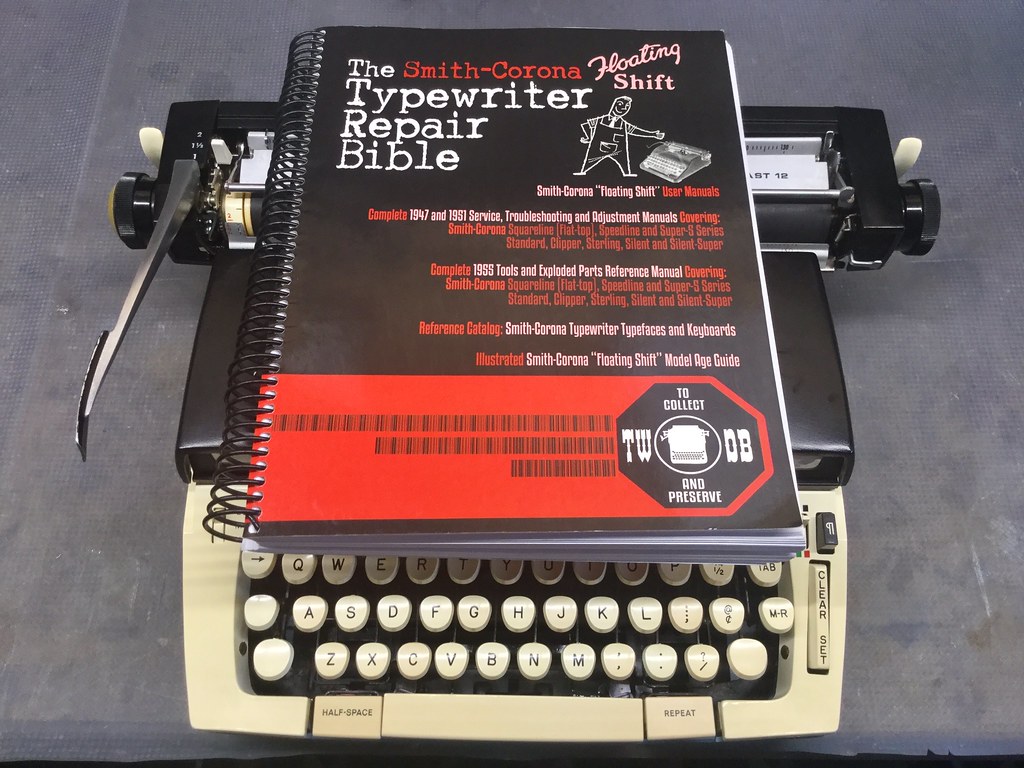
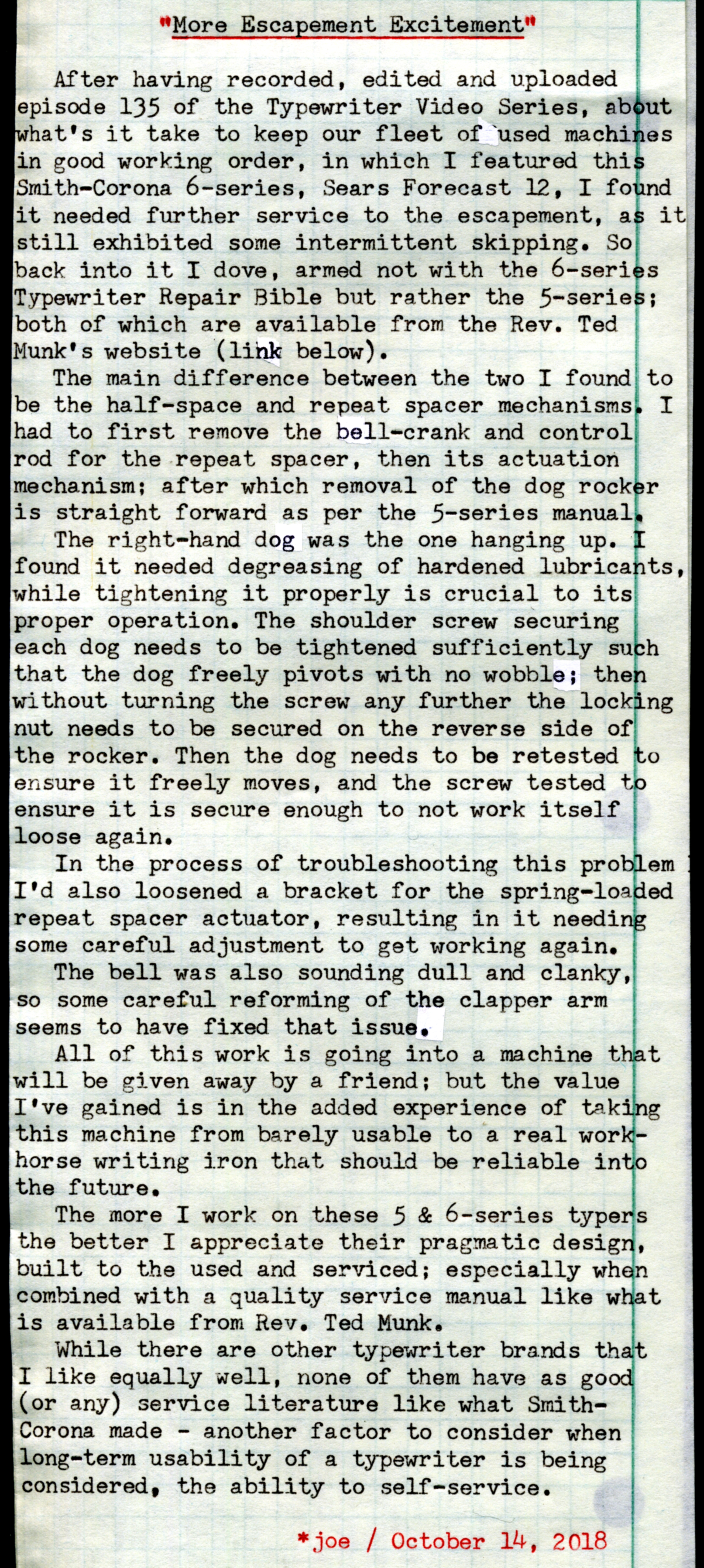
Post-Script: There are too many other adjustments on these machines to cover in a reasonably-sized video; best to get your own Typewriter
Repair Bible, if you're interested. I didn't cover the adjustments for the two positions of the escapement dog rocker, which involve bending some arms to set them such that, when engaged with the escapement cog, the teeth of the cog and rocker dog both align properly. There is also advice for adjusting the escapement trip point based on the heaviness of hand, or technique, of the typist. Another good reason to favor these 5- and 6-series machines in your collection: not only do they perform well, but they are perhaps the easiest to service, with the most complete service literature available - and many of these machines also sport the easy-to-remove platen feature, for gaining access to clean the rubber rollers, paper pan and ribbon guides.
Here's the video that covers this adjustment in detail:
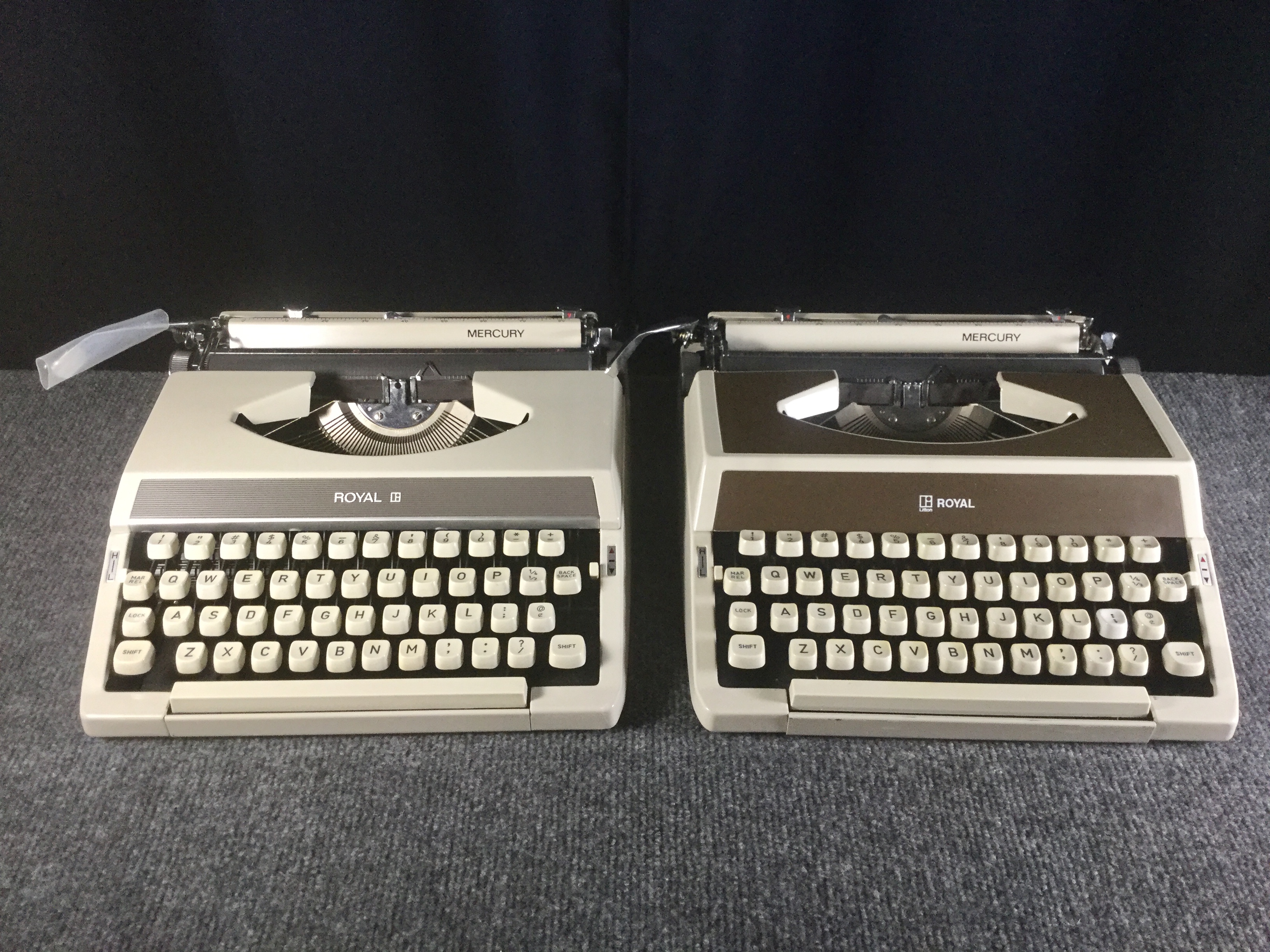
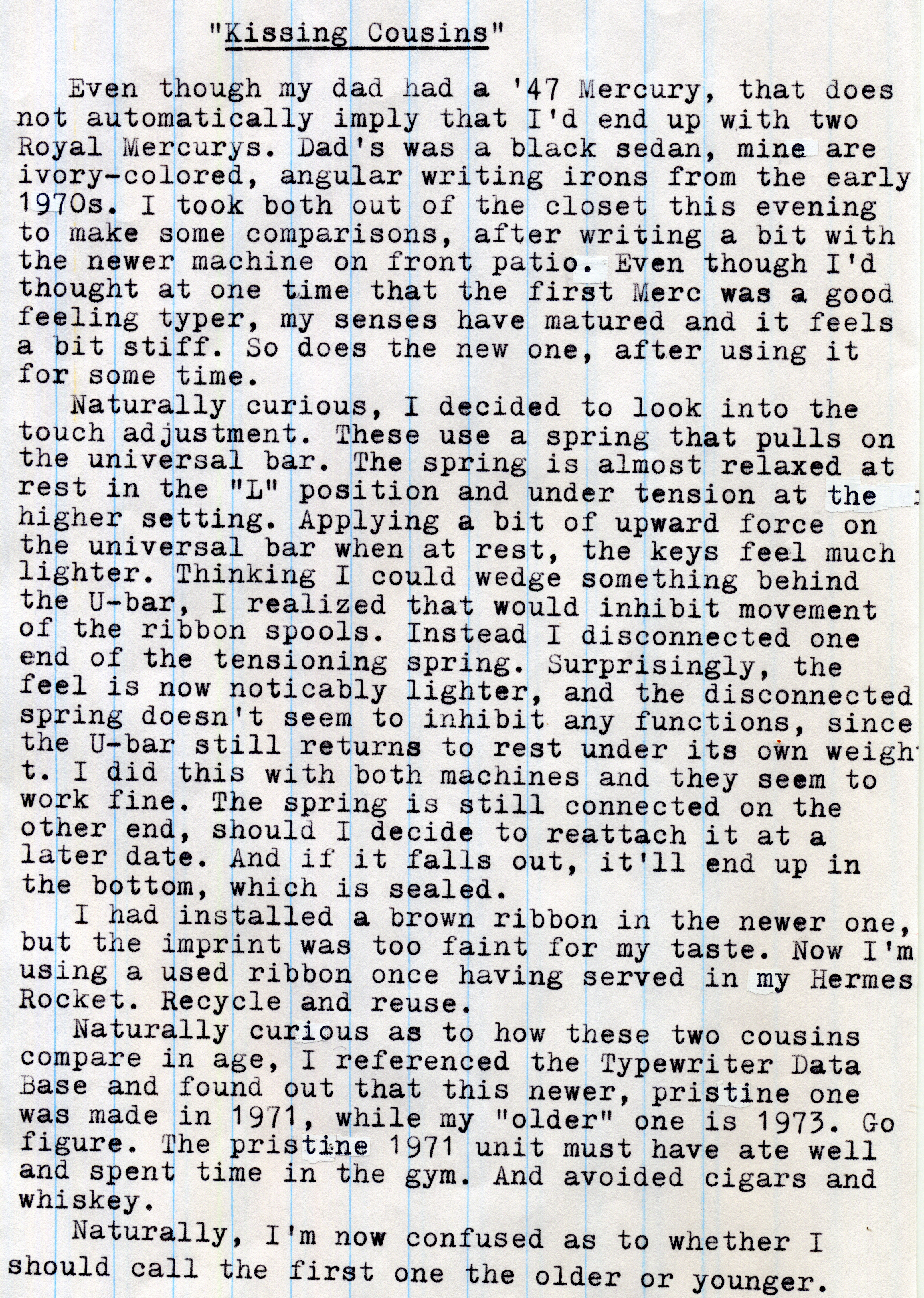
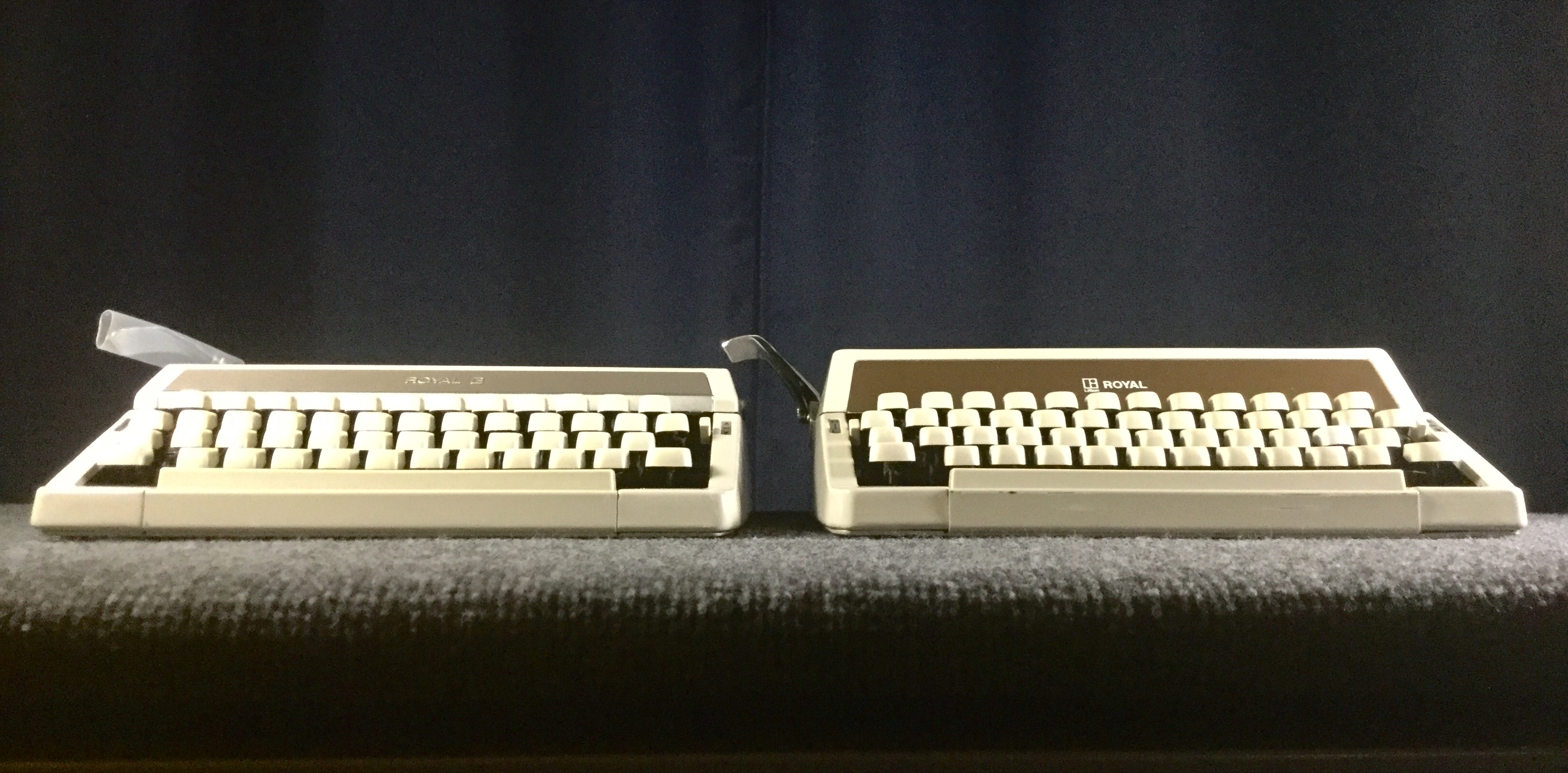
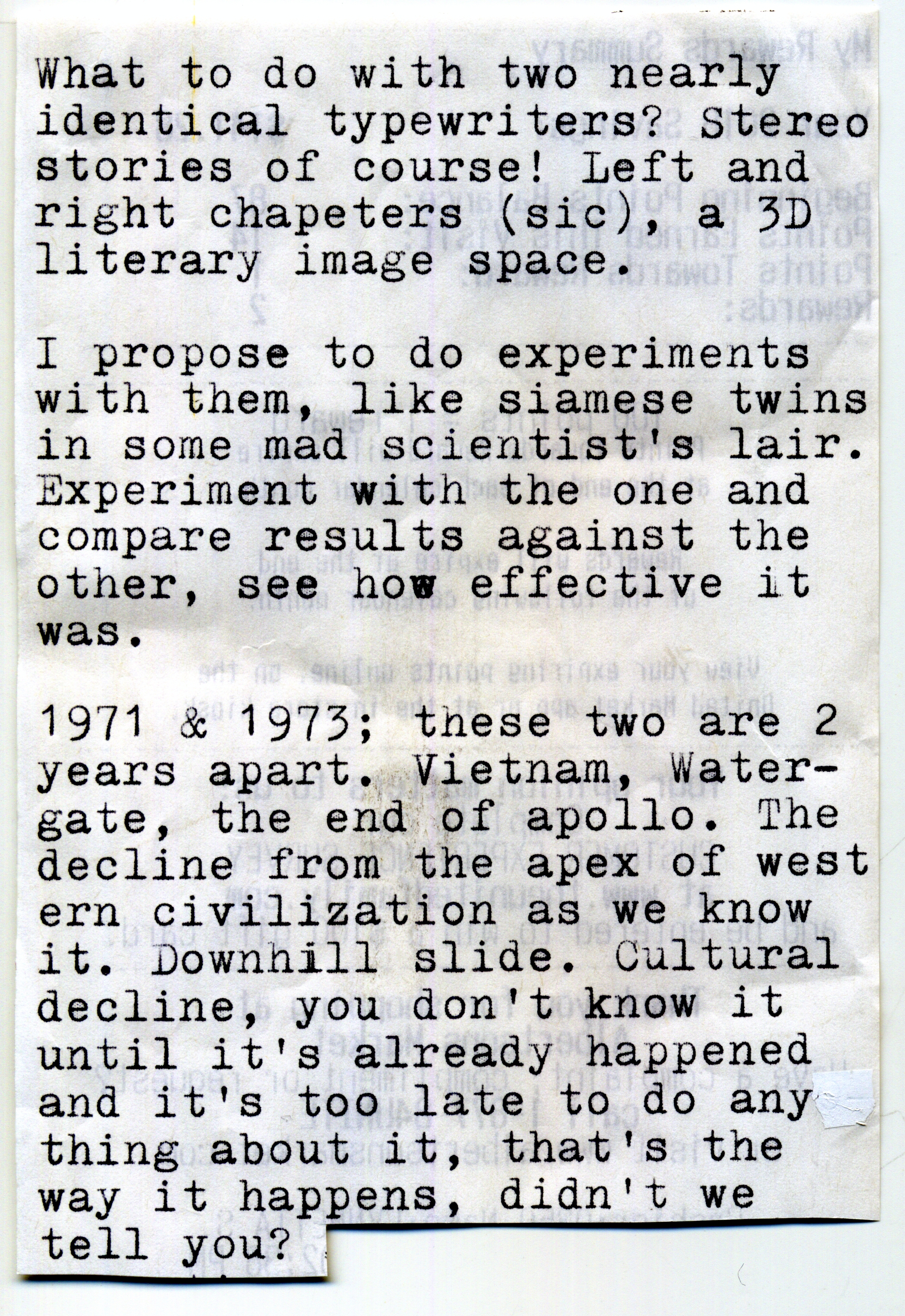
Post-Script: I started this twin typer video on Sunday but was interrupted by Labor Day festivities; then had to do some maintenance on my main evaporative cooler unit (replacing the fan bushings and motor). It started out with me breaking out the 1973 Mercury that's been in my collection since the mid-aughts - my "alpha" machine, the first one I can with certainty claim to have acquired because I was getting the typewriter bug and wanted a small portable; which I haven't used very much in the last few years and it needed more attention than I'd realized. I ended up doing a thorough cleaning and degreasing on it, in the process of making the video.
Naturally, a comparison between both machines was in order. The 1971 model, new to me, had a bit easier touch; but now the other one feels better after the attention it's received.
These machines were designed the way they were designed. You shouldn't expect them to have the touch of a different, lighter, machine. But the trick I did to the touch adjustment, disconnecting the spring that attaches to the universal bar, did affect a noticeable change. Which reminds me that my Brother Charger 11, lacking a touch adjustment, always felt a bit lighter in touch than the Brother-made Webster XL747 that has a touch adjustment; perhaps it's due to this same issue, that at the lightest setting the touch system always gives more tension to the universal bar than without. I'll use both of these Mercs for a time and see if I'm happy with them this way.
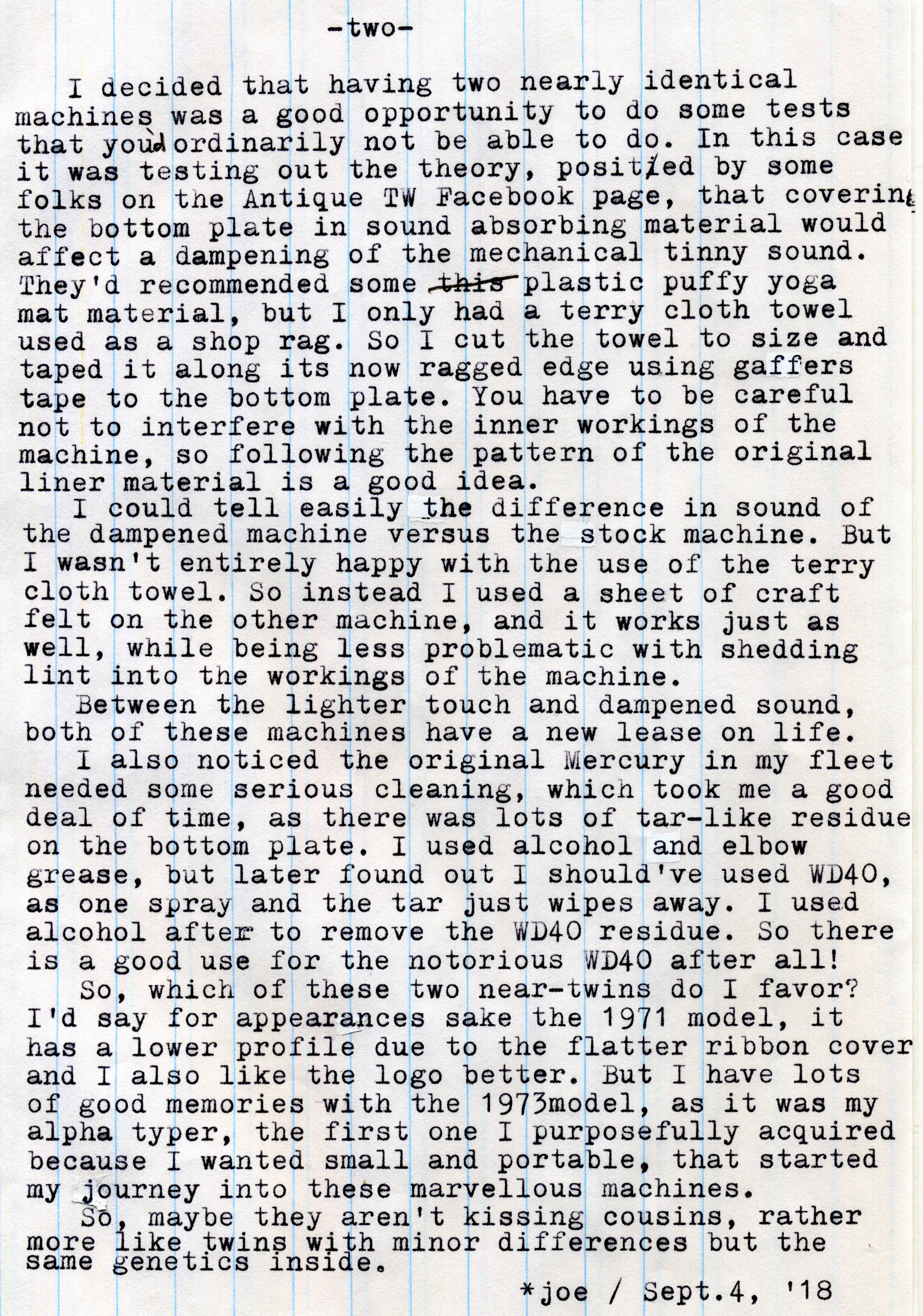
Since I now have these two nearly identical machines, I figured some experimentation was in order. The natural thing would be to compare sound-deadening methods. There has been some recent talk on the Facebook Antique Typewriter Group about using various materials in the bottom of the machine to absorb sound and prevent it from reverberating upward. With the 1973 model I used a terrycloth shop rag, cut to size and taped along its edges to the inside of the bottom panel using gaffers tape. Compared to the unaltered 1971 model I could notice a real difference, more in the muting of the bright metallic sounds, rather than an overall lowering of the volume. Then I used a sheet of craft felt in the bottom of the 1971 model and it seems to have about the same degree of sound deadening. Nothing dramatic, but a real improvement. Since this is an ongoing experiment and easily reversible, I can always take these out and try different materials in the future.
This is the essential tradeoff when you like ultra-portable machines: you have to be willing to accept less than ideal mechanics for lightweight and small. Hence the tinkering with trying to gain back something in the way of better touch and sound. But there's always the fact that these small machines are easy to grab and bang out a quick note on, like the other night when I typed this on the back of an Albertsons grocery store receipt:
This is getting to be a habit, saving up 3-1/8" wide thermal-printed store receipts that are blank on the reverse side. Free typing paper, for short ditties or poems. Nothing profound or earth shattering, but highly convenient, promoting that stream-of-consciousness creativity that can, on occasion, produce surprising results.
Here's episode 130 of the Typewriter Video Series, on these two siblings.
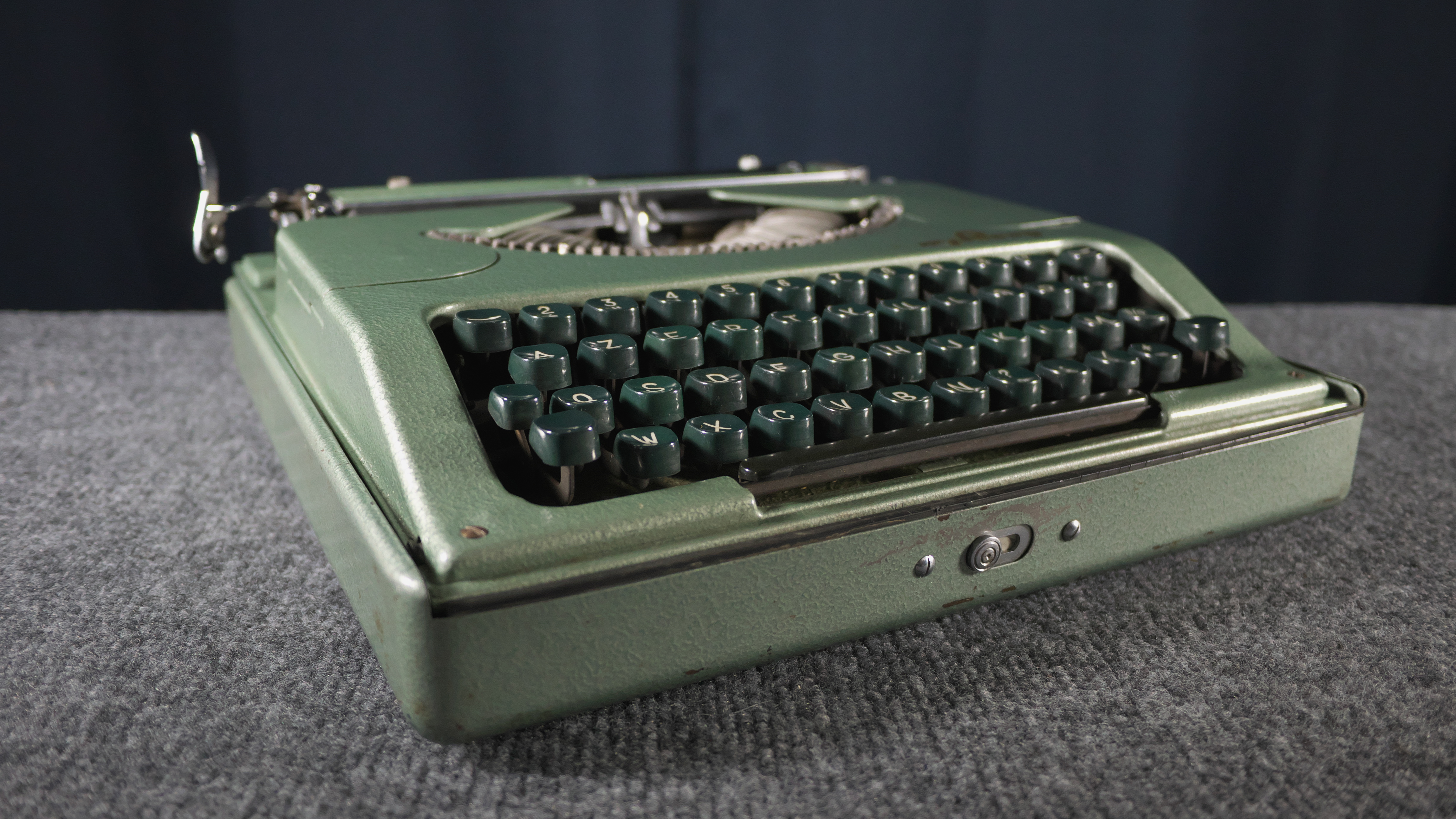
Post-Script: I'm impressed that a typewriter this thin can perform as well as it does. What's also interesting are the similarities to the Hermes Rocket/Baby, especially the carriage return lever and ribbon covers. I suppose attempting to achieve certain common design goals, such as an ultra-portable, results in similar design solutions.
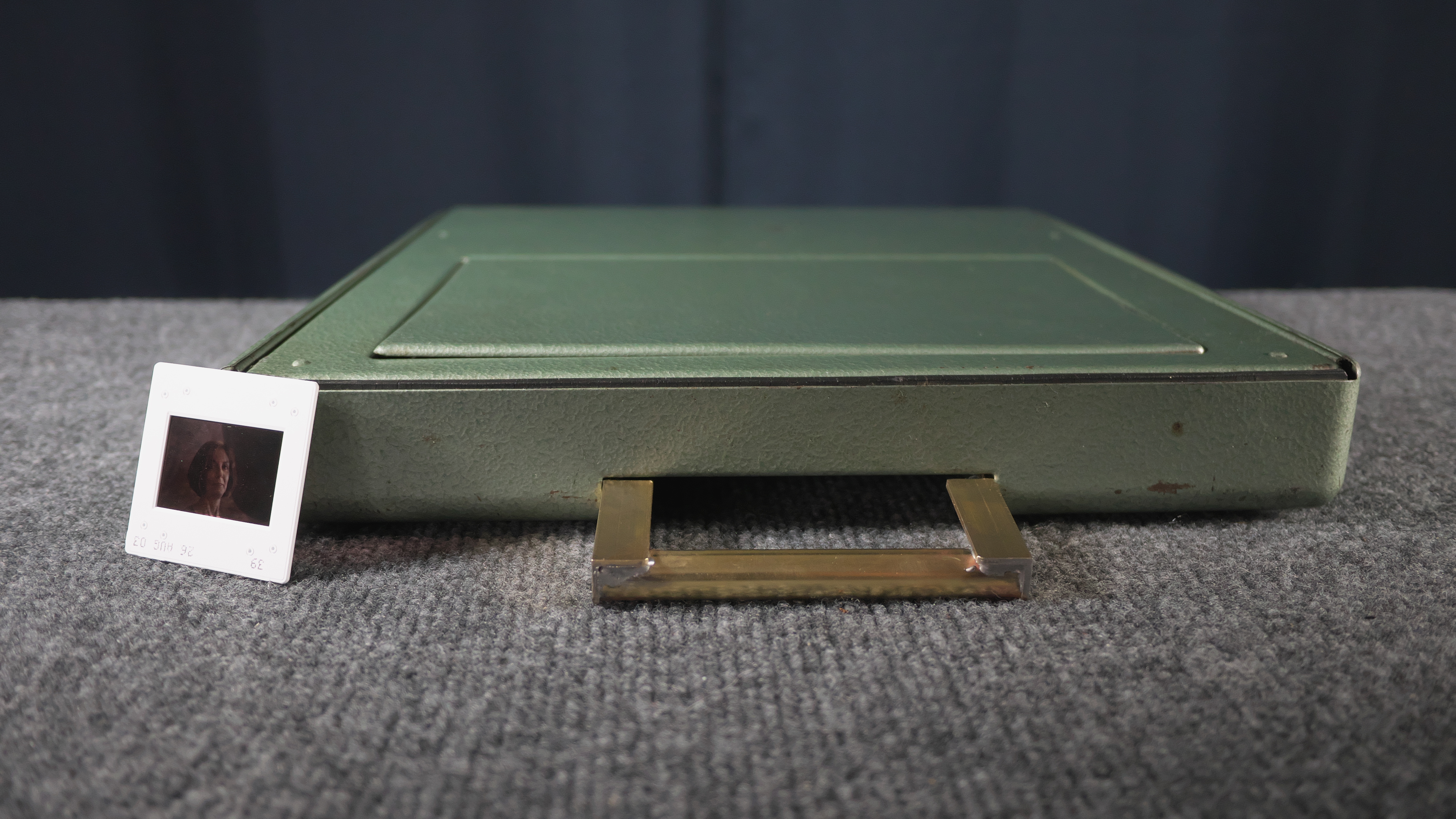
Here's a photo of the Rooy folded up; note the 35mm slide for size comparison:
You might have noticed the brass carrying handle. That was my add-on, since the original plastic handle was badly worn and broken in two pieces.
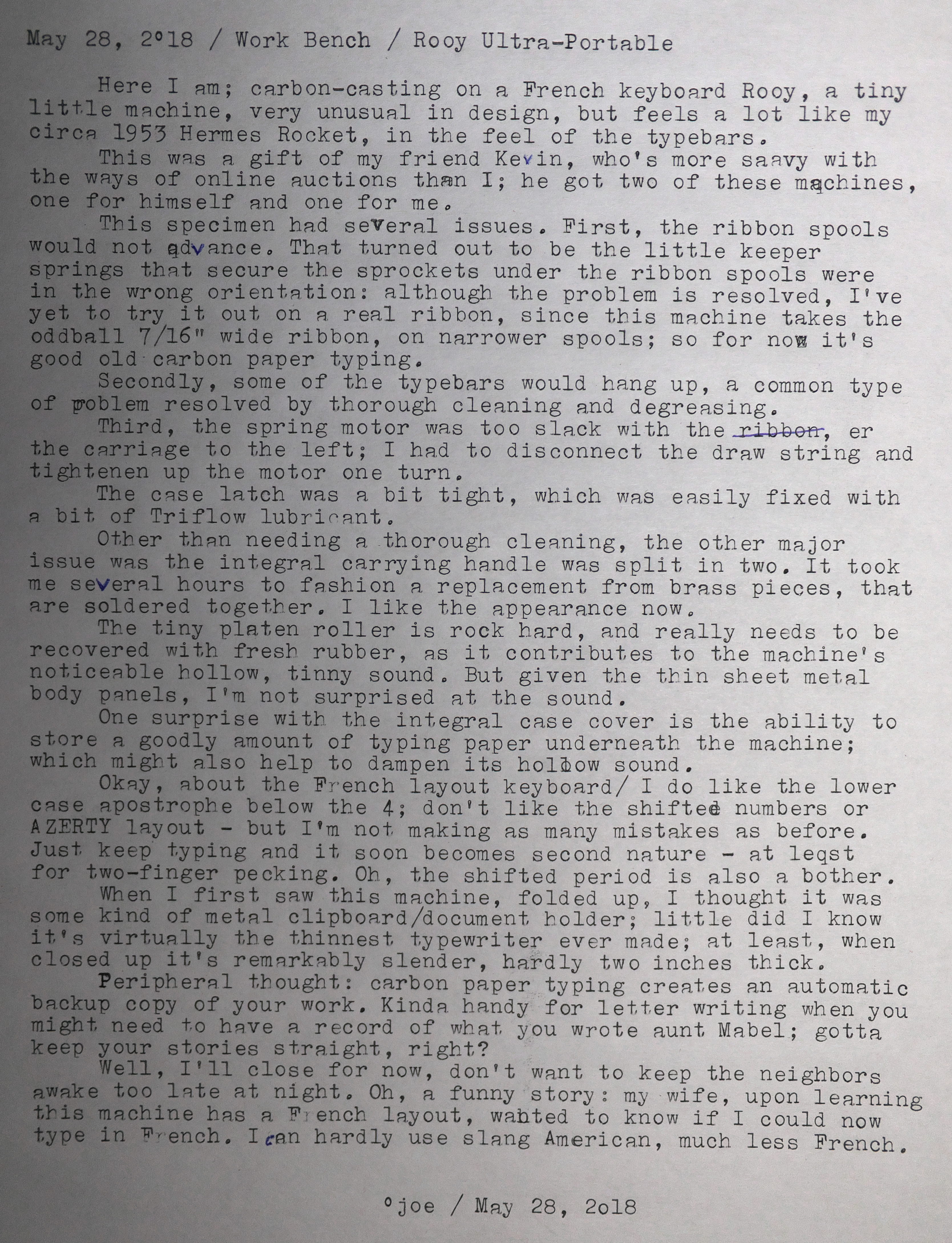
Aside from being in desperate need of cleaning and degreasing, I had to repair the ribbon spool drive system. The spools would not turn as I typed, the sprockets under the spools were a bit too high to engage the drive pawls. It turned out that a set of retainer springs was oriented incorrectly, perhaps installed incorrectly at some time. The spring motor was too slack, as the carriage would quit moving near the right side as the drawstring would go slack. I had to disconnect the drawstring and wrap it one full turn around the spring motor, then thread it again under the platen (while under tension) and reattach it to the right side of the carriage.
The feet on the bottom were badly worn, so this afternoon I cut a set from a thick neoprene washer and glued them on. The machine will not slide, regardless of how hard you return the carriage with that short little return lever.
This machine uses 7/16" wide ribbons, rather than the standard 1/2", in smaller sized spools; so I've ordered some to use. In the meantime I've resorted to carbon paper for these initial typings.
Speaking of typings, the keyboard on this machine is AZERTY, rather than the conventional (for America) QWERTY, evidence of its French heritage. It also has shifted numbers and a shifted period, along with numerous accented characters. Fun to type on while using carbon paper!
WPPD 2018, Grounded Rocket and Addiator Pouch Repair
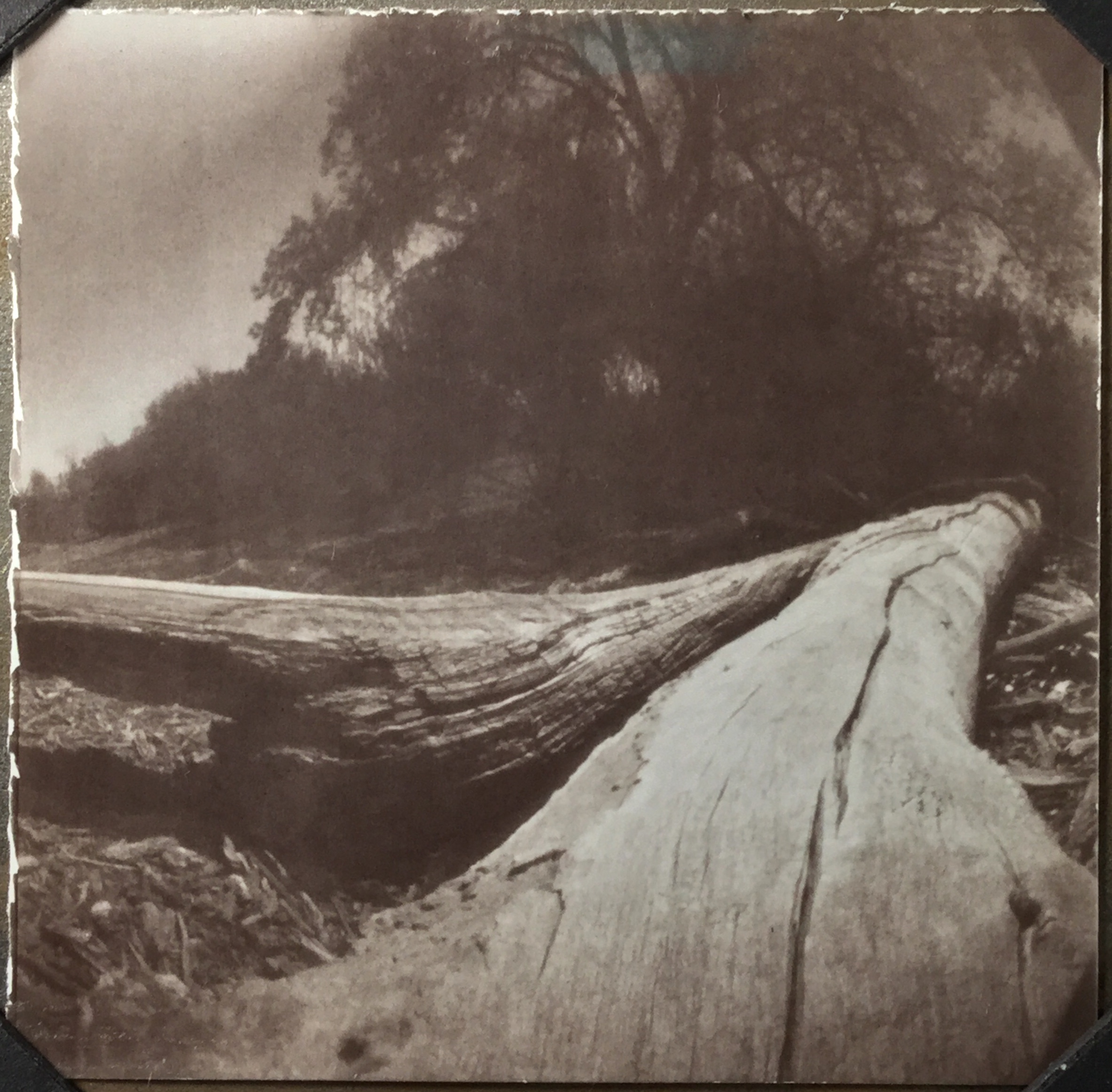
This previous Sunday, the last Sunday in April, was Worldwide Pinhole Photography Day. While I don't practice the craft of pinhole as prolifically as I once did, I try to make an effort to get out with a pinhole camera on this day, if for no other reason than to remind myself why it is that I have a virtual mountain of pinhole cameras (mostly collecting dust) that deserve to be employed in the pursuit of that elusive image.
This day, I chose to stroll the river forest of the Rio Grande, just north of Albuquerque, with two small one-shot cameras, both made from 1.5" PVC pipe and employing a curved film plane with 2.5" squares of Harman Direct Positive Paper. While I've been trying to conserve this paper, due to it limited supply, these small prints are just big enough to hold in your hand and appreciate up close, while being diminutive enough to not be wasteful of paper.
I developed both images in a steel 35mm developing tank, sans reels, with the prints taped to the inside walls of the tank and rotary processed on its side. This method uses only 100mL of chemistry and produces very consistent results, while also not requiring a full darkroom with open trays of chemicals - ideal for those with limited space or, like me, desiring to process in the comfort of one's kitchen.
Being fiber-based prints, I archivally washed them using my recently devised method of employing a slow trickle of garden hose water under the canopy of a tree in my yard, which serves to wash the prints while also watering my landscaping - we do live in a desert, as we are apt to say. After, I selenium toned them and completed another wash.
The prints were dried flat by being superficially squeegeed, then taped face-up to a sheet of glass, using drafting tape, and placed in my film drying cabinet.
I was please with the way these came out; I'll have to do this more often, with more of my pinhole cameras.
There's something very satisfying about creating one-of-a-kind direct prints on fiber paper. Each is a unique object, and usually intimate in size as are these.
Here's a video documenting the process:
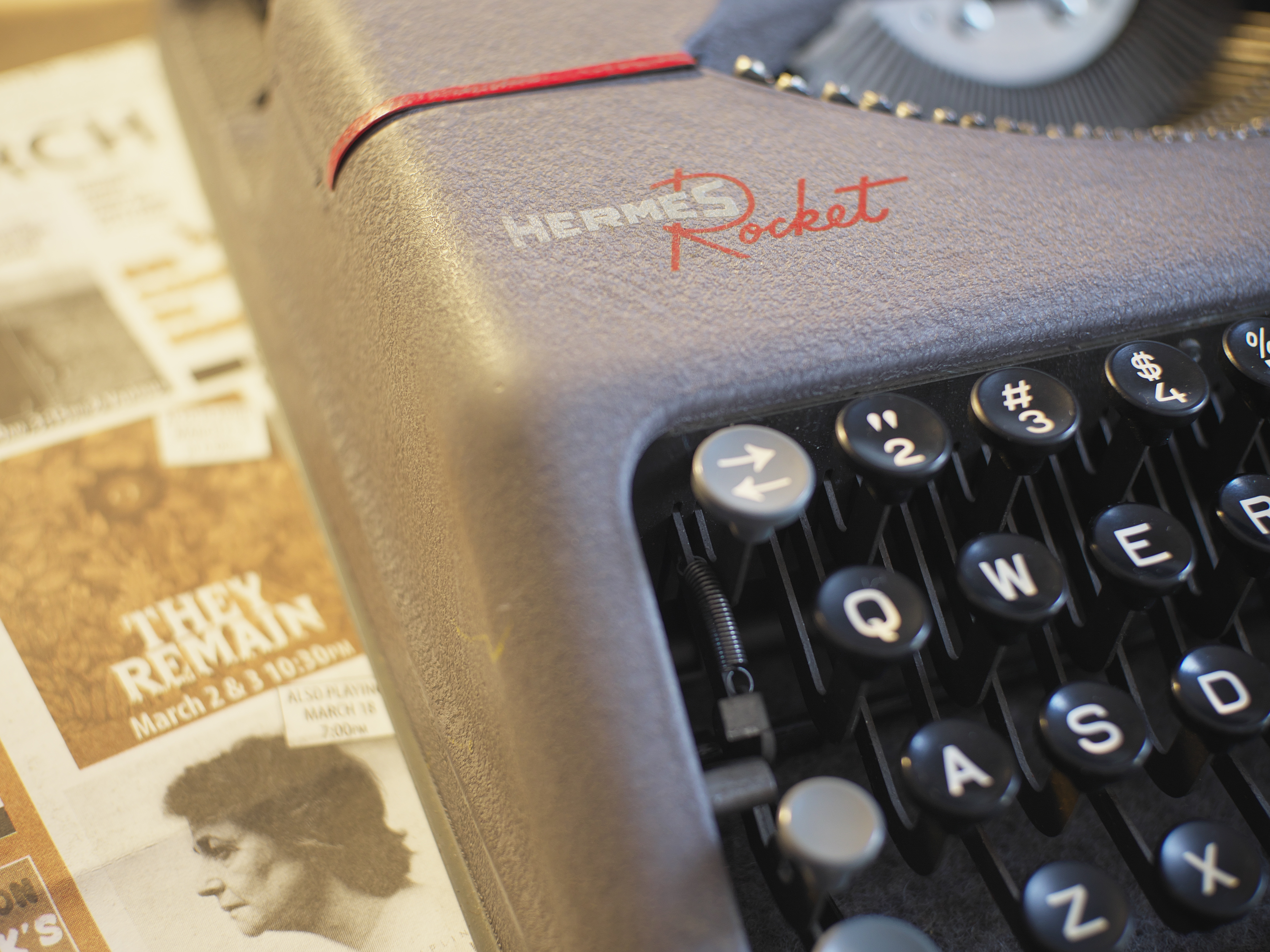
Now onto some sad news. During last weekend's Spring ABQ Type-Out I brought my 1953 Hermes Rocket, which performed fine during the event. Then this last Sunday, while typing up a story for Typing Assignment No. 16, I noticed the carriage was intermittently skipping spaces. This has been a recurring problem with this machine for a long while, one of the reasons why I haven't used it much. I know from previous experience that the problem has been related to the carriage release lever arm, which connects to the rack gear and serves to pivot the rack gear away from the escapement cog when releasing the carriage. This arm appears rather soft and is easily bent. Usually reforming it back into shape solves the problem. But this time I couldn't fix the issue; it seemed the rack gear just wasn't meshing tight enough with the escapement cog.
So yesterday I decided to dig in and see if I could make it better. I started disassembling parts of the carriage, in order to remove the rack gear. In the process, I decided to disconnect the draw band from its anchor on the right side of the carriage. I tried to be careful to let the tension of the spring motor relax itself as I wound the draw band back onto the drum of the spring motor. But evidently I wasn't careful enough, because suddenly the spring motor made an awful noise, and now it's dead.
I also spent many hours afterwards, into the wee hours of the morning, getting the carriage back together. I still have one spring under the paper table that provides pressure for the rollers that isn't properly installed. So now I have a broken Hermes Rocket, in need of a spring motor. I can't see any way to regain tension on the old motor. Attempting to turn it, it just spins; I can't see where the anchor point is, unless it's somehow in around the central hole where it mounts to a bolt-like fixture.
Live and learn. That's why I have 19 other typewriters in my collection, right? Seriously, I wasn't going to be using that machine much in the future anyway, because of its known fragility. Perhaps I can find a working spring motor from a donor machine.
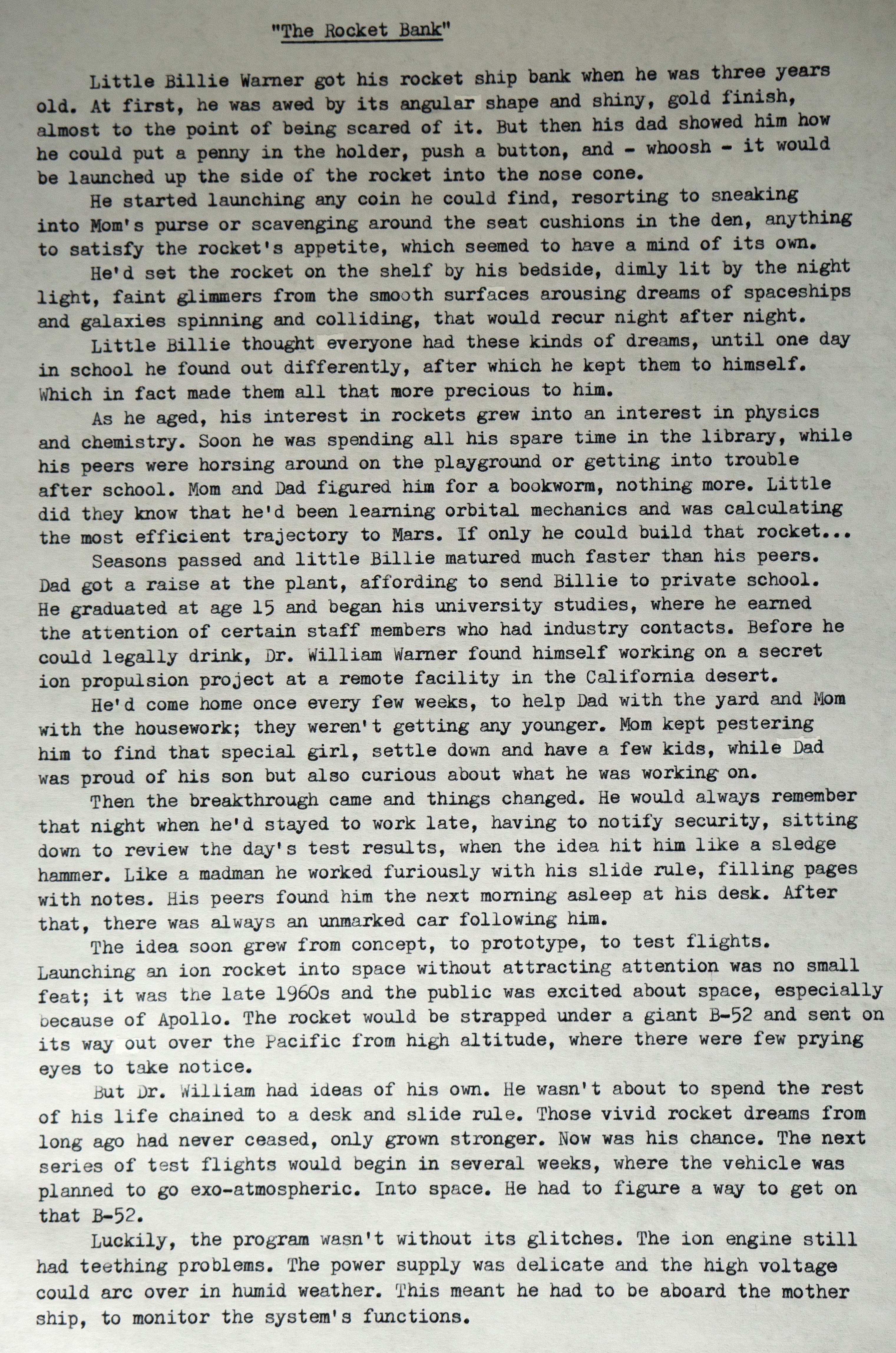
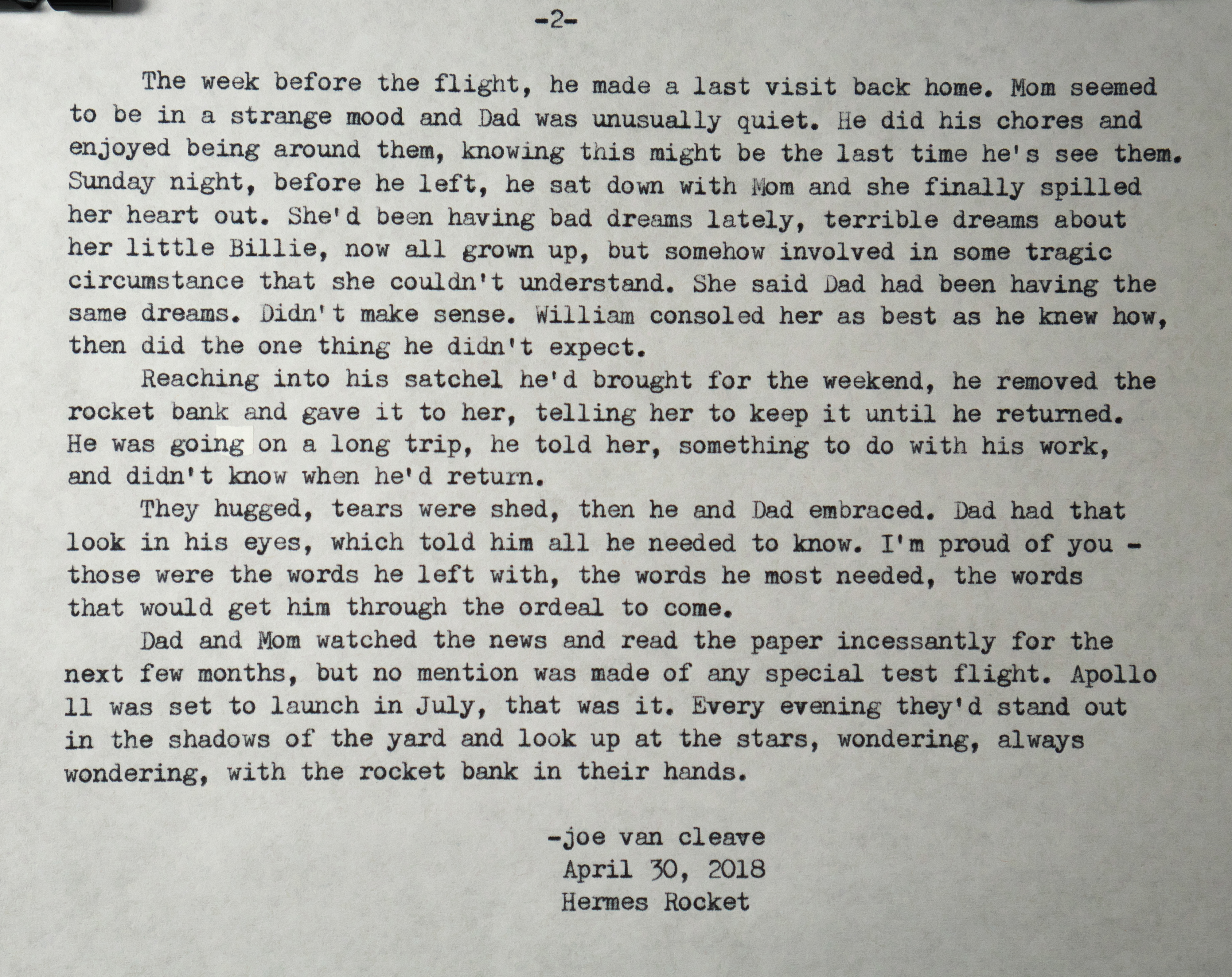
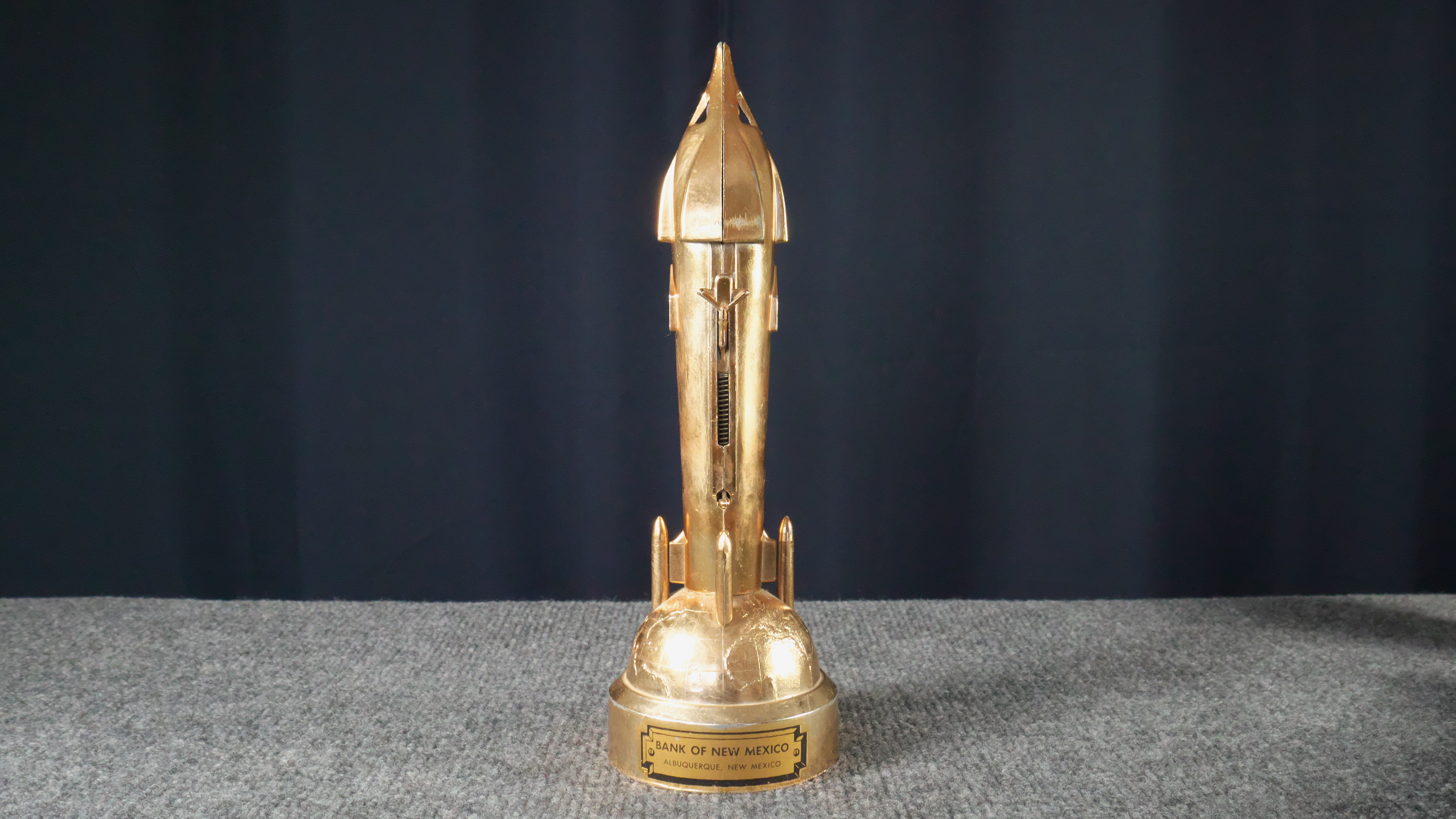
But the story I wrote for Typing Assignment No. 16 will most likely be the last piece of writing done with that machine. The subject of the assignment was to write a one-page piece inspired by some artifact of your possession. My artifact was an old 1950's-style rocket spaceship bank. The protagonist of the story has a similar bank as a kid, which inspires him to become a rocket scientist.
Now here's where this story gets interesting: my Hermes Rocket typewriter, circa 1953, was originally owned by an Air Force officer and engineer who was one of the principal engineers working on the design of the SR71 Blackbird's engines.
Here's the story, the last piece typed on the Hermes Rocket:
And here's the bank itself:
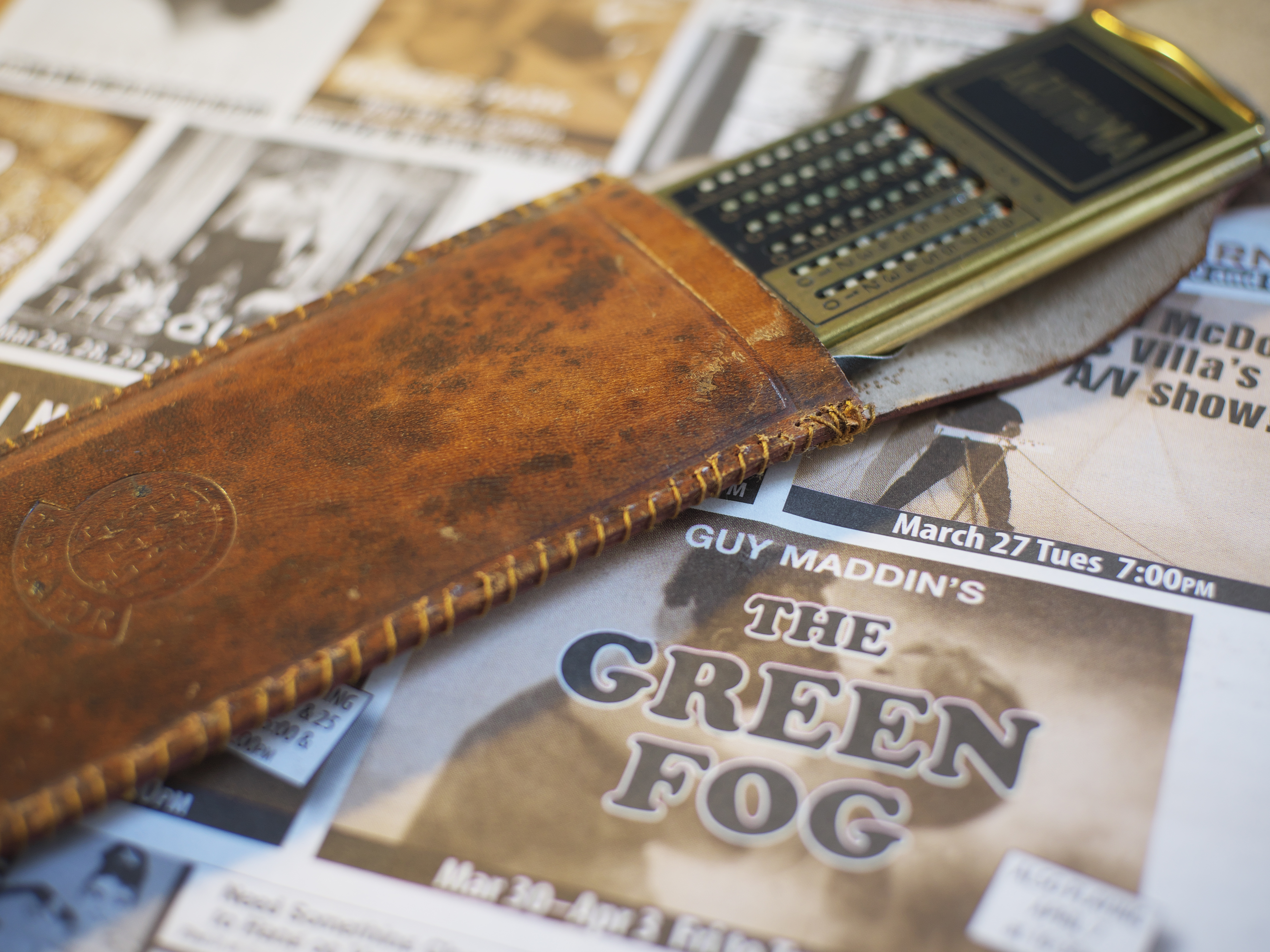
And in more positive news, I dusted off my rudimentary stitchery skills and affected a repair to the leather pouch of my Arithma Addiator:
It may not be pretty, but hopefully it'll serve a few more years of use; it's better than the staples that were holding the pouch together.
Here's a video I recently made about the Addiator. Thank you Ted Munk for the suggestion!