Wednesday, March 25, 2020

Thermal Correcting Chads?

Concept Sketch for thermal typewriter correction chads.
(Click to embiggen)

After using a number of thermal typewriters, even the ones with convenient editing features and an LCD, eventually I make typographical errors. The first few times this happened I by habit reached for the correction tape dispenser, rolled over the error and discovered that correction tape isn't thermally sensitive. Duh!

Since then, whenever I find a typo with a thermal machine I'll cover it with correction tape and hand-write the correct character in its place at a later time. It helps to use a black pen of the appropriate line weight, so as to match closely the original thermal printing. This method has stood me in good stead, but the thought still nagged at the back of my mind, wouldn't it be nice if someone made thermally-sensitive correction tape?

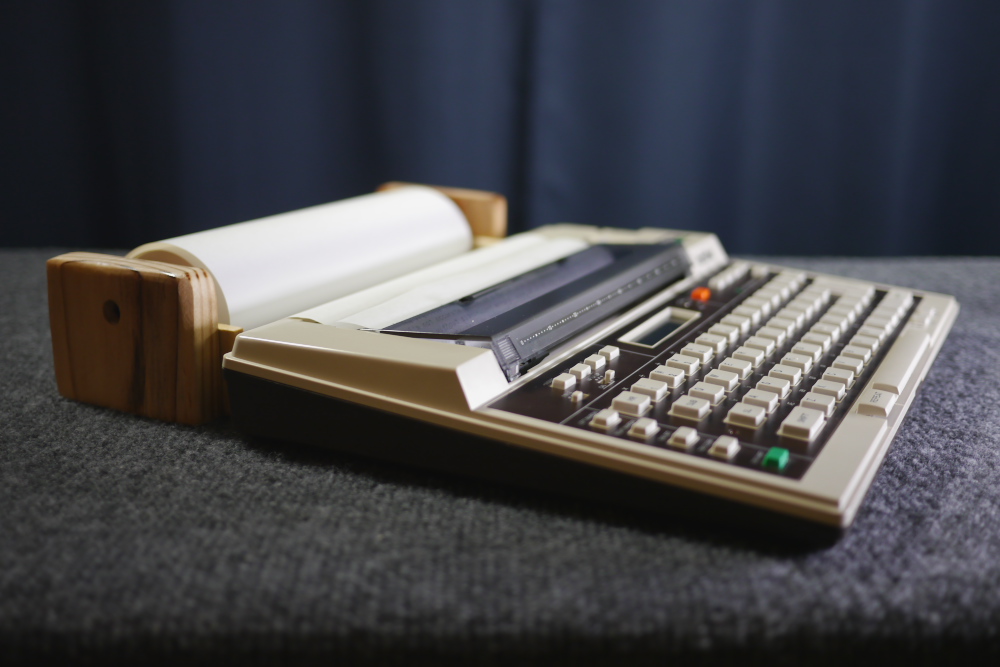
Recently I watch a video by Gregory of The Poor Typist YouTube channel, where he reviewed a Brother EP-5 thermal machine. This looks like one of the later thermal machines Brother made, and lacks an LCD entirely. It also functions more like a standard typewriter, in the sense that it has a correction feature, along with the now out-of-date ribbon cartridges that print thermally onto regular paper. It got me thinking that with this machine Brother was trying hard to entirely conceal the thermal nature of the machine. Of course, all thermal typewriters originally used cartridges for transferring the printing onto regular paper, but some of them did mention in the owners manual that thermal paper could be used as an option.

Since I've lately been embracing a sketch book for documenting ideas, even before I'd finished watching Gregory's video I already had ideas in mind for how one might make thermal correction tape. The latest idea is documented in the wild sketch seen at the top. I tried it out today and it does work, though the method is more fiddly than the convenience of roll-on correction cartridges.

First, cut a piece of wax paper, the kind you may find in your kitchen drawer, several inches long. Then you'll need a roll of Scotch-brand double-sided adhesive tape. Mine comes in a yellow-colored dispenser. Tear off a few inches and tape it down to the middle of the wax paper.

Next, cut a piece of thermal printing paper the same size as the double-sided tape, and fix it to the tape, thermal printing side up. Neatness counts. You can tell which side is thermally sensitive by applying pressure from a sharp object, the thermal side will make a faint gray mark.

Now trim the wax paper down so it's the same length as the thermal strip, but twice or more as wide. You'll have a rectangle of wax paper where one half is covered by the thermal paper and the other bare wax paper.

You can either use it like this, or go ahead and cut the paper into letter-width pieces and store them in a handy container, like a 35mm film canister. Each piece (or chad) will be a little rectangle of wax paper, with roughly half of it covered in thermal paper.

To use these thermal correction chads you first need to figure out how to advance the paper in your thermal typewriter by even amounts so you can raise the errant typing up to the paper table on your machine, to gain easy access for applying the correction chad. Most thermal machines have paper up/down buttons that move the paper in 1/2 line increments. Other machines may have a ratcheting platen knob that also moves the paper 1/2 line at a time. Make sure you count how many vertical steps you've made, so you can return the line to the printing position.

Then use a thin, sharp tool like a small knife blade and carefully peel the chad off the wax paper backing and apply it over the errant character, then press into place. It'll look like the makings of a ransom note!

Then return the paper to its previous line position via the paper down buttons or ratcheting platen knob. Make sure you remembered how many half-line increments to move it. On the two machines I tested (the Canon Typestar 4 and the Brother EP-43) I had to move the paper about 7 half-lines to get the error to a convenient position.

If you've been typing in auto-carriage return or line-by-line mode, you'll want to switch the mode to the character-by-character mode, so you can move the print position back to the chad and make your correction. You may have to refer to the owners manual (if you have one) on how to do this, as it varies with models and brands.

Thermal typewriter correction chad

In the above example, I've covered a letter and overtyped it thermally. You can see I didn't place the chad exactly square, so I had to retype its neighboring letter again.

If you keep the entire strip of correction paper intact, you can cut out larger sizes to cover up entire words, but you'll need to remember to bring scissors with you. This indeed begins to look like a ransom note after all!

If you have any other ideas to improve this method, I'd love to hear them. Just leave a comment below - if Blogger permits it, that is!

Happy thermal correcting!

Labels: , ,

Wednesday, May 22, 2019

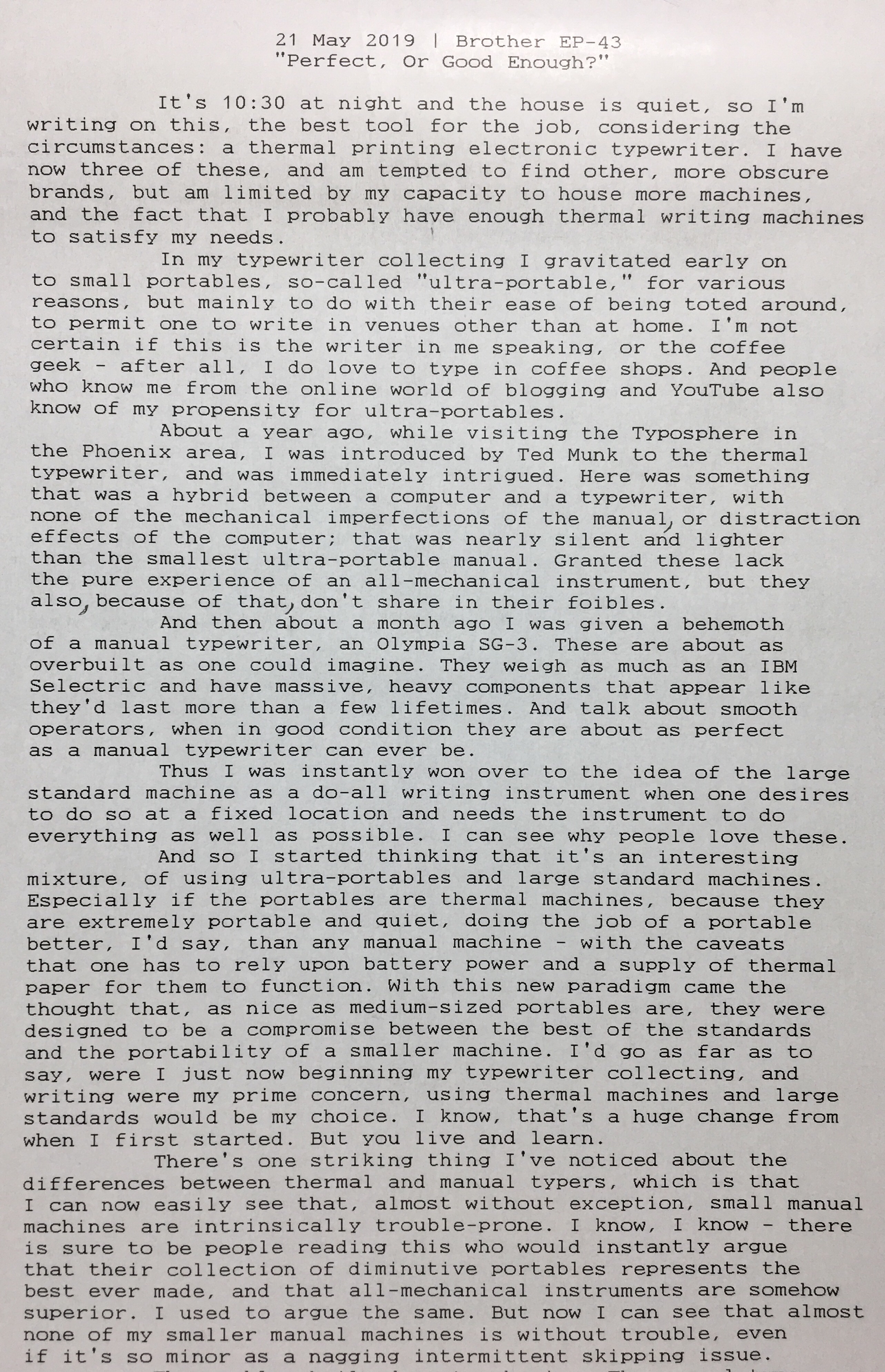
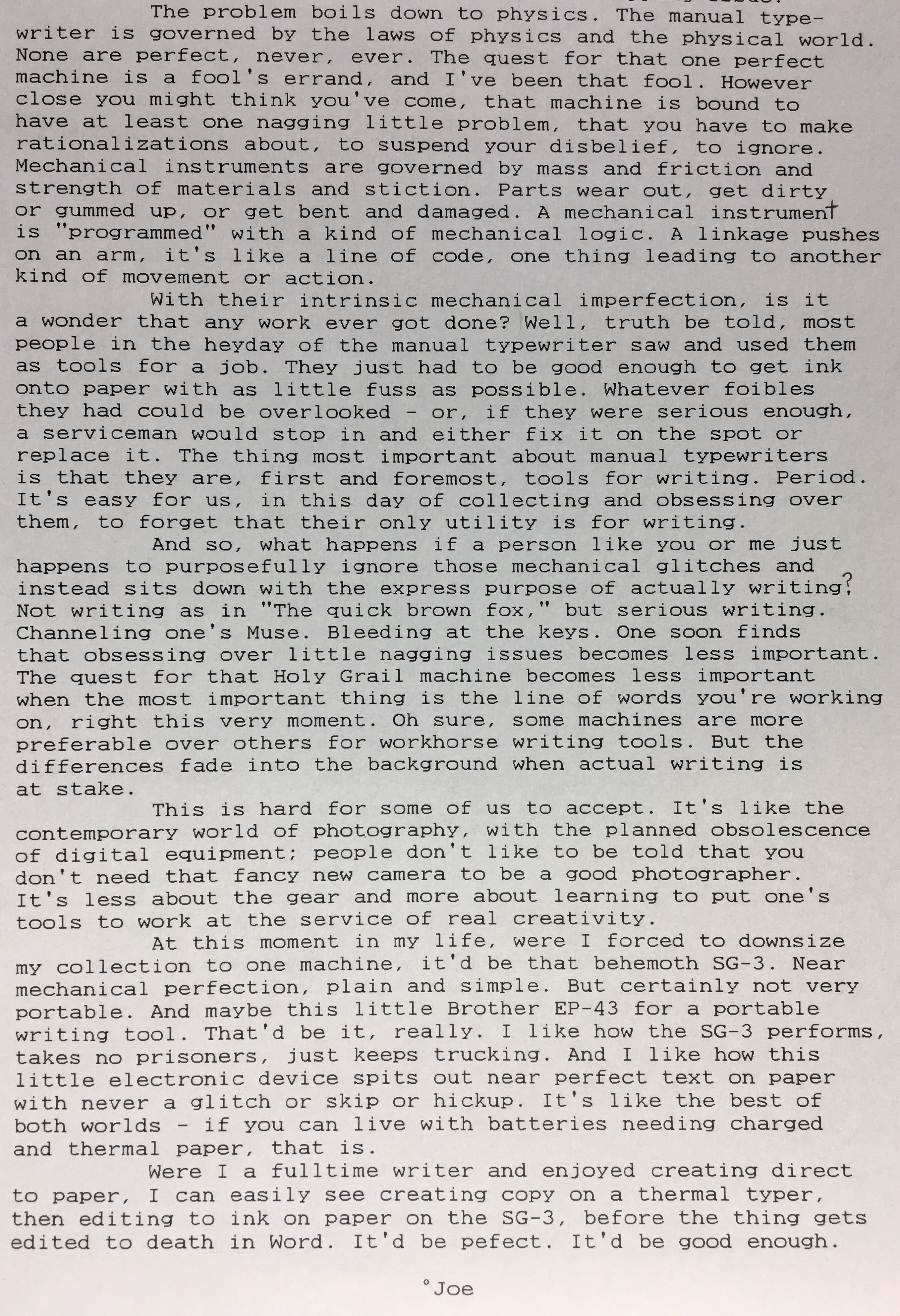
Perfect, Or Good Enough?

P1030670a
“Perfect, Or Good Enough?” Part 1
Brother EP-43 journal writing.
“Perfect, Or Good Enough?” Part 2

Post-Script: I still haven't found a great way to photograph these long strips of writings with a camera without uneven lighting, or field curvature from the lens. The iOS panorama mode comes closest, but you have to move the camera along the strip of paper with absolute precision in terms of the camera's viewing angle and speed of motion. Perhaps a slider would work. Maybe I'll rig one together.

I was inspired late last night to write this, as I was waiting for my video to upload to YouTube. These thermal machines are great for late-night missives where you want absolute quiet in the house. And it's nice to see the results measured in terms of feet and inches, rather than pages. It feels like progress. In the case of this piece (literally a piece, torn off from a roll of thermal fax paper, after it was completed), it measured nearly 21 inches in length.

Labels: , , , , ,

Wednesday, December 05, 2018

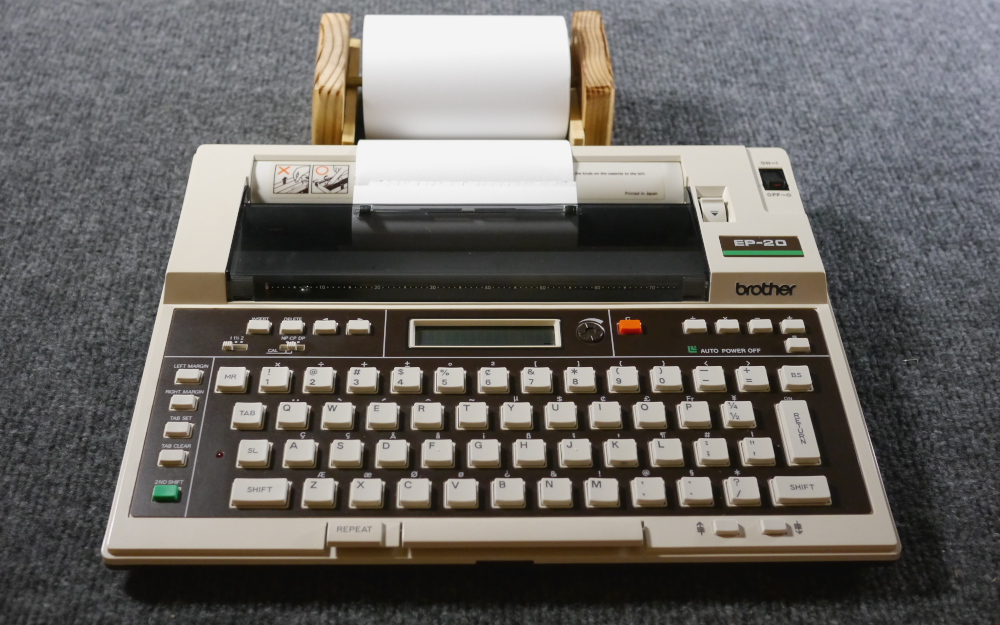
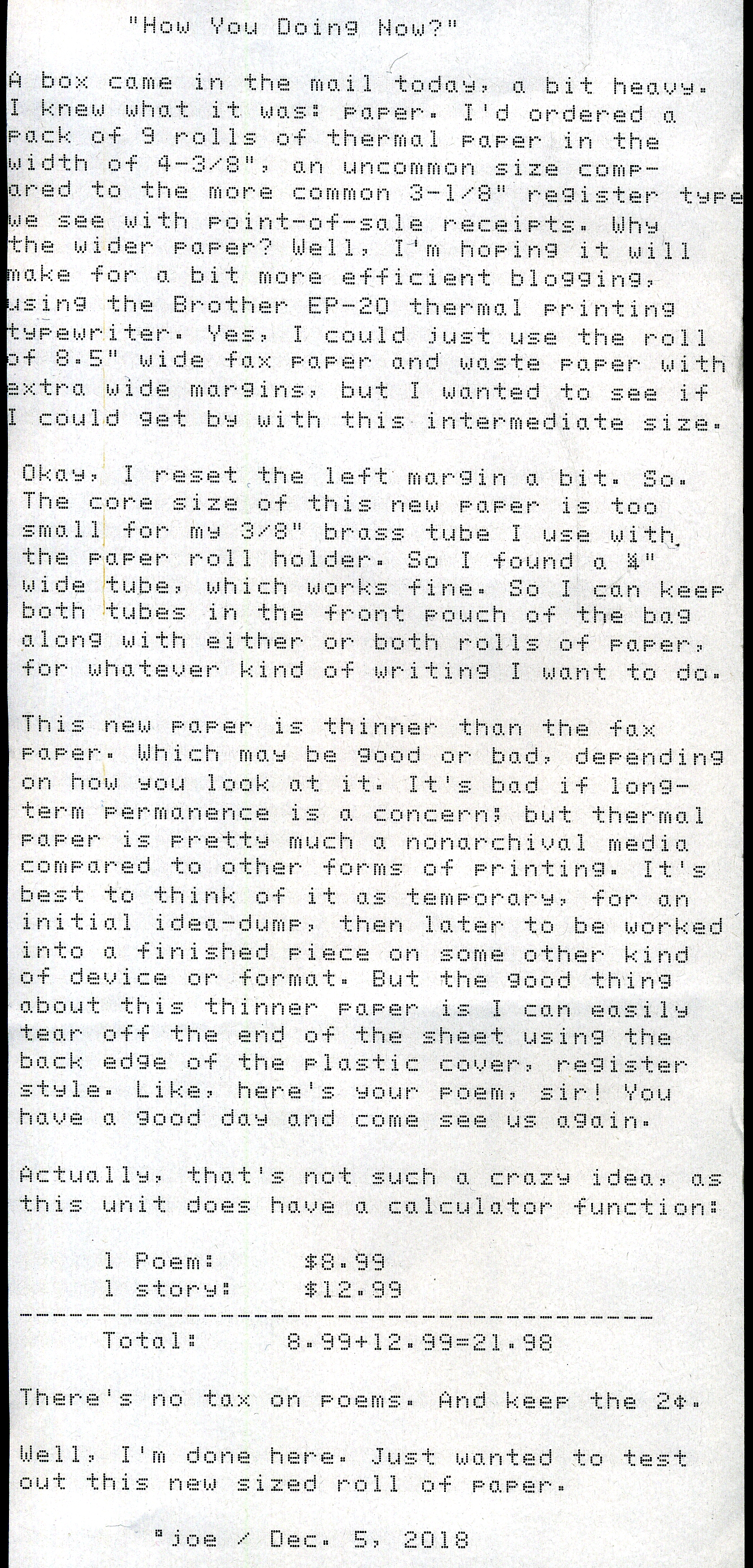
How You Doing Now?

P1010264a
Typecast070

Post-Script: I haven't thought much about how to "archive" these typings in my 3-ring binders until now. The width of the paper is too narrow to span two holes of a binder punch. I think I'll just cut some strips of thicker 11" tall paper, maybe several inches wide, then 3-hole punch that strip and tape the top of the thermal paper to the strip, sideways, and fanfold the thermal paper to fit inside the binder.

I use the term "archive" in quotes because of course thermal paper printing isn't archival. But if stored in a cool climate, it can last for years. My expected usage of this kind of printing is first-draft, to later be edited and worked into some more permanent medium; or journal entries; or just idle thoughts or notes that don't deserve permanence. The stuff that's important can of course be scanned into PDFs and archived digitally. And everything I put on this blog, image-wise, is also on Flickr - but we'll just ignore the question of how permanent online media corporations are in this era. I've a paid membership to Flickr, so all my images are, thus far, preserved from whatever upheaval is currently underway, as one company gets bought out by another. As long as I continue to pay my annual fee, that is.

I know some people have advised me to just host my own server and store my own images that way. But however you spin it, you've gotta pay somebody for some kind of service. The people who are currently complaining about the changes at Flickr mostly have been riding for free. You don't get something for nothing.

Okay, I've also got a video up today for The Tape Project series, comparing two "shoe box"-sized compact cassette recorders, a Radio Shack against a Panasonic. I expected the Panasonic to be the clear winner, but some surprises were found.


This week I also made a more permanent intro clip for my videos, that's in 4K, which in iMovie causes the rest of the video to be rendered also in 4K, even if the rest of the clips are only 1080P; which in turn improves playback quality once uploaded to You Tube. I also made an intro clip for the Tape Project.

Labels: , , ,

Tuesday, December 04, 2018

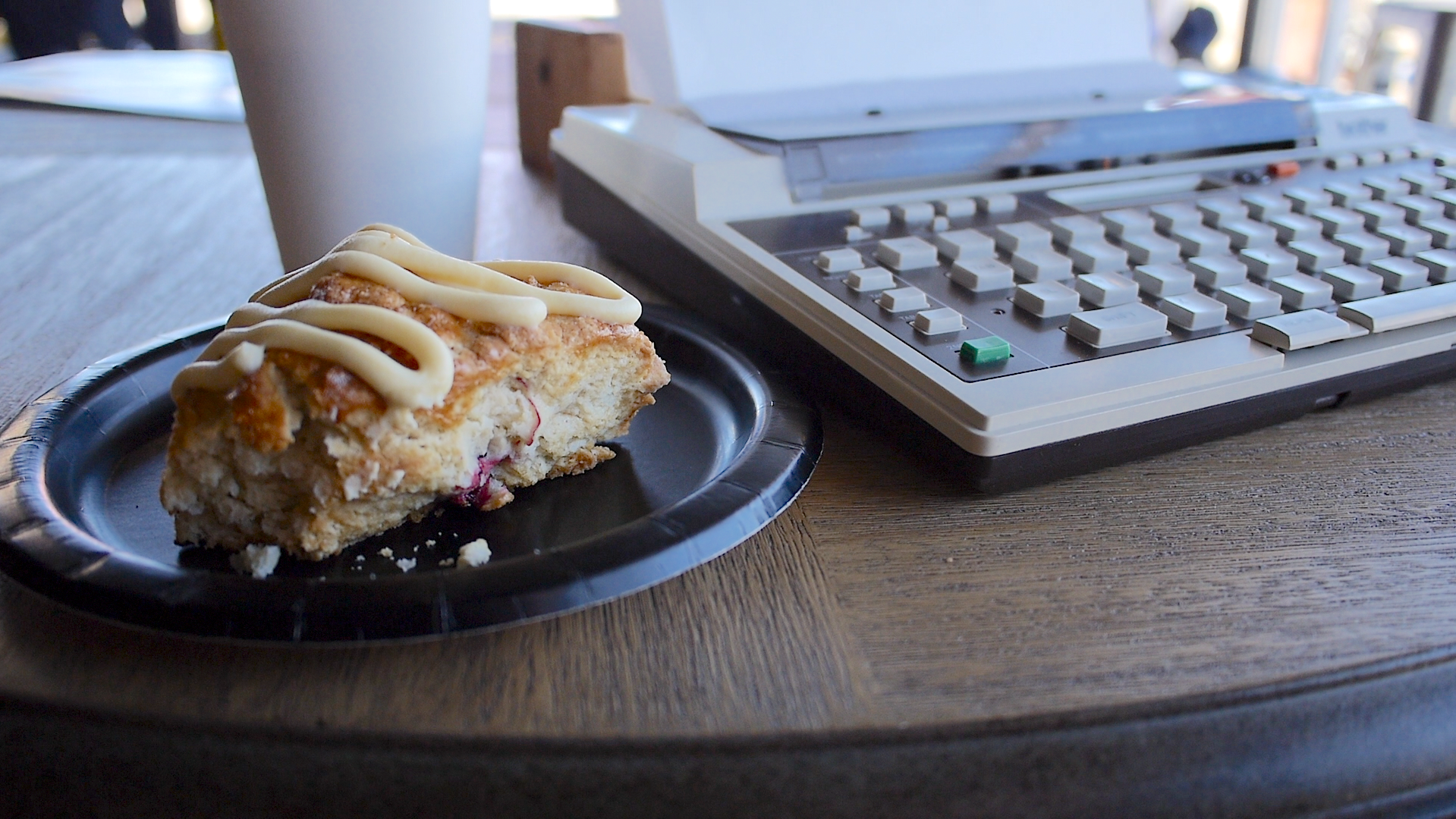
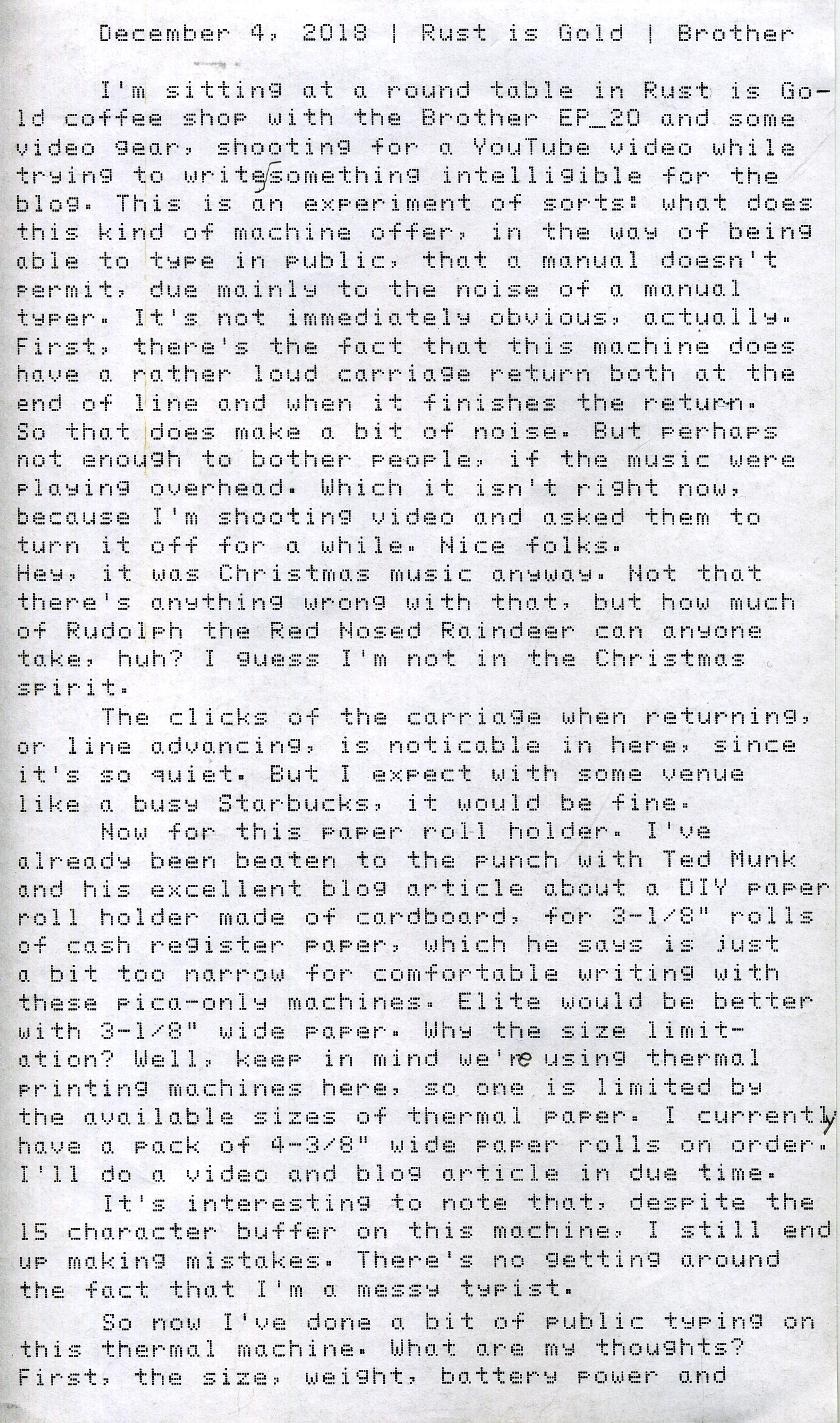
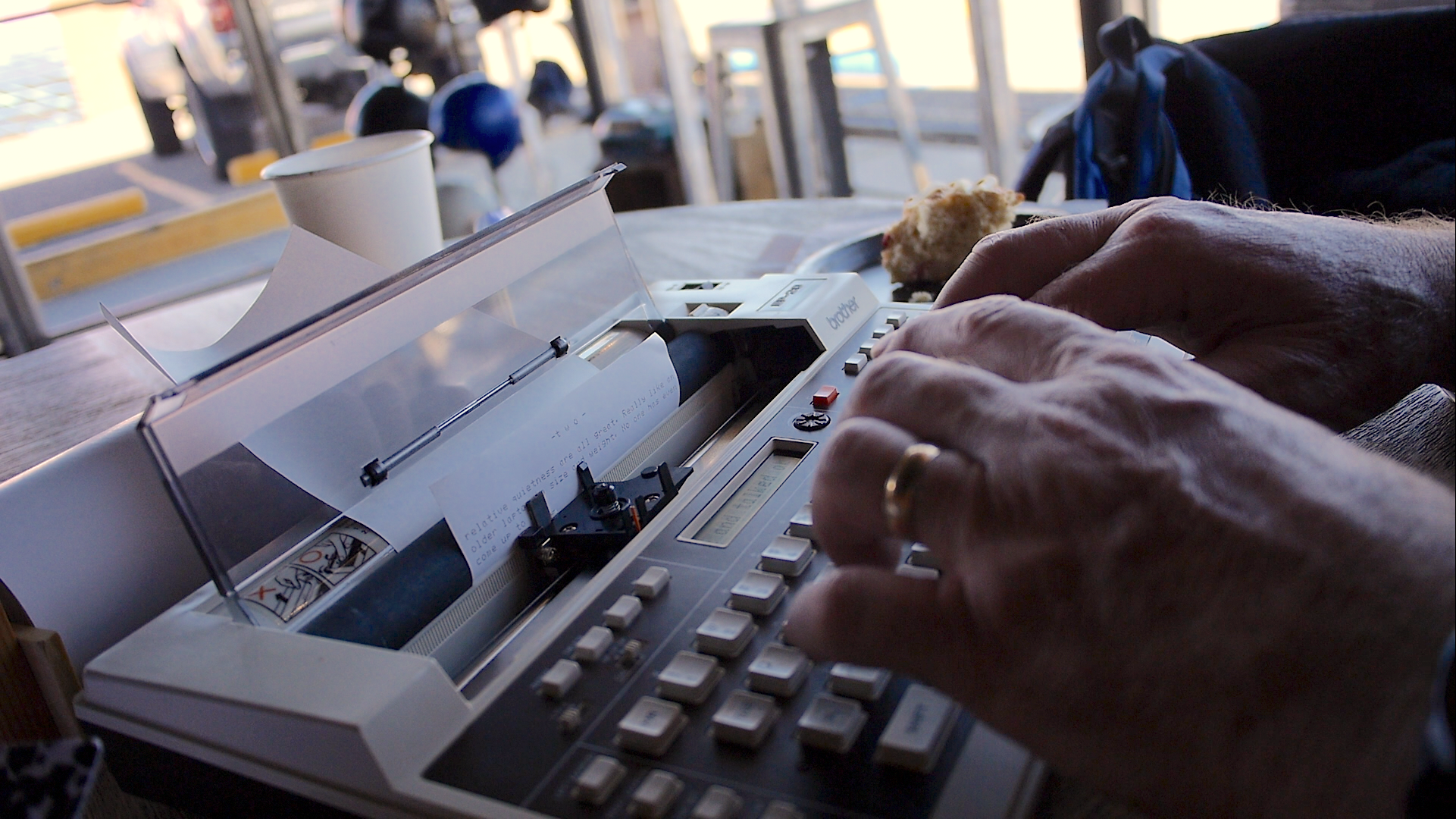
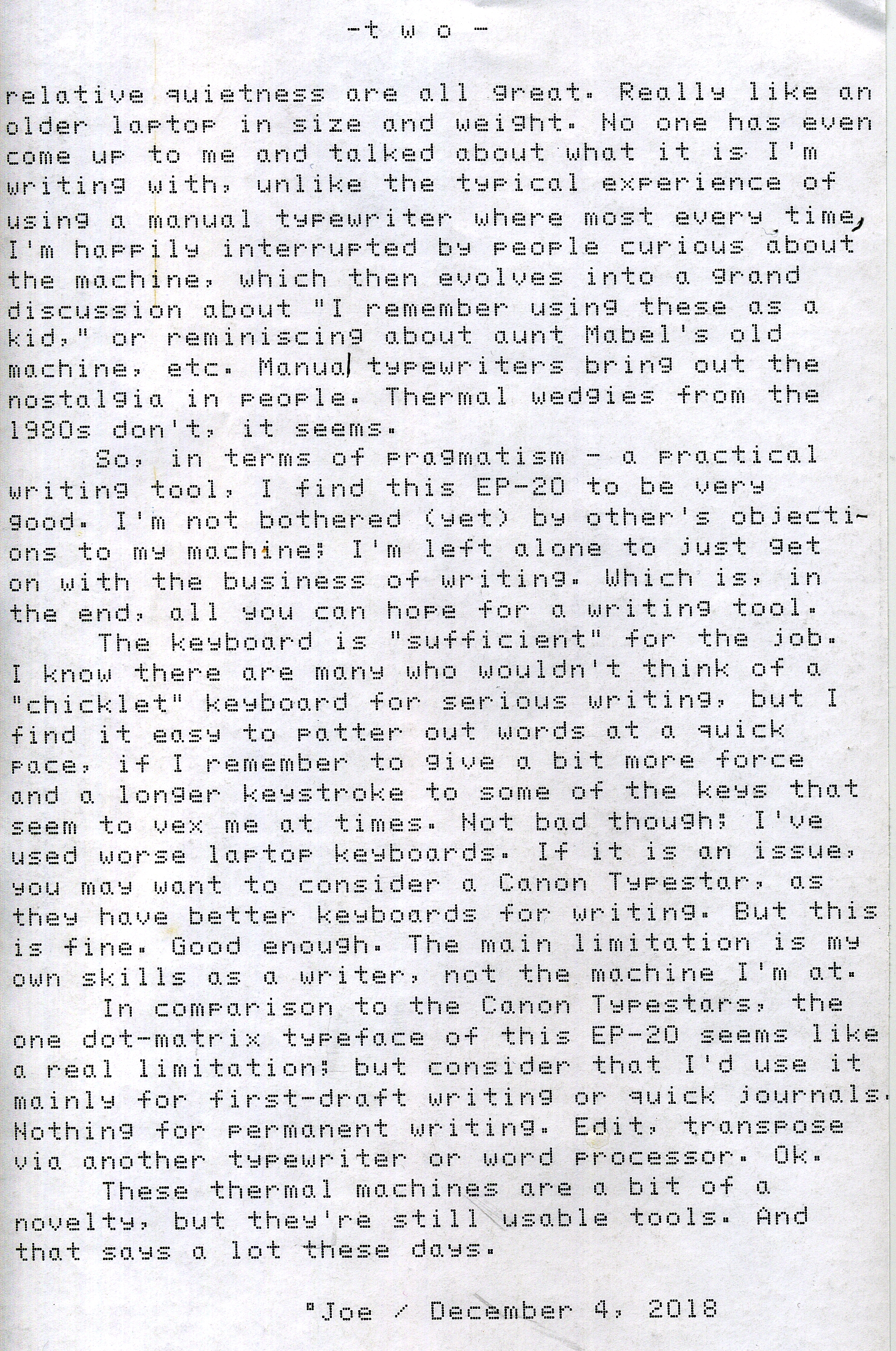
Thermal Typing at Rust is Gold

Rust is Gold
Typecast068
Thermal Typing
Typecast069

Post-Script: Ted Munk's thermal paper roll holder was much more pragmatic than mine. As is usual for these kinds of projects, I rummage through a bin in my work shop for just the right bits. Usually they aren't ideal, but I figure a way to make them work. In the case of this project, it took several iterations to get a simple, workable holder system that easily breaks down flat enough to fit inside the front pouch of the Brother EP-20 carrying case, along with a roll of thermal fax paper.

When it comes time to cut or sand wood, I like to open the garage door and air out all that sawdust. But cold weather kept me from doing so, and now I have a cleanup job to do when (or if) it does warm up sufficiently.

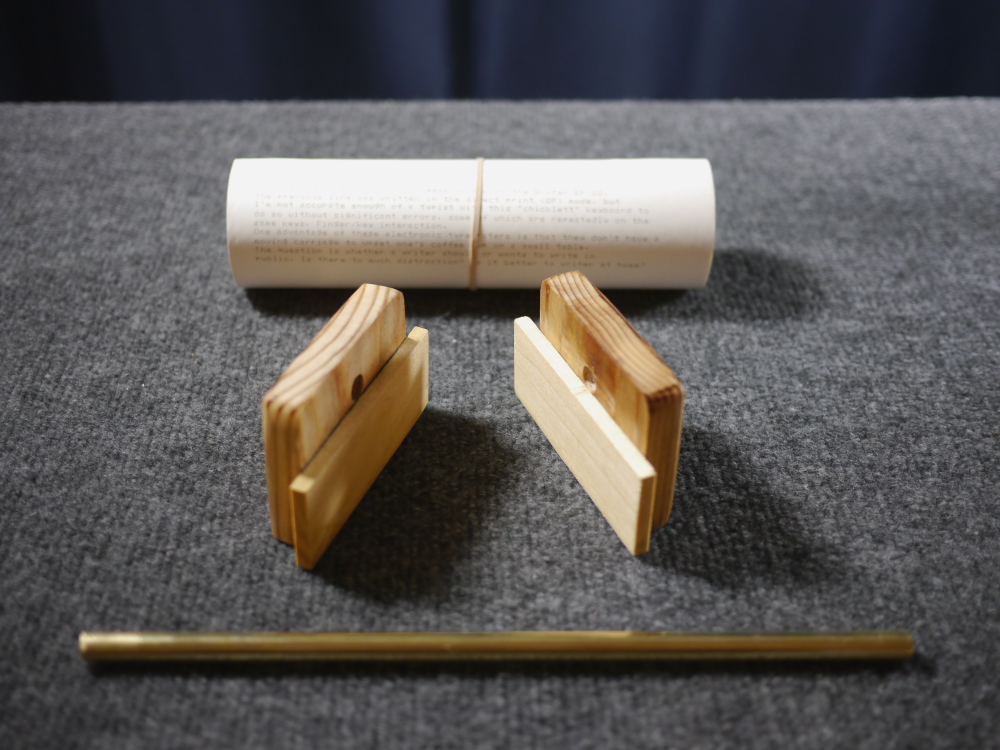
Here are the components to my paper roll holder, disassembled:

P1010255a

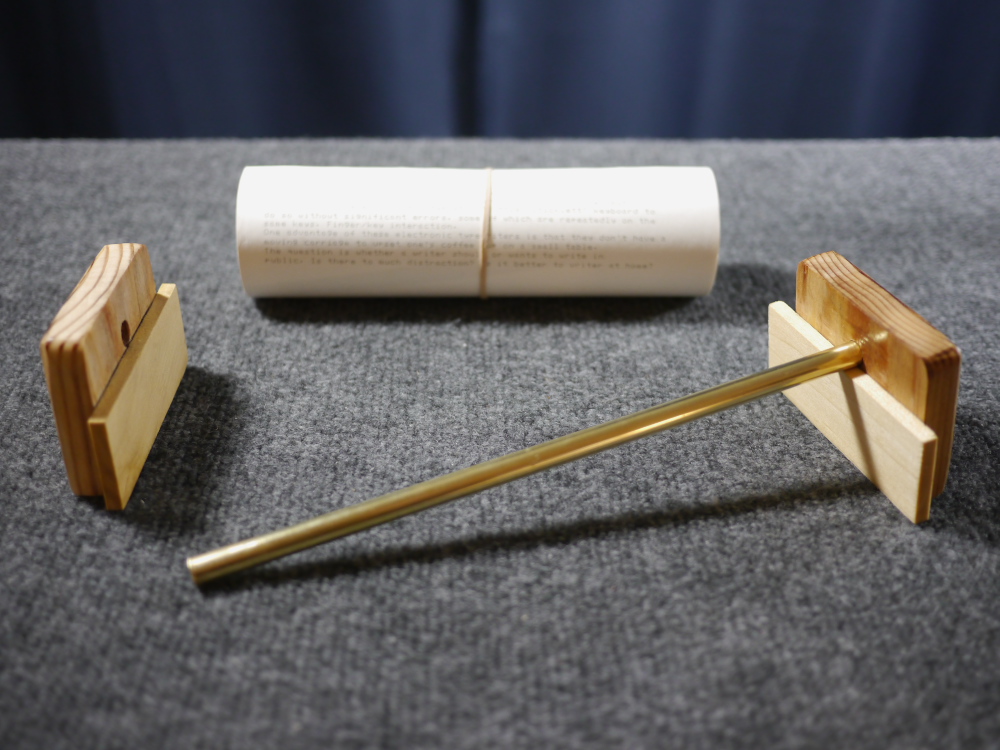
To assemble, first one end of the brass rod is inserted into one of the side brackets:

P1010256a

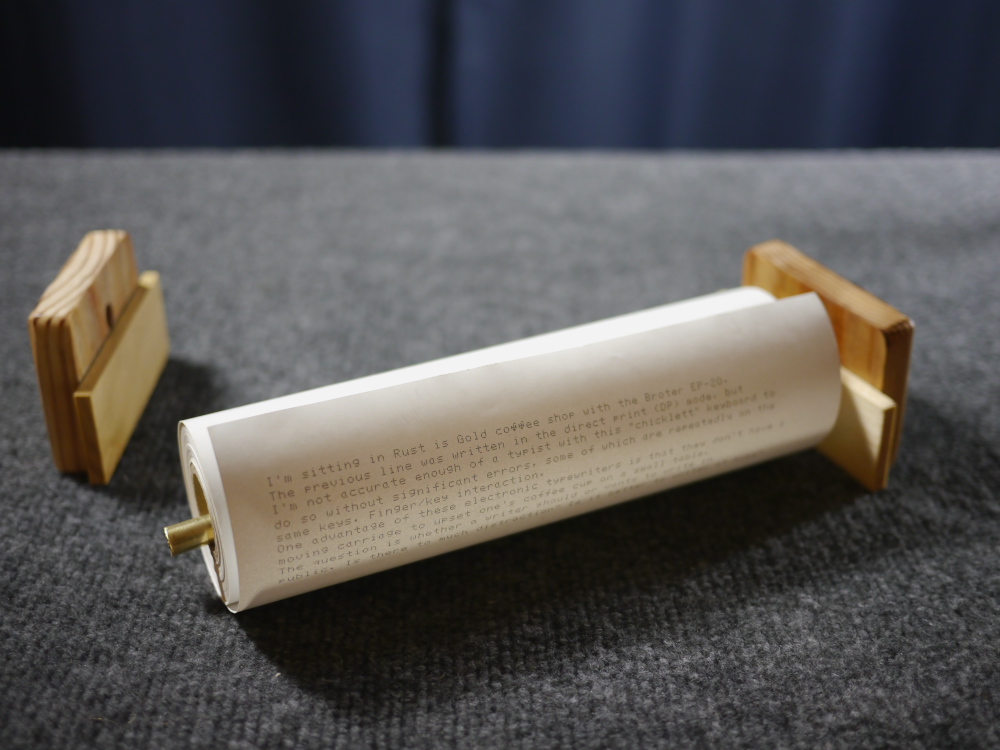
Then the paper roll is slipped onto the rod:

P1010257a

Then the other bracket is installed:

P1010258a

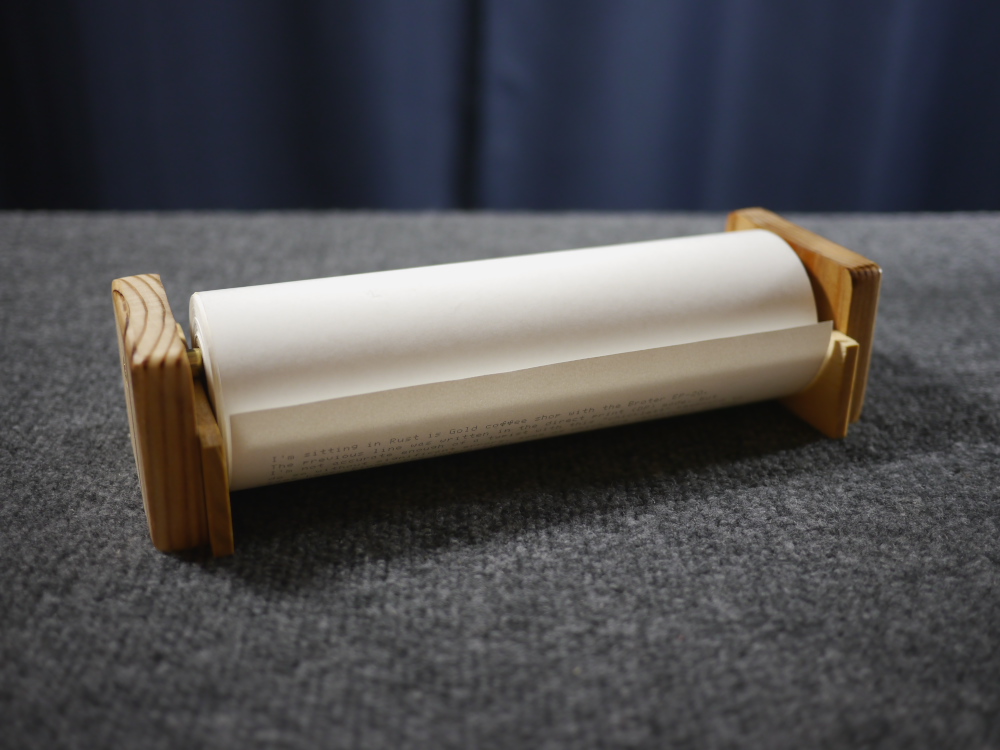
There's enough clearance for the bottom of a full roll not to drag on the table:

P1010260a

The bracket has a low profile and sits conveniently just behind the machine. In practice it helps to pull out a "service loop" of paper and drape it behind the bracket, so the paper has enough slack to easily feed into the machine.

P1010261a

I thought the experience of writing using this system was actually rather good; better I think than using a manual typewriter in public, which for me is fraught with constant worry about what other people think about the noise. Definitely a usable writing system, and easy to tote around.

Here's a video about today's venture:

Labels: , , , , , ,

Wednesday, June 06, 2018

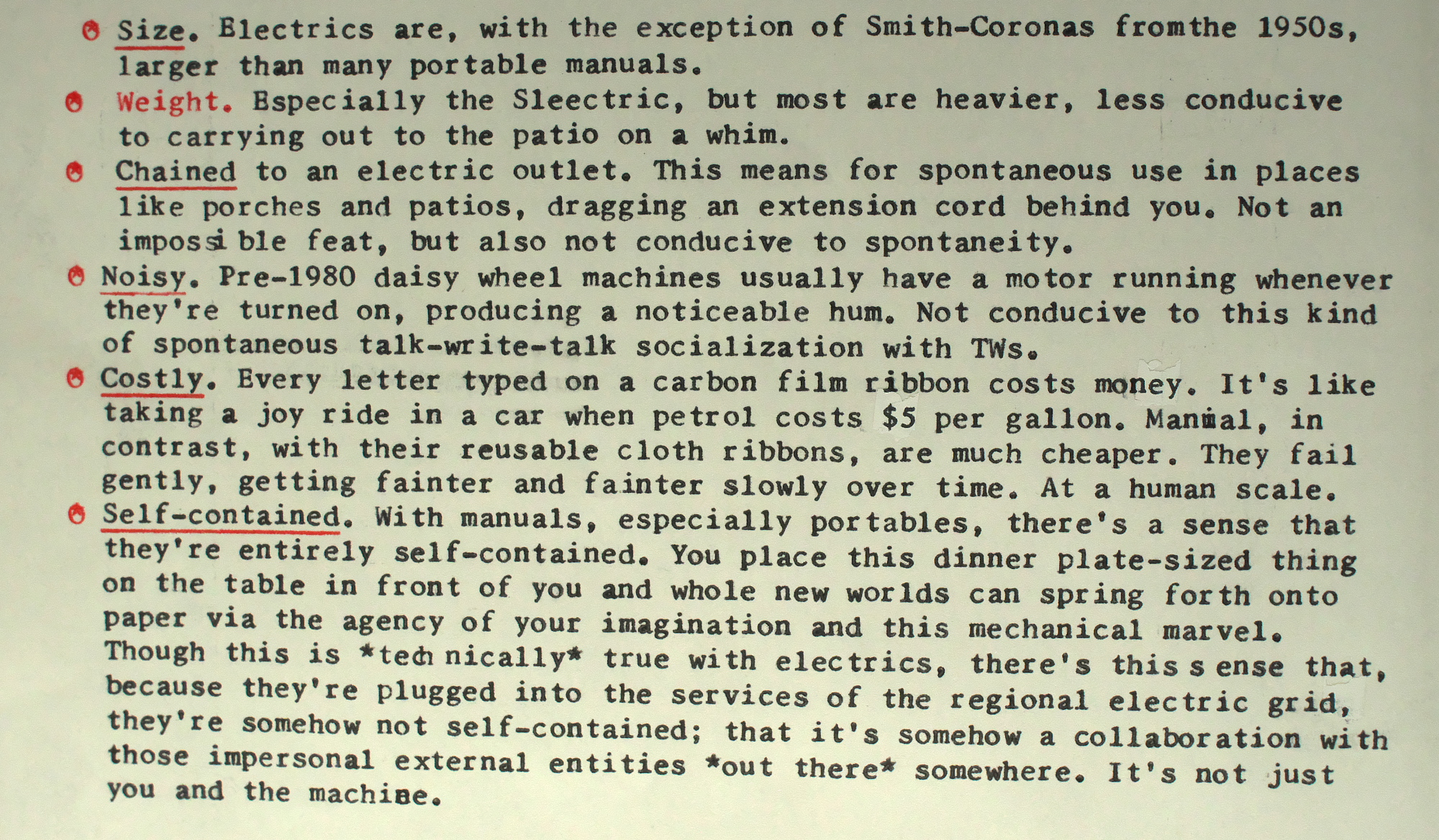
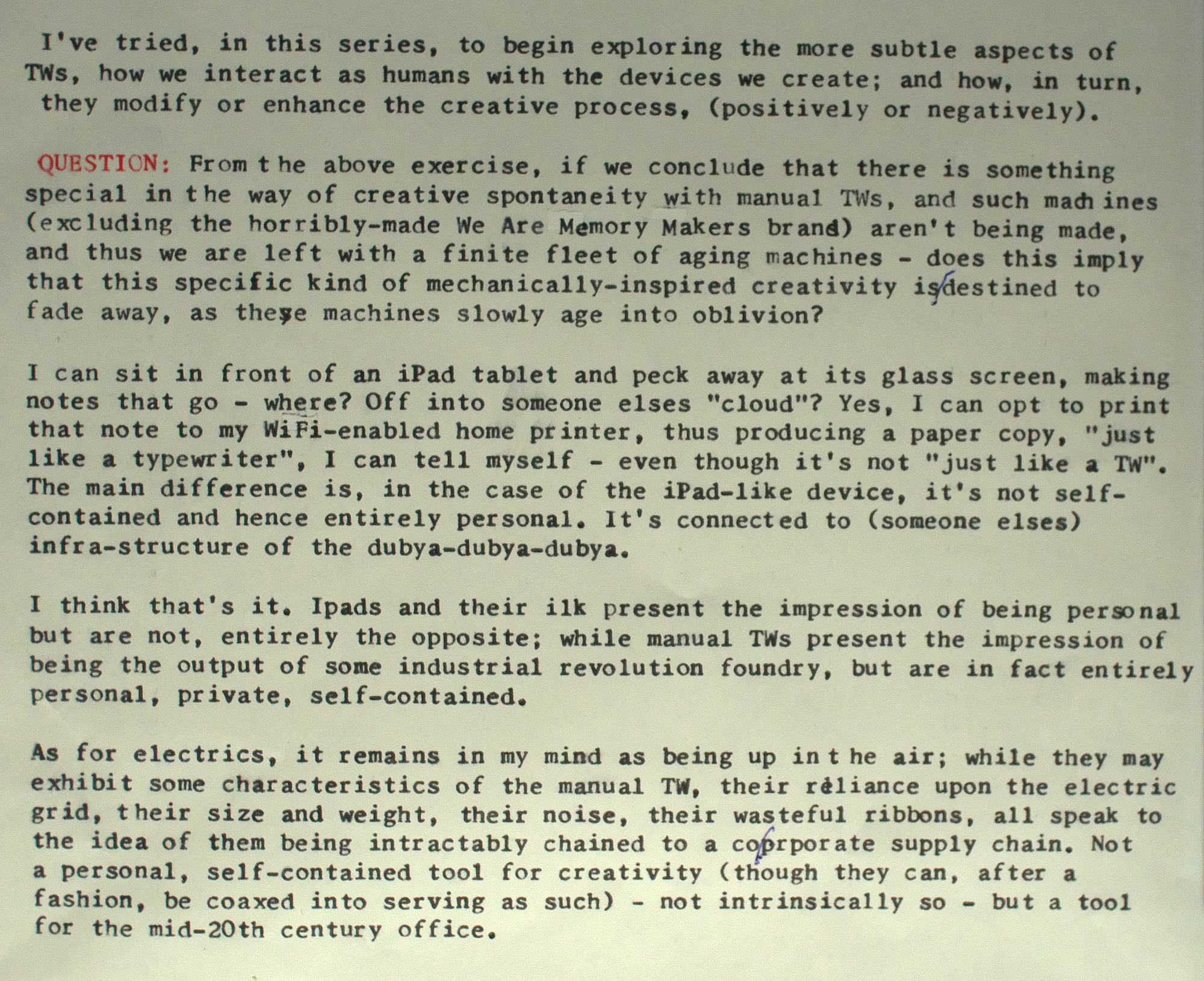
Manuals, Electrics and Creativity

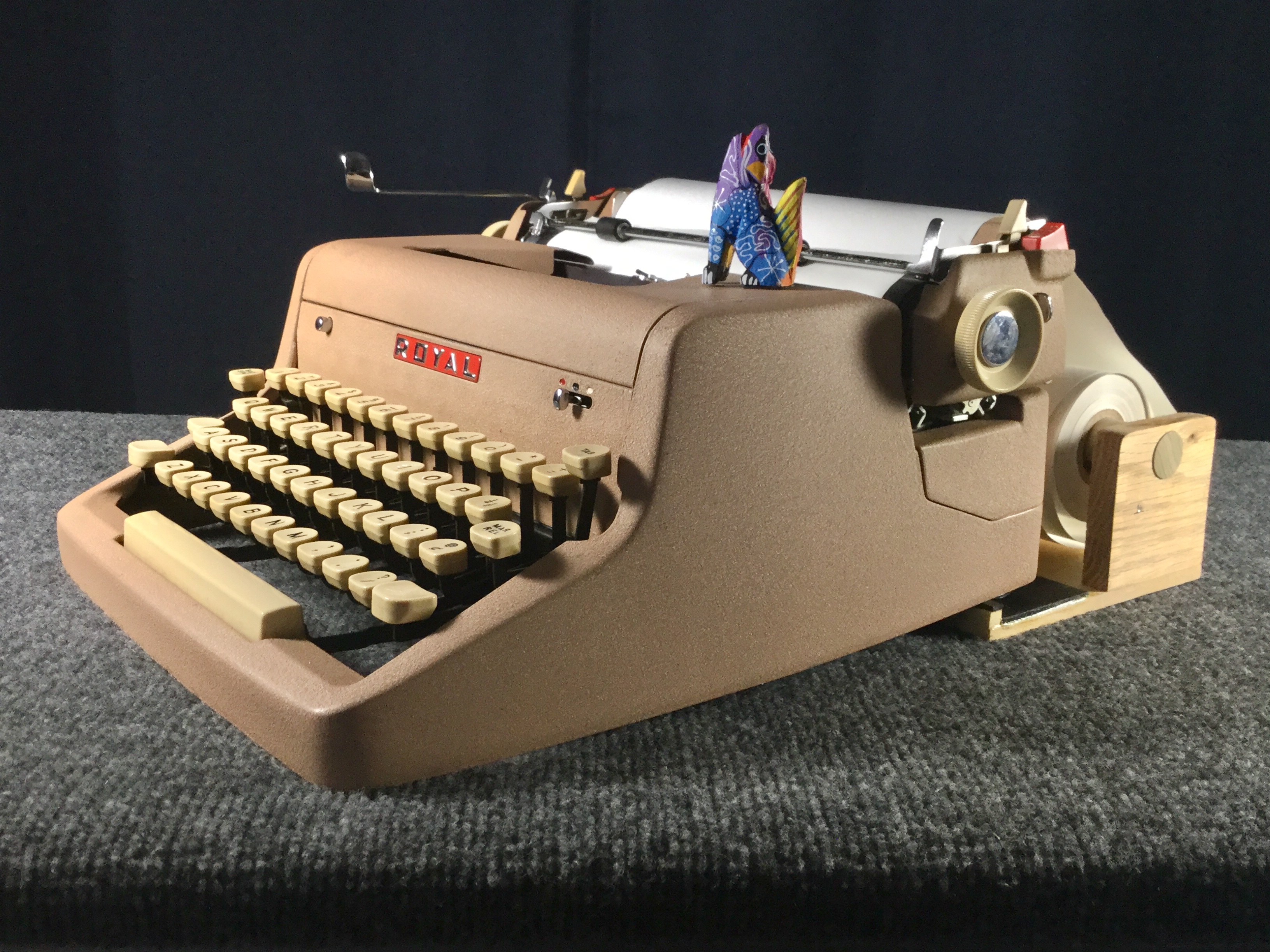
Adobe Rose, Howling Coyote, thermal fax paper and holder

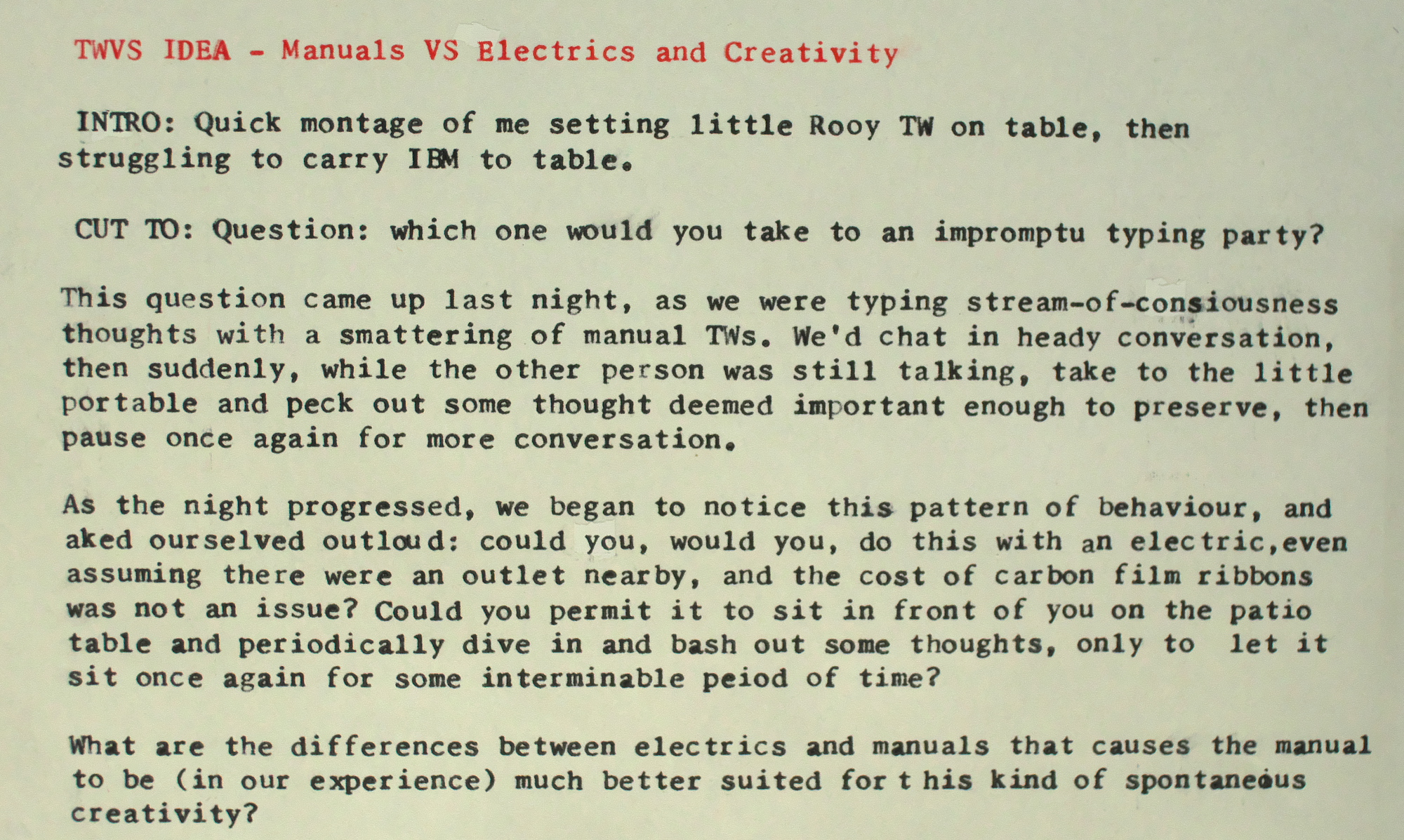
See that lovely creature above? No, not the fake coyote, the Royal. Her name's Adobe Rose. I sat down at her this morning and typed out some extensive notes, in preparation for a video, on the subject of creative writing with manual and electric typewriters. I used the roll of thermal fax paper and liked the results. Very dark imprint, which she seems to do easily; better than many other machines in my collection. And a rather clear imprint for being elite-sized typeface.

But these thoughts didn't start today. They were the result of a late-night typing and socializing session I spent last night with fellow typewriter nerd Kevin.

In keeping with my renewed promise to blog more often ("Captain's blog, star date 60618.2"), I'm taking these raw video production notes and throwing them out to the typosphere - warts, typos and all. You can provide your own spell checking.

Being as how the piece was from one continuous roll, I've taken the liberty to divide it into three parts. Afterwards, you'll find a link (malicious advertising) to the resulting video. Enjoy.

Typecast022a
Typecast022b
Typecast022c

Labels: , , , , , , , ,

Monday, May 21, 2018

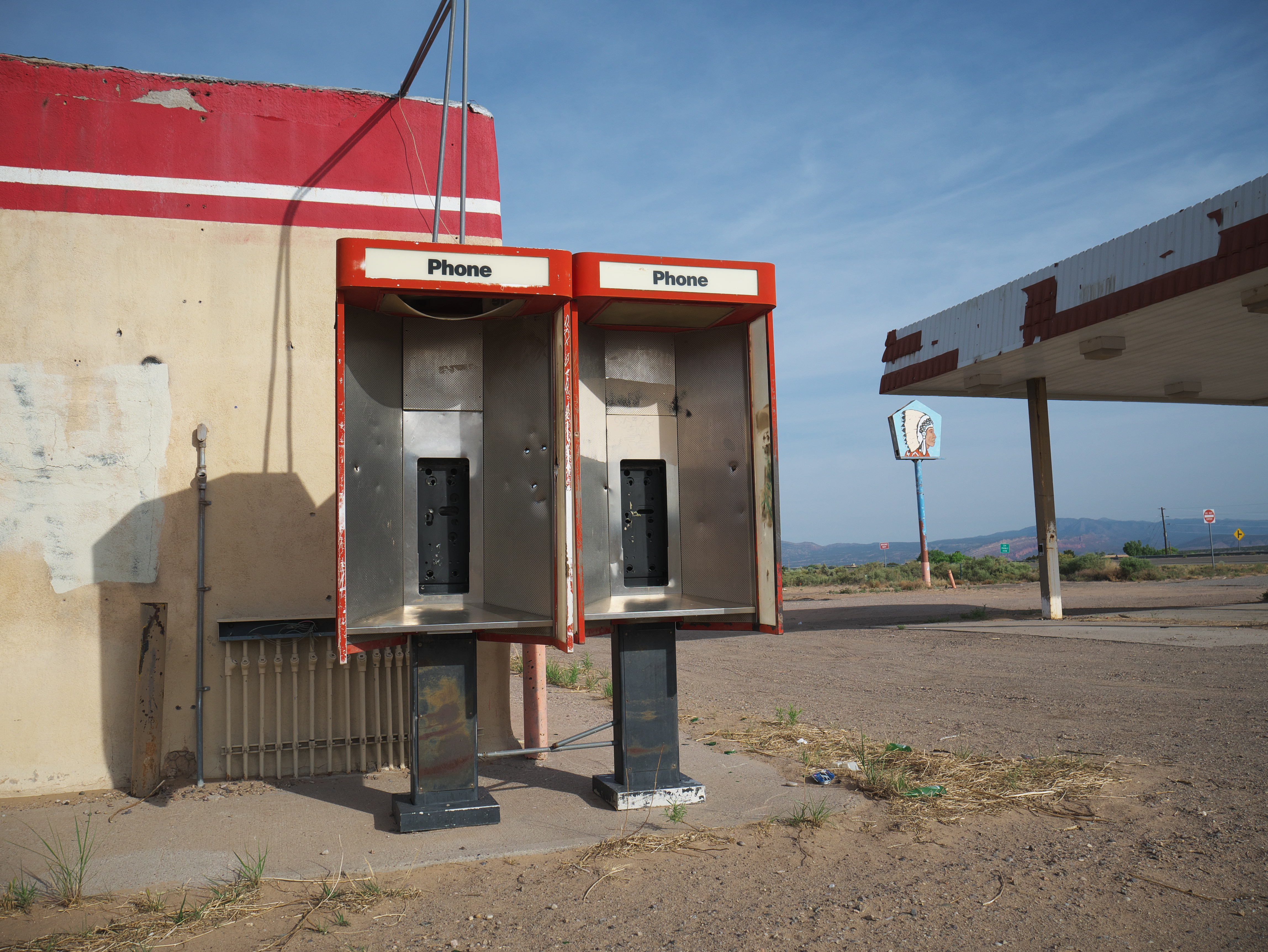
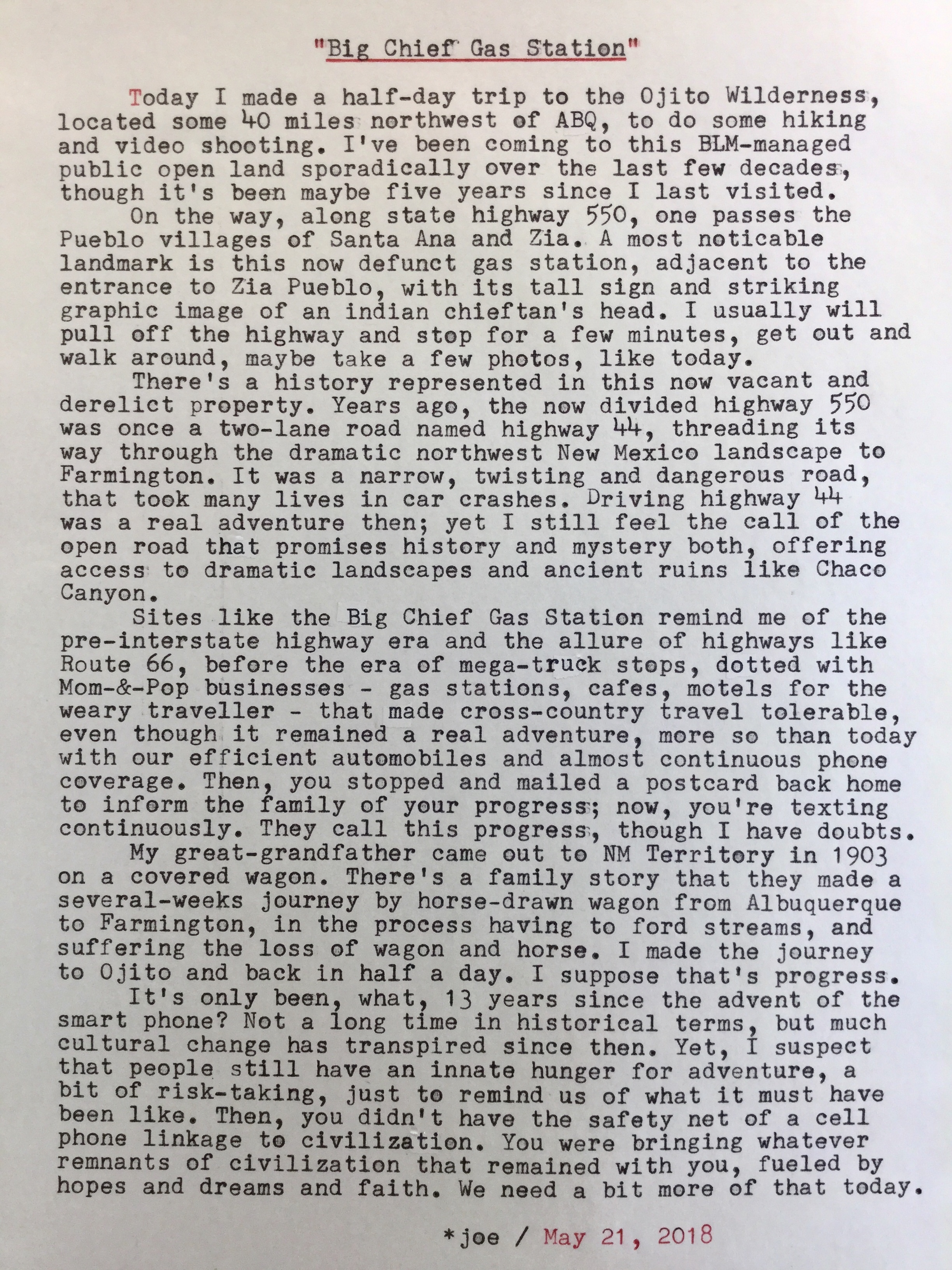
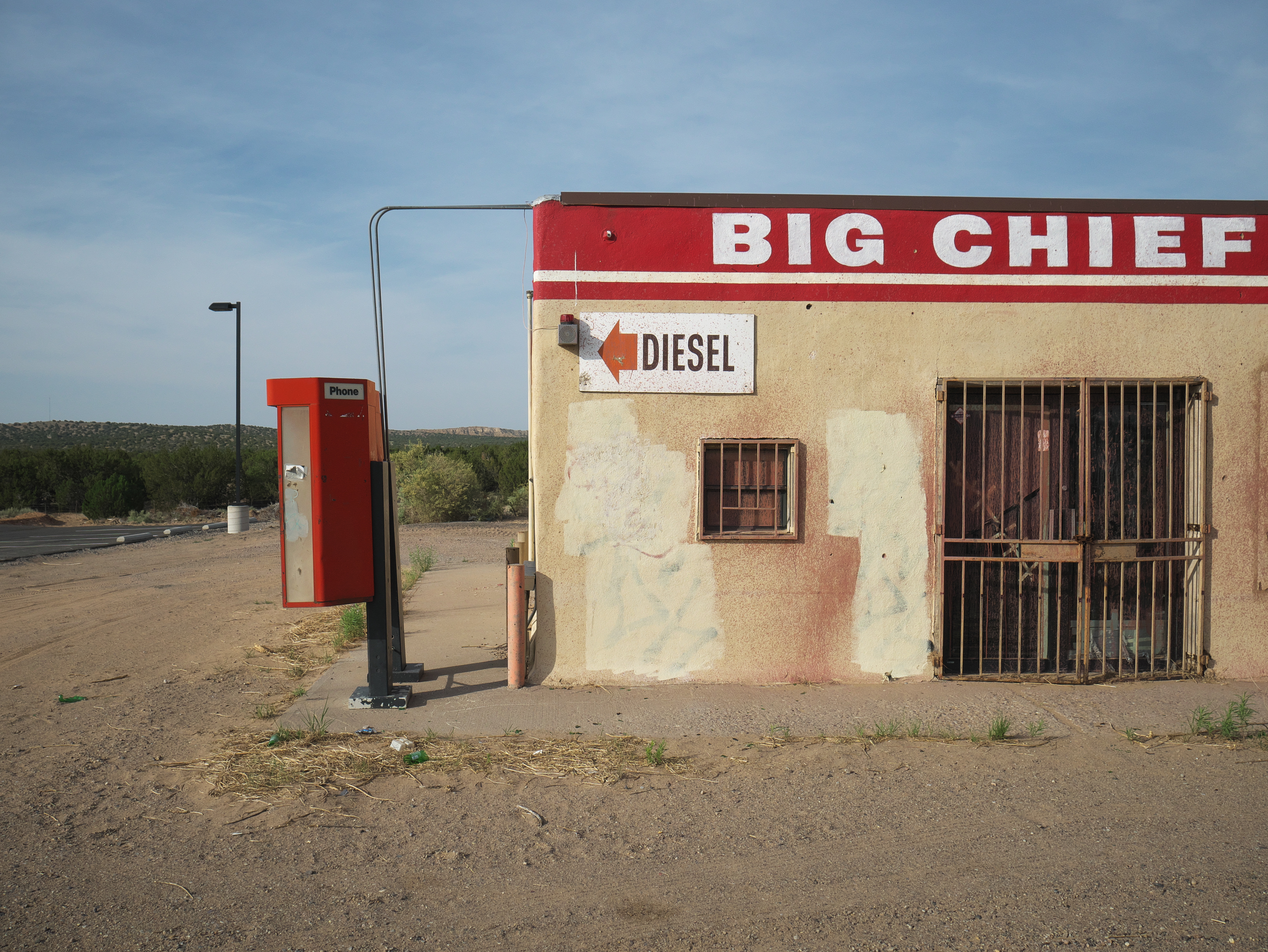
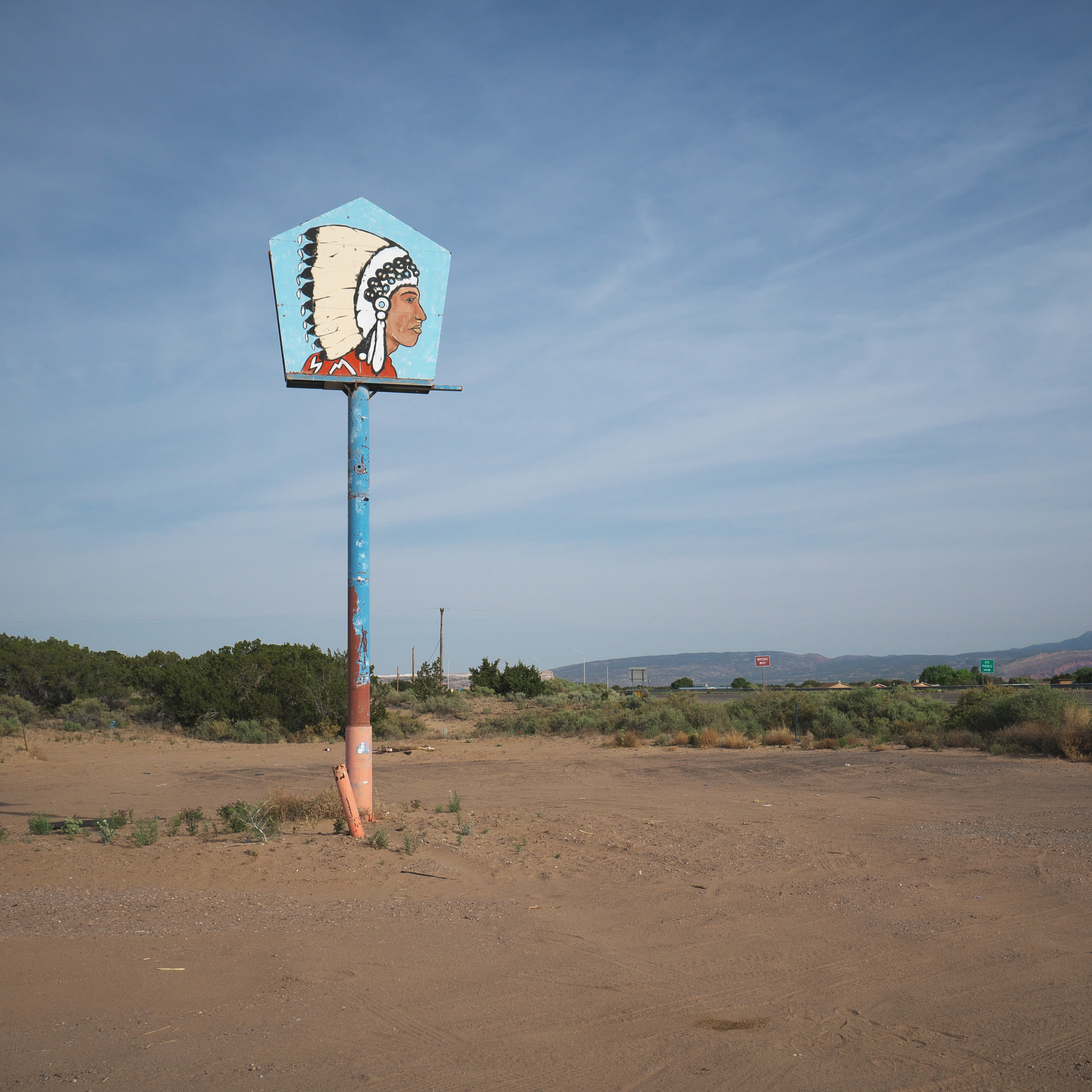
Big Chief Gas Station

P1010718
“Big Chief Gas Station”
P1010714
P1010711

Post-Script: Photos via Panasonic Lumix G7. I was also shooting video on my recently acquired Canon R800 camcorder. Yes, an actual camcorder. I'll be making a video about this soon. Here's the This is Not a VLOG video for today:


Typecast via Remington Quiet-Riter and roll of thermal fax paper.

Labels: , , , , , , , , ,

Sunday, May 20, 2018

Wither Goest the URL?

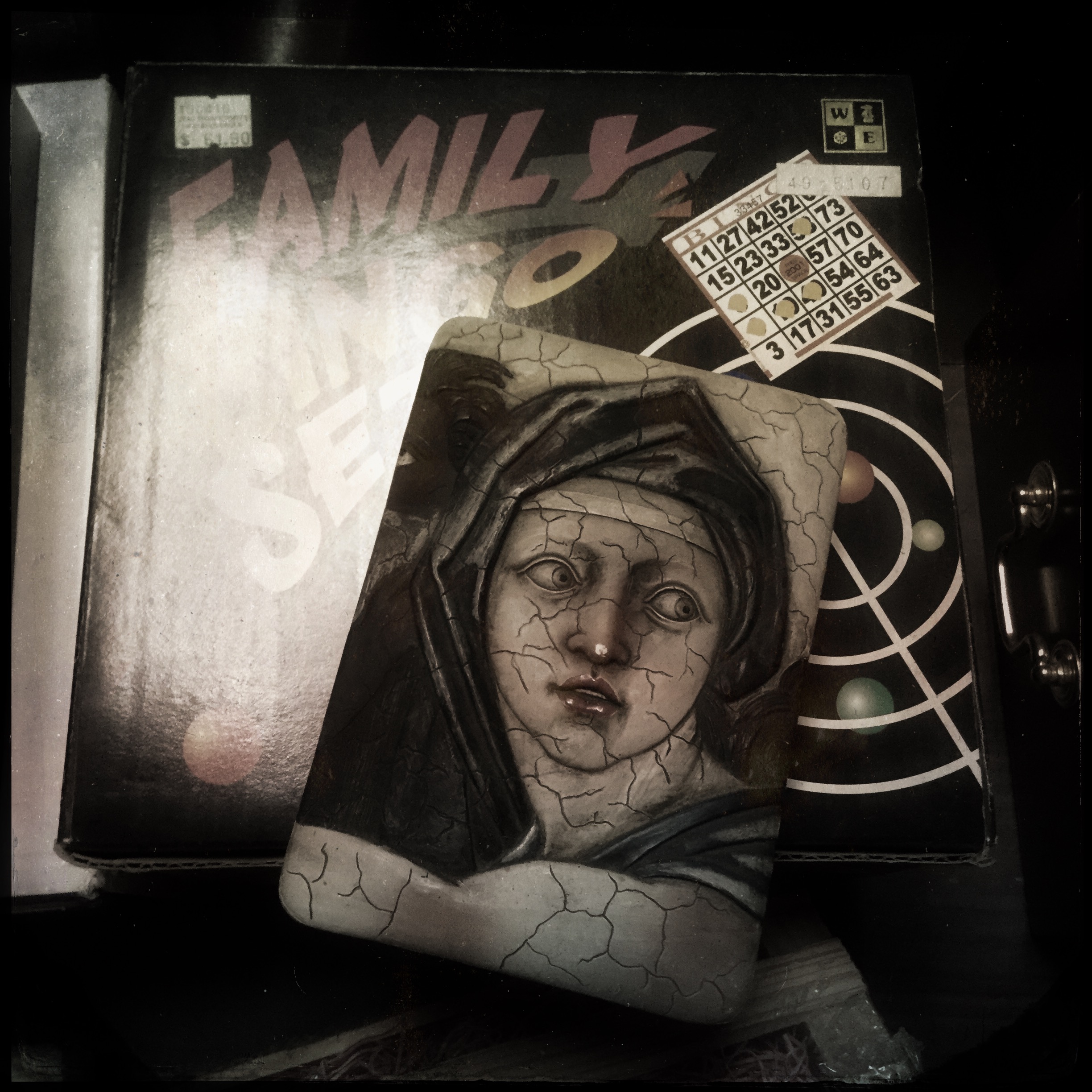
Family Bingo"Family Bingo"

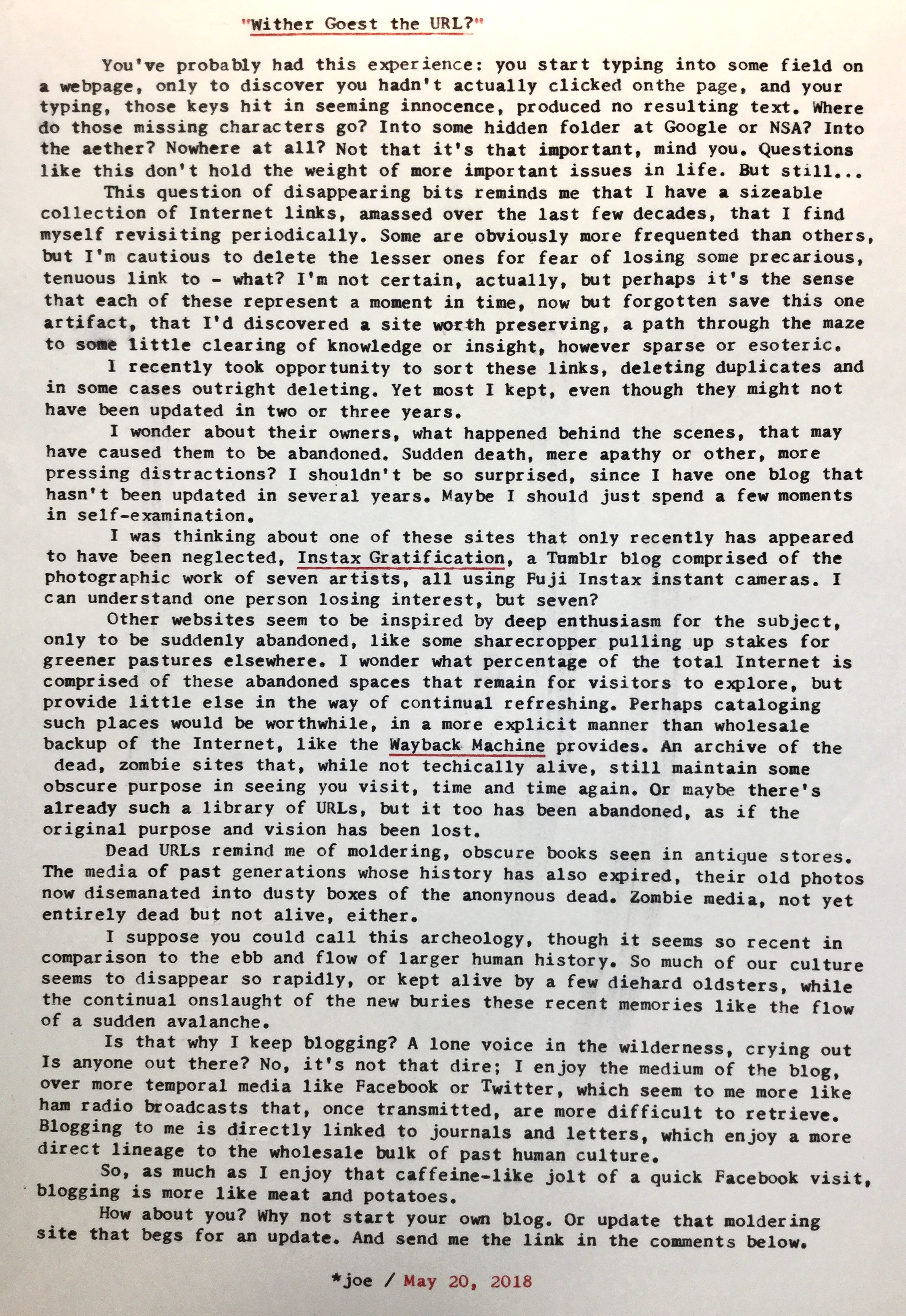
“Wither Goest the URL?”

Post-Script: I, on occasion, have these little thoughts or observations, too minuscule to make into some big project like a video but important enough to share, in the hope that someone will find value; or, that they might amass, each a mere stone, into some sizable structure, sometime in the future. I need to do more of this. Perfect is the enemy of good enough, someone once said. In this case, grandiose is the enemy of the humble. Something like that. Just little thoughts, observations, one piled atop another, to become, what? I don't yet know. But I've got to keep amassing these pebbles.

Typecast via Adobe Rose onto the reverse side of thermal fax paper, using a new old-stock silk ribbon.

Labels: , , , , , , , , ,

Monday, May 14, 2018

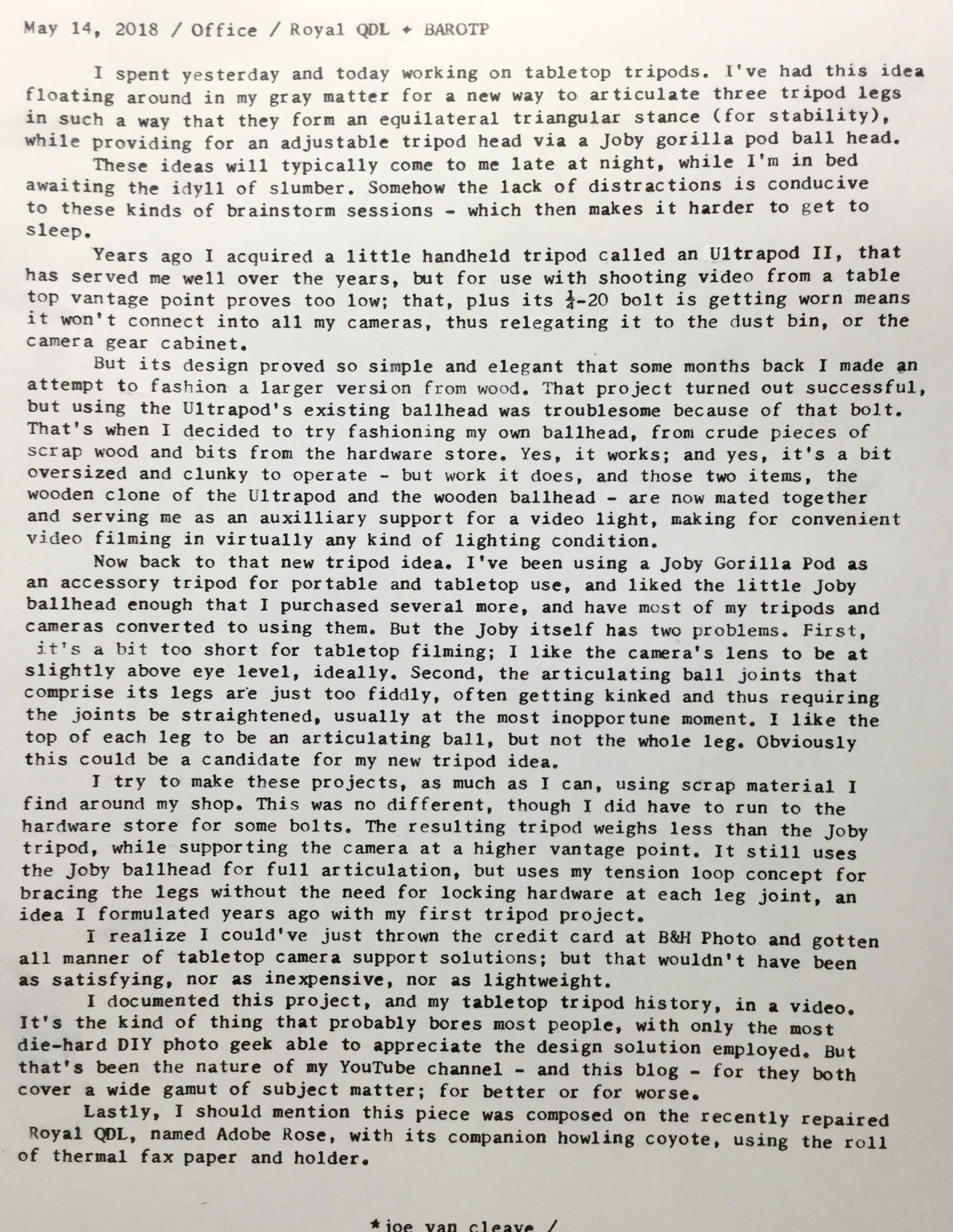
More Tabletop Tripods, Adobe Rose and Thermal Fax Paper

Adobe Rose, Howling Coyote, thermal fax paper and holder
More Tabletop Tripods

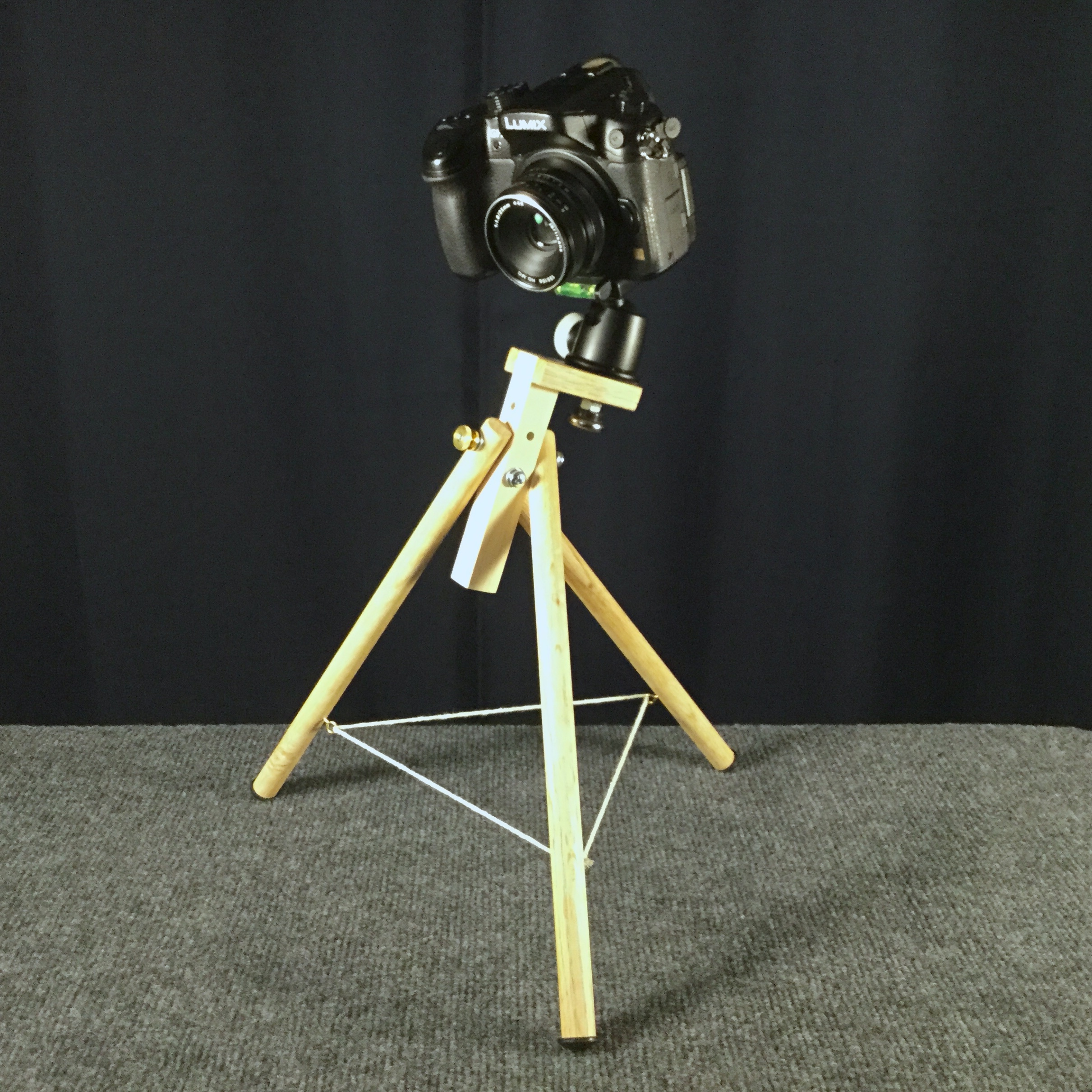
Post-Script: Here's the newly crafted tripod with Lumix GH3 and 7Artisan 25 lens affixed atop a Joby ball head. Note the tension cable (actually twine) for making the tripod's stance stable, using the weight of the camera itself, without the need for locking hardware at each leg joint:

New Tabletop Tripod Design

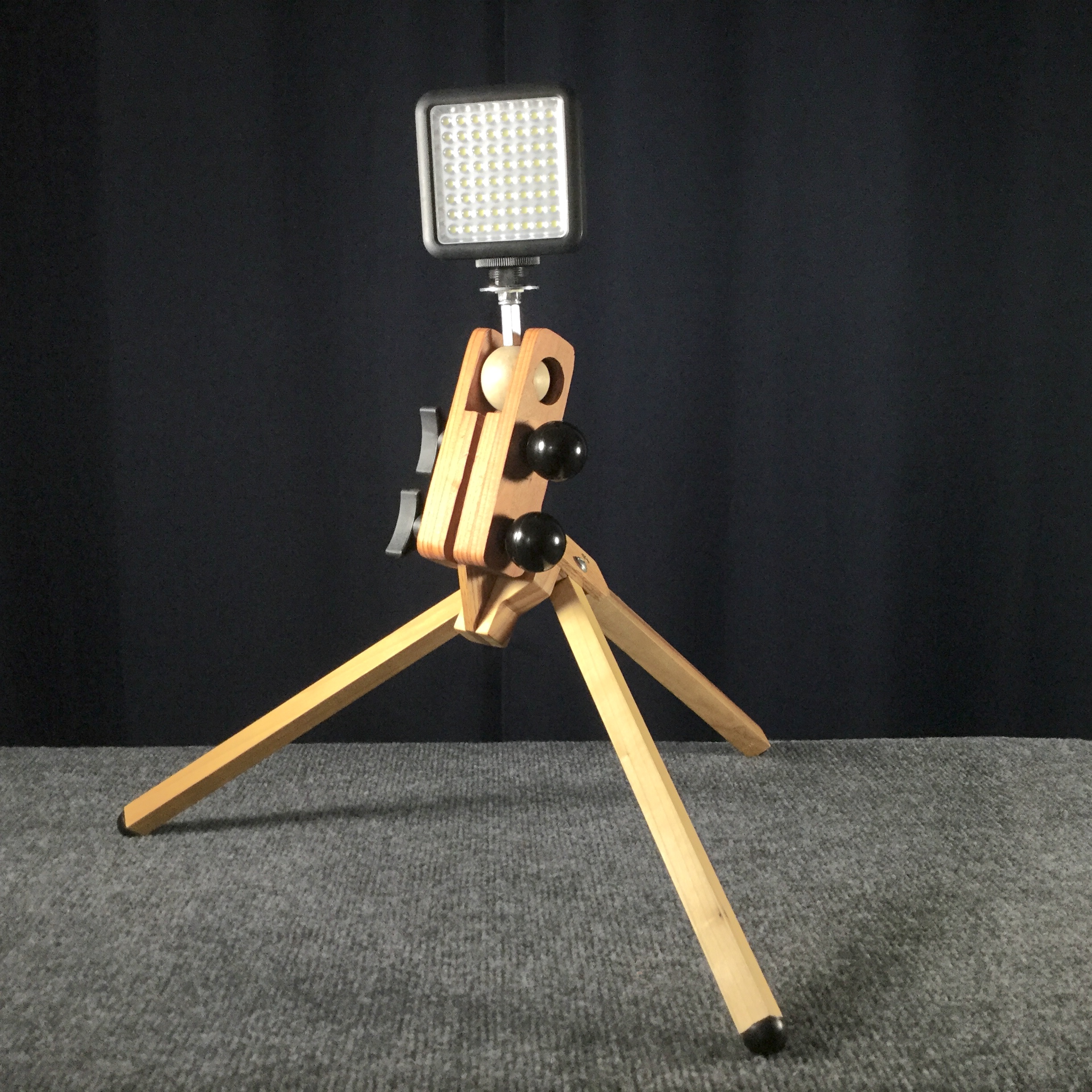
Here's the larger wooden version of the Ultrapod II, with crude handmade bullhead prototype. I trust it for supporting an auxiliary video light more than an expensive camera. The two secondary legs spread apart to 90 degrees from the primary leg, thus not requiring any locking hardware at the leg joints or tension cable:

Inspired by Ultrapod Design, Plus Crude Ballhead

The cost of the hardware store knobs was more than the rest of the project combined, since the wooden bits were from my scrap bin.

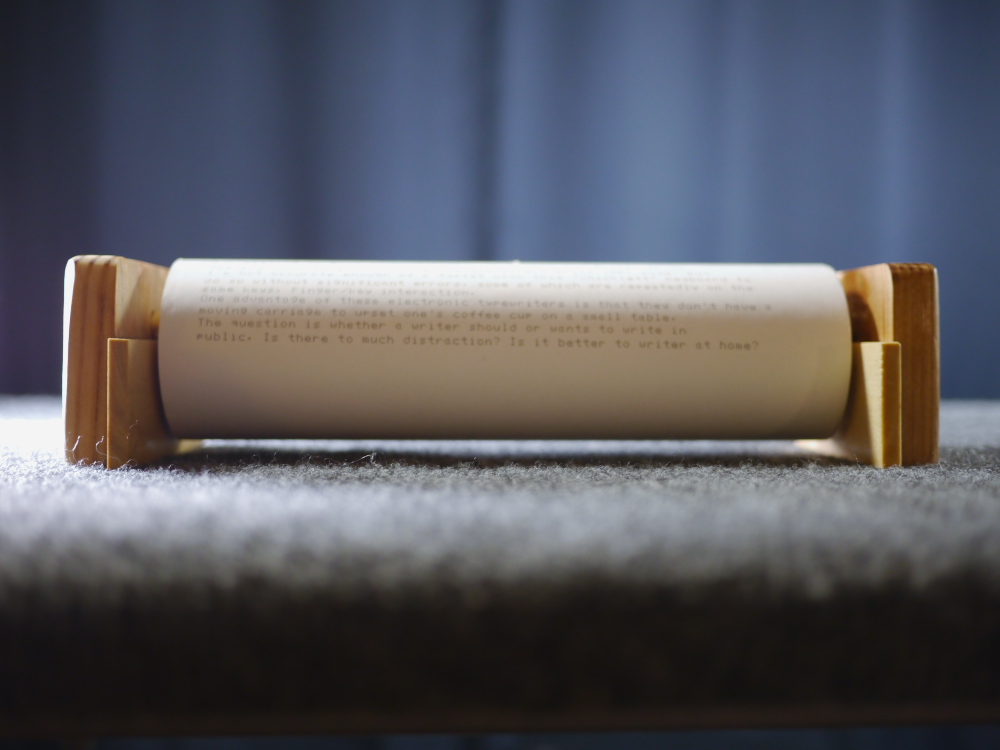
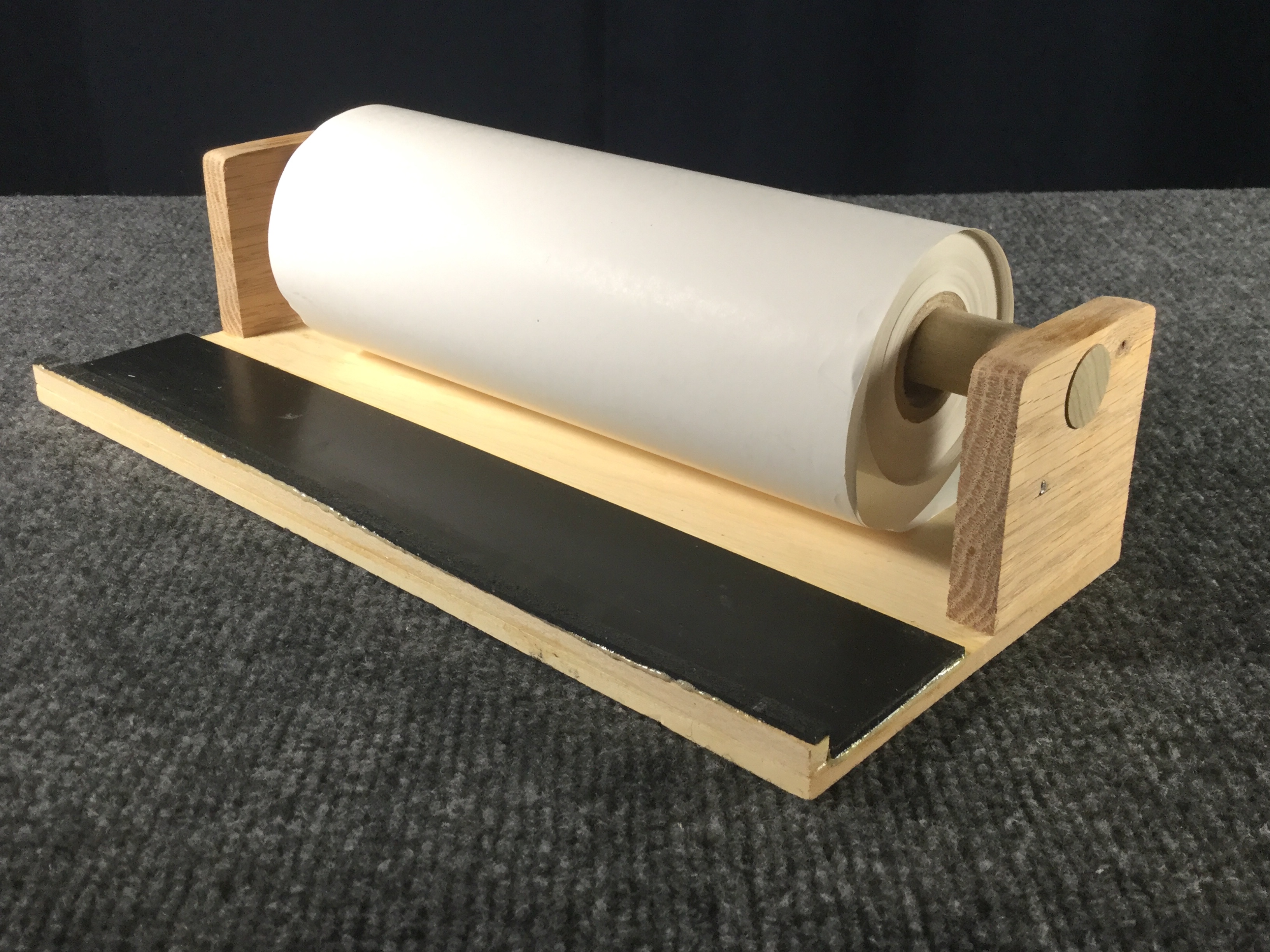
Here's the newly crafted paper roll holder for 8.5" wide thermal (or other) paper rolls. It's designed to rest behind the machine, with the rear feet resting on the rubber pad (or the bottom edge upon the front ledge), with a hearty leader of paper draped behind the work table, permitting enough slack for the carriage's side-to-side movement:

Paper Roll Holder

In the top photo you can see my Royal QDL (named Adobe Rose), with companion howling coyote, mounted atop the paper roll holder.

Here's a video about using thermal paper rolls in typewriters:


I should mention that the nice, dark imprint from the typecast above (written on the backside of a thermal fax paper roll, on the Royal QDL) is due to a new old-stock silk typewriter ribbon, gifted to me by my friend Kevin. In the above video I'd erroneously attributed the dark imprint to the thermal fax paper itself.

And here's the video about the updated tripod project:

Labels: , , , , , , ,