Wednesday, August 14, 2019

Tuesday at the Press Club
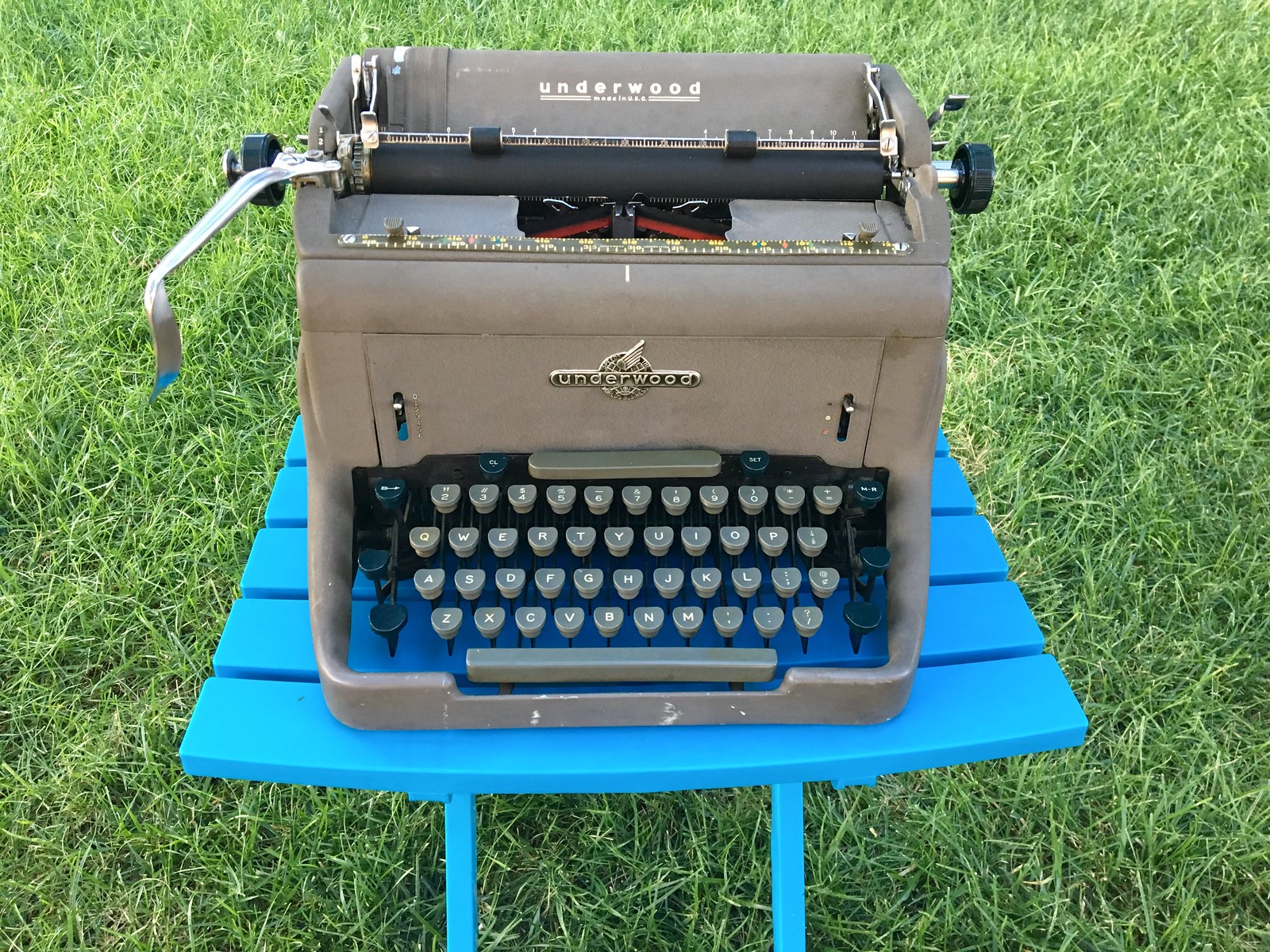
Underwood S
“Tuesday at the Press Club”

Post-Script: I've spent most of the last few days working on the Underwood. It's working pretty good now. I ended up threading the ribbon directly onto the machine's spool hubs, instead of using a ribbon wound onto their own spools. This is the generation of Underwood that uses the Remington-style spools with the wide center hub and the auto-reverse lever that senses end of ribbon by ribbon slack and causes a little spring-loaded lever to rotate out a slot in the hub, dropping a linkage through the hollow ribbon spindle that engages the drive shaft to shift sideways to reverse the ribbon. It wouldn't work reliably with the ribbon spooled onto Remington-style spools, but works fine directly threaded onto the machine's hubs. But it does tend to wind the ribbon a bit wonky, causing the ribbon to creep up the pack as it's wound. Perhaps something to do with the angle of the ribbon drive shaft verses the vibrator's guides, but I haven't fully figured it out. But at least it works.

Now the final cleaning is in order. I'm using a spray degreaser and gentle application of a Scotch-brite pad on the textured paint, with care it seems to remove the years of nicotine stains pretty well without affecting the paint.

I still have to wind a bit more tension onto the spring motor, as the carriage gets a bit sluggish near the right margin.

I like the easy-to-remove platen feature, a bit easier than a Smith-Corona 5T series to operate.

A major issue will be cleaning and reattaching the ~3/8" thick sound proofing pads. Has anyone had luck washing these pads with water, or do they disintegrate when wetted? I'd like to remove as much grunge and mold as possible.

I think this is going to be a good typer for its owner.

Our ABQwerty Type Writer Society seems to be gaining traction, with several newcomers showing up on Sunday. It's going to be fun seeing where this goes.

Kevin and I had a deep discussion tonite about the future of the typewriter hobby. When we get old enough, I hope we find good homes for our collection. More importantly, I see the need to evangelize the younger folk into learning typewriter repair, to keep the torch burning. There are a finite number of machines out there, despite the fact that millions were manufactured over the years; million were also trashed after their useful life was over. And a number of machines end up getting ruined through improper packing and rough handling during shipping, so it seems that, ironically, our desire to collect and preserve these machines ends up ruining some. It's best to check out a machine in person and personally transport it ourselves; but that isn't always possible.

We've noted that us older guys end up doing most of the typewriter tinkering in our Society. It's important I feel that we get others involved in the hands-on repair and restoration work.

What do you think? How do you plan on passing the torch?

Labels: , , ,

Thursday, July 18, 2019

Bigly Typers or Shrimp Typers?

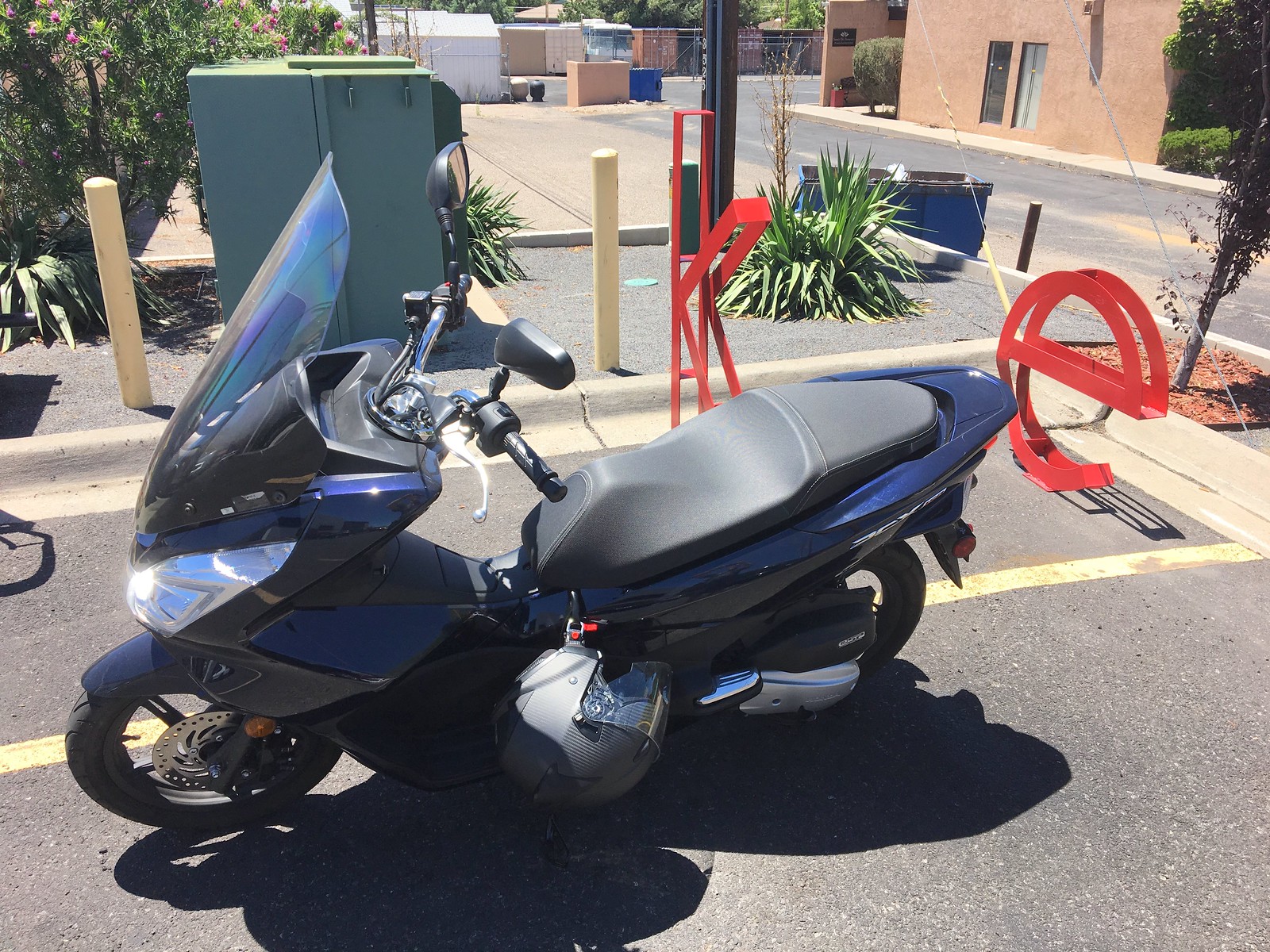
Scootering to Sweet Cup
“Bigly Typers or Shrimp Typers?”

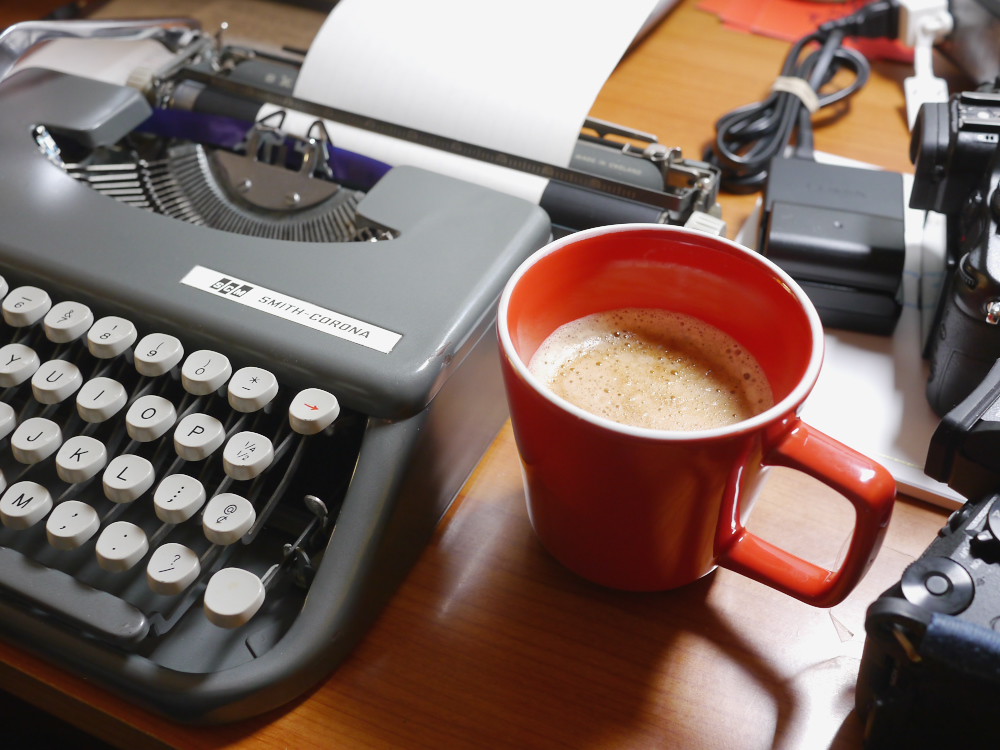
The Bigly Typer:
P1030670a

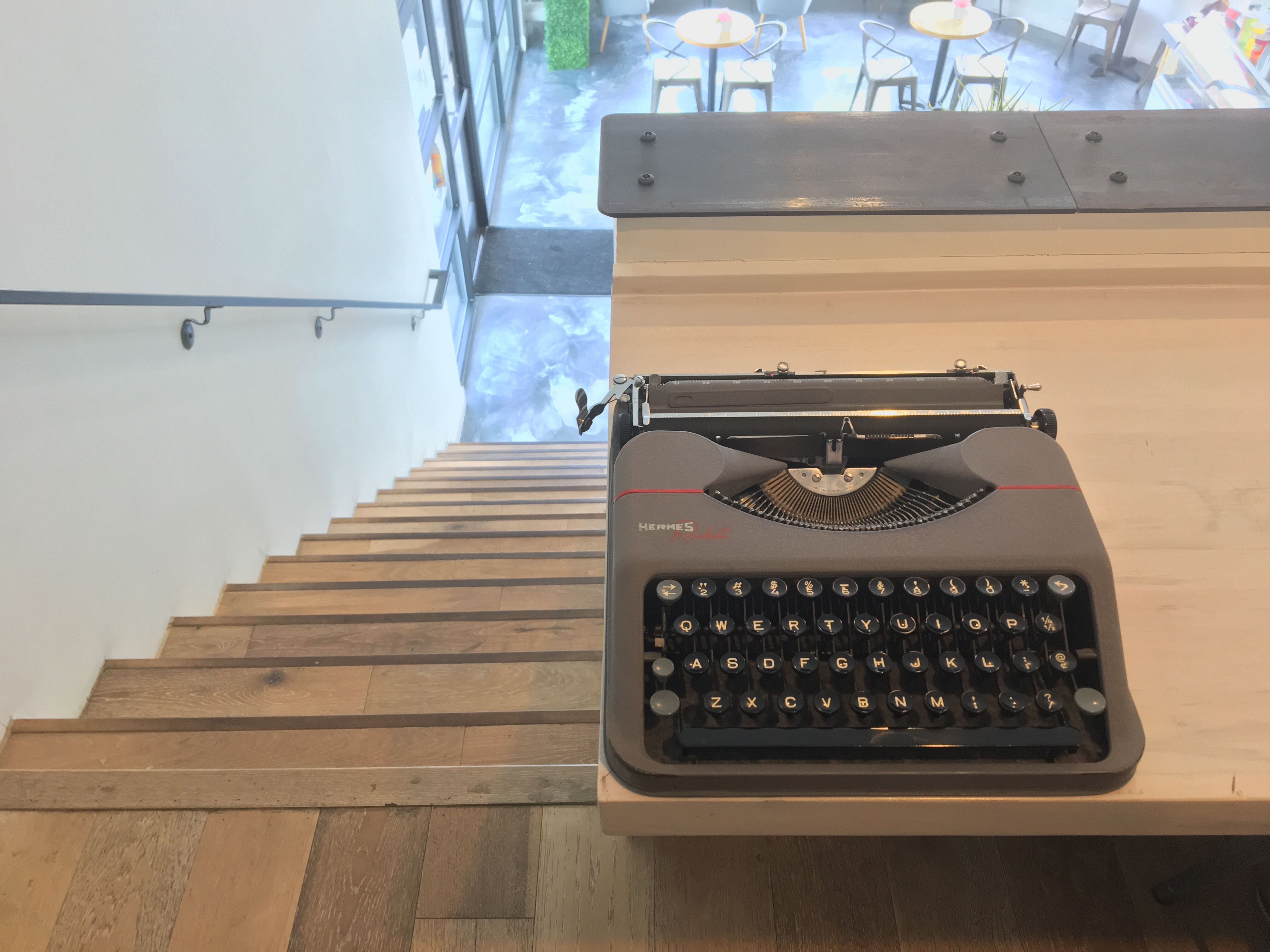
The Shrimp Typer:
P1010217a

Post-Script: They're both good word threshers. One's obviously more portable than the other. For me, the key to entering into that creative zone is being able to focus on the words in my head, my fingers on keys and, to a lesser extent, ink on paper, without excessive fuss or distraction. The Behemoth Olympia SG-3 achieves this by its in-your-face massiveness: it literally blocks your view of distractions in front of you, while elevating the printing position so you're looking forward, not down at the table.

For the shrimp typers, the challenge for me is not getting distracted by the machine's less-than-optimal performance, or erratic behavior. For example, I'd sat at this very same spot in Sweet Cup's loft the day before, with the Hermes Rocket and the same type of coffee drink, and didn't have the same creative flow going. Certainly, we can feel more or less creative one day to the next, but something about the Skyriter's keyboard just felt more natural. I don't even think it had to do with its more ergonomical carriage return lever, either. Funny enough, there were a few skips with the Skyriter that the Rocket didn't have, yet I got along better with the Skyriter.

I noticed midway through the piece that, because of the seating position, my eyes were closer to the machine than at a normal-height desk and chair setup, helping me to focus on the keyboard and helping to reduce distractions; yet I didn't sense that the day before with the Rocket. I guess that's the mystery of creative writing, trying to figure out why one day it works and the next day it doesn't.

These brief moments of inspiration aren't predictable; one has to be prepared to strike (literally!) at a moment's notice; hence the reason to always have a machine set up at home, or in a grab-&-go bag, ready for action.
There's a confidence I have when writing on the SG-3 that I don't often have on these shrimp typers, and it has to do with reliability. Less chance for hick-up or glitch with the big fellow, one less thing to pull my mind away from the inner dialog, that's so fragile to maintain. I have this same confidence on reliable machines like the Smith-Corona Silent-Super, that's pretty much living up to its name.

I think one secret to creative writing with manual typewriters is this issue of reliability. It's not that we must go down the rabbit hole of joining a cult (Hermes, Olympia - pick your poison), but rather that the still small voice inside us remains small and faint, we have to find those nagging distractions and eliminate them. Some machines are just more reliable than others, meaning we have more time to join those fragile chains of thought together. I think you can catch a glimpse of this when you see photos of 20th century writers with their machines. Many authors switched from one machine to the other, finally choosing one brand or model because it just works. It's all too easy to forget this when we are mainly collectors and hobbyists.

Labels: , , , , , ,

Tuesday, July 16, 2019

U.J.T.U.

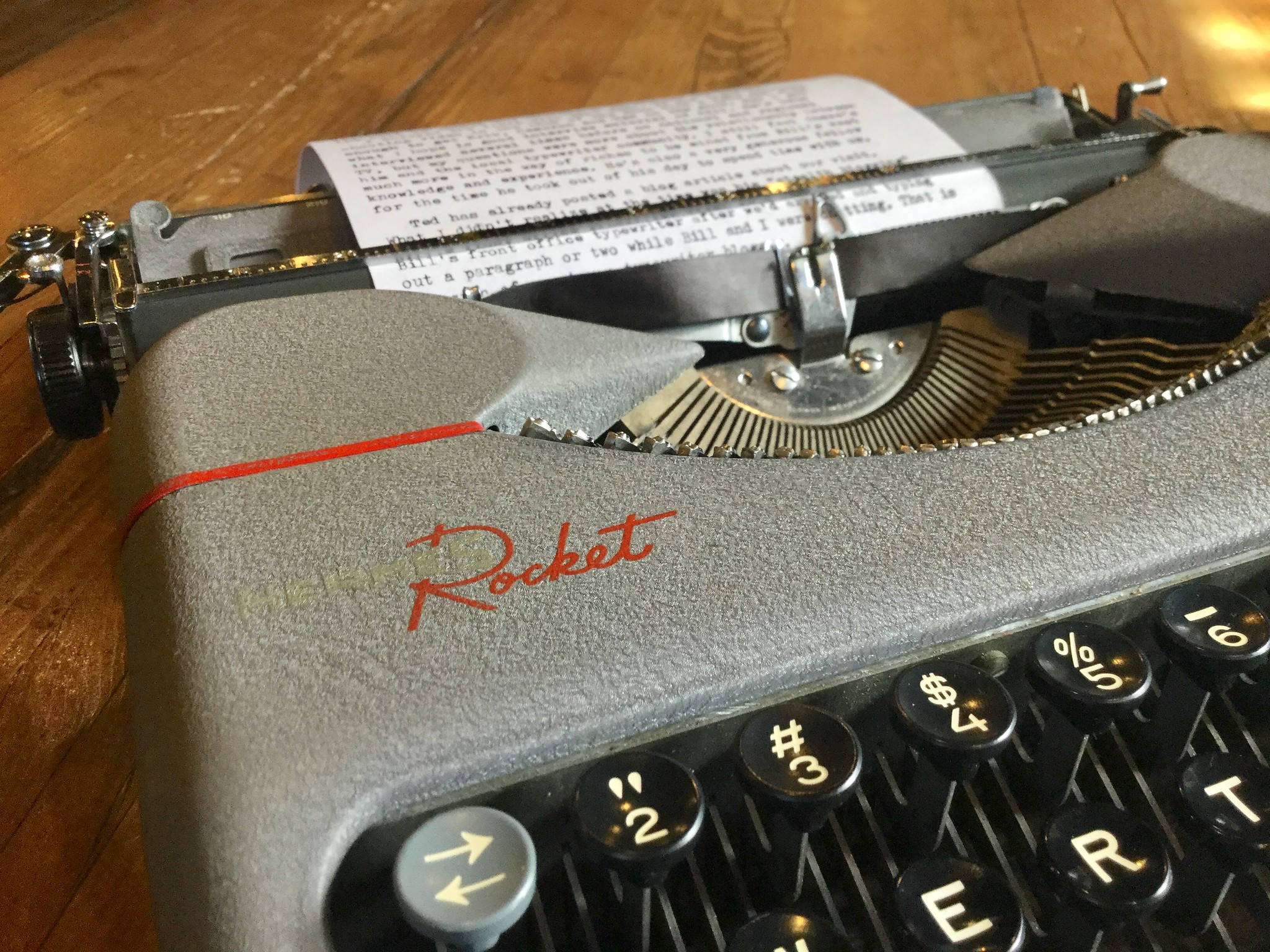
Hermès Rocket at Sweet Cup Coffee
Typecast083

Post-Script: The feed rollers on my Rocket grip good enough, but when I fold this thin paper in half lengthwise it tends to feed wonky. This 13 CPI typeface needs a short line to be readable on mobile devices. Maybe I should just break out the adding machine paper roll for when I'm blogging on the Rocket?

I'm liking the idea of more frequent blog updates, perhaps on more mundane subjects. The "work flow" is still a bit tedious (it isn't work, neither does it flow!) Firing up the scanner - had to reset it once; getting the cropping, light & dark points and contrast set properly; then the full res scan; uploading to Flickr, etc. I'm still not pleased with how my iPhone takes photos of typecasts, especially the field curvature near the edges of the frame. I want to fill the frame with the long side of the piece for good resolution, but then the iPhone's field curvature makes the edges of the page wonky. Yes, there are aftermarket photo apps that permit adjusting field curvature, maybe that's the solution.

I've been thinking about how else "typecasting" can be used with social media, besides blogging. Obviously, many people shoot photos of their poetry and writings and post them to the various Facebook typewriter-themed groups. But today I was thinking about discussion forums (on whatever topic). Instead of replying to a thread via computer keyboard, one could type out a quick reply, upload to Flickr and link the image to the forum. This might be fun to do, especially on discussion forums that aren't specifically typewriter-themed; like RFF (Rangefinder Forum), for instance. The idea is to further infiltrate the digital world with the presence of typewriter-generated imagery.

I enjoyed my visit to Sweet Cup Coffee. This time of year, when the summer monsoons begin (the flow of moist air from the Baja peninsula up through the American southwest), the air is humid enough that evaporative coolers (like what I have at home) don't cool as well; the AC at Sweet Cup was, well, sweet! Another reason to write in coffee shops.

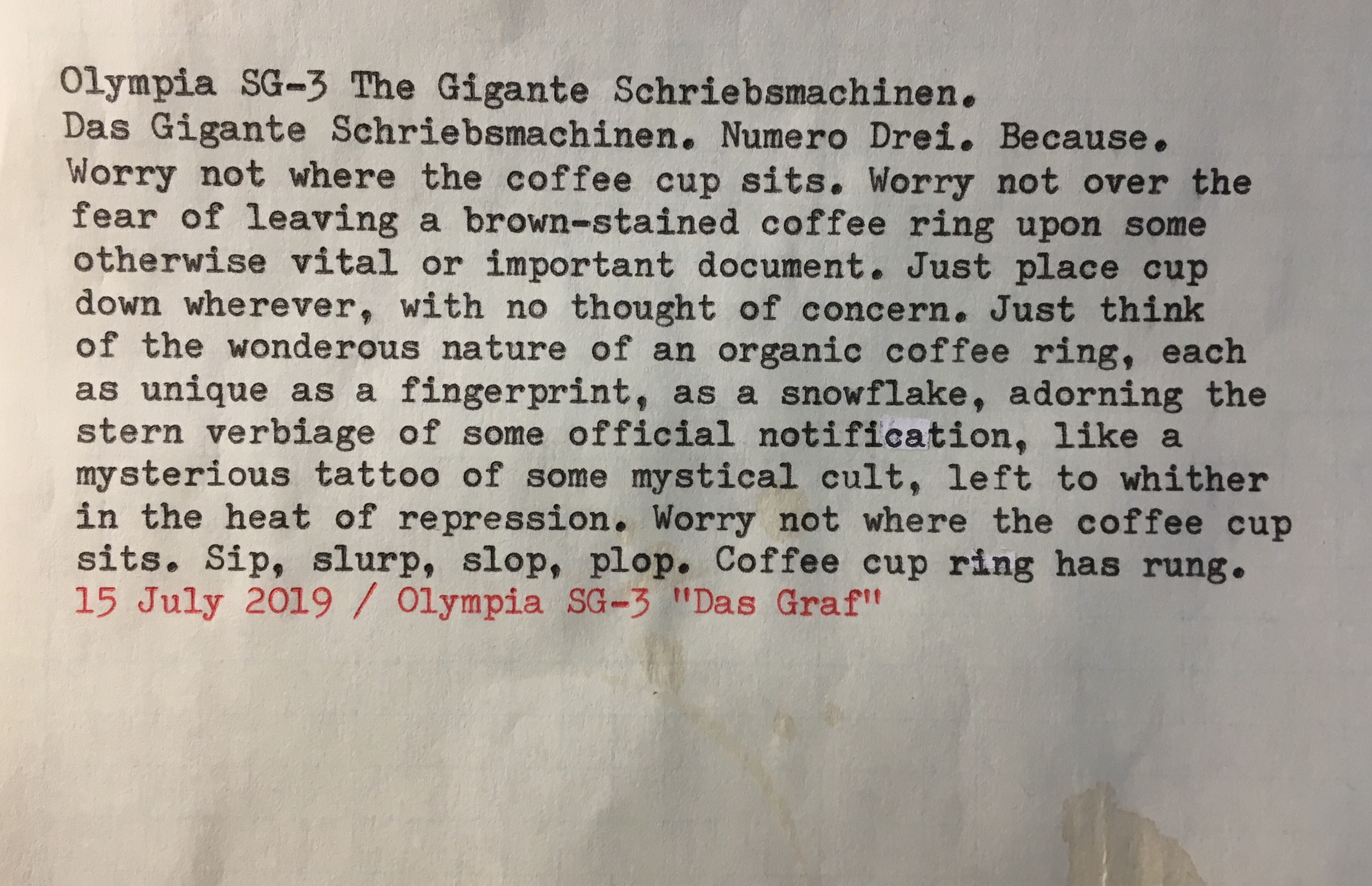
Olympia SG-3 Inspiration

The piece above was an impromptu typing on my Olympia SG-3. It does this to me, inspires me to just bang out these sudden little inspirations. They don't matter all that much, individually. It's in the aggregate, when they begin to accumulate, that the impact is felt. I don't know why this machine inspires me like it does; perhaps it's the size and heft; or the confidence it inspires to work flawlessly; or the pleasingly dark imprint.

I like to collect these little gleanings. Sometimes they're just a sentence or paragraph amidst a larger amount of dross, in which case I'll circle it with a pen for emphasis. I don't know what will become of them, but I hope they function as inspiration for some new work, down the road.

Finally, a video Kevin and I made, about the Maritsa 11.

Labels: , , , , ,

Thursday, December 27, 2018

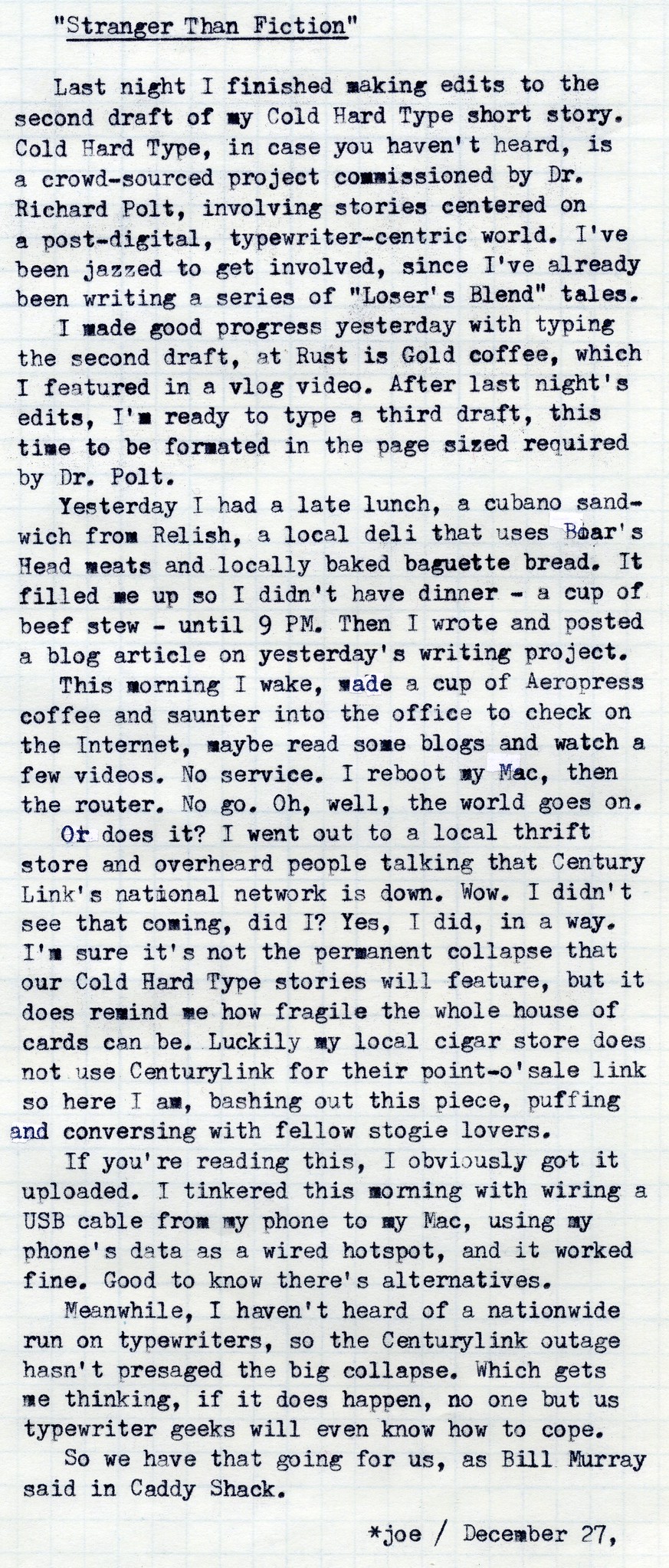
Stranger Than Fiction?

Common Grounds Coffee Shop in Payson, AZ
Typecast073

Post-Script: We finally had Internet service restored before dark. Once returning from the cigar store, I spent the afternoon and into the early evening typing up a third draft of my story, in the final formatting required (4"x7" text area), using the Facit 1620. Being as it's a pica typeface, those lines were pretty short, only 40 characters wide, which meant either a lot of empty space on the right side of each line, or excessive hyphens to break up longer words. I chose mainly to leave spaces, but also changed some of the wording from the 2nd draft, so as to fit words more exactly on each line.

To make the process a bit easier while still adhering to the required borders, I drew up a 4"x7" rectangle in bold ink, centered on my backing sheet of paper, to use as a typing guide. It was easy enough to see through my typing paper, which wasn't all that heavy in weight, making the typing process manageable. I'd seriously recommend this method to anyone working on their story for Cold Hard Type.

I also thought about reverting to an elite font machine, but I do like the clearer imprint of pica. My wife reminded me that I'd have the same problem of breaking up words at the right margin, regardless of typeface size.

This exercise also reminded me how nice it is to read a book with justified text. Perhaps someone out there is writing their story on an IBM Wheelwriter 2000?

Despite the challenge of fitting neat, readable type within such narrow confines, while keeping one's story intact, I do understand the needs of the printing process, since the pages need to appear uniform once in book form.

And now it's snowing outside, with a promised blizzard hitting the area. I guess I'll stay indoors and do more typing. Hopefully the Internet stays up.

Labels: ,

Tuesday, November 27, 2018

Targus Bag & R.I.G. Typing

P1010224a
Typecast067

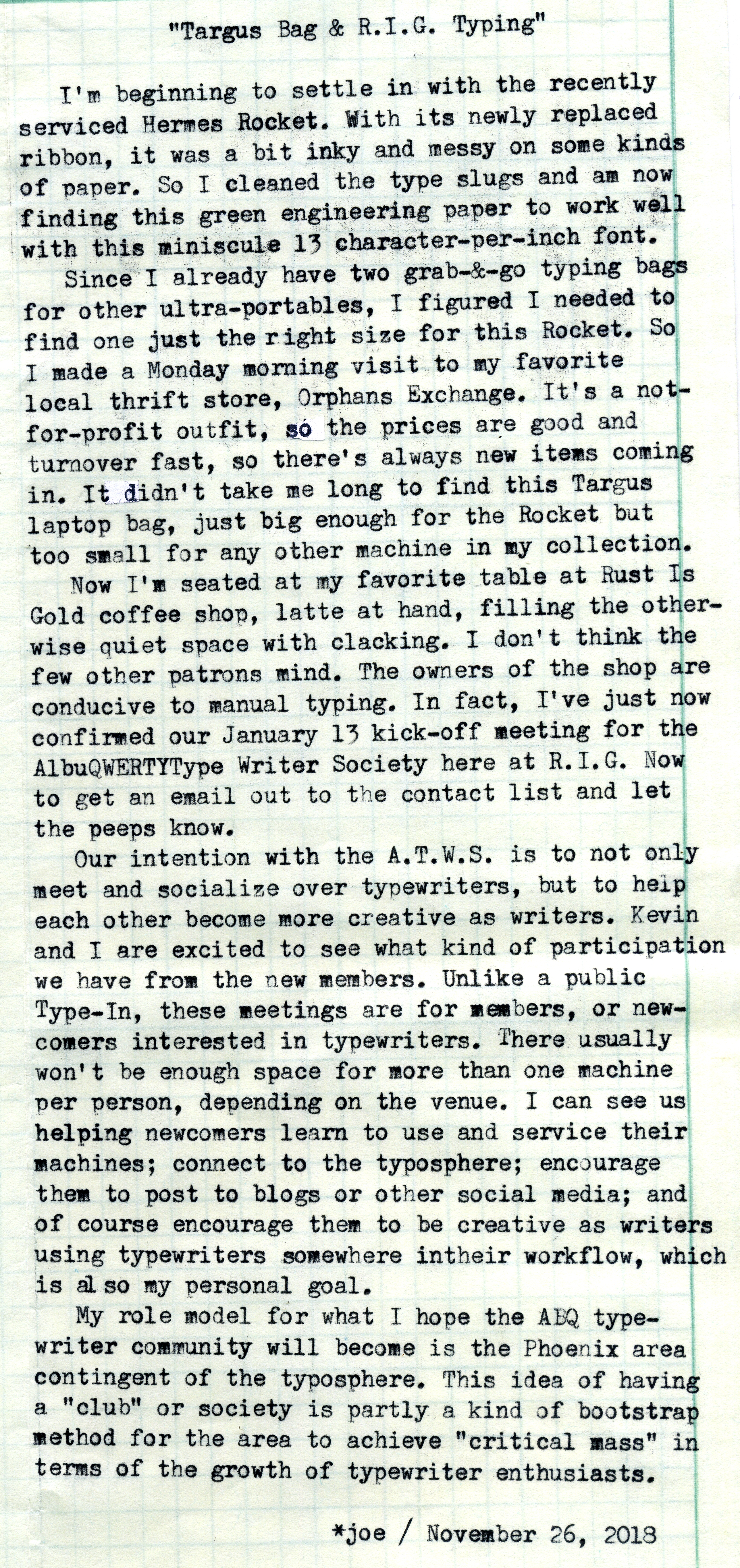
Errata: 3rd paragraph should read "AlbuQWERTY Type Writer Society;" in my haste to upload I failed to make annotations.

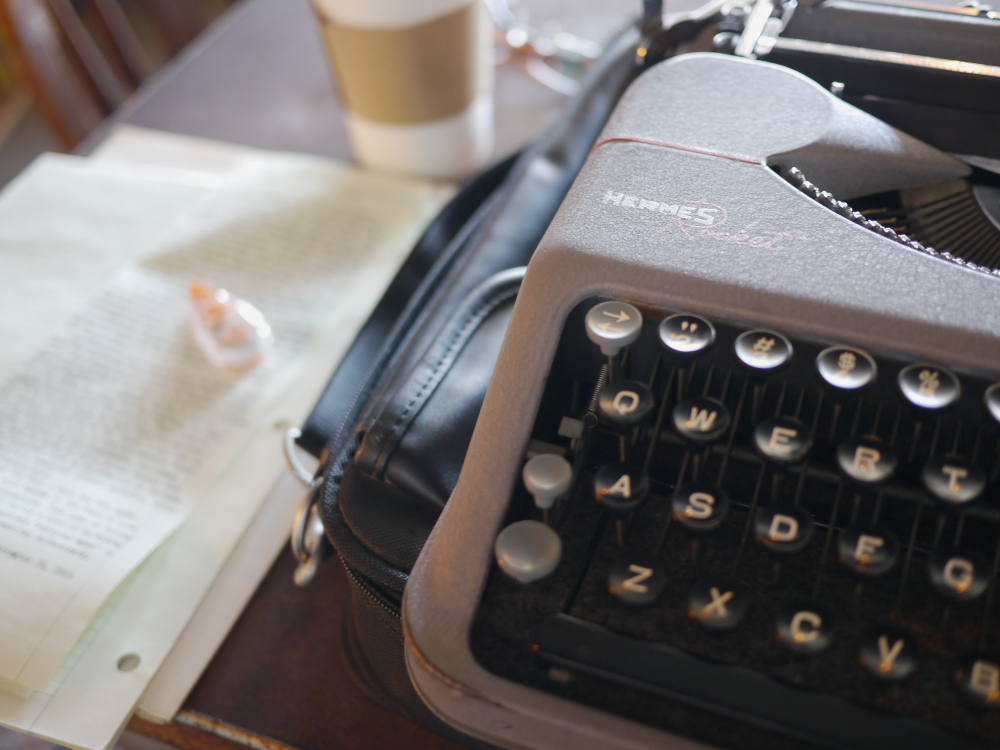
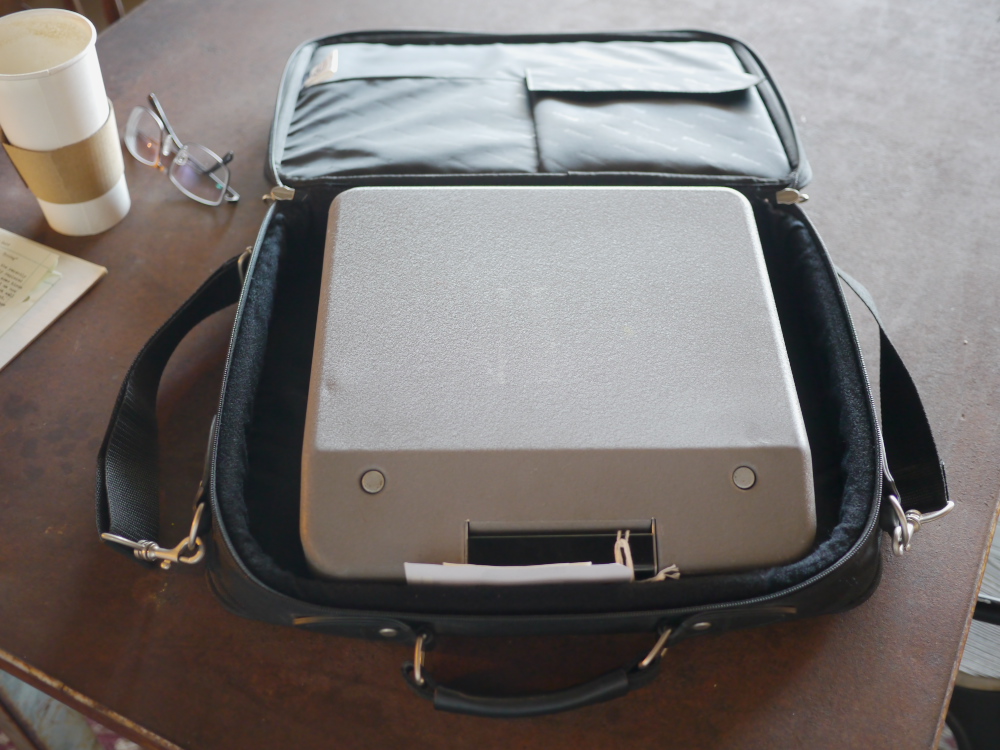
The Rocket fits snuggly in the Targus bag:
P1010225a

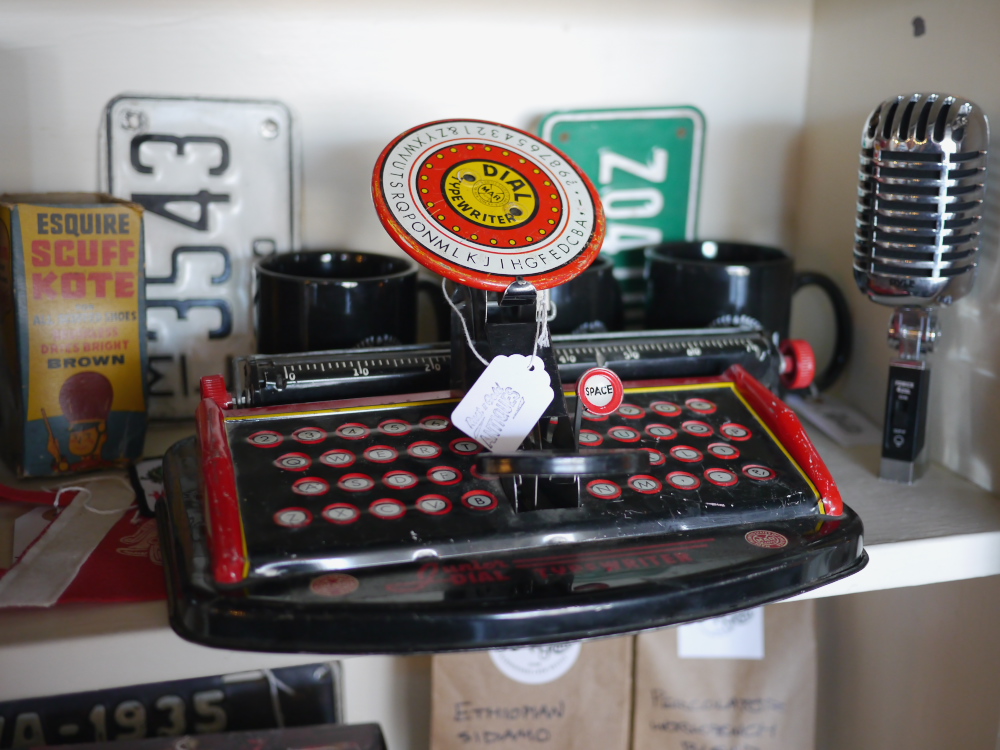
A toy typewriter for sale at Rust is Gold:
P1010219a

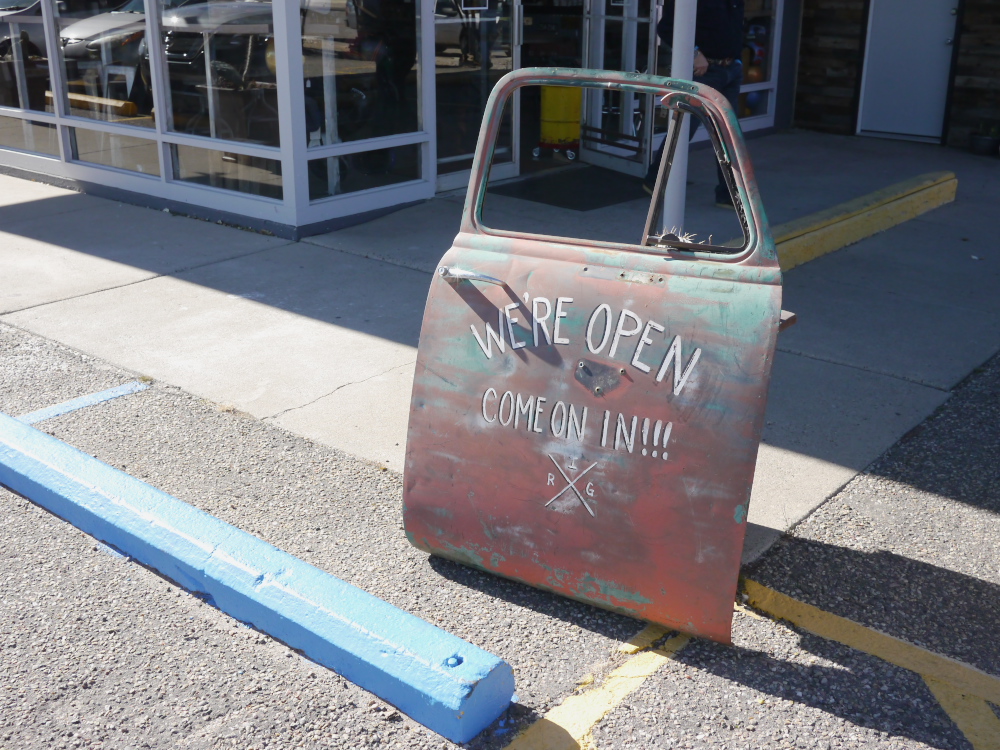
Their unique parking lot sign:
P1010226a

Labels: ,

Tuesday, November 20, 2018

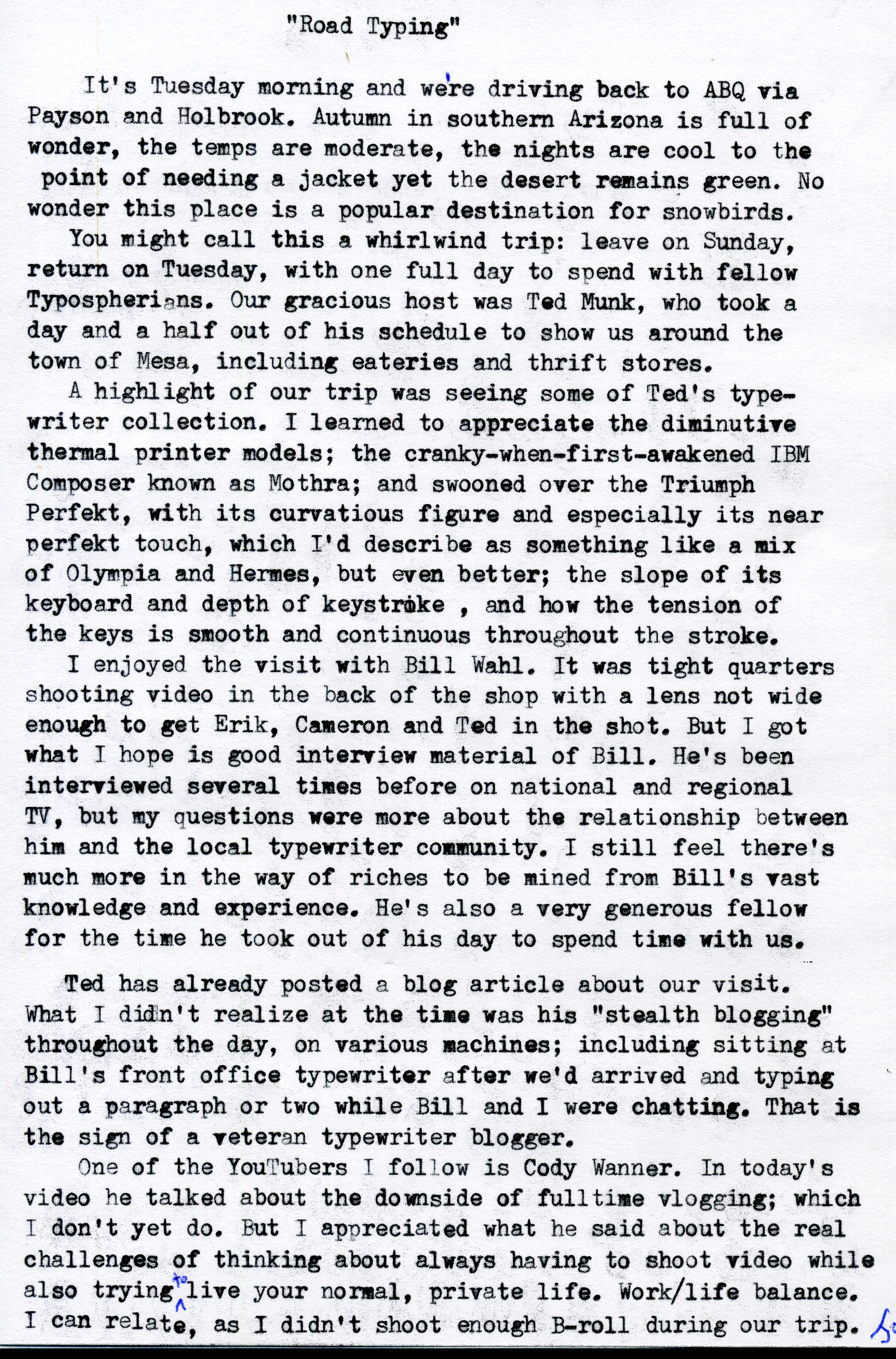
Road Typing

Common Grounds Coffee Shop in Payson, AZ
Typecast064

Post-Script: We arrived home this evening after enduring a loooong line of traffic in Gallup, NM, due to a traffic accident; it added about an hour to our trip.

It was nice having the Rocket back, after Bill did his magic to it. I did a bit of journal typing at the hotel breakfast room before we left. One of the wait staff stopped and told me she loved the sound of the machine, and was surprised at how small it is. Along the way we stopped in at Common Grounds Coffee in Payson, AZ for a cuppa, where I worked a bit on this article, during which a fellow patron also commented on the typewriter. She mentioned that she had an old pink Corona back home, I encouraged her to break it out and start using it.

While my wife drove the first leg of the journey back home, I tried writing in my journal (with the new Rotring 600 mechanical pencil), but the vehicle's movement made my handwriting even more sloppy than normal. Another good reason to do road typing instead. I like the feel of the machine on my lap, as I pause, look out the window and think about my next line of text. There's no hurry, as the miles fly by; and the machine is plenty patient - it's not like batteries are being spent.

It was great seeing Ted, Bill, Cameron and Erik again. This business of smuggling typewriters back-and-forth across the Continental Divide could get risky, but no black helicopters were noted. I prefer the drive rather than flying, despite the time it takes, as I don't want to risk flying with typewriters; plus, there's more junk you can stuff in your car than what the airlines would allow you to take onboard.

Okay, time to start uploading video footage and see what kind of story I can piece together.

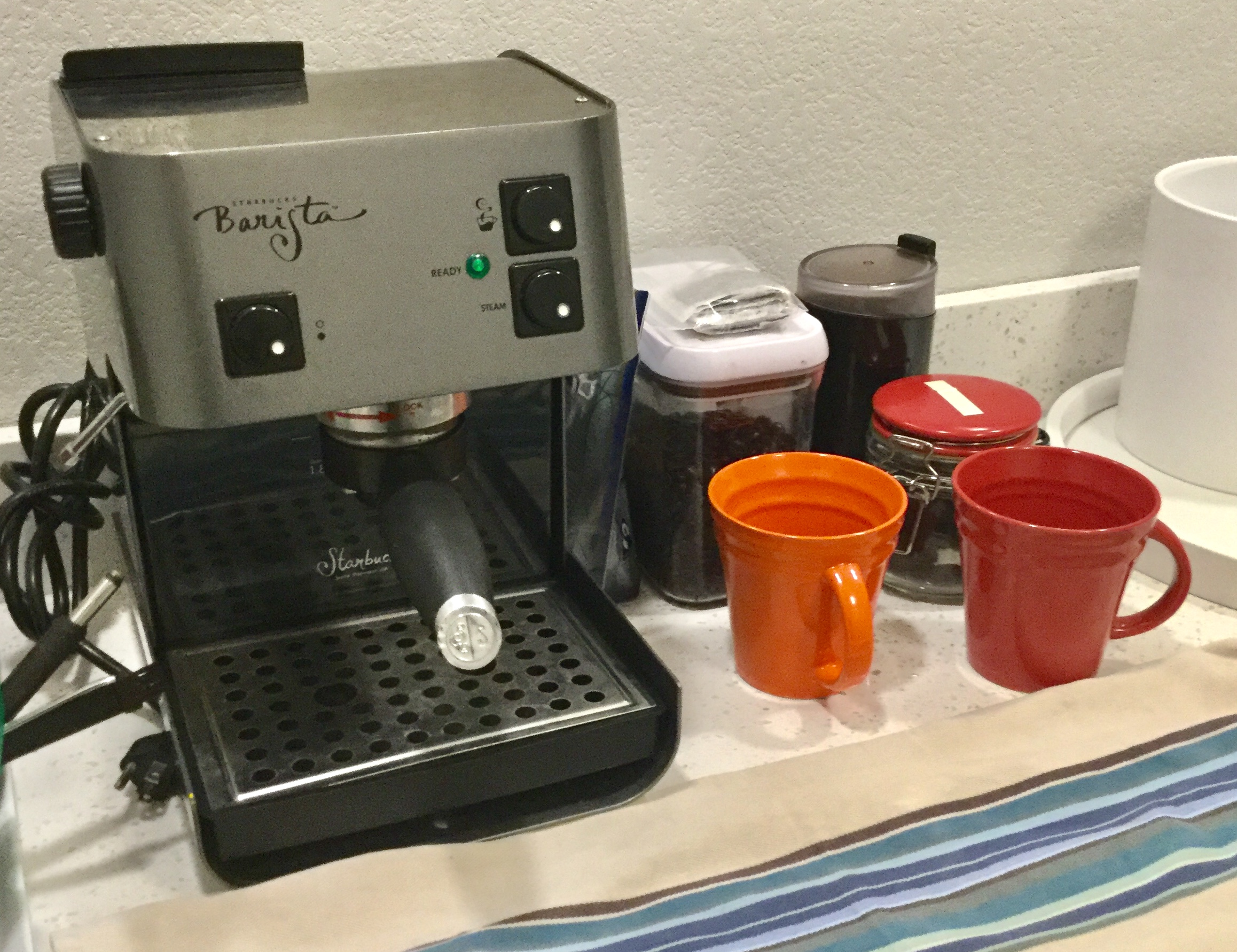
Bring-Your-Own-Espresso

We brought our entire espresso kit with us. Because that's what you can do when you drive instead of fly. When you're coffee snobs like us!

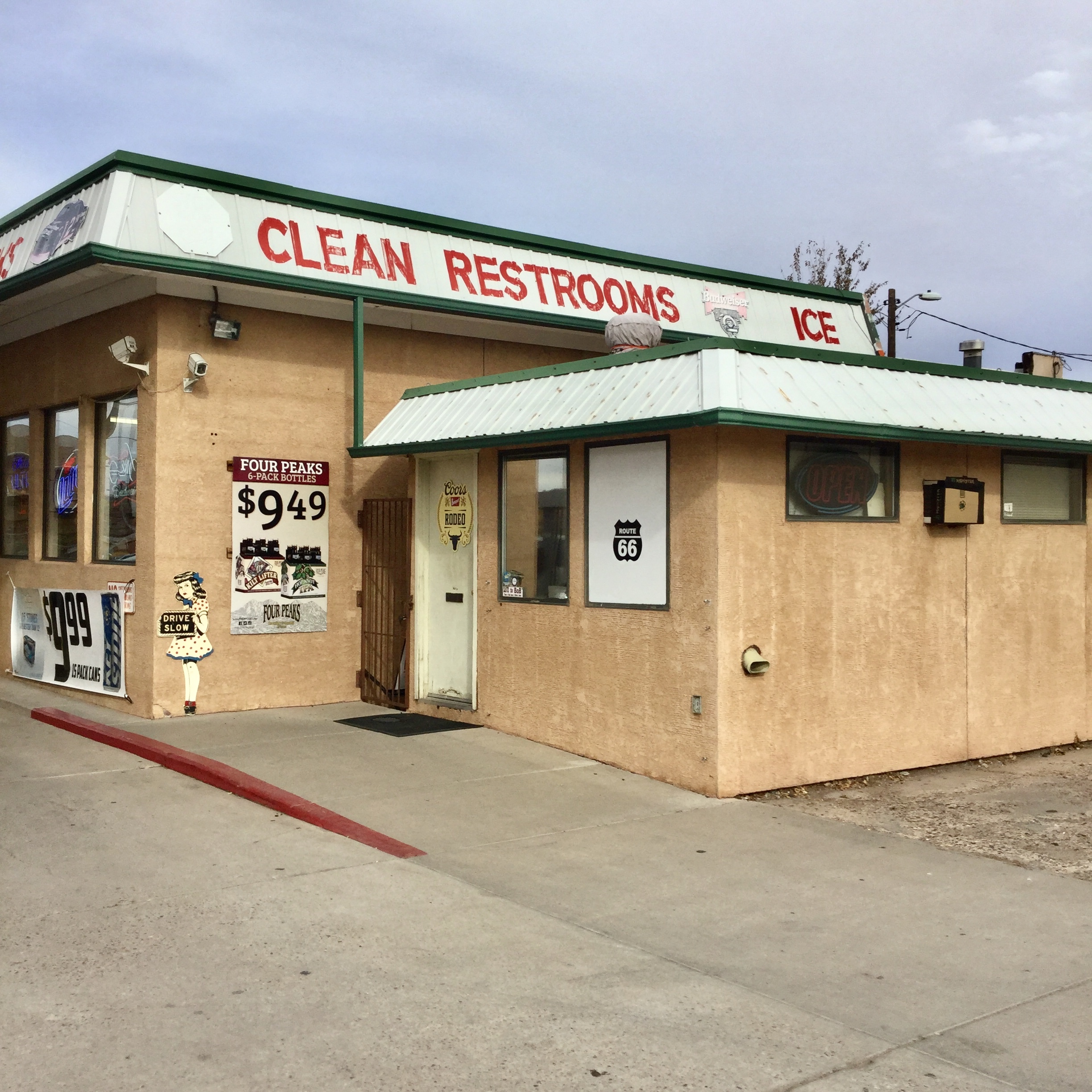
Holbrook, AZ
Holbrook, AZ

Sometimes it's the little things that count. (Holbrook, AZ)

Labels: , , , , , , , ,

Tuesday, May 01, 2018

WPPD 2018, Grounded Rocket and Addiator Pouch Repair

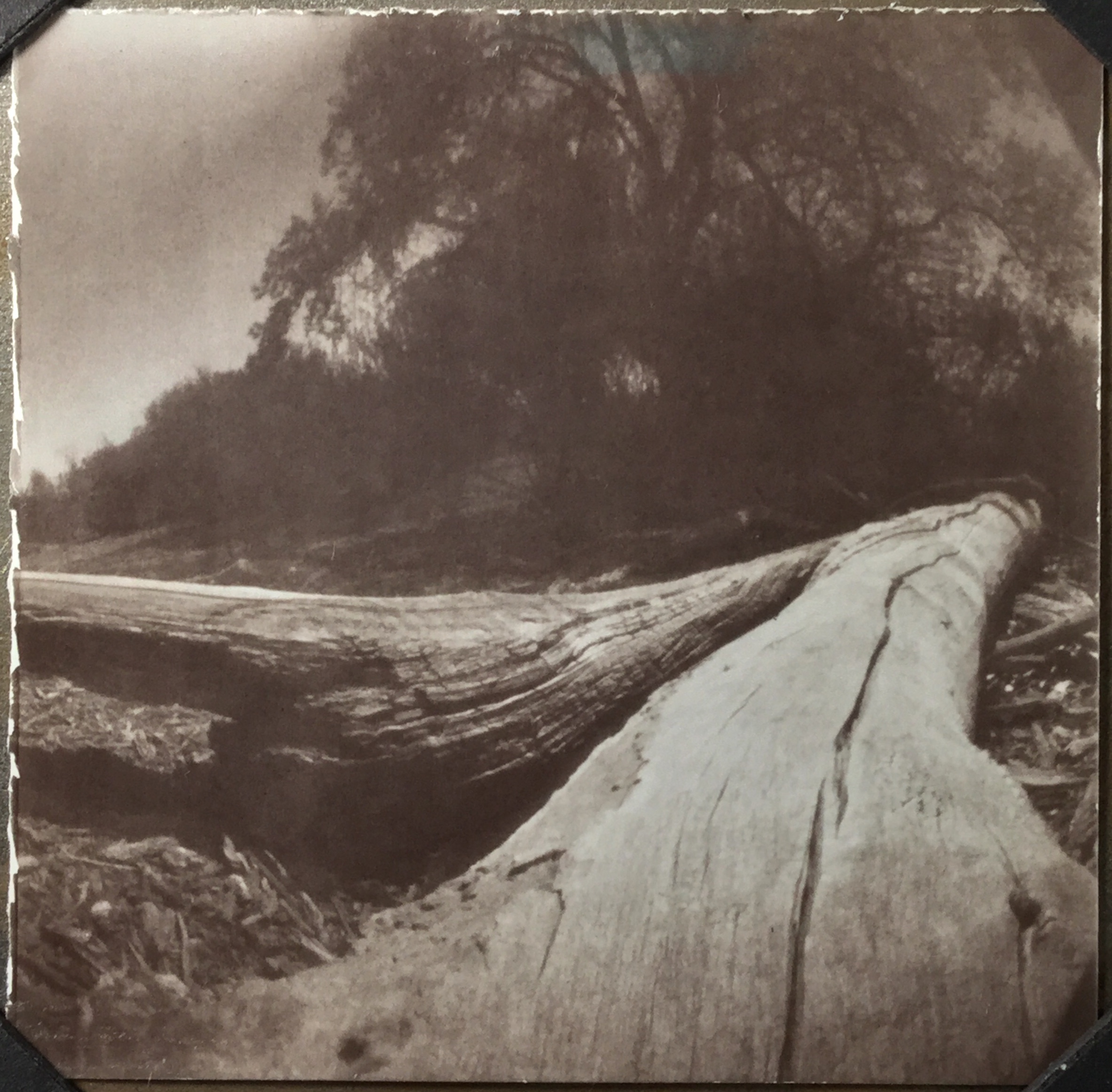
Rio Grande Bosque, Pinhole Camera, Harman Direct Positive Paper

This previous Sunday, the last Sunday in April, was Worldwide Pinhole Photography Day. While I don't practice the craft of pinhole as prolifically as I once did, I try to make an effort to get out with a pinhole camera on this day, if for no other reason than to remind myself why it is that I have a virtual mountain of pinhole cameras (mostly collecting dust) that deserve to be employed in the pursuit of that elusive image.

This day, I chose to stroll the river forest of the Rio Grande, just north of Albuquerque, with two small one-shot cameras, both made from 1.5" PVC pipe and employing a curved film plane with 2.5" squares of Harman Direct Positive Paper. While I've been trying to conserve this paper, due to it limited supply, these small prints are just big enough to hold in your hand and appreciate up close, while being diminutive enough to not be wasteful of paper.

I developed both images in a steel 35mm developing tank, sans reels, with the prints taped to the inside walls of the tank and rotary processed on its side. This method uses only 100mL of chemistry and produces very consistent results, while also not requiring a full darkroom with open trays of chemicals - ideal for those with limited space or, like me, desiring to process in the comfort of one's kitchen.

Being fiber-based prints, I archivally washed them using my recently devised method of employing a slow trickle of garden hose water under the canopy of a tree in my yard, which serves to wash the prints while also watering my landscaping - we do live in a desert, as we are apt to say. After, I selenium toned them and completed another wash.

The prints were dried flat by being superficially squeegeed, then taped face-up to a sheet of glass, using drafting tape, and placed in my film drying cabinet.

I was please with the way these came out; I'll have to do this more often, with more of my pinhole cameras.

There's something very satisfying about creating one-of-a-kind direct prints on fiber paper. Each is a unique object, and usually intimate in size as are these.

Here's a video documenting the process:


P1040073

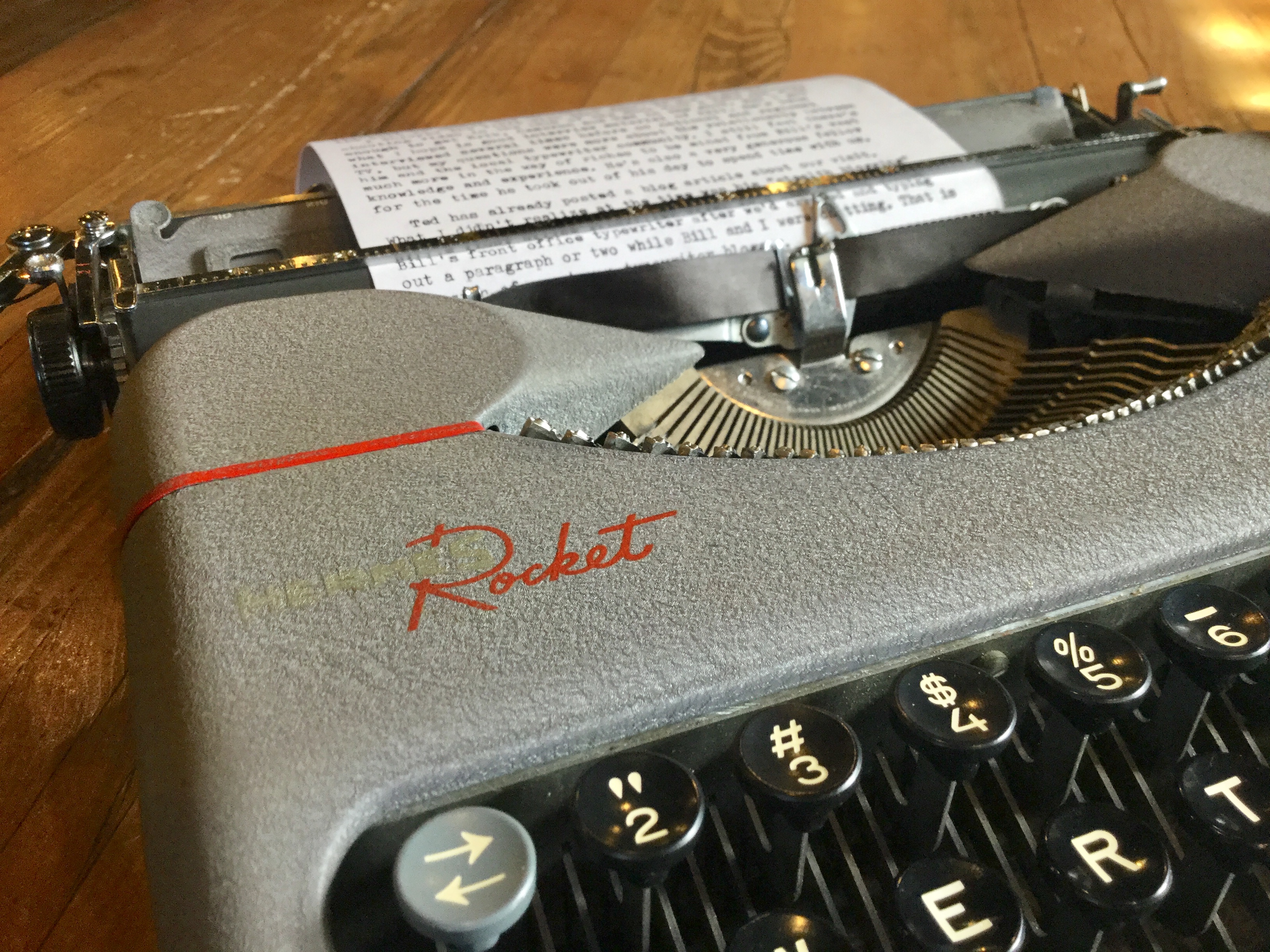
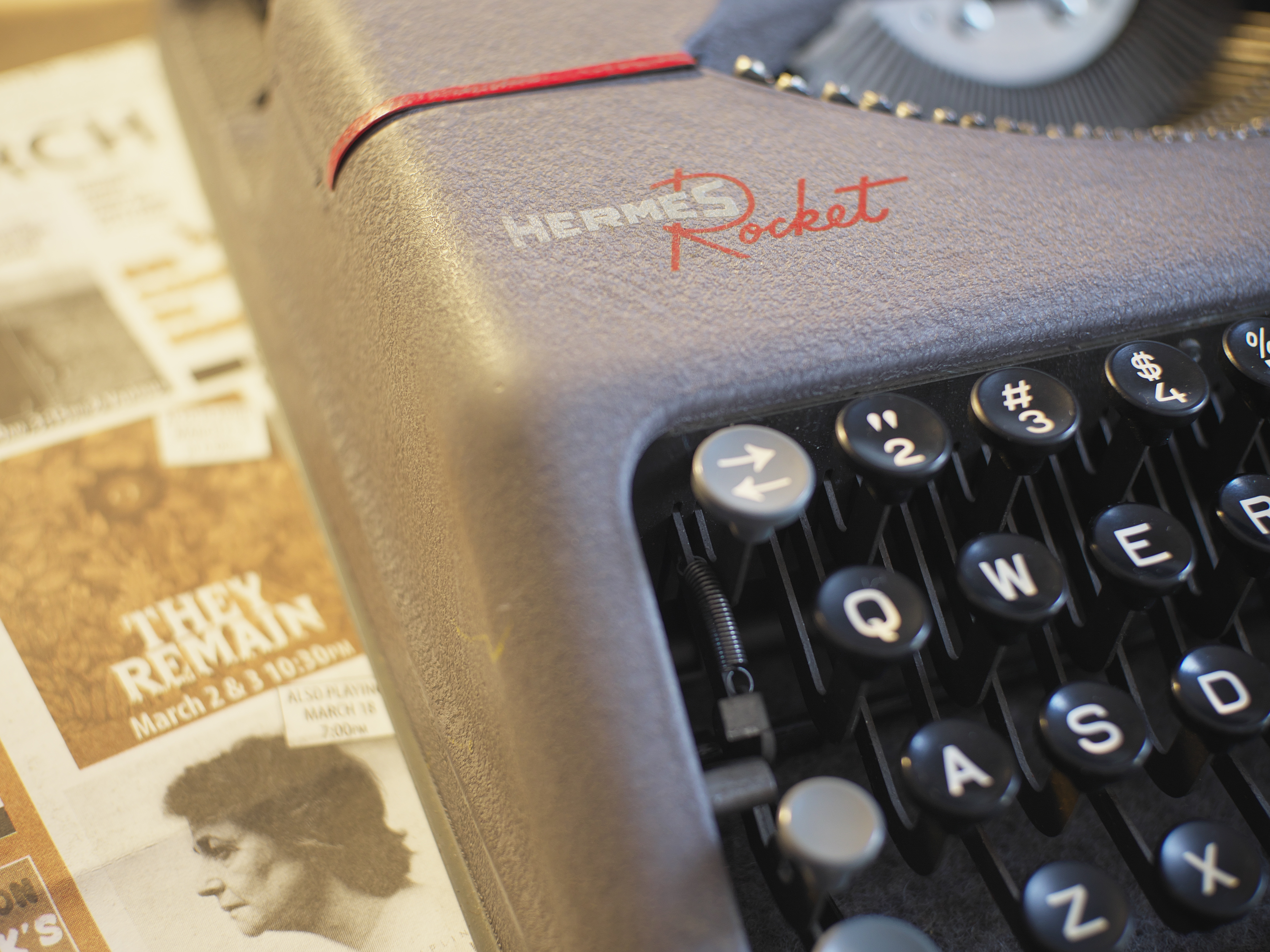
Now onto some sad news. During last weekend's Spring ABQ Type-Out I brought my 1953 Hermes Rocket, which performed fine during the event. Then this last Sunday, while typing up a story for Typing Assignment No. 16, I noticed the carriage was intermittently skipping spaces. This has been a recurring problem with this machine for a long while, one of the reasons why I haven't used it much. I know from previous experience that the problem has been related to the carriage release lever arm, which connects to the rack gear and serves to pivot the rack gear away from the escapement cog when releasing the carriage. This arm appears rather soft and is easily bent. Usually reforming it back into shape solves the problem. But this time I couldn't fix the issue; it seemed the rack gear just wasn't meshing tight enough with the escapement cog.

So yesterday I decided to dig in and see if I could make it better. I started disassembling parts of the carriage, in order to remove the rack gear. In the process, I decided to disconnect the draw band from its anchor on the right side of the carriage. I tried to be careful to let the tension of the spring motor relax itself as I wound the draw band back onto the drum of the spring motor. But evidently I wasn't careful enough, because suddenly the spring motor made an awful noise, and now it's dead.

I also spent many hours afterwards, into the wee hours of the morning, getting the carriage back together. I still have one spring under the paper table that provides pressure for the rollers that isn't properly installed. So now I have a broken Hermes Rocket, in need of a spring motor. I can't see any way to regain tension on the old motor. Attempting to turn it, it just spins; I can't see where the anchor point is, unless it's somehow in around the central hole where it mounts to a bolt-like fixture.

Live and learn. That's why I have 19 other typewriters in my collection, right? Seriously, I wasn't going to be using that machine much in the future anyway, because of its known fragility. Perhaps I can find a working spring motor from a donor machine.

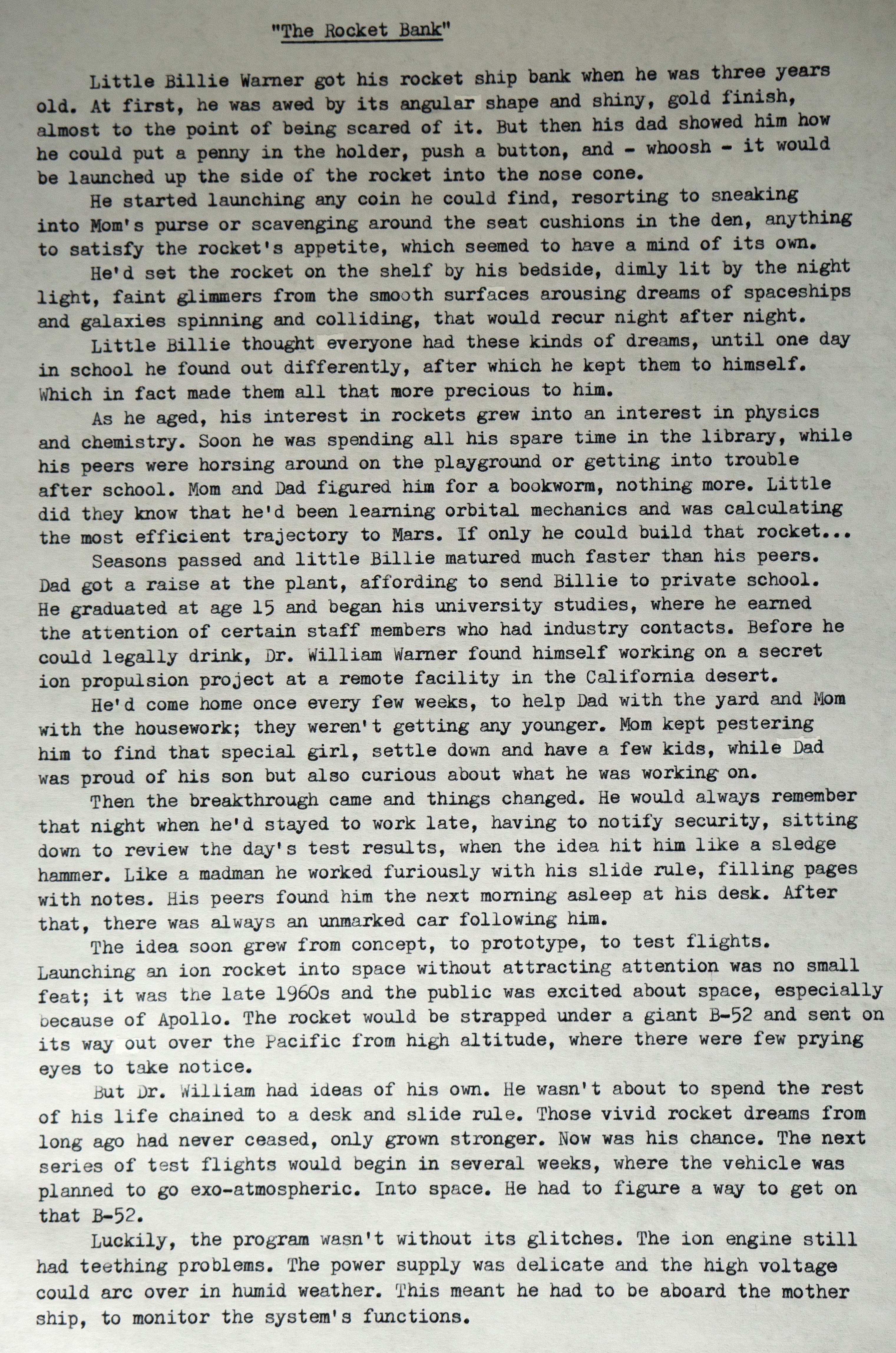
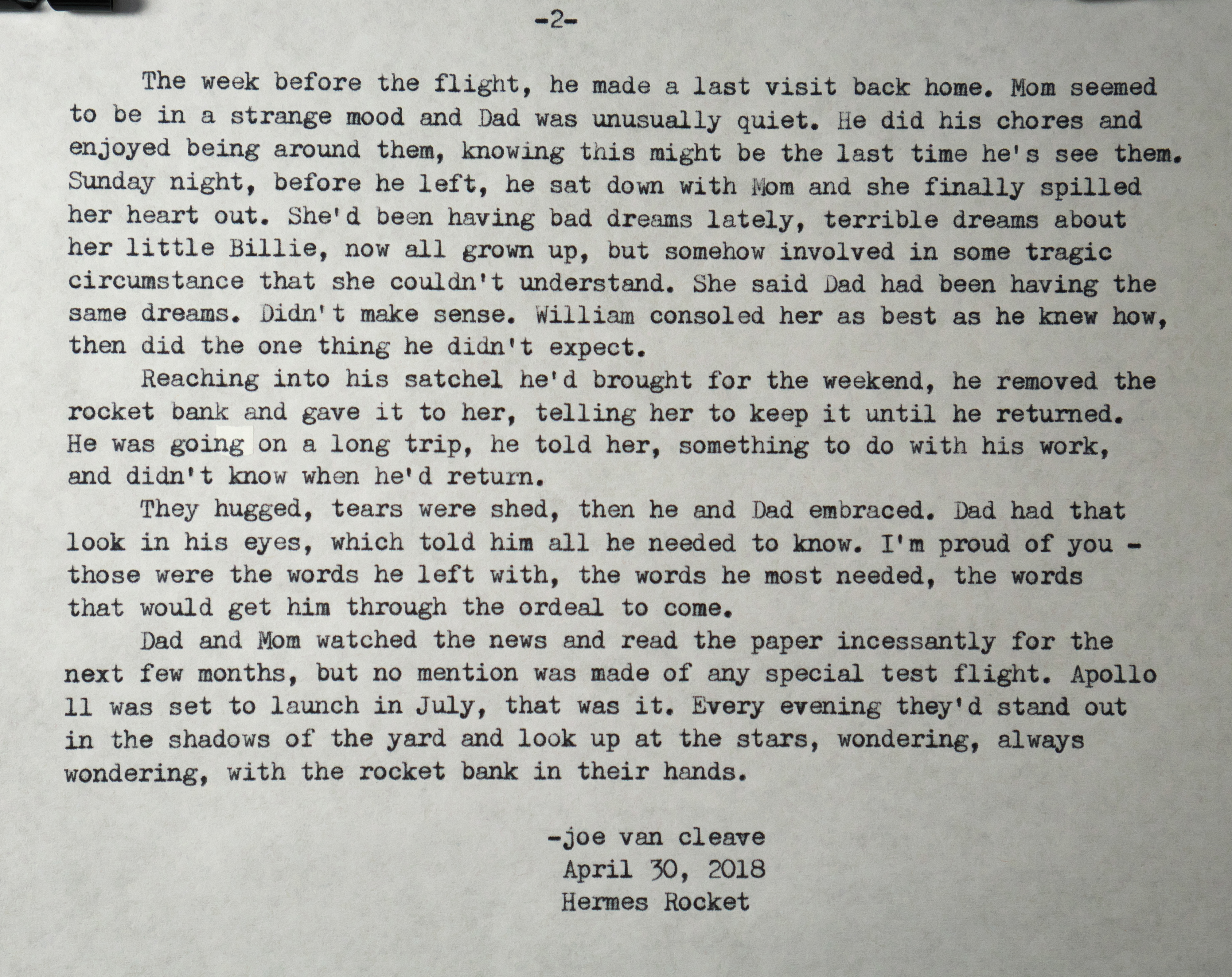
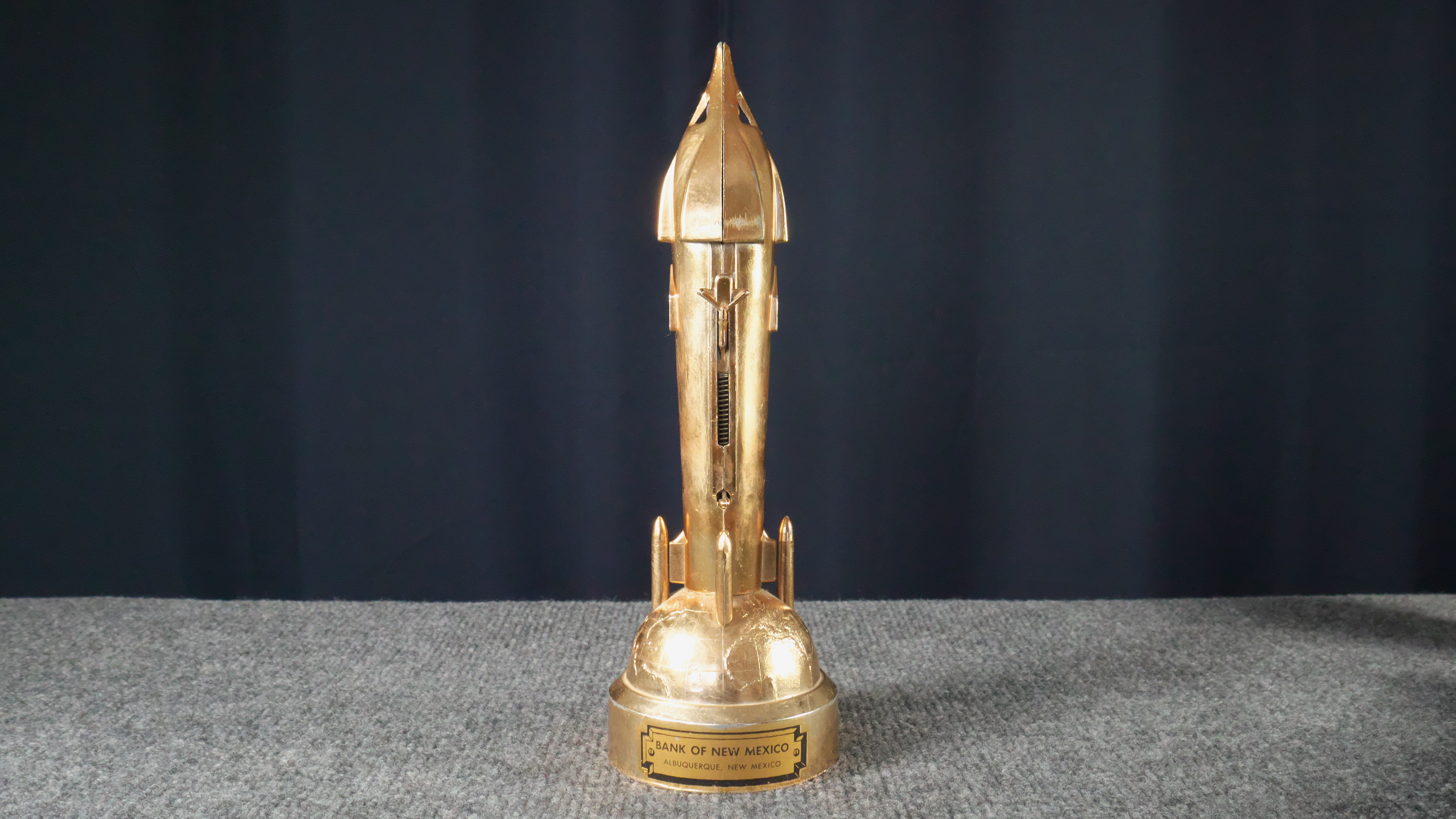
But the story I wrote for Typing Assignment No. 16 will most likely be the last piece of writing done with that machine. The subject of the assignment was to write a one-page piece inspired by some artifact of your possession. My artifact was an old 1950's-style rocket spaceship bank. The protagonist of the story has a similar bank as a kid, which inspires him to become a rocket scientist.

Now here's where this story gets interesting: my Hermes Rocket typewriter, circa 1953, was originally owned by an Air Force officer and engineer who was one of the principal engineers working on the design of the SR71 Blackbird's engines.

Here's the story, the last piece typed on the Hermes Rocket:

"The Rocket Bank," part 1
"The Rocket Bank," part 2


And here's the bank itself:

Rocket Bank

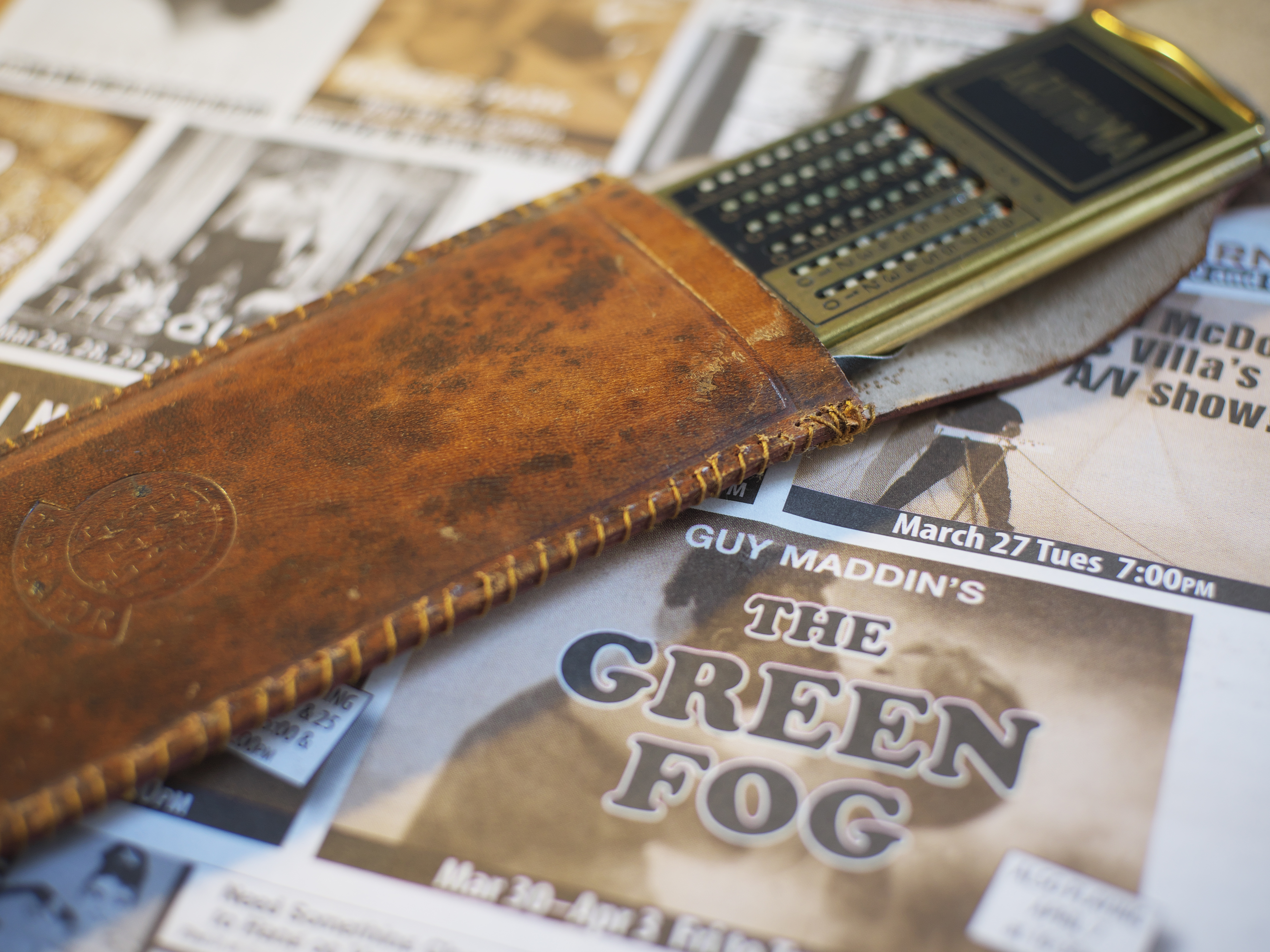
And in more positive news, I dusted off my rudimentary stitchery skills and affected a repair to the leather pouch of my Arithma Addiator:

P1040072

It may not be pretty, but hopefully it'll serve a few more years of use; it's better than the staples that were holding the pouch together.

Here's a video I recently made about the Addiator. Thank you Ted Munk for the suggestion!

Labels: , , , , , , , , ,

Wednesday, December 07, 2016

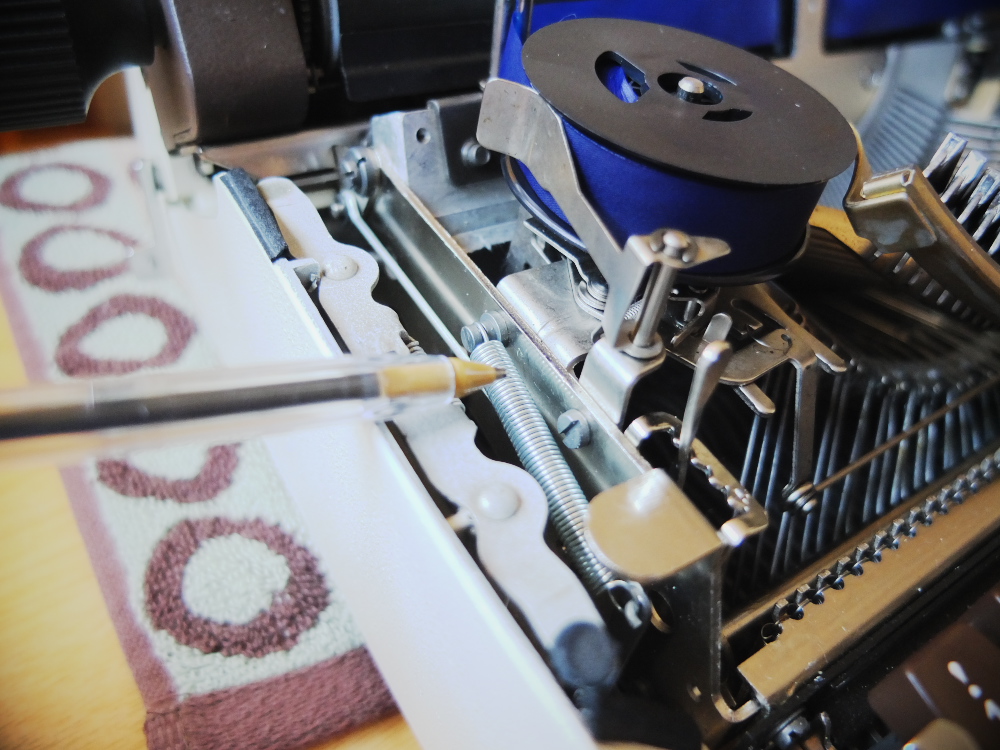
Spring Tension

DSCF5142a
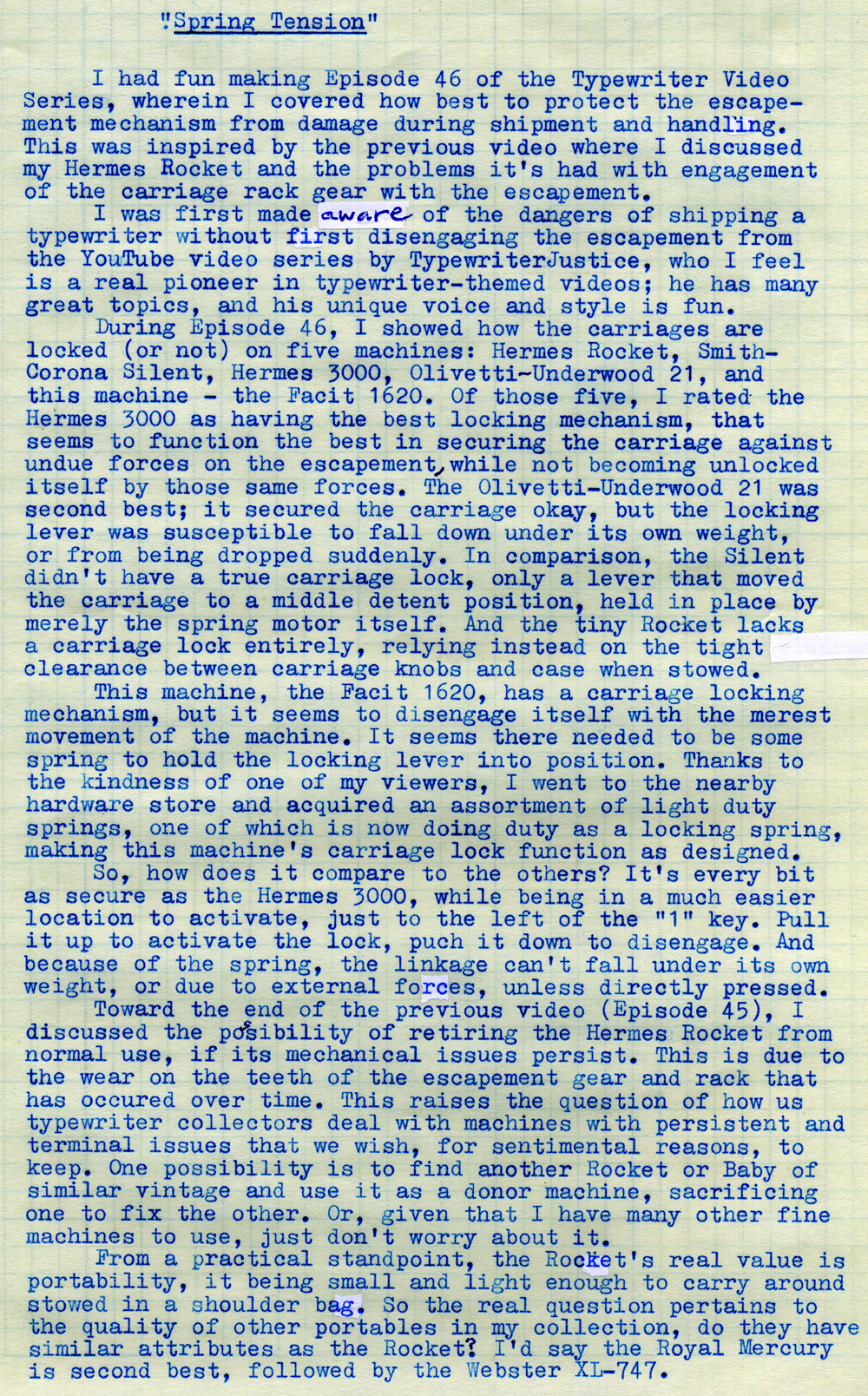
Typecast267

Post-Script: Here are links to the videos mentioned above:

Episode 45, Hermes Rocket:


Episode 46, Escapements:


Here's a link to the TypewriterJustice channel on YouTube, a great typewriter resource.

Photo via Fujifilm X10. Typecast via Facit 1620.

Labels: , , , , , , , , , , ,

Tuesday, October 04, 2016

Pre-Typosphere Typewriter Collecting

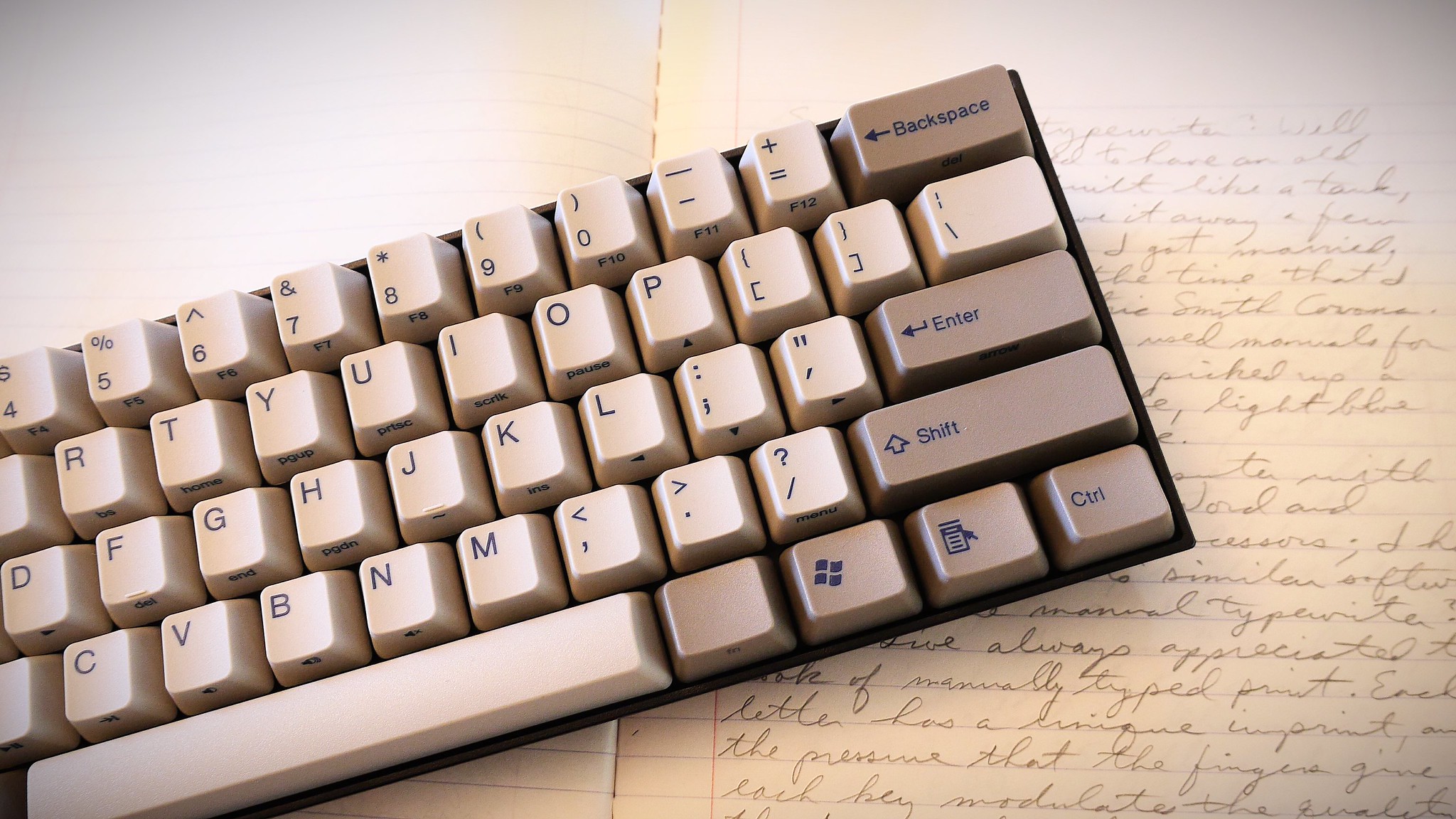
KB Paradise V60 Mechanical Keyboard and Journal Book

While researching material for my latest "Agent 51" video, I came across a journal entry I'd written on October 28, 1998, the first entry in a new composition journal book. This had been written in mechanical pencil, and what I found worth sharing with you was that it included the subject of typewriters, and alluded to a revival of interest in manual typewriters as far back as 1998, well before the current era of blogging and what we have come to know as the Typosphere.

So, without further ado, here is the transcription of that article.

10-28-98

This opening entry in this, the second volume of my journal series, begins with me having purchased a manual typewriter.

I don't believe that I've ever seriously entertained any ambition of becoming a writer. The closest thing I've come to is when I was on a poety writing kick while in the Navy and afterward. Upon thinking about it, I recall that, because of the volume of work I produced, I gained a self-identity as "poet," which I reinforced by surrounding myself with creative people - artist types, if you will.

But to be a "real" writer - a composer of "prose" - I have never identified with. And not to take anything away from these pages, but this journal is definitely not aimed toward public consumption, although some of my thoughts in the previous journal concerning video, film and photographic images constitutes a good framework around which writings for public consumption could be built upon, or perhaps worked into the upcoming seminar.


(Note: the seminar mentioned was an upcoming Basement Films presentation I made on low-budget analog video production techniques. - Joe)

So, why the typewriter? Well, for starters, I used to have an old Royal manual, built like a tank, but I think I gave it away a few years ago, before I got married, maybe around the time that I bought the electric Smith-Corona. My friend Worden has used manuals for years, and recently picked up a mint little portable, light blue with a carrying case.

(Note: Worden passed away a few years ago, but he self-published many small books of stories and poems on portable manual typers. That blue machine of his I only later realized was perhaps nearly identical to my Brother-made Webster XL-747, also blue and with a carrying case; further reason why I value it so much. - Joe)

So I have a computer with the latest Microsoft Word and Word Perfect word processors; I have access at work to similar software. So why the manual typewriter? Well, I've always appreciated the look of manually typed print. Each letter has a unique imprint, and the pressure that the fingers give to each key modulates the quality of the typed character in a direct, analogous fashion. You can tell when a computer typist is trying to touch-type on a manual, for the letters which are on the far left and right ends of the keyboard, struck by the weakest ring and little fingers, show up on paper as noticeably lighter in tone.

Last week I roamed around town, and visited several typewriter places. The one on Menaul
(John Lewis's shop - Joe) had an interesting museum, including old calculating, tabulating and other office equipment, as well as an abacus collection.

I engaged into an interesting discussion with the proprietor, and we covered an interesting gamut of things. He finally showed me an Adler manual typewriter, not quite as compact as the Hermes Rocket but, according to him, built to last a long, long time. It was built in "Western Germany," and supposedly has a high grade of corrosion-resistant steel in the mechanism. He knocked off 35 dollars, but I threw in for trade an old adding machine which he dated at before 1925. The end result is a nice, durable, well-built typewriter, which should last for a long, long time (I hope).

He asked me if I had planned to write a book, as many UNM-types come in and look for old Smith-Coronas that resemble the one that Hemingway used. Kind of like photographers who buy Leicas because they hope that they will immediately become more like Cartier-Bresson or Winogrand.

I never thought that a typewriter could actually influence one's writing style until I noticed that in order to type successfully on a manual you have to jab at the keys. The requirement of the fingers is not an increased strength, just a quick jab or punch at each key. It's the speed of the jab, not the pressure of the finger against the key. My thought is that perhaps the quick-jab style of typing could change the tone of the writer's voice from mellow word processor-smooth-clicky-clack into an aggressive, angry street-smart voice, matter-of-fact and no-nonsense, a kind of sparring session with the machine, the result imprinted upon paper, artifacts left behind from the interaction of human mechanics with antiquated technology. As the finished image is affected by the uniqueness of the lens in use, so is the typewriter able to focus the writer's thought in a peculiar way.


Did you catch those hints? Keep in mind that this was in 1998, before Facebook, Twitter or YouTube; when AOL was the dominant Internet provider and laptop computers were bulky devices. And it was certainly before the time that we commonly recognize as the revival of interest in the manual typewriter, before the Typosphere was formally identified. Yet there it is, John Lewis the typewriter repairman telling me that, even back then, university students were interested in those machines as writing tools.

Notice too that I've already gained some understanding of how a person should interact with a typewriter, that it's more about the speed of one's fingers than the pressure applied to the keys. I was certainly a neophyte at that time, but yet I had some understanding.

There is this mysterious reference in the piece to a comparison between the Adler and a Hermes Rocket. I didn't think, until I read this today, that I even knew of the existence of Hermes Rockets. Had I been suddenly educated that day by my visit to John Lewis, already had some subtle yearning for those little portable machines? Perhaps; only a few years later I'd return to his shop and trade in the Adler for a Royal Mercury portable, which I have to this day.

I am also amused by the idea that in 1998 someone like me was roaming around town on the lookout for typewriters; the more things change, the more they stay the same, even then the typewriter bug had already bitten hard, apparently.

For me, this journal entry is a bit of personal history unearthed; but for you out there in the Typosphere this might serve as some source material for the prehistory of the typewriter revival that was yet to come. I'd like to hear from others of you, if you have any personal anecdote or story pertaining to your pre-Typospherian interaction with typewriters.

Post-Script: Transcribed via KB Paradise V60 mechanical keyboard into iPad 2 with iAWriter. Wow, was this fun to type. Very AlphaSmart-like. But with a much bigger screen - a touch screen. No, it's not a "real" typewriter (and I apologize to those of you who might have been put off by the last two blog articles that have been overly enthusiastic about mechanical computer keyboards and tablet devices), but a very pleasant, focused writing experience.

Labels: , , , , ,

Saturday, August 20, 2016

Smuggling Typewriters to Phoenix

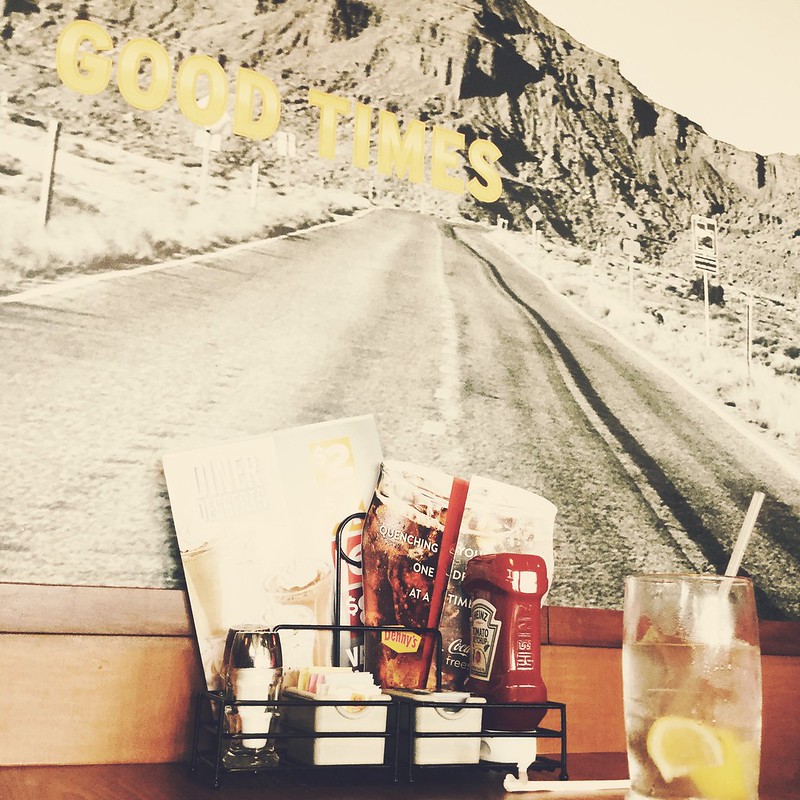
Good Times
Smuggling Typewriters to Phoenix

Post-Script: This posting serves as a kind of experiment for mobile blogging, in that both the lead photo and typecast were taken with this iPod Touch camera, the photo using Hipstamatic and the typecast cropped and tweaked in the camera's edit feature.

Once the images were emailed to my Flickr stream, grabbing the links was challenging, as you need to use the desktop version of Safari (a hidden feature accessed by pressing the retry button), then highlight the entire URL, a kludge of an operation that seems to eventually work if you hold your mouth just a certain way, and the phase of the moon is correct. Or maybe my fingers are too stubby and I need to learn the iOS touch gestures better.

Labels: , , , ,

Tuesday, June 14, 2016

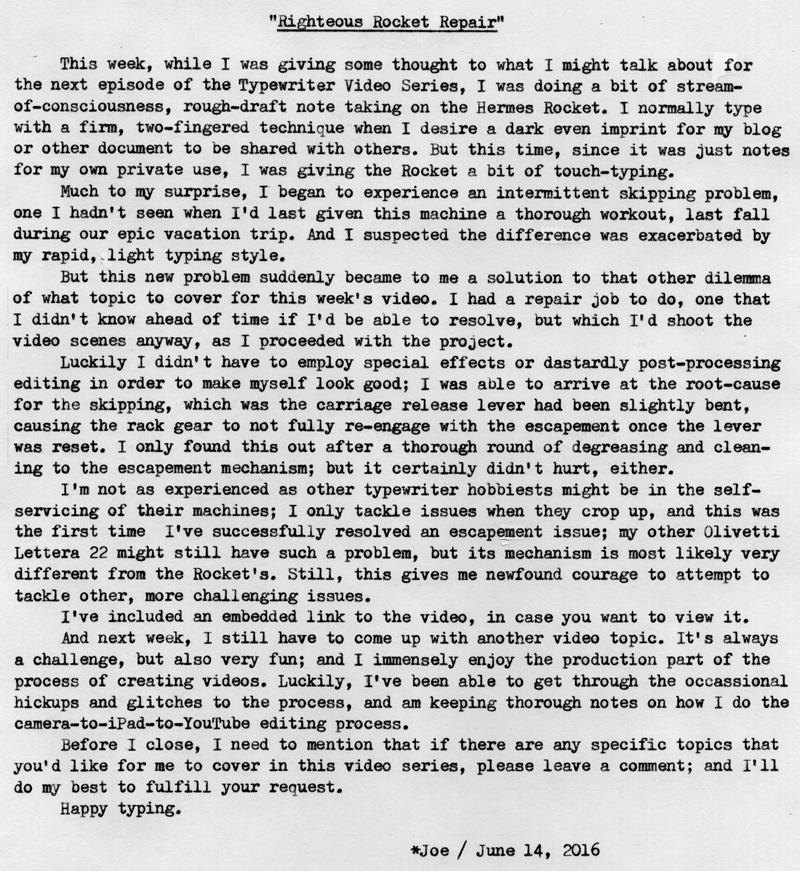
Righteous Rocket Repair


Typecast175

Post-Script: This was a fun day; I photographed, edited and uploaded two videos; and wrote and posted two blog articles - and fixed my Rocket! The other blog article and video are about my film canister pinhole camera project.

Labels: , , , ,

Sunday, March 27, 2016

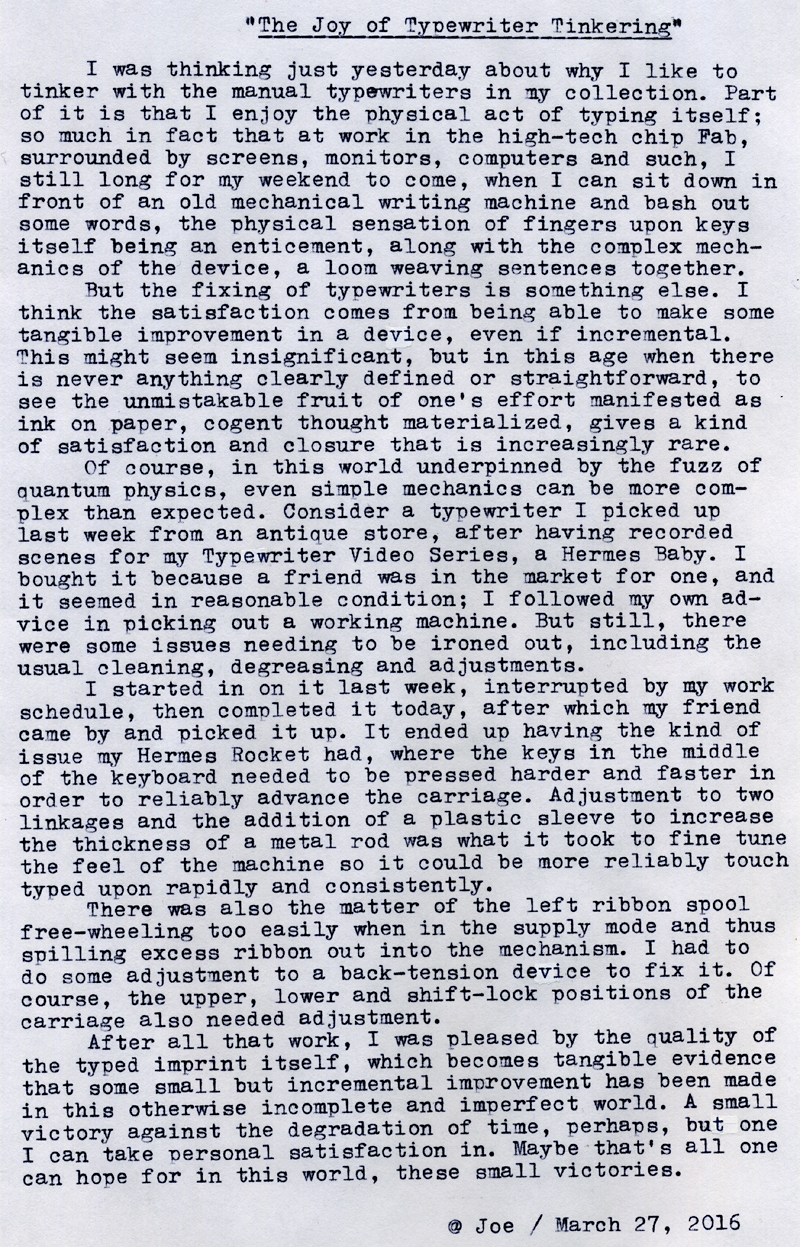
The Joy of Typewriter Tinkering

DSCF4836a
Typecast154

Post-Script: I like the idea that typewriters provide such an enjoyable user experience, engaging both the physical senses as well as one's intellect, while also providing opportunity for exploring their inner workings and discovering their hidden design features. And, they're practical; you can actually write with them!

I didn't take an opportunity to photograph the Hermes Baby mentioned above, but it's virtually identical in appearance to my Rocket. I did type an earlier version of this article using the Baby and a combination red/black ribbon, but I wasn't entirely happy with the two-tone, red/black effect to the imprint, since this machine lacks a ribbon height adjustment and therefore uses the middle of the ribbon; I've subsequently installed an all-black ribbon.

The machine also has a European keyboard with accent marks, and lacks both the dollar and pound currency symbols; which led my friend and I to joke that this was an anti-capitalist machine, a Bernie-typer. Long live the revolution!

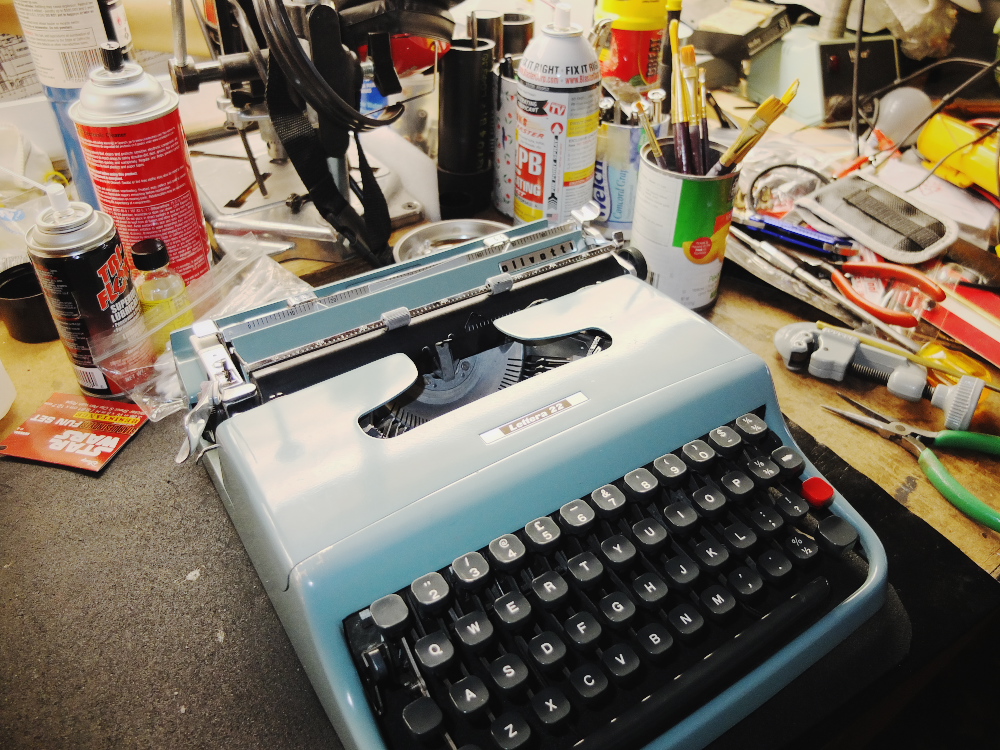
Typecast via Olivetti Lettera 22 with British keyboard.

Labels: , , , , ,