Wednesday, May 06, 2020

Vignettes

Silent-Super on Holiday (Case)
Vignettes

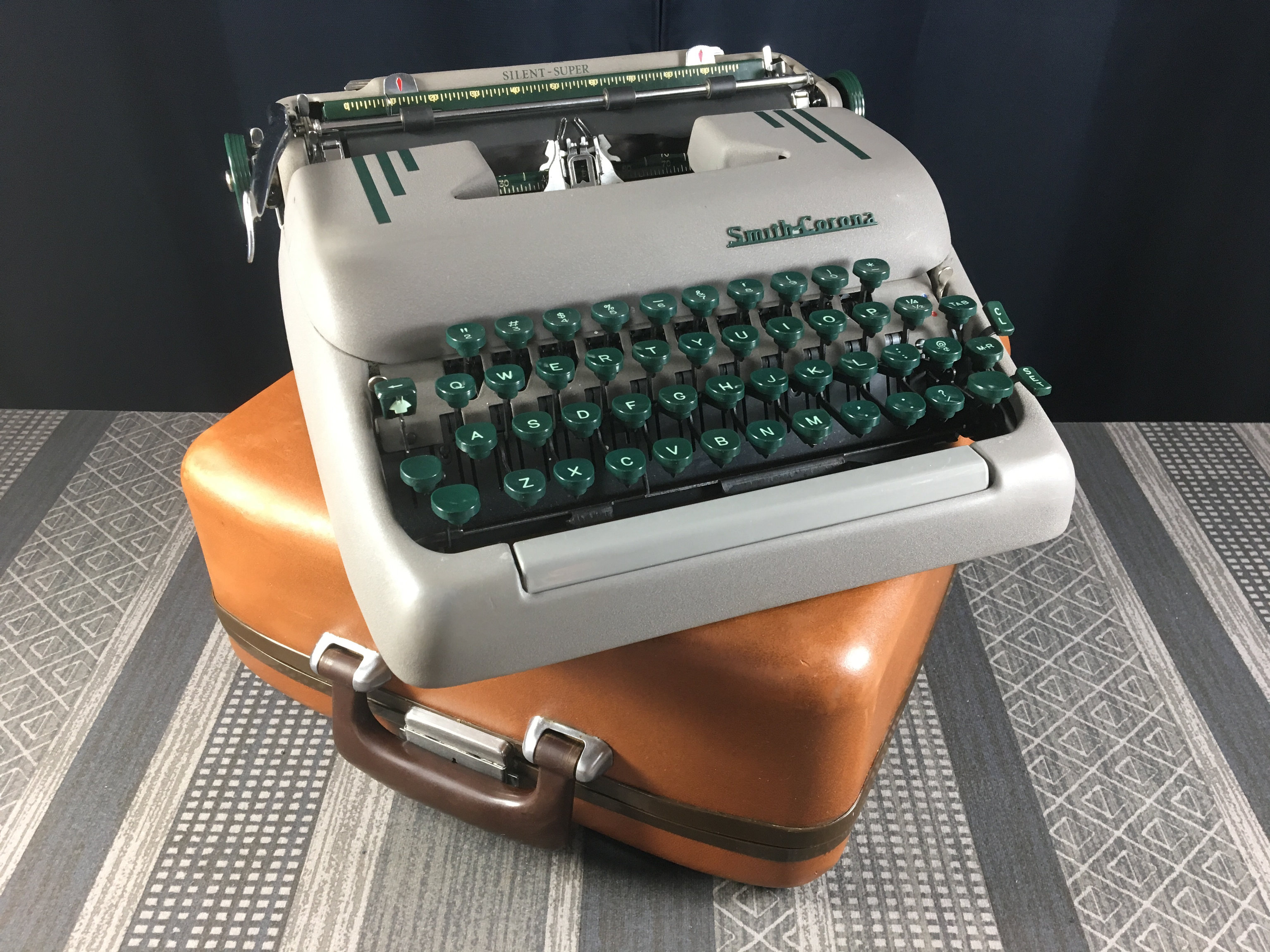
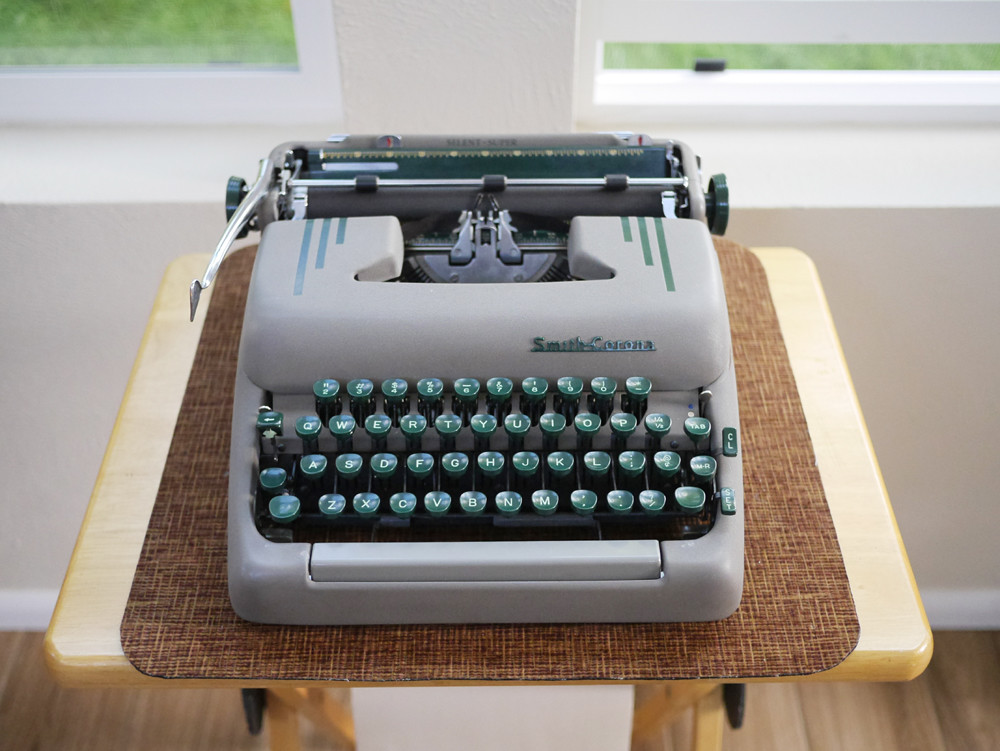
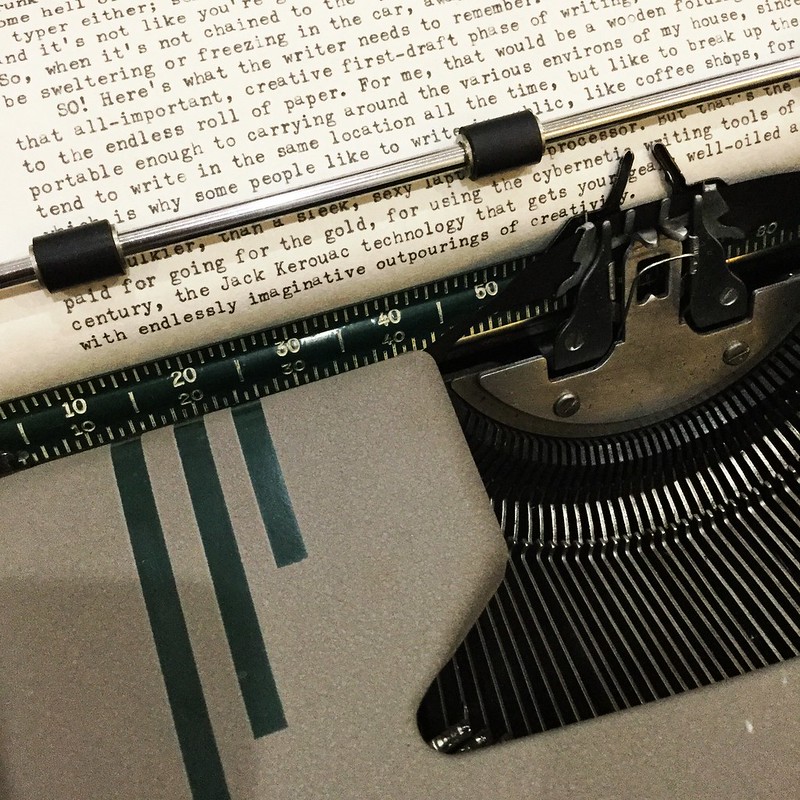
With the Silent-Super attached to the lower half of the holiday case but the top half removed using its quick-disconnect feature, it sat comfortably in my lap for some relaxing springtime afternoon meditative typing onto Southworth linen paper. Normally this would be a task ideally suited for an ultra-portable, but I like the elite typeface of this machine, and its richly dark imprint.

It was recently pointed out to me that the backspace key, although being virtually the same color, isn't the same shape as the others. It must have been replaced at some time in the past, probably by a typewriter shop. Which implies that it's gone through two rough periods during its existence, followed by some restoration. A broken or missing key cap is a sign of some rough use, and I'm certain the shop, whomever it was, wouldn't have returned it to its owner without being fully serviced.

When I acquired it just a few years ago it was again in poor shape, extremely dirty and exuding a foul odor. It took me months to clean, degrease and adjust to good working order, during which time I spent countless hours typing stream-of-consciousness drivel, in an attempt to suss out an intermittent skipping problem. Not only did that process result in the problem being resolved, but it taught me the power of the typewriter to draw out from me inner thoughts that would otherwise remain hidden.

I learned to love the elite typeface with its efficient use of space on a half-sized sheet of paper.

Subsequent to the work I put into it, I sent off the platen, feed rollers and paper bale rollers to JJ Short & Sons, to be covered in fresh rubber. The result is like a virtual time machine, like I've travelled back to 1957, the year of my birth -- and this machine's, too.

These semi-portables sport sufficient features to function as an office machine, yet are small and light enough to lug around, should the need arise. No, they're not as nimble as an ultra-portable, but they perform better in most respects. Were I to downsize further my collection this, and an ultra-portable like the Hermes Rocket or Royal Mercury, could serve admirably as a collection of two.

Every time I sit down and rest my fingers on its keys I'm reminded of the power of rehabilitation, of second (and sometimes third) chances. Don't ever think for a minute that there's no hope. Just plug away and keep doing the work.

Labels: ,

Sunday, September 08, 2019

September TW Society Meeting

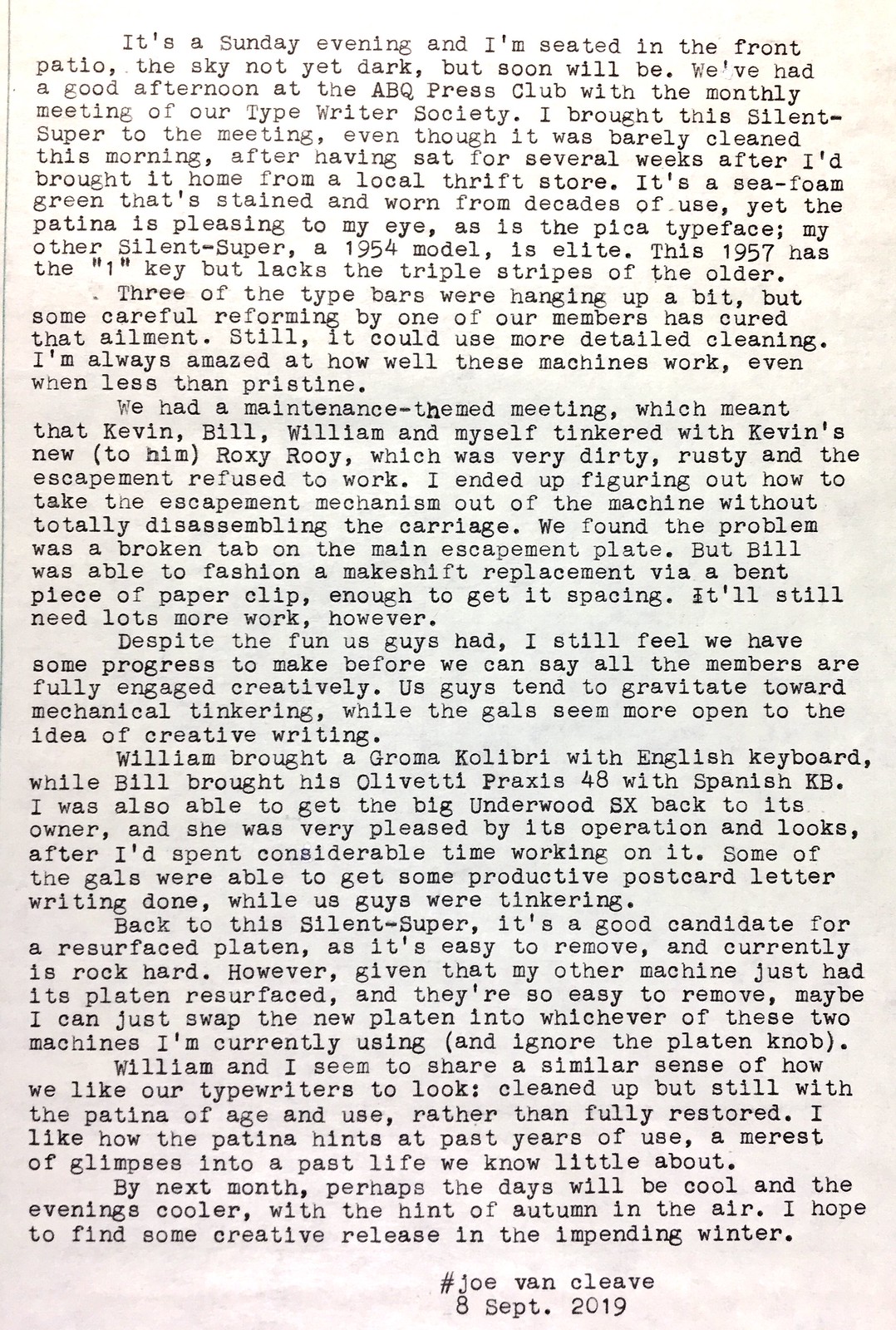
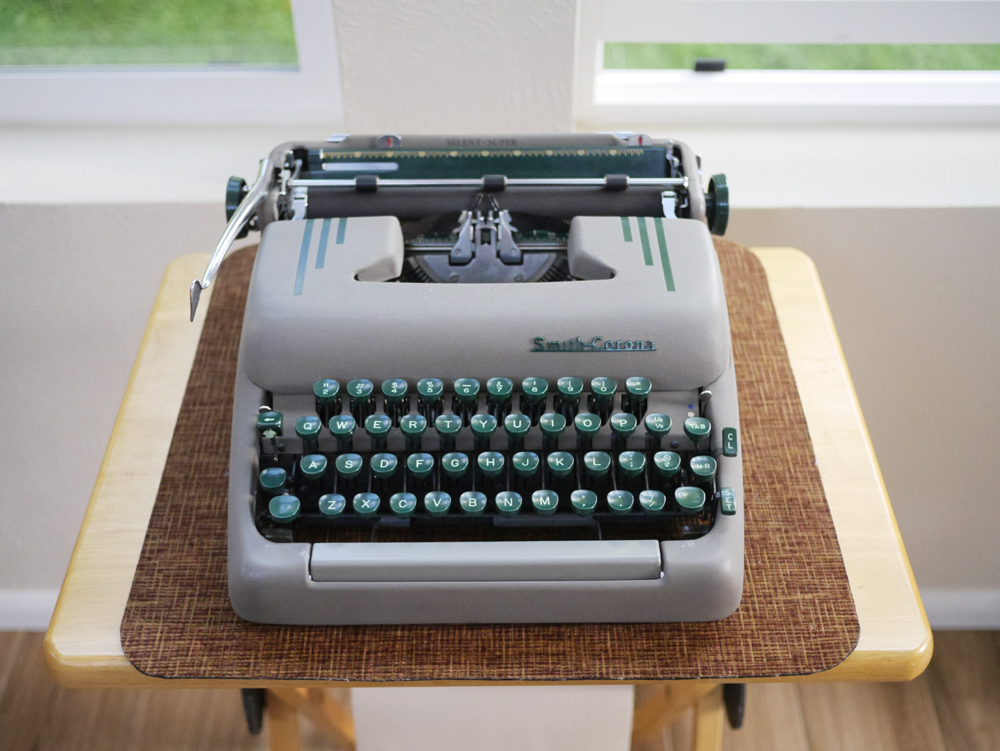
1957 Silent-Super
“September TW Society Meeting”

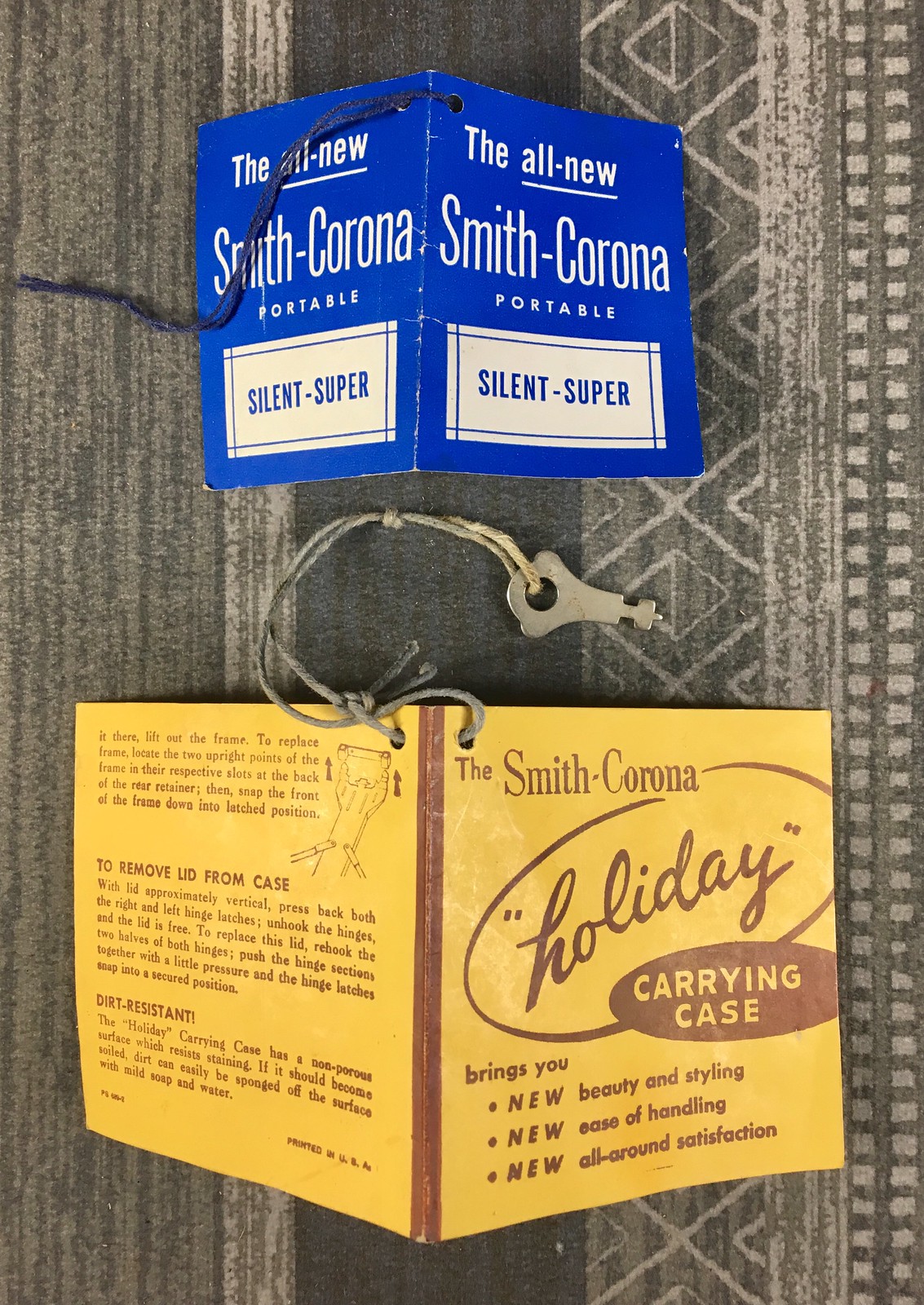
Post-Script: Here are some close ups of the ephemera included with this machine - the owners manual, touch typing guide, Holiday Case key & tag and sales tag. There was also a 3M brand cleaning sheet included, in the original plastic bag.

Silent-Super Ephemera 1
Silent-Super Ephemera 2
Silent-Super Ephemera 3

There's still a bit more work to do on the machine. Several of the type bars hang up on the type guide (the "h" and "f"), and it needs more cleaning. But the card guide fingers are formed so that you can actually thread a sheet into the machine and it'll roll right under the paper bail rollers, which is neat. I'll have to see about adjusting my older elite machine the same way.

I was initially thinking I'd sell this to a local member, but now I'm having second thoughts; I really like the type face. But I do have a potential buyer for another machine in my collection, so perhaps I can make room for this one instead.

I'll post a video about the meeting tomorrow, and will include the link below when I do. We had fun tinkering with a Roxy Rooy escapement issue, so stay tuned.

Labels: , , ,

Tuesday, May 02, 2017

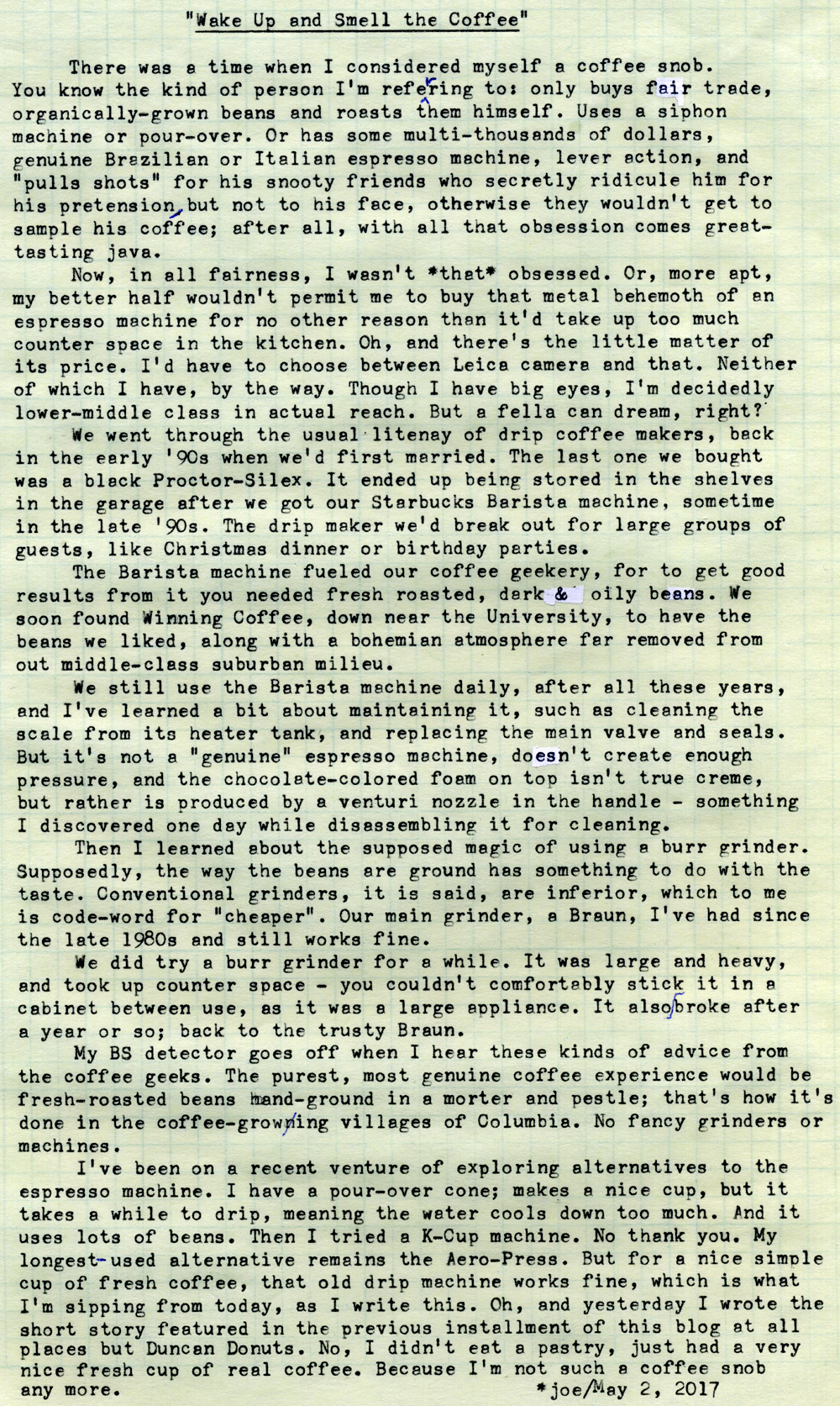
Wake Up and Smell the Coffee

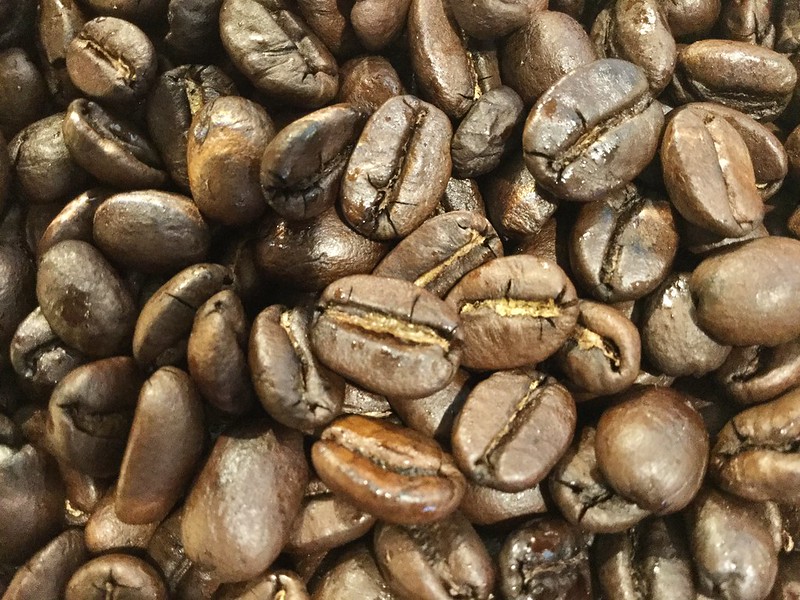
Beans!
Typecast280

Post-Script: In my desire to keep this piece a one-pager, I ran out of room to mention that we've also tried a Bialetti brand Moka Pot, stove-top espresso maker. While it makes an okay espresso, it's always a bit burnt-tasting, because of the heat required to get the little thing to generate steam pressure. But it is a genuine espresso experience, in the sense that this has been the traditional way many Italians make their daily coffee; or so the advertising informs us.

About that top picture of the beans; these aren't the darkest, oiliest coffee beans I've ever seen. I was struggling for a decent coffee-related photo this morning, and this was all I could come up with. As I mentioned in the piece, we've for years bought our beans from Winning Coffee, who do their own roasting. But their main roaster dude (is that a title?) finally moved on after many years, and since then the beans haven't been the same. Also, I know several coffee geeks at work, and these people are truly obsessed, in ways I never was. For example, I don't like straight espresso, preferring it sweetened with sugar and a dash of whole milk. Not so these hardcore types. They've also informed me that dark, oily beans supposedly don't work as well in an espresso machine.

So then there's this thing called "third wave coffee;" which, in case you didn't get the memo, is already outdated by "fourth wave coffee." But here in New Mexico, we're usually a few years behind everyone else, so we've just now seen so-called third wave coffee shops spring up around town. Sometimes news travels slow along I-40 from LA. These are places that do pour-overs and siphon extractions, and also offer cold-pressed coffee. And their espresso beans are less dark and oily, the results a bit more bright chocolate tasting. Kind of like the recent trend in bitter, hoppy IPA beers. You're supposed to like them, because everyone else who matters likes them. Except I don't like them; I prefer dark ales, porters and stouts, by the way.

The thing is, I still haven't had a decent cup of coffee at a third wave coffee shop. The pour overs and such taste like old Navy coffee, which is where you brew a pot in a percolator, then dispense the results, via a large container, back into the machine and re-perk it for a second time. The kind of coffee where the spoon will stand straight up in the cup without touching the sides. Where us younger fellas would need a mess of sugar and creamer just to make it palatable; unless you were an old Chief Petty Officer, beer gut hanging over your uniform belt, your coffee cup hand permanently deformed into that hook-shaped cup-holding posture. These old boys could walk up the steepest shipboard ladders, in the roughest seas, without spilling a drop.

I also got into trying Vietnamese coffee. Even went to the trouble of buying a little metal coffee maker, with the Vietnamese-brand coffee and sweetened condensed milk. Tastes like some dessert beverage, not something you'd want to drink first thing in the morning. Oh well.

As I said earlier, the Aeropress is the only alternative method I've tried that's any good. But it's one cup at a time, and you have to get your process down exactly. Scientific, laboratory-grade repeatability. If you alter the grind, or water temperature, or any other "process parameter" by just a smidgen, the results will vary wildly. It's like developing black & white film. Your agitation method, how long you stir the grinds in the hot water, how soon you start the press, whether you use it right-side-up or upside-down, paper or metal screen filter - these all effect the results to a noticeable degree. Some mornings it's great, others you get this bad taste in your mouth and wonder whether you should've first brushed you teeth (is there any coffee-flavored toothpaste out there?). Even our Starbucks Barista machine varies from day-to-day. Weird.

But then there's the old drip machine. This morning I brought it in from the garage, dusted it off, washed out the tank and carafe, and made a pot. Wonderful, basic, fresh, hot coffee. Like coffee was meant to taste. And enough for a refill or two.

Typecast via Smith-Corona Silent-Super. This is the first chance I've had to put it through its paces since last week's successful repair session, and it types wonderfully. There's still a bit of smearing on some of the uppercase characters, something to do with the way the type slugs hit the type guide fingers on the way to striking the ribbon, that will require more tinkering at a later date. But I'll live with it for now. This is why I'd never make a good typewriter repairman, it takes too long for me to get all the bugs worked out of these sensitive machines. The customer would be calling me, months later, inquiring about their unit, and I'd hem and haw about how I'm still testing it for reliability.

Labels: , , , ,

Wednesday, April 26, 2017

A Bit of T.L.C.

P1010007a

There was a pile of typewriters still sitting on my workshop bench from Sunday's Type-In, most needing to be stored away but several needing to be looked at: both Smith-Corona 5 series machines, especially the Silent-Super, purchased late last year from what I've described previously as a "hippie." Both machines performed fine during the Type-In, but since I'd last attempted to service them, I've acquired the Smith-Corona Floating Shift Typewriter Repair Bible, published by Rev. Ted Munk. I figure this would make for a good opportunity to revisit the somewhat intermittent escapement issues with that machine, and see what effect a good service manual would have upon my tinkering experience; while also serving somewhat as a mini-review of the book itself.

The book is divided into various sections, from the earliest Floating Shift models up to the Series 5. It did take a bit of flipping around to find where the sections begin and end, as they don't have clearly marked dividers; I plan on installing some tabs to the pages for that purpose. Once I found the Series 5 adjustment section I started at the space bar alignment procedure and worked my way through the escapement to the touch adjustments, using as my test subject the somewhat troublesome Silent-Super mentioned previously. It has been performing much better than when I'd first acquired it, due to the "service" I'd performed previously, but I didn't know exactly what I did to make it better. Now with the service manual, hopefully I'd find out, along with any further improvements to be had.

The space bar itself was well-centered in the frame of the machine, with no hanging up or rubbing, but the trip point of the space bar linkage upon the escapement was a bit too close to where the space bar stops at its rubber bumpers; the adjustment was to reform (bend) a linkage arm, to permit the escapement to trip earlier.

Next was checking the escapement pivot arm for freedom. You lock the carriage in the stored position, which also disables the rack gear from the escapement, then disconnect the spring on the pivot arm. It should freely pivot with no binding. I found it necessary to loosen the pivot points a bit, made with a precision open-end wrench and small screw driver; I'm still needing to acquire some gun-smith drivers for this purpose (or, more ideally, a legacy set of typewriter tools - as rare as hen's teeth). Now that the pivot arm was moving freely, I reconnected the spring.

Next was checking the freedom of rotation of the escapement star wheel itself, which is again checked with the carriage locked and the pivot arm manually moved out of the way. Here too I found it necessary to loosen the star wheel shaft nut a bit, to provide freer rotation.

Next was to check when the escapement is tripped as letters are typed. This is done by slowly moving a type bar toward the platen and noting at what position the type slug is relative to the type guide when the escapement trips. It should trip when the slugs are adjacent to the tip ends of the type guide. I found it necessary to reform a linkage to adjust the trip point.

The rest of the escapement-related checks were in good order, which encouraged me.

Subsequent testing on several sheets of paper with random nonsense typing showed marked improvement, with virtually no skipping or piling up of letters. But I did see another section in the adjustment manual about the touch selector, so decided to take a look and see if any improvements could be had there. It turned out that there was some unevenness of touch tension between the left and right sides of the keyboard, which was easily adjusted via the two screws on the touch spring lock bar. Once they were balanced from left-to-right, I then loosened both evenly about a quarter turn, making the overall touch of the machine a bit lighter, something I like in good portable machines.

None of these adjustments could have been made without the service manual, and the nagging escapement issues this machine had been experiencing I feel are resolved. There was not just one adjustment that fixed the problem, but a whole series of adjustments. The manual proved absolutely invaluable.

Once emboldened by my success thus far, I proceeded to the much trickier task of realigning the type slugs for even imprinting. This took me far longer than I'd anticipated, mainly because I lack the special tools designed for precision bending of the type bars. But I can say that, finally, the type imprint is much better aligned vertically, while the upper case imprints are clearer than before. I found that subtle misalignments would still deliver good lower case imprint, but with the type slug hitting one side of the type guide slot it would cause a smearing of the upper case imprint.

I feel this machine is finally in a condition where I'd be comfortable with anyone using it. And credit is entirely due to Ted Munk for making these resources available to the layperson typewriter community.
After servicing the Silent-Super, I proceeded to tackle the much less troublesome Silent version, and I didn't find too many issues to speak of, other than the escapement trip point was a bit too far toward the type guide, so it had to be backed off a bit; just the opposite of the previous machine.

I haven't gone through every area of these typewriters with this book, since I haven't been experiencing other issues. But I can rest assured that, if need be, I have the technical resources to tackle virtually any problem.

Another item of interest in the adjustment section was doing custom adjustments to compensate for individual user's typing styles, specifically what they call "Follow -Through, Hang-on Typists" and "Speedy Galloping Typists." Some of these adjustments involve reforming parts, while others involve measuring tolerances of clearance between neighboring parts and, if necessary, machining parts or ordering replacements.

Aside from the adjustment section, I found it interesting in the section on model features that various platens were once available for these machines, including extra hard platens intended to be used for stencils or thick sheets of carbons; and also slotted platens of various sizes for typing on smaller cards. It makes me wonder, when I read about someone's super hard platen, that perhaps they have one of those purposely-made extra-hard platens.

Any person owning one of these Floating Shift models owes it to themselves to get this manual, because these service adjustments are written with the technician in mind, using down-to-earth language that is rarely found in tech manuals of today's era. I especially love the way that terminology in the text is underlined, then the underline is connected to a call out arrow that points to the exact part in the associated diagram on the same page, making it easy to locate the part being described.

Keeping these machines running into the future is going to be much easier with this factory-supplied service literature available to anyone. What we still need, however, is a supply of replacement parts, currently only found from donor machines too far gone to fix. Perhaps some machine shop will rise to the challenge and start fabricating these rare and unique items. But until then, we need to keep these machines in good working order with a bit of tender loving care. Thanks, Reverend Ted! Yesterday I couldn't spell technician; today I are one!

Labels: , , , , , ,

Monday, April 10, 2017

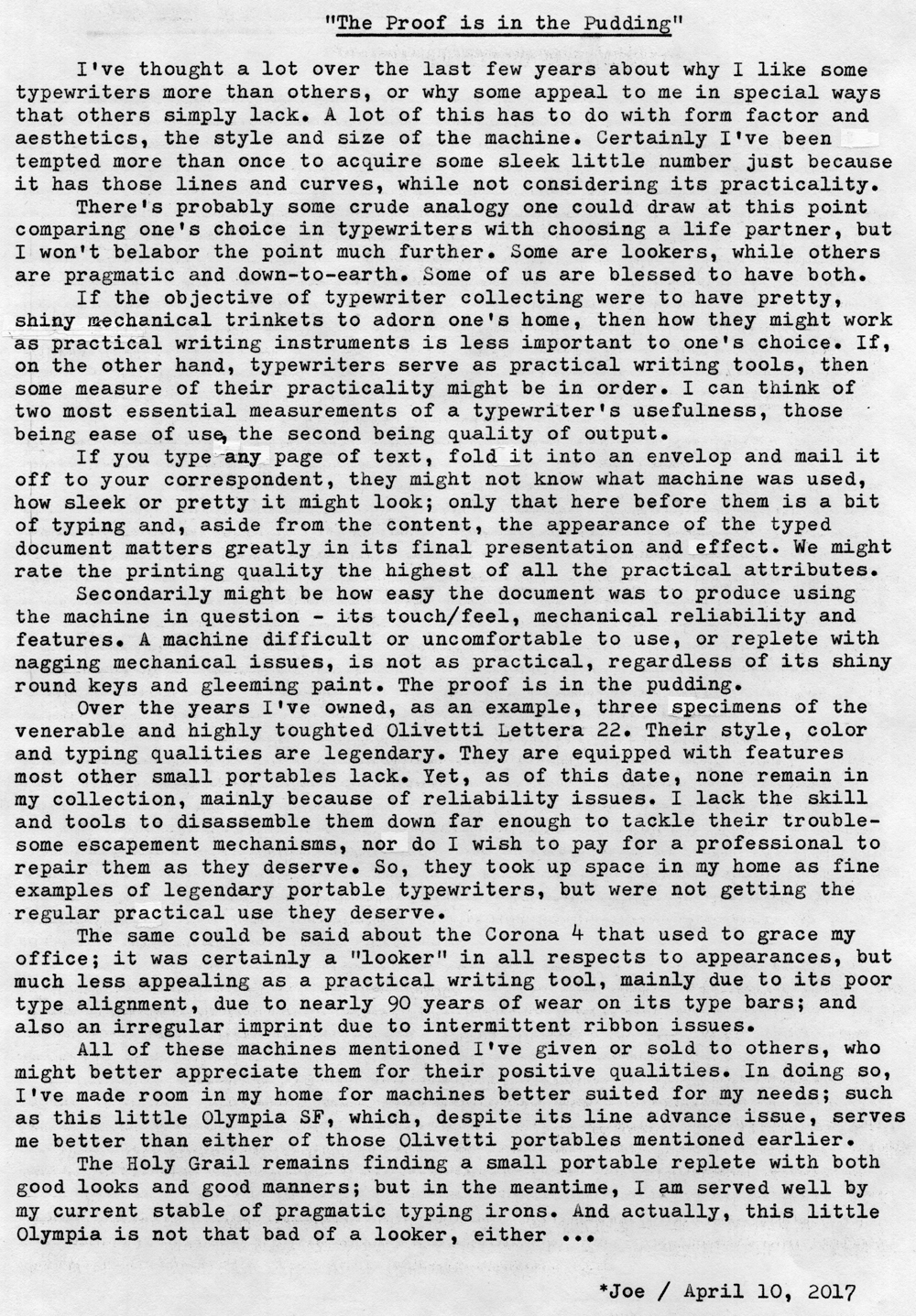
The Proof is in the Pudding

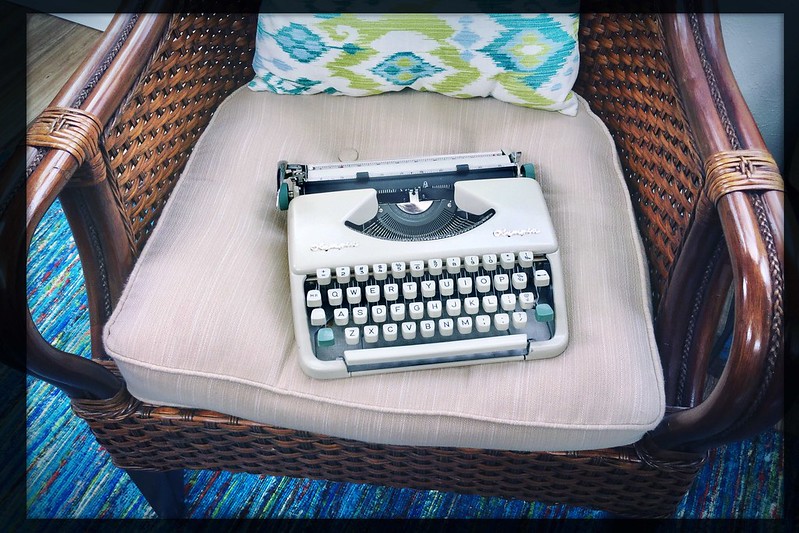
Olympia SF
Typecast279

Post-Script: After we arrived back home from last week's vacation to Jerome, Arizona, the first typewriter I used was the lovely Corona Standard. Not only is it a true "looker," but its typing feel is wonderful. It's probably the one machine in my collection that has it all; aside from not being a true ultra-portable. But then I set this Olympia SF on my lap and began some random typing, and really enjoyed its touch, too. Yes, it does have that one little issue with the line advance, but my temporary solution of back-rolling the platen one click after a conventional carriage return seems to make it a practical writing tool.

Comparing the Olympia with the Brother Charger 11 taken on the Jerome trip, I'd say the Olympia has a more solid feel, though weighs more, but also makes a nicer imprint. And its clam shell lid latch components are made from metal, so they should be more reliable than what I've experienced with the Brother. I know some people criticize these Brother portables, but aside from the broken lid latch, I've found them to be rather reliable. But the Olympia is a more solid machine; and you could argue perhaps has better aesthetics going for it, too.

It's interesting that in all my travels with typewriters I've only ever taken with me an ultra-portable typer. Yet room in one's vehicle shouldn't limit oneself to just those diminutive models, since there's plenty of space in the back seat for at least a medium-sized portable. The real issue is how easy the machine is to lug from car to hotel room, or in the case of last week's trip, from our room to the garden for some private typing. The Brother was a good choice in that respect, as it is light in weight; but I can very much see myself on a future trip taking a medium-sized portable like one of my Smith-Corona Silents. The fancy Corona Standard I think will stay safely at home for the time being.

Since I mentioned the Smith-Corona Silents, I should also make mention that I did a bit more investigation into the intermittent escapement issue plaguing the Super-Silent. I've had promising results by comparing its inner workings with the more reliable Silent stablemate, and documented my findings in a video:


Labels: , , , , , , , ,

Tuesday, February 07, 2017

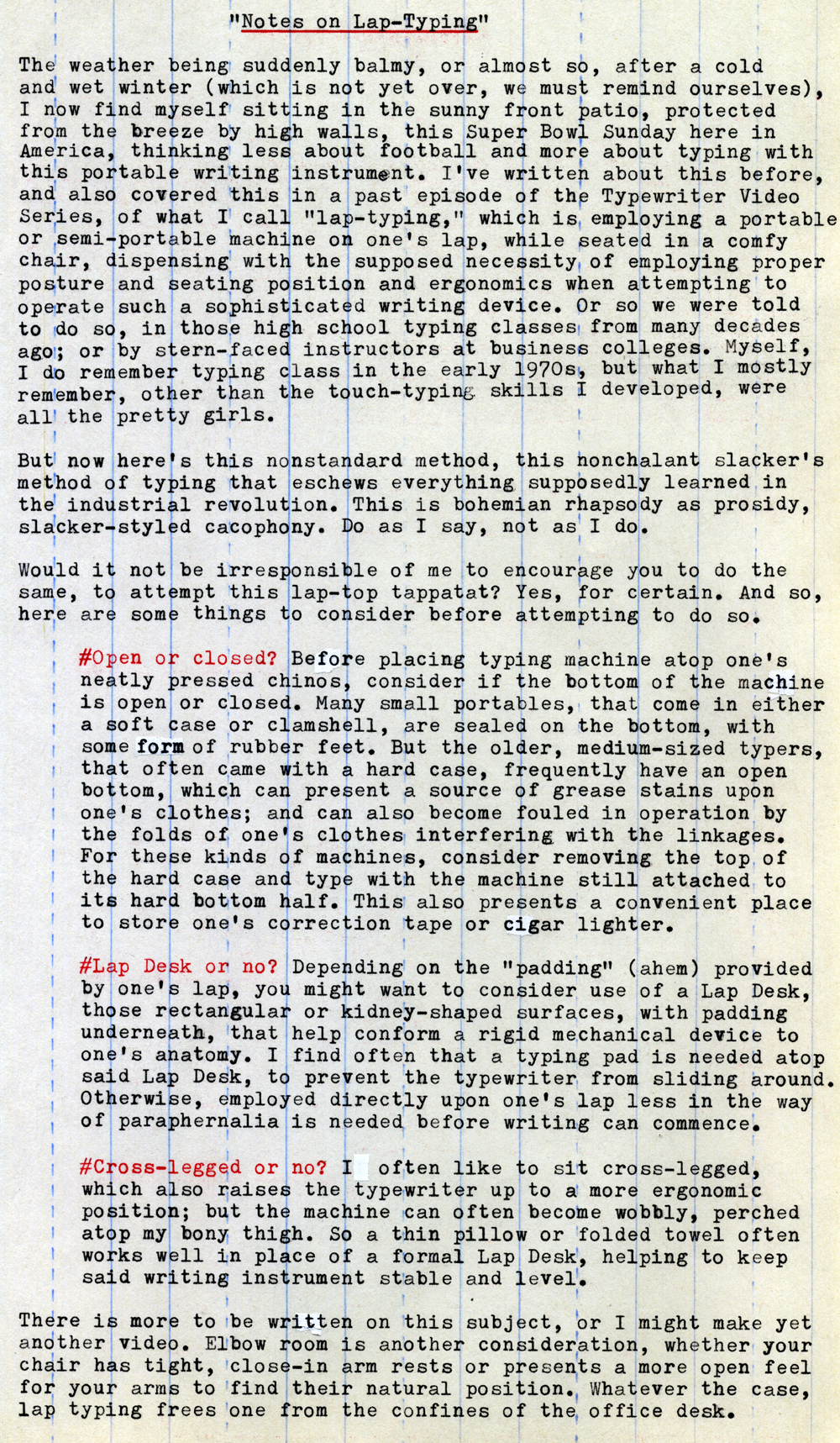
Notes on Lap-Typing


Typecast273

Post-Script: As you can see from above, I did end up making another video, on lap-typing. I happen to love portable and semi-portable typewriters, and what I find most distinctive about them is their relatively compact size and weight makes them ideal for moving out from the traditional office/desk setting, into more creativity-spurring environments. After all, this is why they are called "portables" in the first place.

I was hoping to try my hand at making a medium-size portable like the beloved Smith-Coronas Silent into a more take-anywhere machine, by removing the top of the hard case and, keeping the machine secured to its base, enclose it in a soft material like an old pillow case, then slip into a backpack, for carry-anywhere portability. But alas, my little day pack is a bit too narrow for that idea to see fruition. Perhaps a slightly wider back pack. Of course, a person could lug the case by its handle, but who wants to do that for more than just a few minutes at a time. I was also brainstorming some idea for attaching straps to the hard case, so it could be portered on one's back, but no winning ideas have yet to see the light of day.

Speaking of Smith-Corona Silents, yesterday I brought out the Silent-Super for a bit of test-typing, and noted that, after it's been sitting for several months unused in the cold garage, the troublesome escapement issue returned. I spent several hours yesterday afternoon with it and its stablemate non-Super Silent next to each other on the bench, as I used the less problematic machine for a comparison, and found a few mechanical adjustments needing to be made, and some hardened pivot linkages needing to be freed up. Afterwords I spent an extended period of time with the machine and it hasn't skipped once. But that doesn't necessarily mean that it's fixed, no sir, because one has to remember where it came from: a Craigslist ad from a fellow who I'd generously describe as a "hippie," living in the filthiest house I'd ever stepped foot into (and I used to do TV repair service calls, years ago, and have seen a few grungy dwellings in my time). I spent several days initially cleaning and degreasing this machine. Even now there's a bit of funky odor emanating from the hard case, just a subtle reminder of its colorful pedigree.

This typecast was via the recently acquired Brother Charger 11, a humble but willing writing companion, and truly fit for lap-typing.

Labels: , , , , , ,

Sunday, October 30, 2016

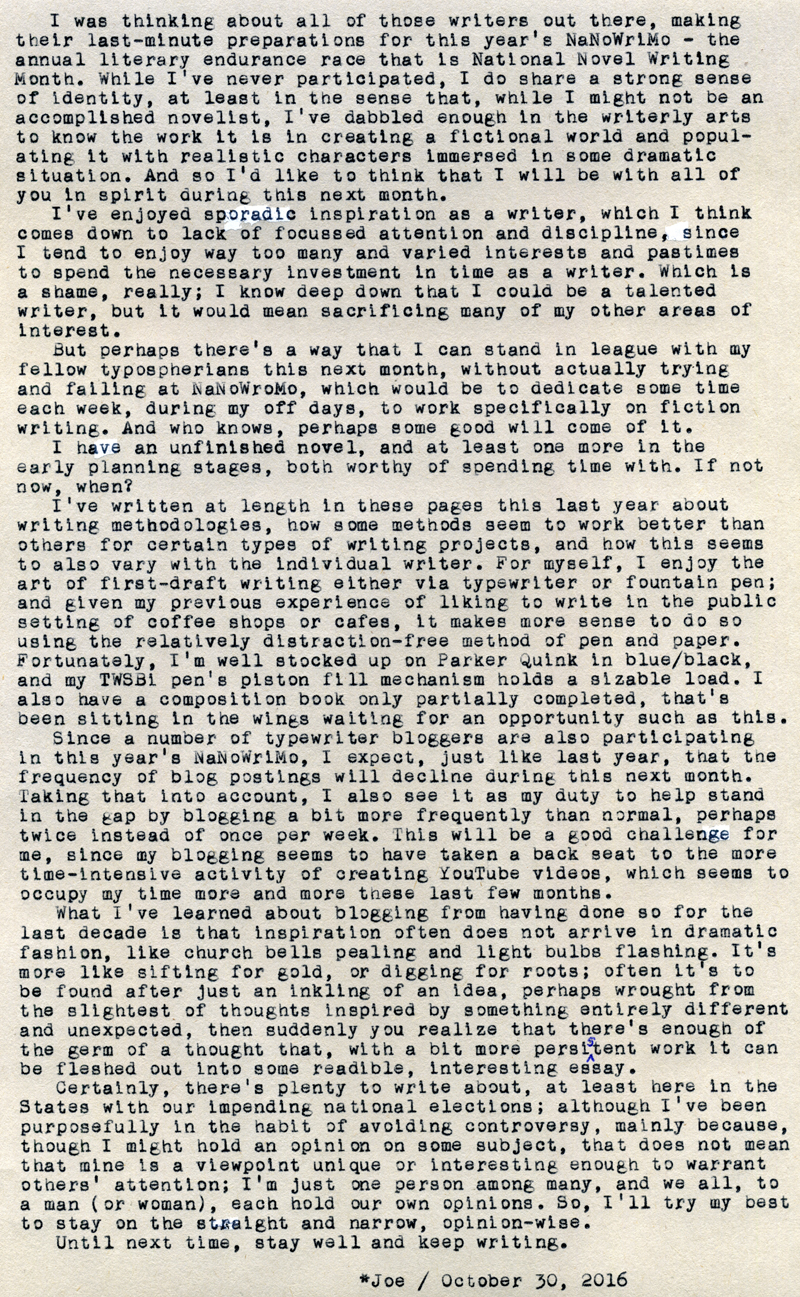
To Stay on the Straight and Narrow

Poised to Write

Typecast195

Post-Script: Do you remember, just a month or two ago, all the time I spent cleaning, adjusting, typing and typecasting with my more recently acquired Smith-Corona Silent Super? Well, this is its older stablemate, the venerable non-Super Silent, the one with the fixed tabs, and a bit more drab color scheme but in better mechanical condition. In terms of "haptics," this one feels every bit as good as the best mechanical typewriter, but is more compact in size than the larger Galaxy 12s or Hermes 3000s. And, being of elite-sized (smaller, 12 characters per inch), it just works better for me as a first-draft typer, especially with the seemingly endless roll of teletype paper threaded up. It is because of machines like this, situated in my patio room upon the tray table, ready to type up a storm, that I can, at a moment's notice, be creating words upon paper. An imminently practical, pleasurable writing instrument.

I've been taking a liking to this teletype paper. No, it's not a fine quality foolscap of rich vellum, it's instead more like rough, leathery, thicker newsprint. But I like the look it gives to printed words. They're meaty and physical. You can more easily see the ink impressed upon the paper's fibers. The paper's off-white tone looks like it's already aged half a century, like these freshly typed words could have been from a previous era; some sort of typewriter time machine at work, words from the present appearing as if they've come from the past.

The best part of using the roll of teletype paper is not having to thread up a fresh sheet of paper after an all-too-brief session of typing. No interruptions, just pure, nonstop writing pleasure.

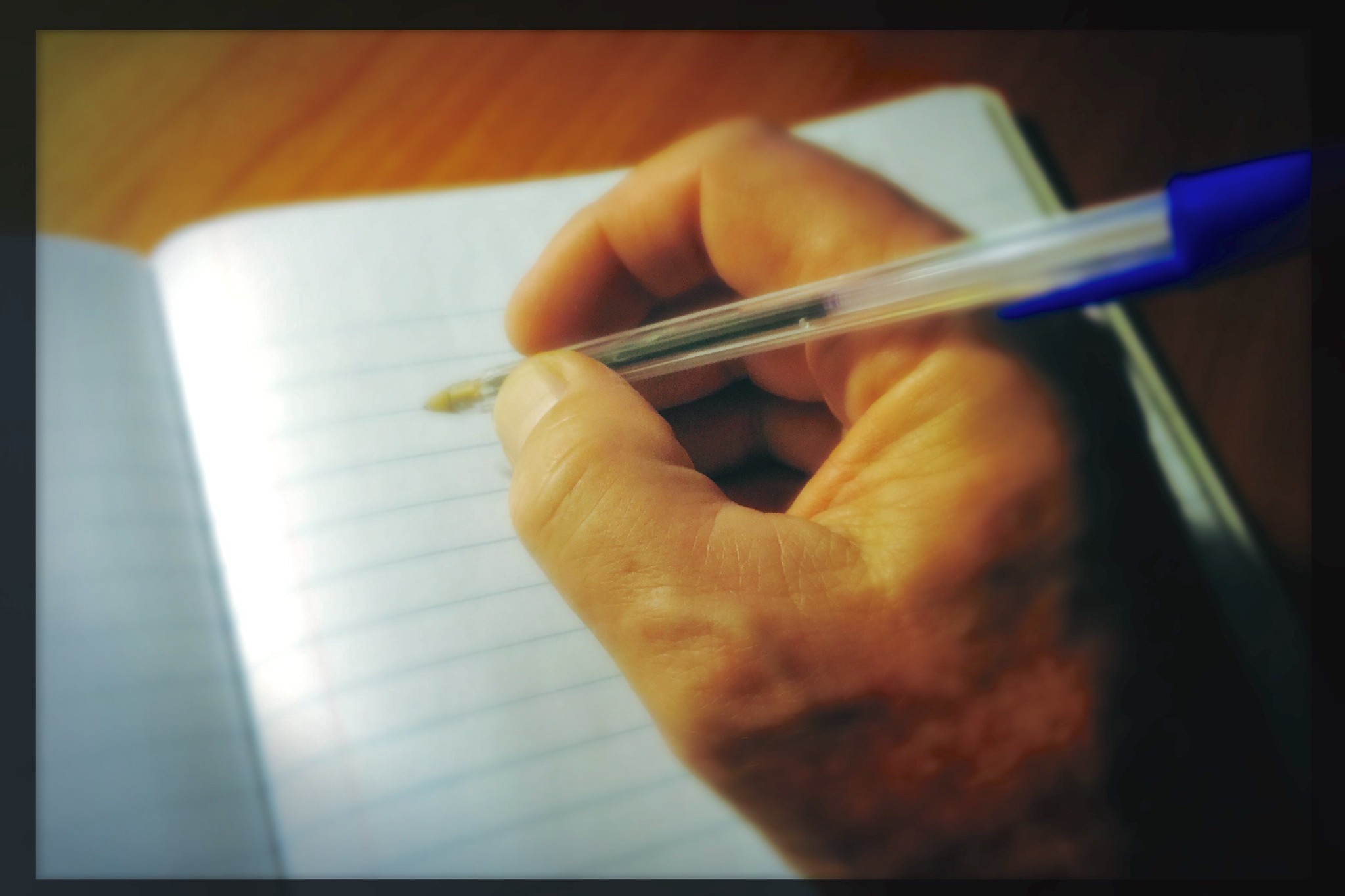
The top photo shows a Bic Cristal medium-point in blue ink, one of my all-time favorite writing instruments. If it weren't for fountain pens, this is what I'd be writing with. I've taken to liking these pens so much that I go out of my way to stay stocked up on them; the larger 1.6mm tip versions are also very nice writers. Oddly, they're rather hard to find at my local big-box retail stores. Luckily there's Amazon to the rescue.

Labels: , , , , , , , ,

Wednesday, September 14, 2016

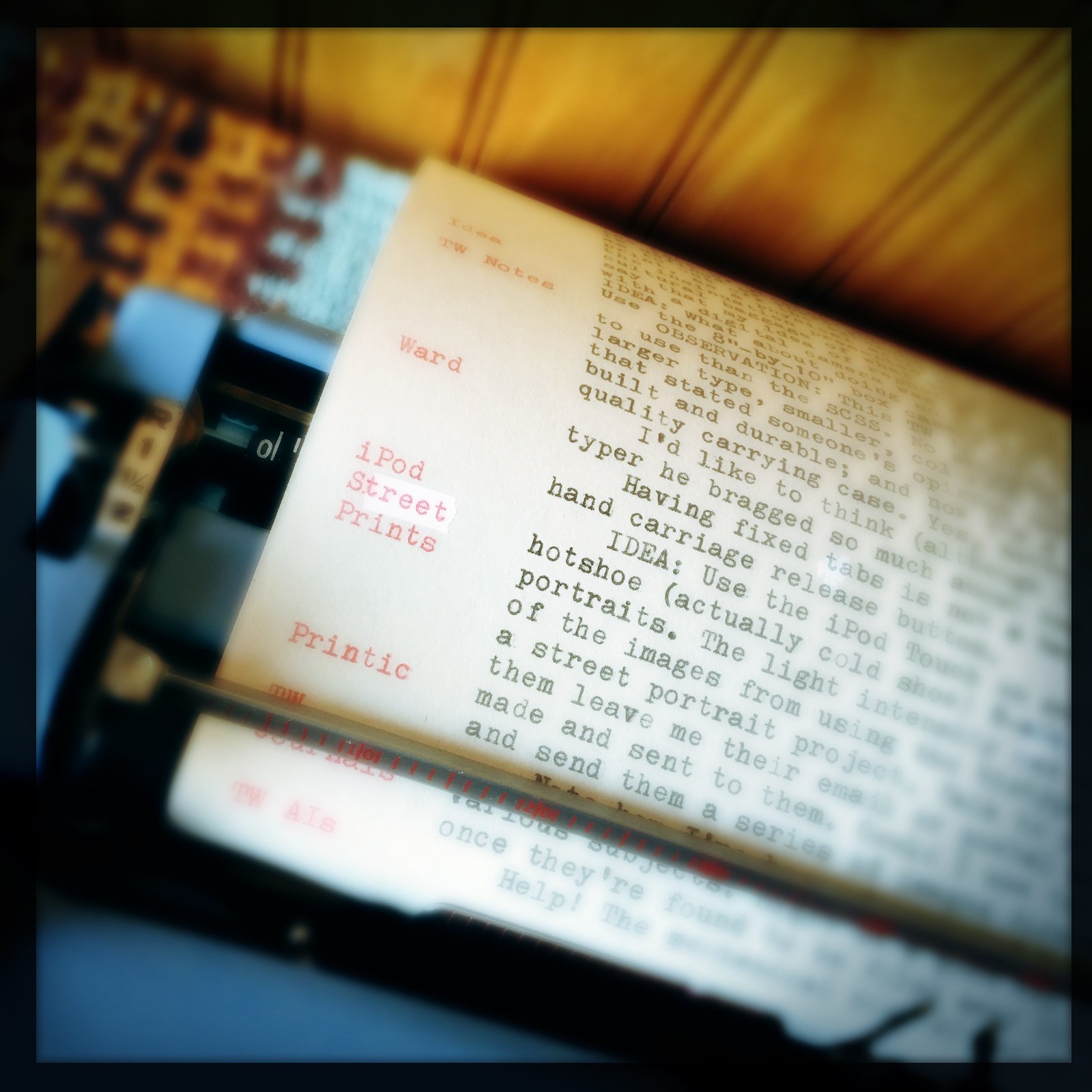
The Blue Mechanical AI

The Blue Mechanical AI

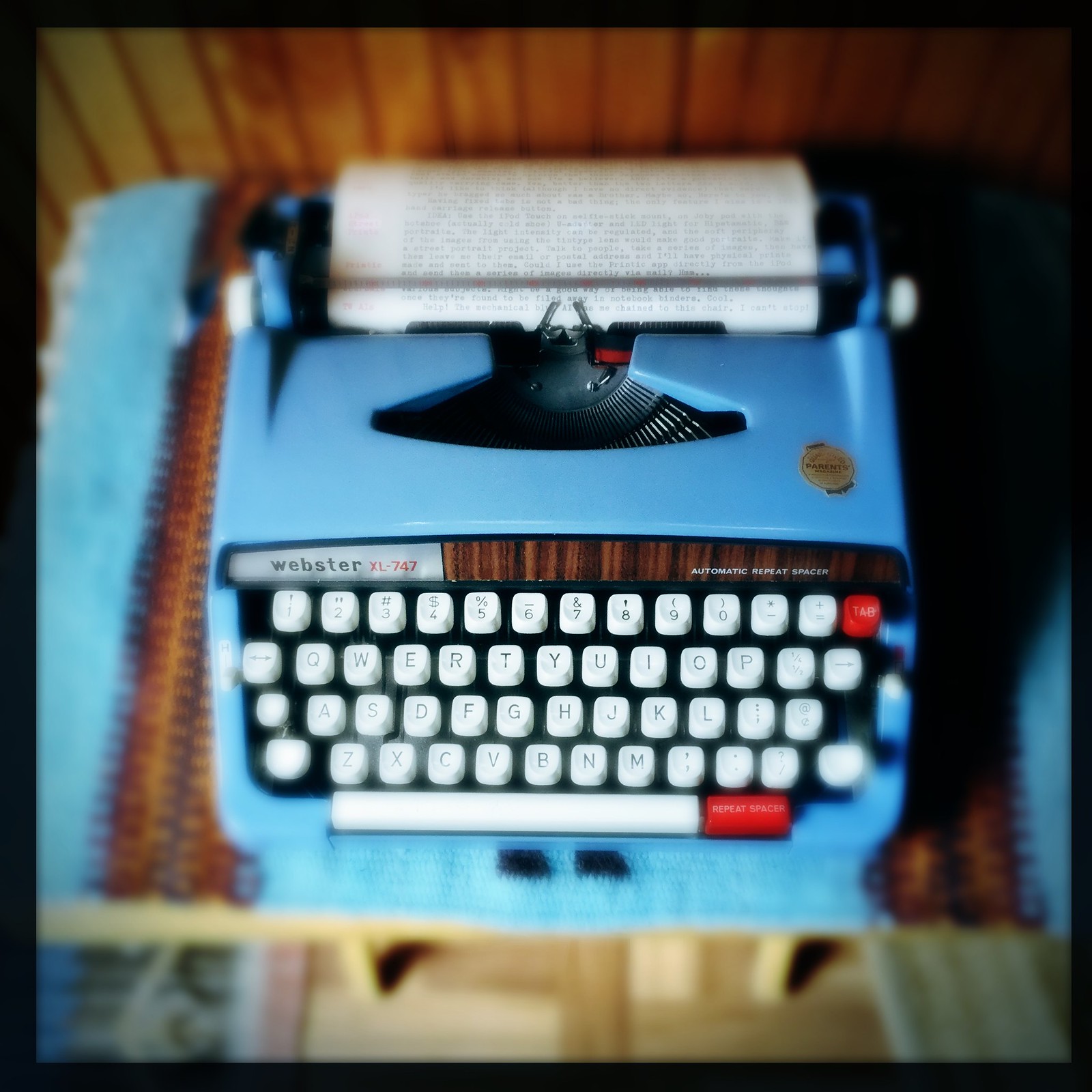
Help! I am being held captive by a blue mechanical AI. No, it's not some advanced artificial intelligence of the kind being developed by leading tech industry titans, but was something evidently created decades earlier, and made of all mechanical parts, like some steampunk automaton.

I know what you're thinking, that there's not enough complexity in a typewriter to account for its abilities I've observed this afternoon, while engaged in an extended typing session with the roll of teletype paper threaded up, to keep me chained to my chair, banging the keys and slinging the carriage back, a roll of intelligent prose (or nearly so) falling back behind onto the floor. But I have no better explanation to offer.

This Brother-made Webster XL-747 has even offered me a meaning to its name: Writing Enjoyment By Simply Typing Endless Randomness. At least, that's what came out on the paper roll. Who am I to argue?


Margin Notation

Now, there's something else it revealed to me: a way to organize these diverse scrolls of random writing by using the margin release button and red ribbon to make marginal notes along the lefthand edge, so that once filed away I can still easily locate individual topics.

I've been using Smitty, the Smith-Corona Silent Super, for a few weeks and, while it has a softer touch than this Brother, I've found I can type at least as fast, maybe faster. Yes, the touch of the keys is heavier, and it's carriage shift, but with my weird typing technique and my right elbow supported on the armchair I can accurately hit the keys harder, with great accuracy.

This little blue AI also is smaller, lighter, has the repeat spacer and a nice carrying case. This is one of those things about typewriter collecting that I hoped to achieve, to narrow down the collection to just those machines I really enjoy using. While at the Phoenix Type-In last month I sold both Olivetti Lettera 22s, which were both similar enough to this Brother in size and color but weren't as pleasing to use. I think I made a good choice, as this machine has essentially no mechanical issues whatsoever. It's a joy to type with despite its heavier touch because I don't have to pause for corrections like with other, more trouble-prone typers.

Now that this blue AI has used me for its own purposes of announcing itself to the world, I'm hoping it will have the kindness to permit me a good nights sleep before I return to work early tomorrow morning. But they're sneaky, these AIs are, so I must be on my toes.

Labels: , , , , , ,

Tuesday, September 13, 2016

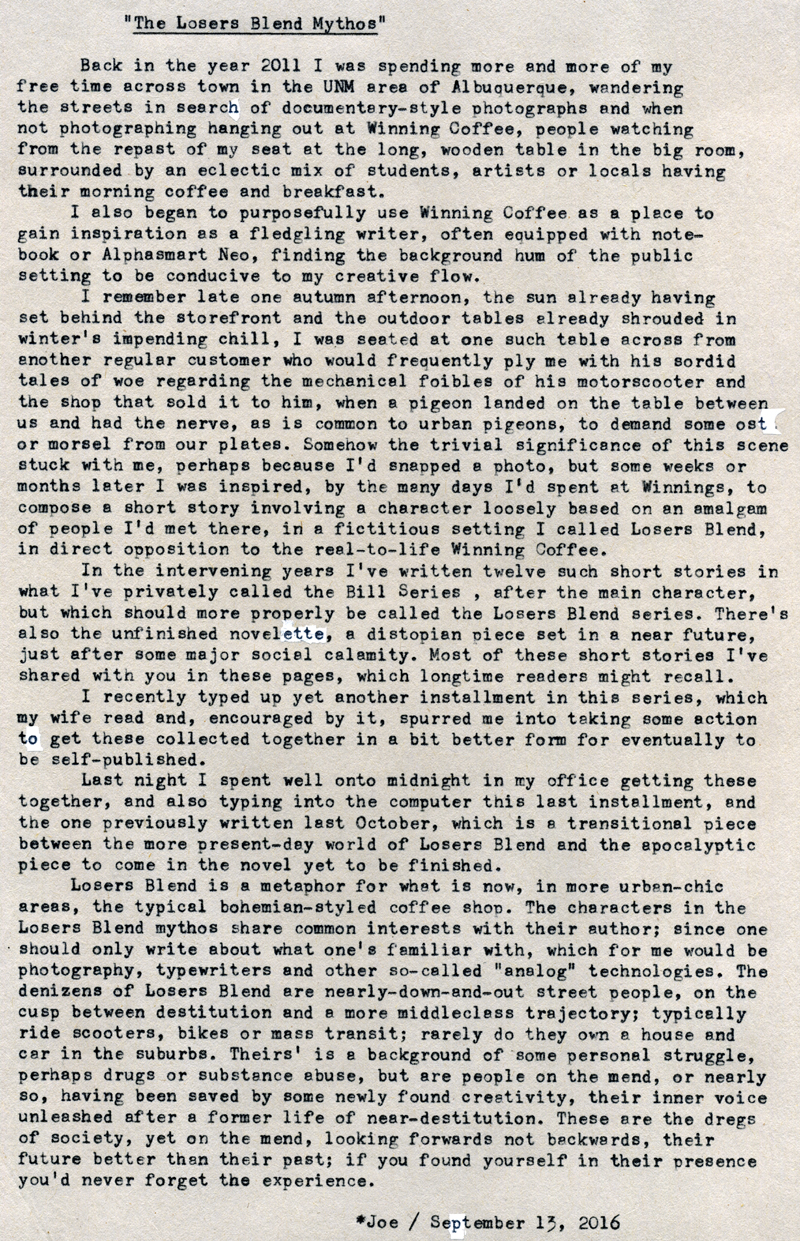
The Losers Blend Mythos


Typecast192

Post-Script: Here's the entirety of the short story series thus far, in the internal chronology of the story's world. The last part yet to be posted online is below, which comes second-to-last in the chronology.

1) "Pigeons" / Oct. 19, 2011

2) "Interface" / Nov. 1, 2011

3) "Barney The Cigarette Guy" / Nov. 14, 2011

4) "Healthy Respect" / Nov. 30, 2011

5) "Winter Crows" / Dec. 12, 2011

6) "The Guy Who Came in from the Cold" / Dec. 28, 2011

7) "Decrepit Underpinnings" / Jan. 22, 2012

8) "Two Lovers" / June 17, 2012

9) "Coming Home" / May 20, 2013

10) "The Real Deal" / May 29, 2013

11) "Some Future" / Aug. 23, 2016
(See below)

12) "Typing Like Your Life Depends on It" / Oct. 1, 2015


You might notice that a number of these stories were written in a short period of time, spanning October 2011 to January 2012, in what I consider to have been a most creative period of my life. It's difficult to manufacture creativity, but I must have been doing something consistently good; perhaps merely hanging out at Winning Coffee had some effect.
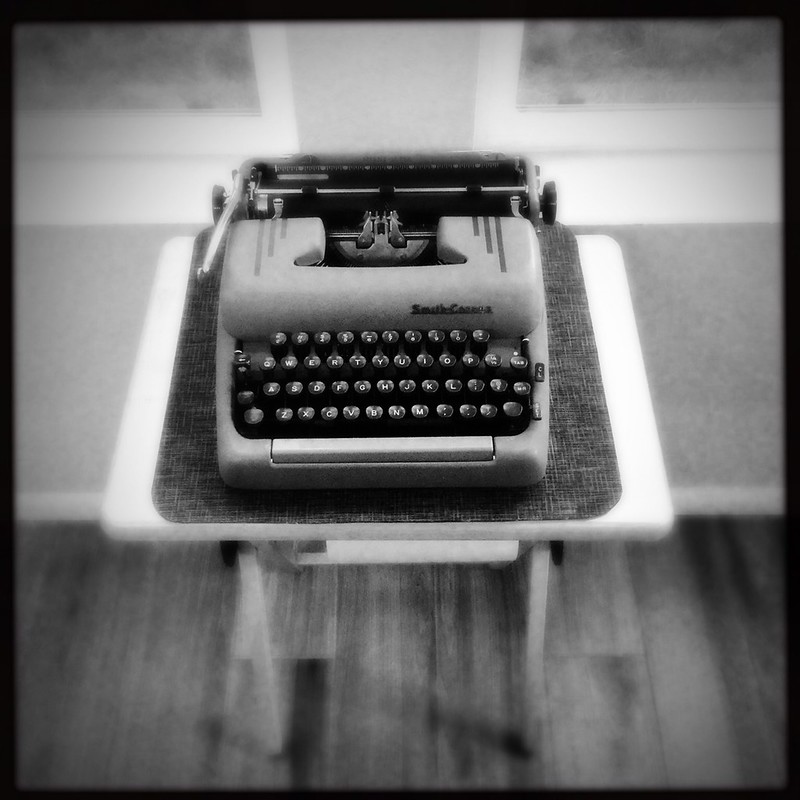
Smith-Corona Silent Super

The eleventh story in the chronology, "Some Future", is posted for the first time below. I composed it on the Smith-Corona Silent Super, a typewriter that is of the same ilk as the denizens of Losers Blend, for it too was rescued from a former existence of bohemia and the dregs of society, requiring plenty of work, and even now remains noticeably less-than-perfect, but therefore possesses a quaintness because of that troubled background. This is a reformed beatnik typer, yet still possesses the spirit of that Kerouac technology, despite all the work I've put into reforming it into some model of middle-class Americana. It possesses a free spirit, always reminding me of its scars and troubles, as is fitting for a beat typer. One should always respect one's beat typer, for they are the artist-typers of our culture, the ones we should grab first when we wish to channel our inner Muse and capture onto ink and paper a bit of the whimsy of the aether.


"Some Future"
by Joe Van Cleave

Bill threaded the scooter between traffic and rows of parked cars, finding the ramped curb where Harold the store clerk rolled his dollies of produce from the double-parked delivery trucks, early in the morning. Finding his favorite spot on the sidewalk between the newspaper box and light pole, Bill lifted the seat and extracted cable lock and shoulder bag, securing the rig as he'd always done, then headed halfway down the block to Losers Blend, indicated by the mess of tables and chairs on the wide, brick sidewalk, filled with mostly an assortment of college students, street people and hipsters posing as the former. The smell of hand rolled cigarettes and vaporizers filled the autumn air, unseasonably warm.

The aroma of fresh ground coffee, garlic and cayenne pepper from the kitchen greeted him as always, a comforting familiarity in his otherwise hectic existence. "Morning, Todd."

"Morning, Bill. The usual?"

"Yea. And the Times. I'm feeling rich today." Bill didn't always read the news, but sometimes he made exceptions.

Coffee and paper in hand, he made his way to the corner table, ordinarily cluttered with a mess of magazines and sections of yesterday's paper, a catch-all that the old crew knew was actually Bill's reserved table in disguise. He quickly gathered up the detritus of old news and stacked them, in one graceful heave, into the spare chair, then sat down, neatly arranging his coffee, shoulder bag and paper.

Just in time, Maggie, the new gal, brought him his breakfast. "Here you are. Can I get you anything else?"

"Just keep the coffee coming, thanks."

"Well, we normally don't do refills, it's serve yourself."

"I know. But then again, nobody's come here as long as I have, and it's become a kind of tradition, one that Marty started, years ago."

"Oh, you're the special customer. I see. Sure, no problem."

"Special customer? No, not really. I just like tradition, that's all. Otherwise nothing special at all about me."

As Maggie turned to leave, Bill realized his special status as the closest friend to the late founder of Losers Blend was a soon passing phase, one that would be lost to the changes that time brings. Just as cultures evolve, the old Losers Blend would soon be forgotten.

He didn't exercise his special status out of some ego-driven motivation, but as a way of remembrance, or so he liked to tell himself. Remembrance for the way things used to be, for the special person Marty had been, and for their special relationship, forged by a bond that only comes from drastic circumstances. Though he didn't want to think about those dark times, he also didn't ever want to forget. That was the whole point of the messy table in the corner, the one Marty used to sit at during his breaks from the kitchen, back when Losers Blend was just starting and the idea of a bohemian coffee shop was an oddity to middle class sensibilities.

Digging into his breakfast, the chile was as hot as ever, the one thing, aside from the good coffee, that hadn't changed with Marty's passing. Pausing with elbow on table and forkful at mouth, Bill could still recall, as if it were just yesterday, when they'd first met.

Bill's had been a hard childhood, with his mother dying when he could barely walk and then his dad's years of struggle with drink. He'd been passed around from one family member to another, first his grandparents, then an aunt, then another aunt, until he was sixteen and decided enough was enough and he ran away, to start his adult life a few years earlier than his peers, whom he didn't know, having moved from city to city and school to school, always the loner, the outsider, the new guy.

At eighteen he tried to join the Army but failed the entrance exam. People told him you had to be pretty dumb to fail the Army exam, as dumb as a box of rocks. For a while he started to believe it himself, until one day when he found himself on a bus stop bench voraciously reading a discarded paperback novel and suddenly looked up and the world around him looked different from what it had been a half hour earlier, as if those words printed in that grimy, dog-eared novel had been a key that unlocked something deep inside him, like shedding a thin veneer that'd covered his eyes and obscured the truth. Ever since then, he'd been on a journey of discovery, bouncing around from one situation to the next but always with his mind set forward, to some future that only he could see, a future anyone else who knew him at that time would be hard pressed to imagine could ever circumvent the situation he'd been in then.

And then he met Marty, a fellow vagabond like himself, and at once they both knew they'd found brothers in each other, the family they didn't have. Marty and Bill hung out together, ran the streets together and did whatever they could to get by, sometimes doing things they knew were trouble, but justifying it with the reason that they were desperate, and desperate people had to do what they had to do. Survival was the motto on the streets.

But Marty and Bill weren't dumb. They knew enough of the streets and the people on them to know that once you fell to the allure of the bottle or the needle or the pipe, you were a goner; that the way forward and up would be much harder. And they both shared a common vision for the future, one in which they both could keep a bit of their present freedom while somehow making it in life, threading that narrow needle's thin gap between slavery to The Man and succumbing to the flesh.

Bill suddenly realized he'd been staring out the window, the food that had once been on his fork now staining the front of his shirt, and Maggie had refilled his coffee while he'd been away in his private reverie. And this was how he came to understand that he'd crossed over some crucial milestone in life, when instead of all his energy being consumed in striving for a seemingly unattainable future, he spent more and more time recalling a past that was even more unattainable. The future was certain to happen, though maybe not the future one hoped for; but the past was gone forever, its only evidence distant memories and some artifacts, like bones unearthed and preserved in our private museums, memories of the kind one finds prodded into surfacing from the dark pond of life by snapshot photos in crusty old albums.

The morning rush now over, Todd was busying himself with cleaning up and preparing for the noon rush when he noticed Bill standing at the counter. "Need a refill?"

"No, Todd, thanks anyway. I'll be going now. And the table in the corner, you should clean off those old newspapers, I'm sure somebody'd like to use it."

"Later, Bill."

But Bill didn't answer, or didn't hear him. He exited out the grimy glass door into the morning light, bag on shoulder, without looking back, his face set on some future only he could see.

Labels: , , , ,

Tuesday, September 06, 2016

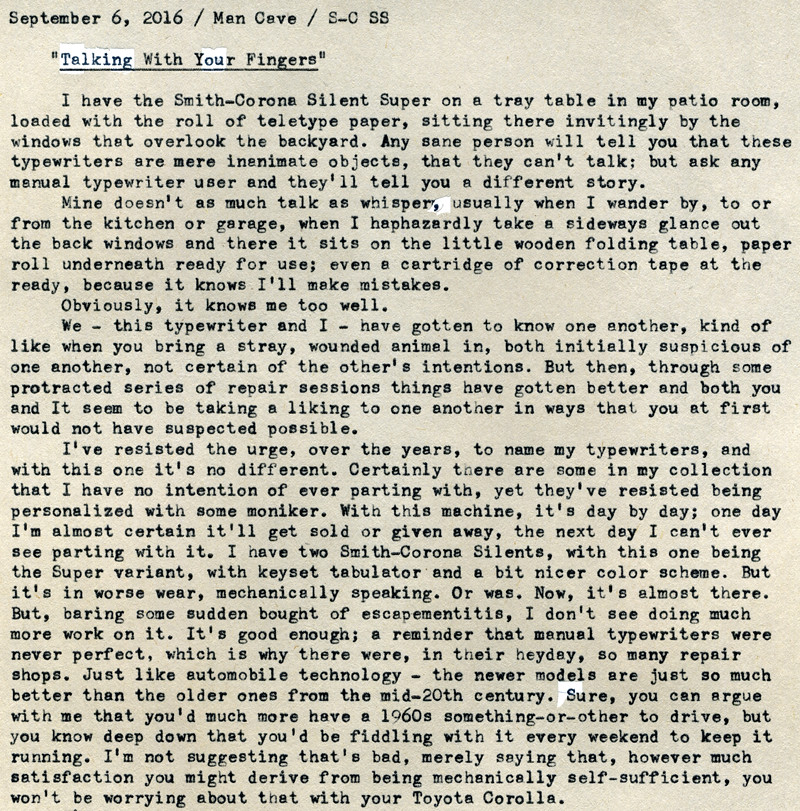
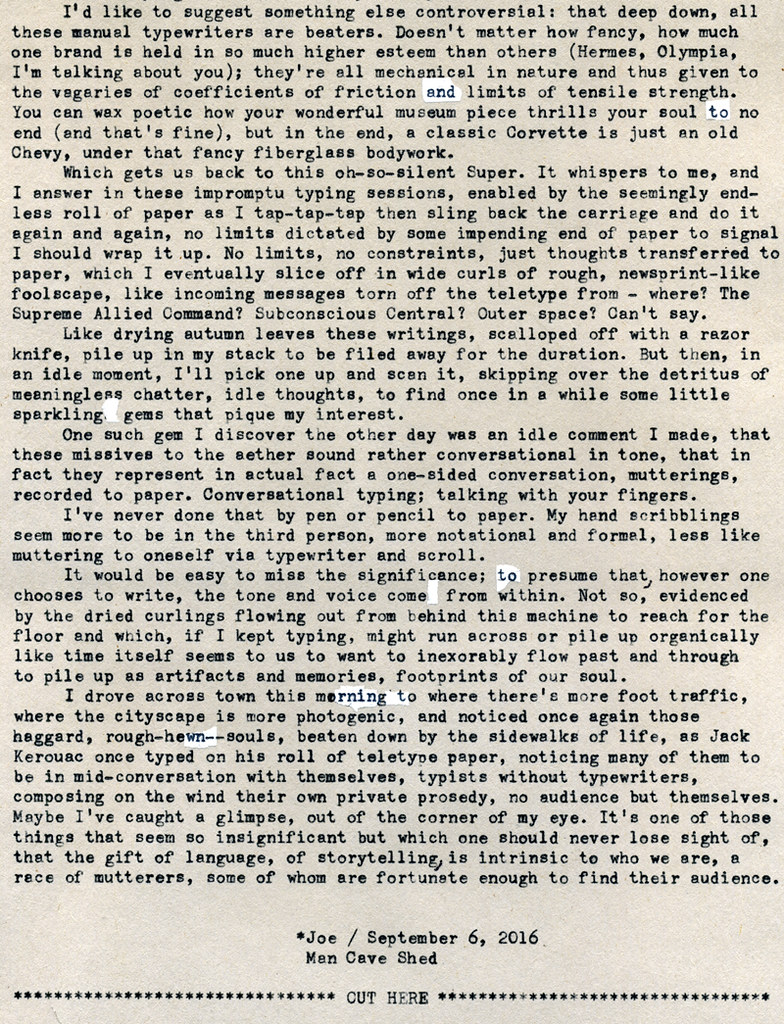
Talking With Your Fingers

P1010007a
Typecast190
Beater Typer
Typecast191

Post-Script: The reference in that last paragraph to Kerouac's On The Road was unplanned, but perhaps inevitable, given the nearly identical method of composition. I've read On The Road numerous times, but never in the context of it being a work specifically wrought onto teletype paper via manual typewriter, in some manic act of marathon muttering. Perhaps a reread is warranted.

I find the smaller font size of the Silent Super to be ideal for this kind of writing, as it seems more like letter-writing, more personable, requiring an up-close read, an intimate squint into one's own soul.

Misspellings and typographic errors courtesy of the author.

Labels: , , , , , ,

Wednesday, August 31, 2016

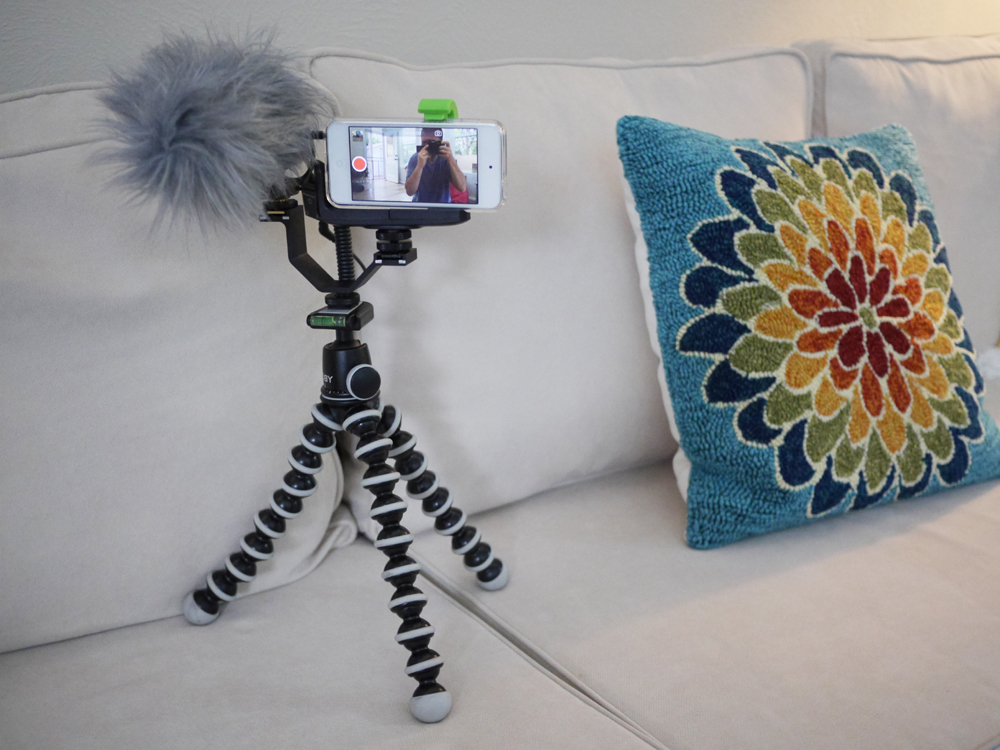
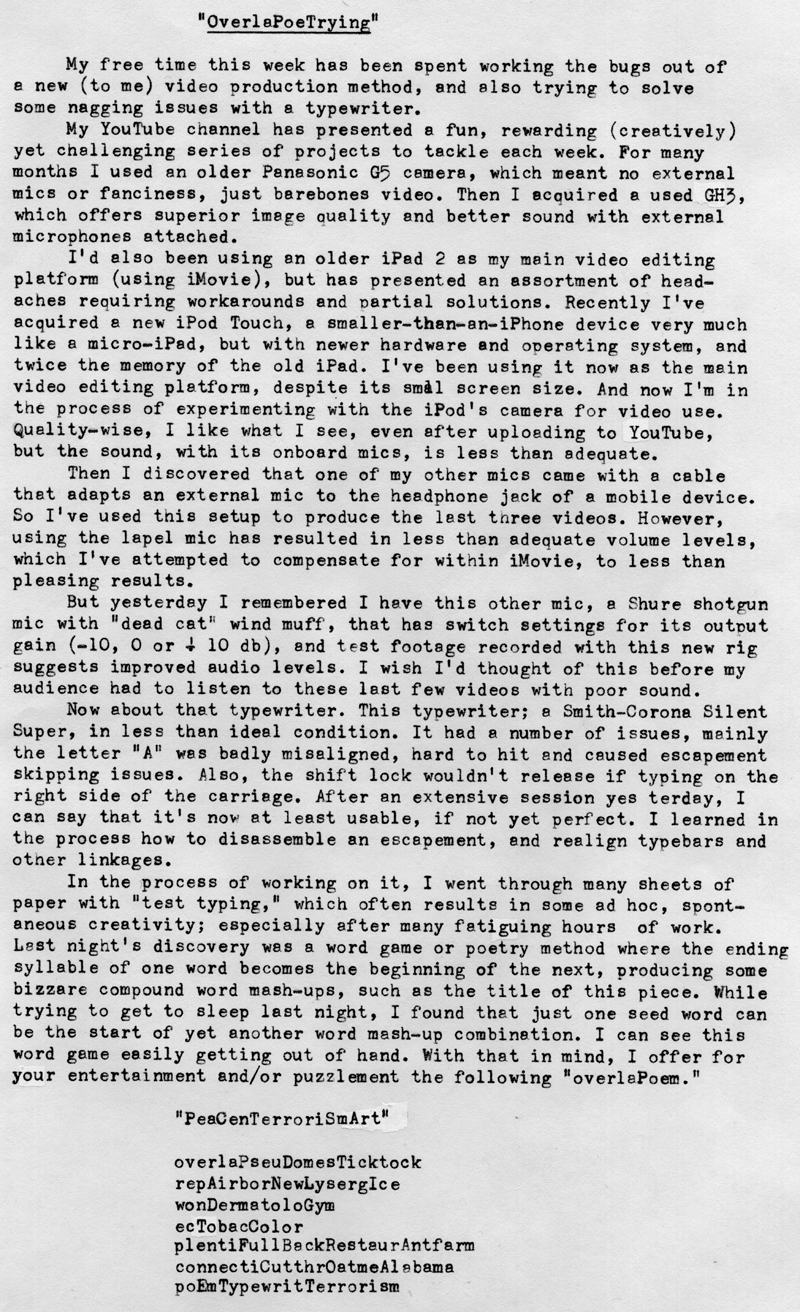
OverlaPoeTrying

P1010006a
Typecast189

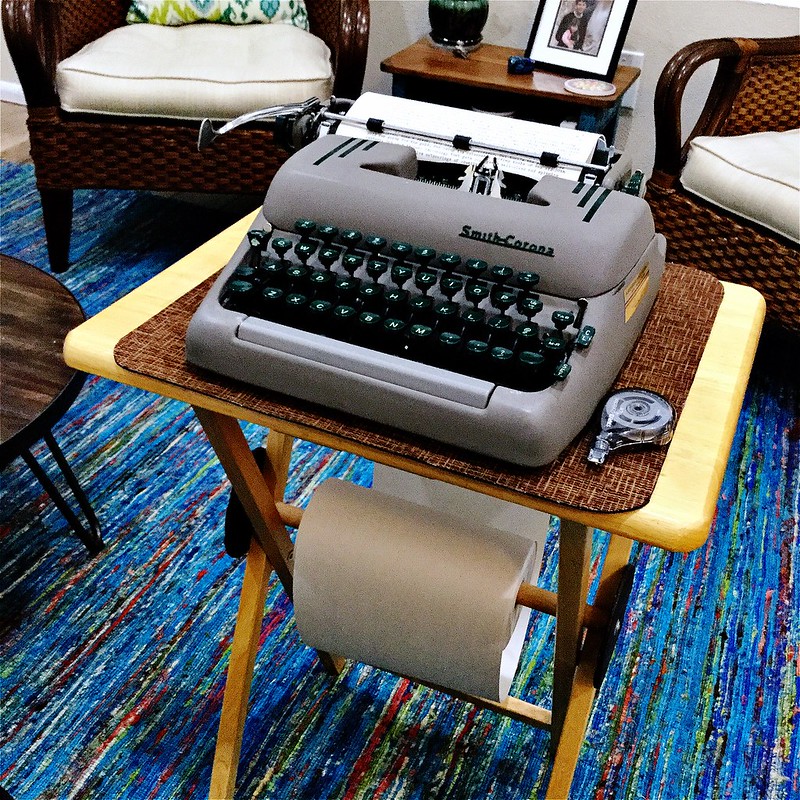
Post-Script: Here's a glamour shot of the problem-child Smith-Corona. It's interesting how much attention these problem children can garner. I'm certain that's part of their strategy, to steal attention away from their more cool siblings. Bless its little heart.

P1010007a

Regarding these "overlaPoems," after some experimentation I find that if you capitalize the first letter of the next overlapped word, it helps in its comprehension; if there is any to be found, that is.

Labels: , , , , , ,

Wednesday, August 17, 2016

Beater Typers

Kerouac Writing Technology

OKAY. I recently came to the realization that for the serious, or semi-serious, or sometimes-serious writer of prose, who chooses to compose first-drafts via the medium of mechanical typewriter, there are some things worth taking care with, while other things don’t matter so much.

One of those things not worth worrying about is the quality of imprint. These are to be typings that no one else in the entire universe, save for one’s estate trustee or poor offspring stuck with the duty of disposing of your life’s detritus, will ever see; unless you’re one of those few whose writings are of a caliber worth the attention of some university institution.

SO! Quality of imprint doesn't matter. What does matter are other things.

ONE! Legibility. The letters so printed need merely to be readable, so as to facilitate later transcription into one’s word processor for that lengthy, middle-period of revision. But they needn’t be printer- perfect.

TWO! The mechanics of the typewriter need only be sufficient for the job of putting down legible words on paper, to later be transcribed. Nothing camera-ready here. Nothing fit to be published or shared with others, just inked words on paper, that you alone will read.

THREE! Haptics need to suit the writer. All important, this issue of feel, for how the two individuals, the one machine and the one writer, meld into a more perfect cybernetic union, which is that all-important physical sensation of pleasure for the writer, doing the Lord's work of creating literature out of thin air, powered by nothing more than cheese burgers and beer, has everything to do with the success of the endeavor. Even if the machine has some serious issues (like this one, for example), if the feel of the thing - the haptics - are good (like this one, for example), then the fit is right for it to be that all-important first-draft writing machine.

NOW! I will make a pronouncement. That the best, prettiest, sleekest machine in one’s typewriter stable might not be the best suited candidate for the job of workhorse typewriter. Like that stable of fine cars in Jay Leno’s garage, you wouldn't want to use that rare, exotic sports car for one’s daily commute. Doesn't make sense. You leave the pretty stable queens to primp and preen and so be ready for Friday nights out on the Strip; meanwhile that worker’s machine does the daily grind of making a living.

FOUR! The dichotomy should be striking, that one could be found to be creating some dang fine piece of literature using that most humble of writing instrument; that what mattered wasn’t the punter’s concern of fancy paint and shiny nickel trim or brand name, but that this old, ugly junker was a humble tool; that the work of writing is what happens between one’s ears, then to be worked out in fits and starts upon some cantankerous, curmudgeonly clunker of a tin-plated typer. It’s the dichotomy between the humble status of the beater typer and the finery of the resulting work. BEATER TYPER: that’s something to be proud of, that one went out of their way to find and use the most beat of the beater typers as one’s daily workhorse, that’ll take you from point A to point B reliably, though perhaps not in style or fashion.

FIVE! Elite font size. You want to not only be using that nearly endless roll of teletype paper, but to fit the most letters on each line of type before the inevitable interruption of the carriage return.

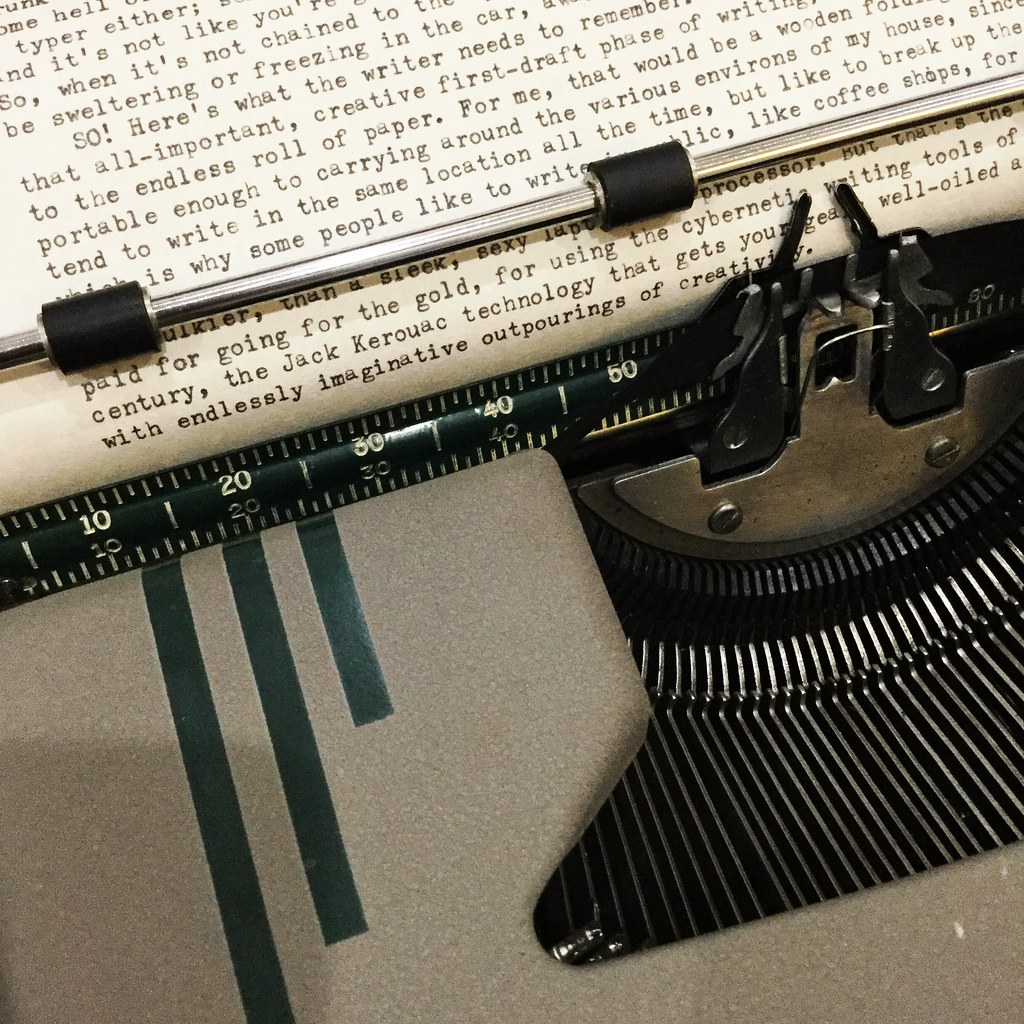
Beater Typer

SIX: TRUNK TYPER! You won’t always be chained to your nearly endless roll of paper, that Jack Kerouac-inspired technology, but might want to be out and about on short notice, for one never knows when inspiration might strike. It’s like lightning in that respect. So the Trunk Typer is the one you keep in your car at all times, year-round, come hell or high water. And it needn’t be that ultraportable, svelte runway model of a typewriter, regardless of how much you want to show her off. More apt would be a chunkier, middle-weight job, a serious working typer, a bit of a beater in appearance and performance but one that’ll get the job done. It’s not like you’re going to carry it very far ... it’s in your car, after all.

SO! Here’s what the serious typewriter-using writer should consider. That one’s writing station, during that all-important creative first-draft phase of writing, should be the typewriter chained to the nearly endless roll of paper. For me, it’s a wooden folding tray table, paper roll mounted underneath to a dowel rod between the table’s legs. It’s portable enough to easily move around various parts of my home, since I don’t always write in one spot, but like to break up the monotony.

Your needs might be different, I don’t know; but for getting yours gears well-oiled and spinning with endlessly imaginative outpourings of creativity, nothing beats a good beater typewriter well-suited to your person, where you don’t have to worry about every nagging issue (maybe it skips spaces or the letters aren’t even - but so what?), but it works well enough to easily put words down on paper that you alone will read. A beater typer is your true friend, your best friend, as a writer, because you have no higher expectation than it perform to that minimal requirement. It's imperfections are what makes it charming. After all, you’d be afraid to crank out a 50,000 word novel on your museum-grade cabinet queen, afraid you’d wear it out; but not so the beater typer, it has nothing left in life but to serve you, it's one true Master.

Typecast via beater Smith-Corona Silent-Super.

Labels: , , , ,