Monday, April 05, 2021

Are Typewriters Alive?

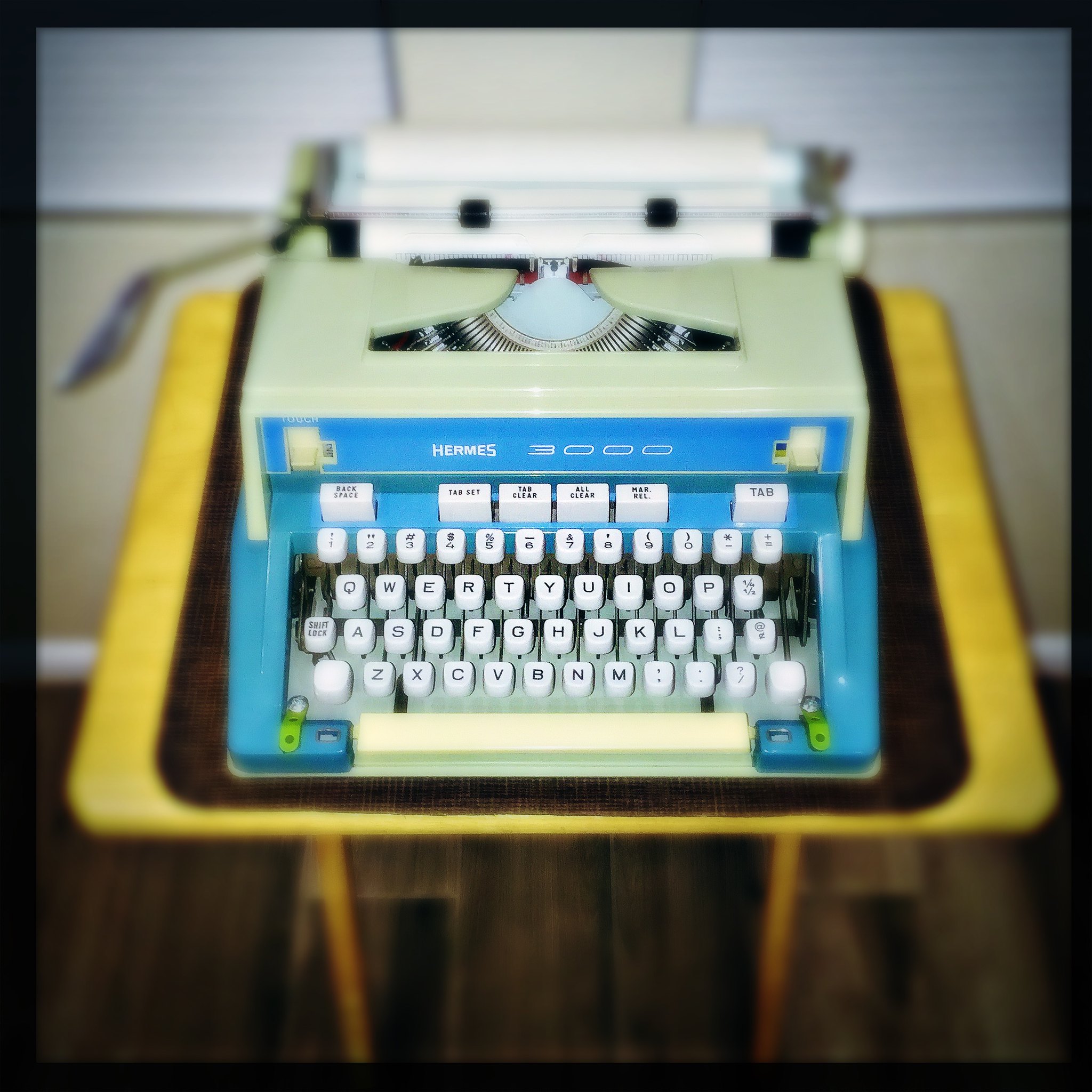
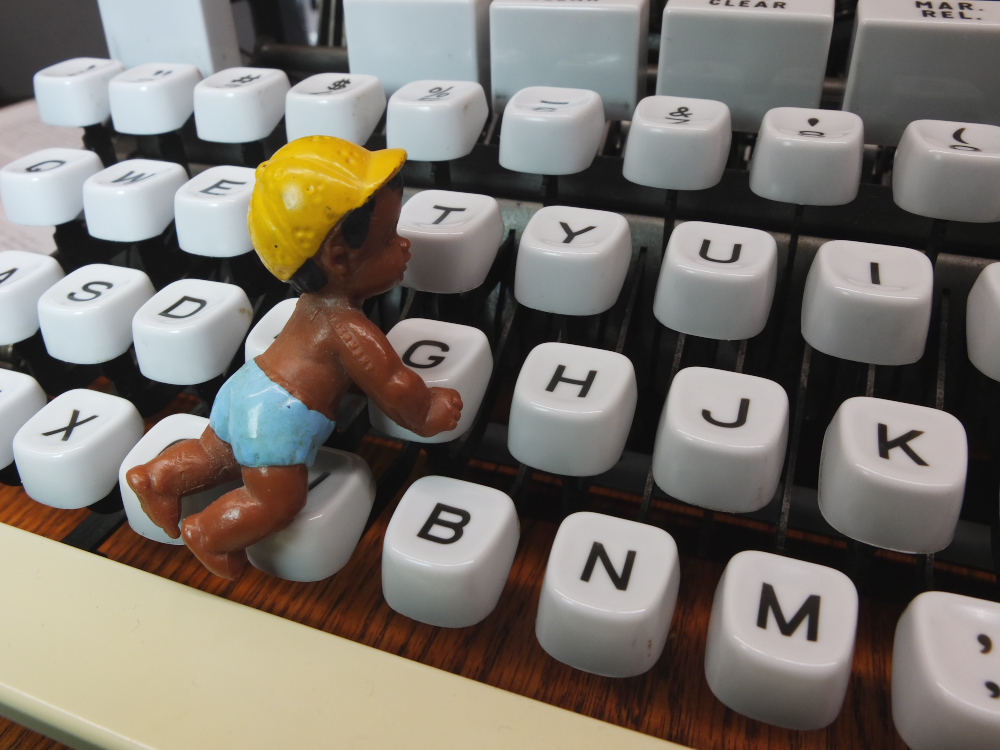
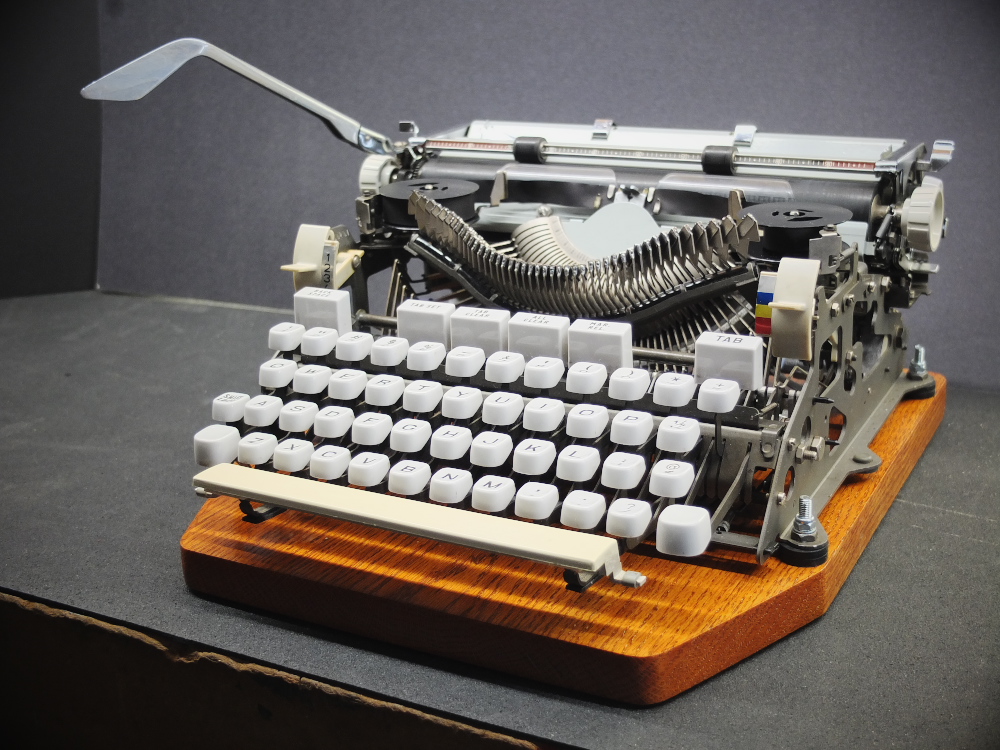
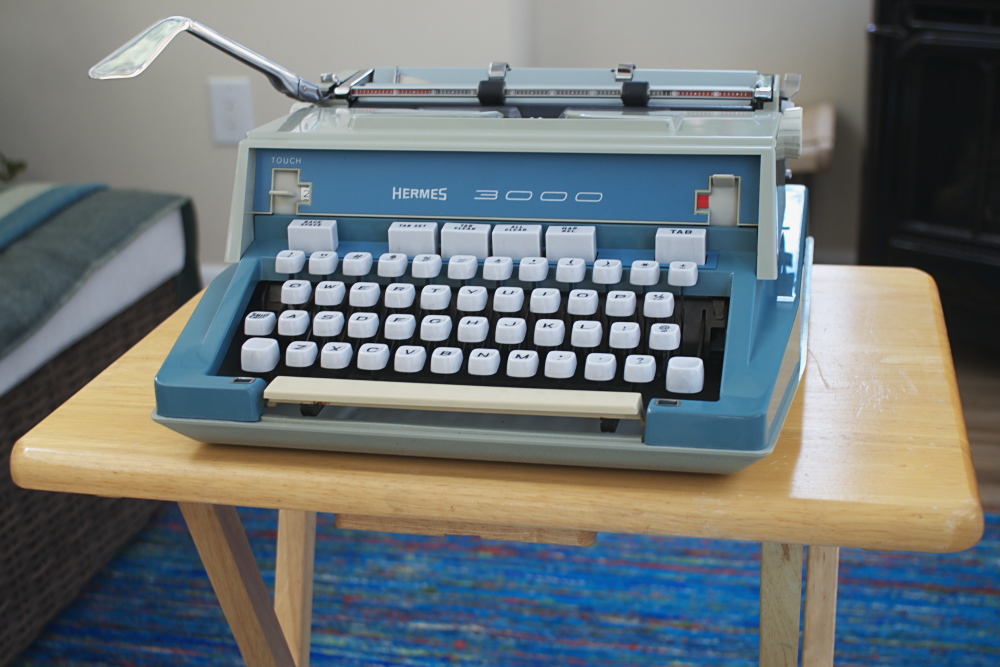
1961 Hermes 3000
Are Typewriters Alive?
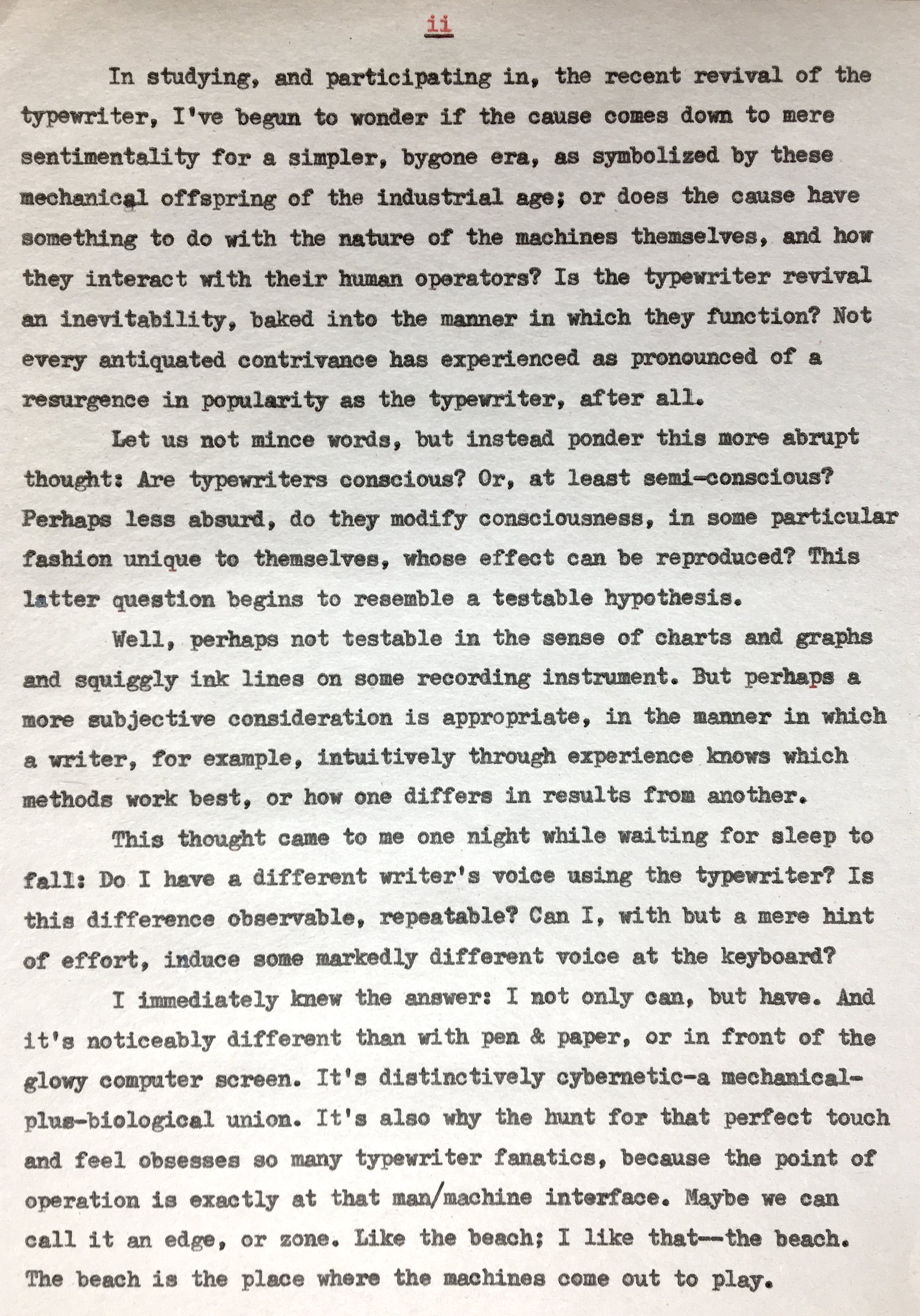

This essay came alive to me in unexpected ways as I was sitting in front of the Hermes 3000 under the shade of the umbrella at my patio table, on a warm spring day. It started as a thought I had while I lay in bed several nights previous, which was that it seemed as if typewriters had the power to impart their own effect on the writing process, even to modulate the writer's voice. In a flight of fancy I asked myself if this might even be construed as a form of intelligence on the part of the machine, all the while simultaneously knowing they to be a complex assemblage of bits of metal parts, and that these thoughts were mere nonsense. Yet, following the chain of thought further, I asked myself if perhaps they possessed some primitive consciousness, in the way that people in the early 1970s began to think of plants as possessing a consciousness of their surroundings, as documented in Tompkins' and Bird's The Secret Life of Plants.

It's most likely the effect being observed with typewriters involves the process of how tools modulate the work of the artisan, yet it seemed sufficient to follow this fanciful thought further. If typewriters do possess a primitive form of consciousness -- or, like a virus that harnesses the reproductive process of living cells to procreate, the machines' harness the physical and emotional abilities of the writer -- do they do so individually, or is there some collective consciousness that might explain the slow but steady resurgence of interest in the typewriter? Are they reviving themselves, by harnessing the enthusiasm of writers and aficionados; or is their revival intrinsic and inevitable, a natural expectation in the evolution of human technology, with its ebb and flow in repetitive cycles?

All of this is mere fancy, and at most metaphoric of observations writers make about how they interact with their tools. These thoughts are a mental model and nothing more, that happen to explain some phenomena we observe as we create new work with these tools. Like most models, they are imperfect and subject to change. In the way that the Aether Theory served as a model for how space works, and even as it still seems to explain some observational phenomena today, we now know of better models; so too is the theory of living typewriters a mere mental construct, which we can choose to hold close or discard, depending on the breadth of our imagination.

Of course, ask any typewriter aficionado and they are certain to agree that, yes, some typewriters seem to be alive, seem to impart that something special into their creative process. I will leave it to you to decide if that constitutes some form of consciousness. I know where I stand.

Labels:

Monday, September 21, 2020

The Cult of Hermes?

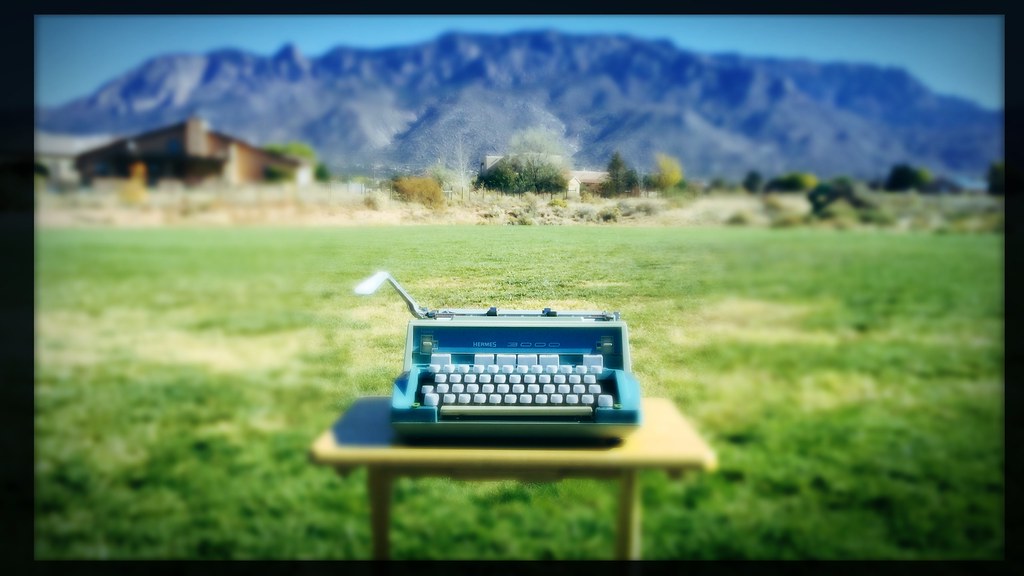
Hermes 3000 at Sandia Foothills


The mysterious thing about typewriters is the more you experience, the less certain you are about what might constitute the very best machine. Oh, for sure you know better than most the difference between the low-end and the high-end of the quality spectrum. And for certain, there’s lots of middle-of-the-road machines for whom excellence has not quite been achieved in either design or manufacture, but perhaps close enough, at least for some people.

The very best is a high bar to achieve - this is especially meaningful the more time you spend thinking about all the attributes of typewriters that you appreciate. For example, I had in my collection an Olympia SG3. For many, this would be considered near the apex of mechanical build quality. True enough, it’s hard to argue with that era of Olympia in terms of construction. To find a better-built machine you’re now in the rarified air of rank opinion more than absolute fact. And you still have to consider the condition of any one particular specimen.

But what if one attribute that signifies the best, like build quality, is diametrically opposed to other attributes, like portability? Or storability? The problem with the SG3 - for me - was that I didn’t have a permanent place to use it, since I live in a smaller house and store machines in closets when not in use. Full-sized office machines like the SG series don’t come with cases, meaning they’re not “portables” in any sense of the word. I also like to write in various venues and settings. These behemoths just aren’t compatible with that requirement, regardless of how well built they might be. My SG3 also had an extra-wide carriage which, because of its excess mass, meant the carriage return action was irritatingly heavy. Just enough to not be perfect.

Down on the ultra-portable end of the spectrum we find many machines very light and diminutive, easy to tote around in either their case or a messenger-style bag. But they often lack build quality, an expressive feedback touch and a full set of features. Design compromises must be made for the sake of portability.

Somewhere in the middle of the spectrum we might come closer to perfection, or its second-cousin, near-perfection, when we consider medium-sized portables, machines that technically can be lugged around in a case via a handle, but you wouldn’t be comfortable doing so for very long. They can be stored in the closet when not in use and usually come with a full set of features.

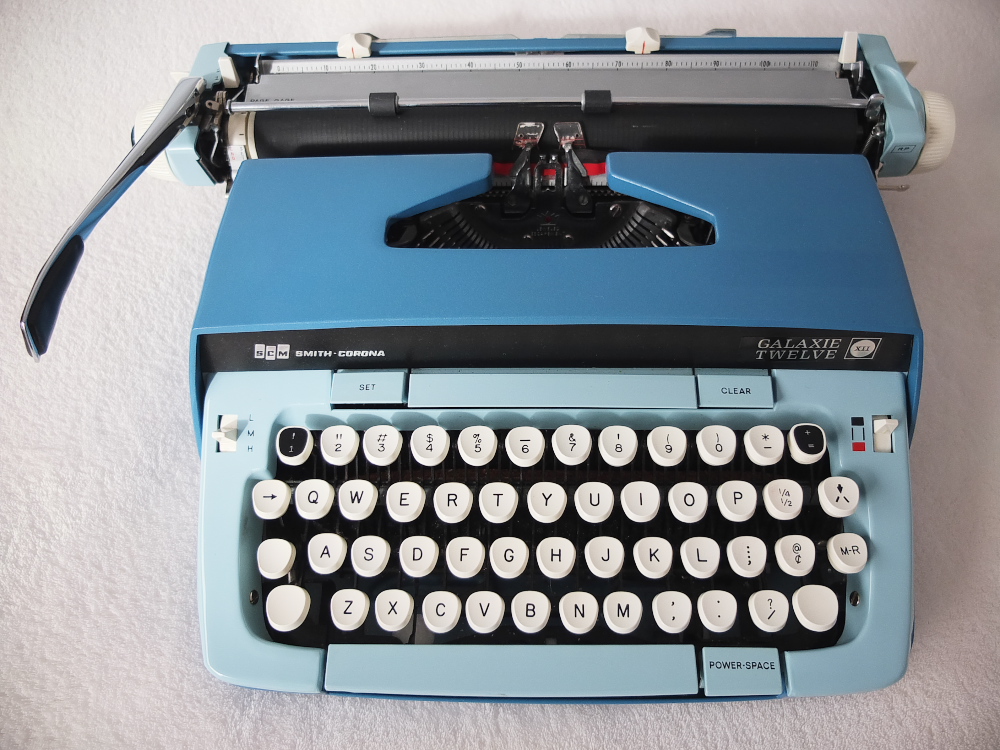
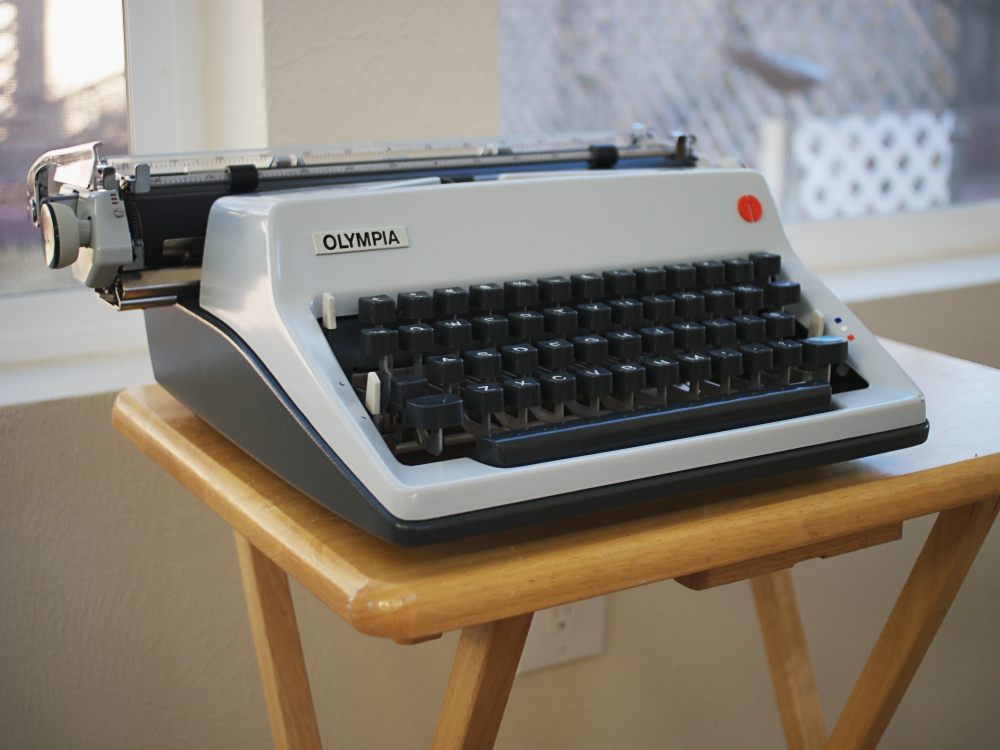
When we begin to consider the best of the medium portables there are a few brands and models that stand out, like the Smith-Corona 5 series, the Olympia SM series, the Royal QDL and the Hermes 3000. There are also many other brands and models, less easy to find, that might rank up close to this grouping. And when we begin to consider this elite group of machines, we find ourselves at odds with our own expectations. Like not being able to see the forest through the trees, or getting so close to the base of the mountain that the foothills obstruct the grand vista, so too do we find it difficult to choose just one model that’s the very best. At least for me. The royal “we.”

What if we say the Smith-Corona was the best? Then we’d have to discount the superior build quality of the Olympia, or the smoothness of the Hermes. They each have unique attributes that make them desirable, which is why they’re on the short list. It’s hard to be a monogamist here, with so many enticing machines.
And so we come to The Cult of Hermes. Even if you don’t hold the Hermes 3000 in that high of esteem, it’s hard to argue with The Cult of Hermes as a title. Sounds like The Cult of Diana, something out of ancient history, with mysterious rituals. Of course, this is all tongue-in-cheek. We imagine a Cult of Hermes because of the adoration and fanfare given to these machines by collectors, which have helped to drive up prices on the used market. What kind of Kool Aid does a person have to drink before they too are a True Believer?

DSCF4845a
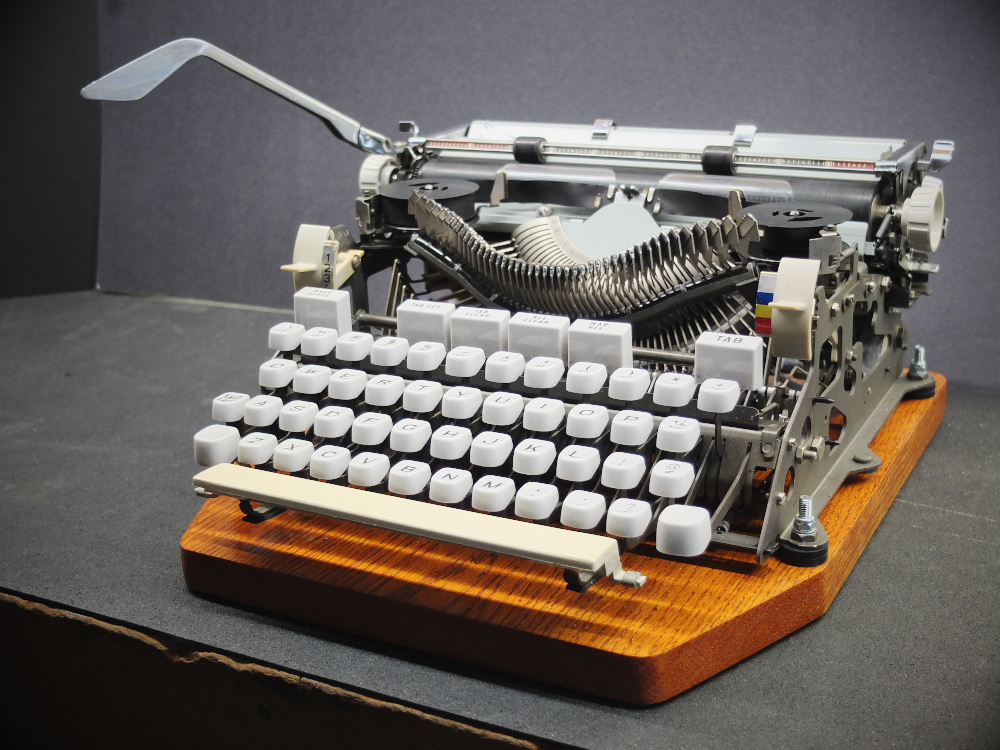
Well, it took me giving the former Nekkid-Riter Hermes 3000 to my friend Kevin, before he had enough time to give the machine a fair shake. He’d been a skeptic too. Now, he’s closer to a true believer, if there is such a thing. As he told me, the 3000 just gets out of the way during the process of writing. You don’t notice it, the machine fades into the background, nothing about it stands out as an irritant or distraction. And it’s surprisingly quiet, even with a hard platen. It offers enough features to not be lacking for anything, other than perhaps a half-space feature.

Of course, we do keep our eyes on the other prized machines in the Pantheon of the Greats. We may be a Hermes cult member, but we’re also ecumenical enough to be curious about other cults, too. Lately, in fact, I’ve dipped my toe into the Cult of Olivetti. But that’s a tale for another day.

Labels: ,

Tuesday, May 19, 2020

Bike Tinkering

Gear&Chain001a
Bike Tinkering

No, the top photo isn't of my bike's gear train. But both of them were certainly in need of some service. Fortunately, most of the work required of bikes can be done by their owners, depending on how many specialty tools you're willing to acquire.

I've never been an athletic bike rider, but did spend many years as a kid riding on two wheels around town. I first had an "English Racer" Rayleigh 3-speed with hub shifter and a black lacquered paint finish with gold trim. At the time it looked old and stodgy, but today would exude much positive hipster vibes. My older brother got a yellow Schwinn Varsity 10-speed from our Dad, which we thought was as cool as a Chevy Corvette, and together we'd do a lot of urban riding.

I had a 10-speed bike while in the Navy, but got rid of it because it was difficult to store on the ship, and I didn't like riding the steep hills of San Diego; also, the bus system wasn't conducive to bikes back then. I don't remember the brand, but I think it was fairly nice. Later, in the 1980s, I thought about getting a bike once again and got an urban commuter bike, kind of like a mountain bike in layout but not as aggressive, more suited to city riding, and did some commuting on that. Later I got another Schwinn road bike, a 12-speed, which I had up until the late 1990s and had it converted to flat handlebars.

Then I got interested in recumbents, and got a Bike E, upon which I did more riding than any other bike in my adult life. I remember making a 50-mile ride through the White Sands Missile Range on a cloudy April Saturday morning, during their twice-per-year public opening, where they make available the Trinity Site and McDonald ranch house (where the core of The Gadget was assembled prior to being loaded into the device and hoisted atop the 100-foot tower). The ride started at the Stallion Gate on the north end of the Missile Range, and takes a 50-mile circuit, including the Trinity Site itself. I was totally unprepared for that ride in the sense that I didn't do any special training, but did fine.

I think it was me getting into motor scooters, then motorcycles, in the early 2000s that tore me away from bikes. The recumbent sat dormant, then I had my brother store it in his garage. A few years later we got these Townie cruiser bikes. They're 21-speed, not a true single-speed cruiser. My wife's has wider tires, fenders and a front shock, so it's heavy; while mine has no suspension, thinner 700cc tires and is lighter and faster. They're both comfortable to ride, but not as comfortable as the recumbent.

Several years ago a pile of clutter in my brother's garage fell over onto the Bike E and broke the seat bracket. The bike is no longer being manufactured, but I need to see if I can find a replacement after-market (or used on eBay) seat bracket and see if I can fix it up. I'd love to go recumbent riding again.

I've been enjoying writing on this French-made Hermes 3000.

Hermes 3000 at Sandia Foothills

Here's what a black Bike E AT looks like (below). It's not a true recumbent, the riding position is more semi-recumbent (the pedals being lower than the seat), but I found it ideal for city riding, as it was easy to set a foot down at a traffic stop, even with clip-on pedals; and it's not as low to the ground as a recumbent trike; although I'd love to have one of those. At that time in the late 1990s the Bike E was the best-selling recumbent brand.


The valid criticism of recumbents is they're harder to climb hills than conventional diamond-frame bikes. You can't stand up on the pedals. The trick with the recumbent riding position is to gear down and spin faster. Hill climbing on a recumbent is more of a cardio workout than a leg muscle thing. But they do have an advantage when going downhill in terms of aerodynamics. I've ridden the Bike E at frightfully fast downhill speeds, even with its tires being wider than those of an ultra-thin wedgie racing bike. The thing about recumbents is that they make the journey as important as the destination, especially important if you have degenerative arthritis and don't want to put a lot of force and vibration on your hands and wrists.

Labels: ,

Monday, August 13, 2018

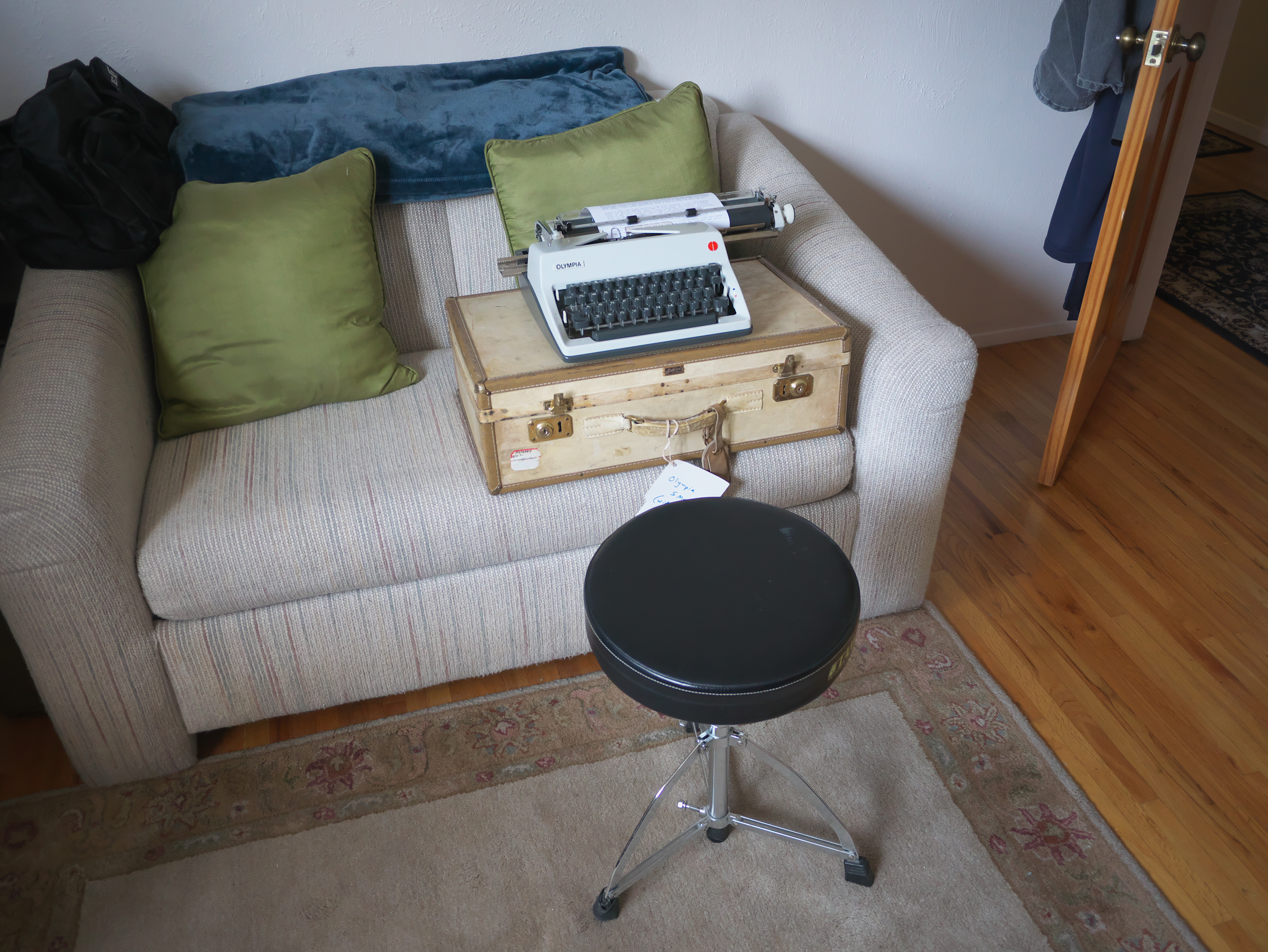
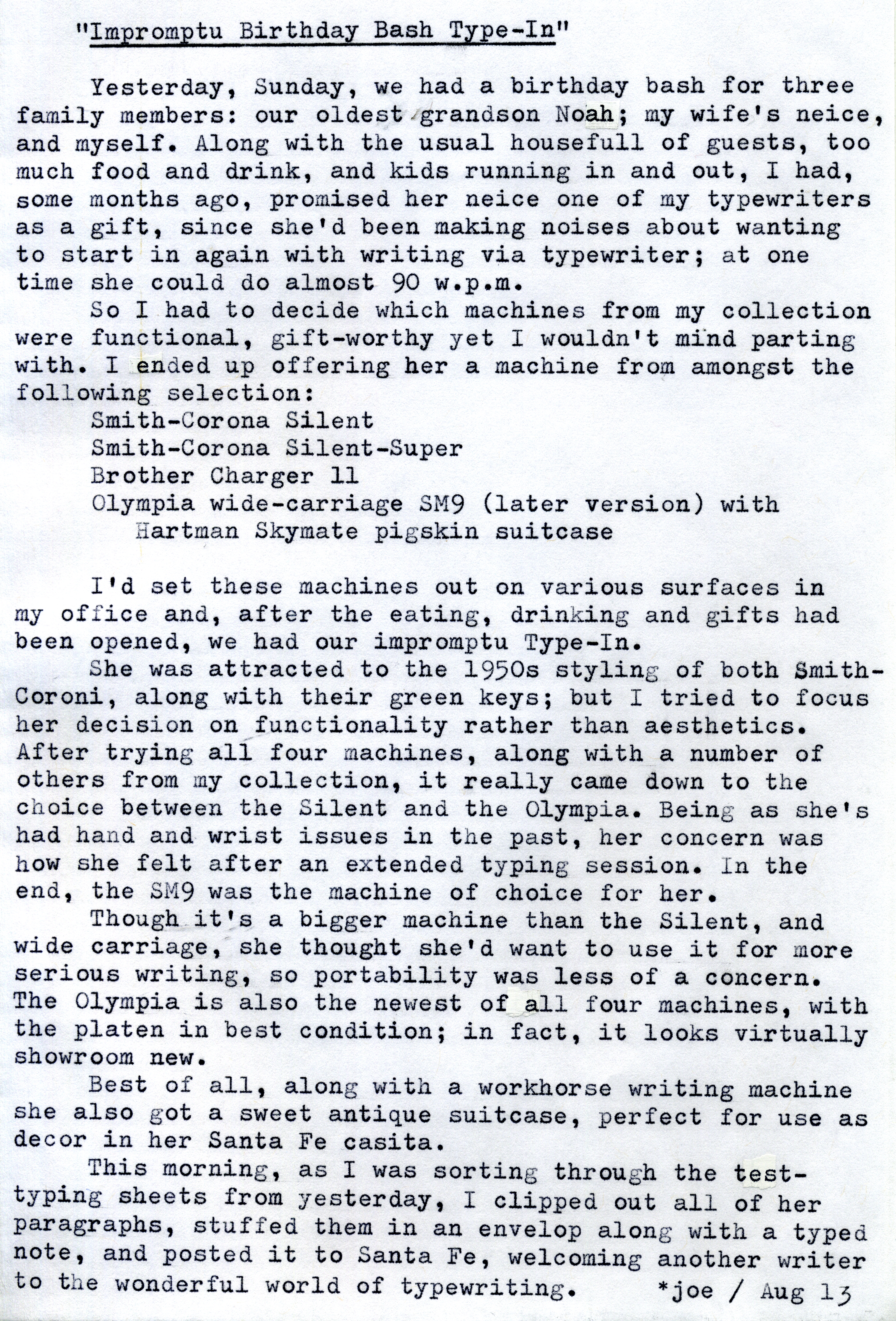
Impromptu Birthday Bash Type-In

P1020034
Typecast035

Post-Script: The niece's husband tried his hand at the little Olympia SF, and he blazed away using the middle finger of each hand. It turns out his first book was written, years ago, on a larger Olympia, using the same typing style.

He asked her why a typewriter, isn't a computer more efficient. Her answer was something along the lines of wanting to get into typing again; she also has a desire to do some serious writing, and feels a typewriter would suit her best, as least in the initial phases.

They both live an hour up the highway in Santa Fe; I told her in my letter that should she need ribbons or other assistance, just call.

I think she made the right choice of the SM9 as a serious writing tool. Nothing wrong with the Smith-Coronas, except they're older, have seen a harder life.

P1020036

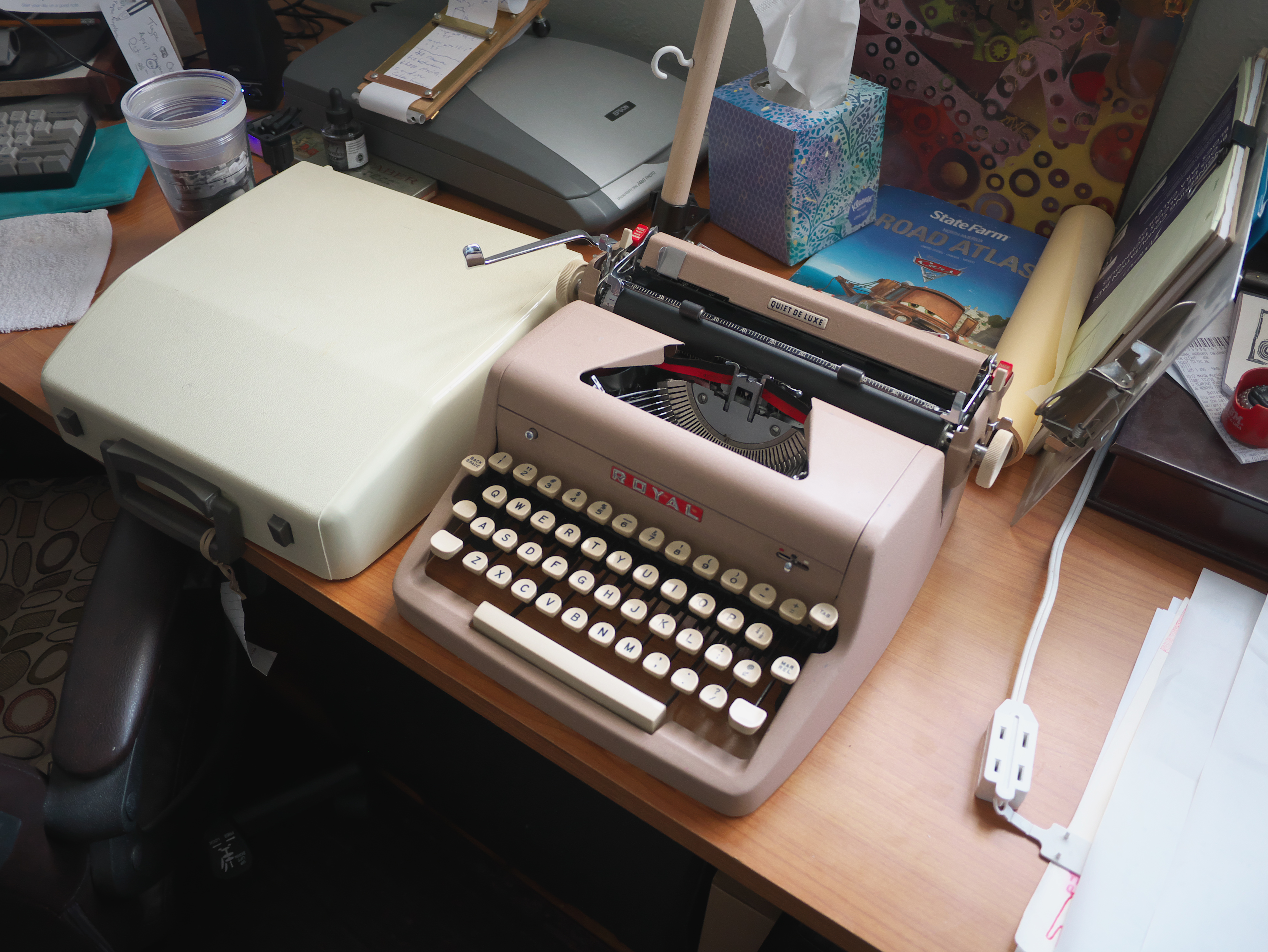
I also had her try Adobe Rose, the Royal QDL, seen above next to the Brother Charger 11, which still had its lid attached, one of her other choices. Unless portability were her main concern, she was wise to steer clear of the Brother, as it's not nearly as easy to type on.

She made some interesting observations about the feel of the keyboards of these various machines. The spacing of the keys, and slope of the keyboards, has a lot to do with typing comfort, as she wisely discerned; to her, the SM9 felt easier than the Hermes 3000.

P1020043

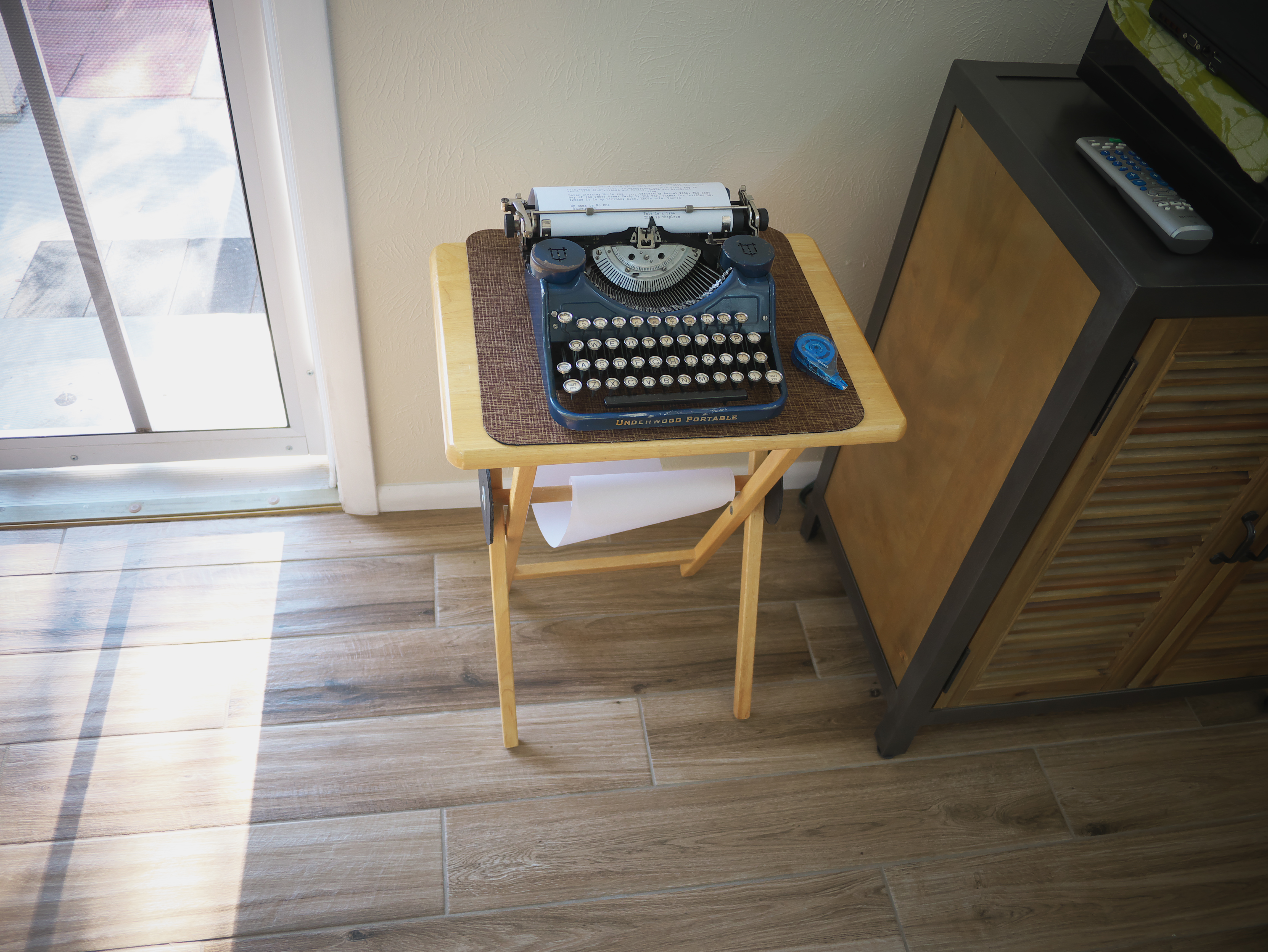
Above is the 1930 Underwood Portable with a roll of paper; we used it during the birthday party for people to type comments upon. Always a great machine to have handy.
P1020050

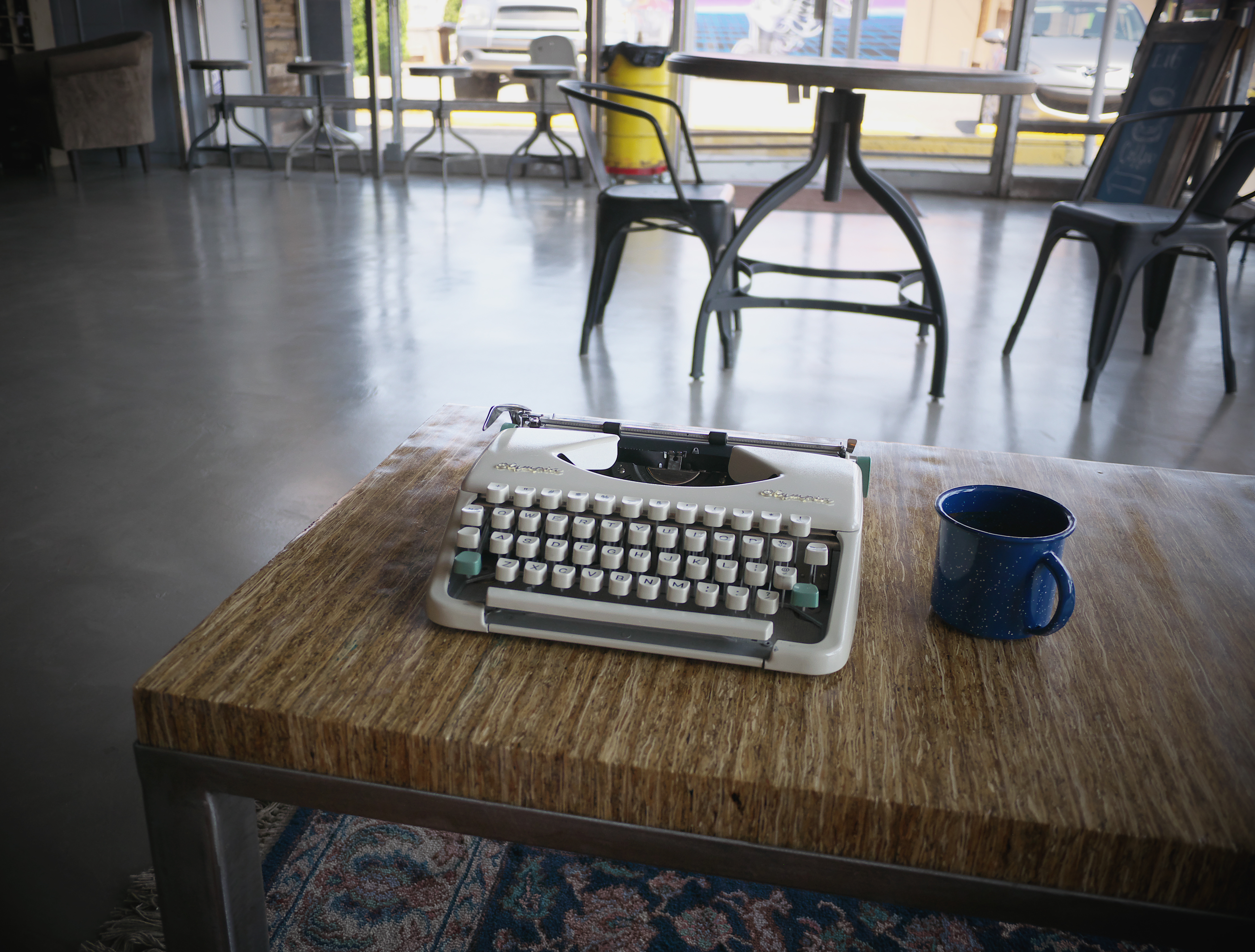
This morning I stopped in at Rust is Gold, a new coffee shop + artists collective, on Eubank near Constitution, with the Olympia SF, for some blog writing and coffee slurping. Fun was had, and I struck up a conversation with a fellow patron who was interested in the typewriter. I didn't have business cards with me, so typed him one on a scrap of paper.
Labels: , , , , , , , , , , ,

Monday, June 19, 2017

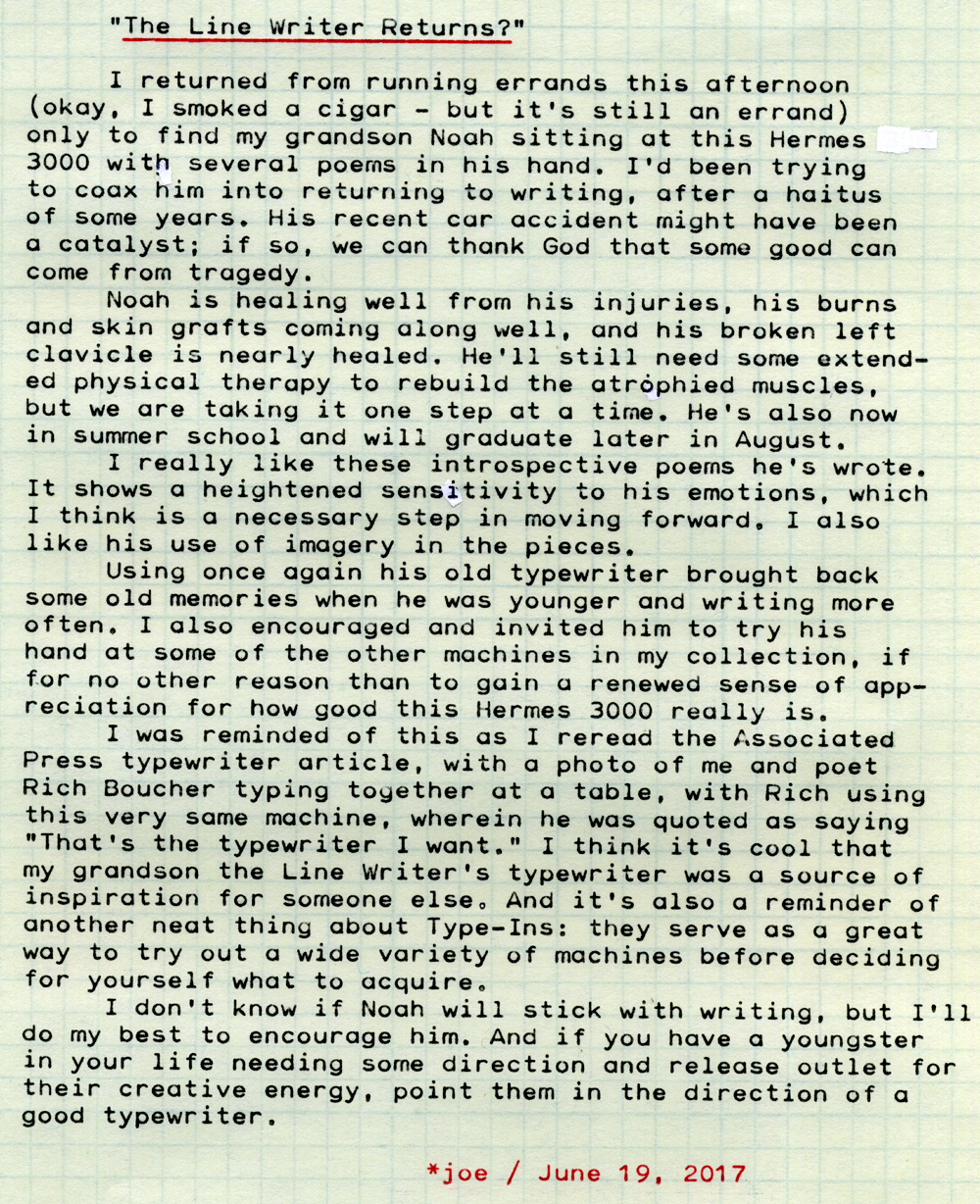
The Line Writer Returns?

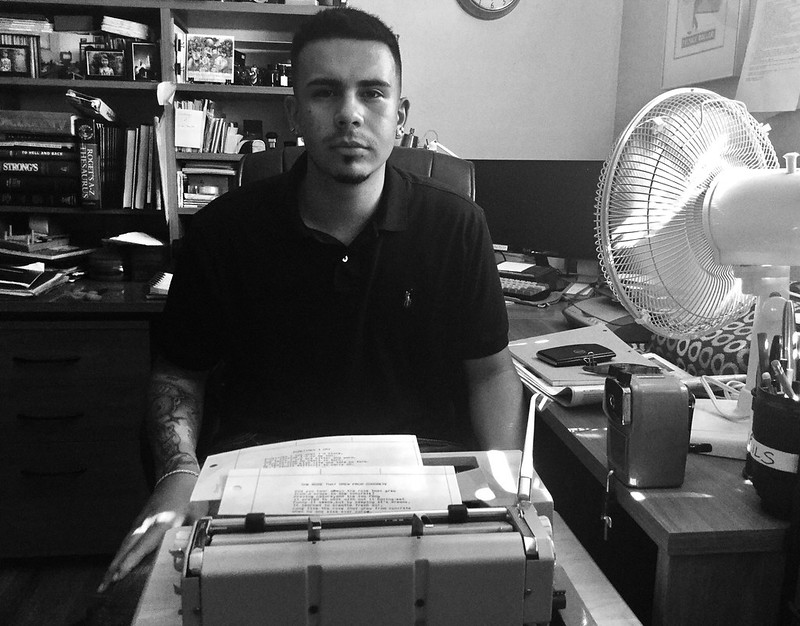
The Line Writer at his Hermes 3000
Typecast285

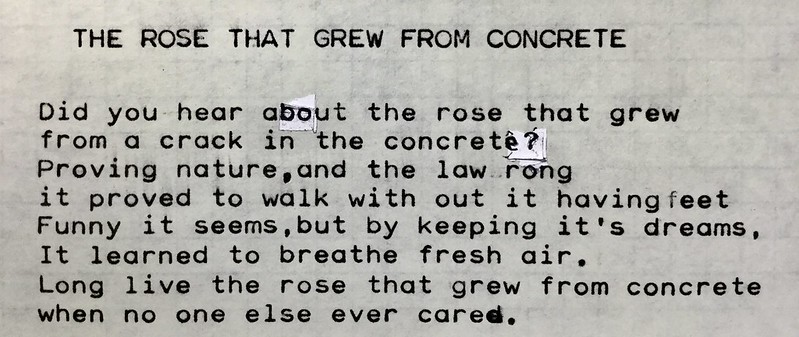
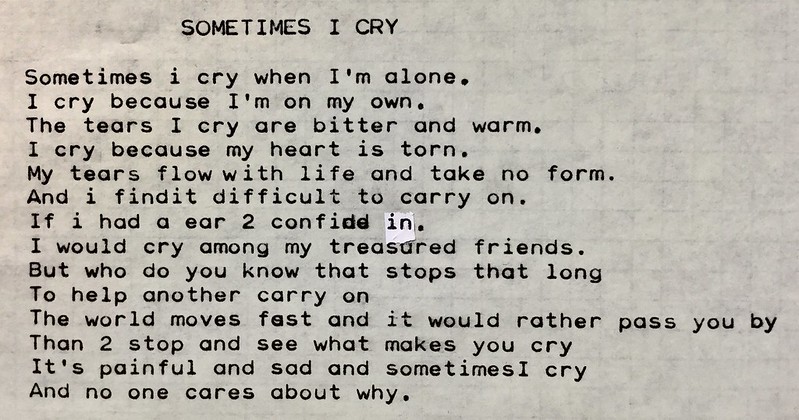
Post-Script: Here are the two poems Noah wrote today:

The Rose That Grew From Concrete - by Noah the Line Writer

Sometimes I Cry - by Noah the Line Writer

It's easy to see coincidences where there perhaps aren't any, but earlier today I'd posted a video and blog article about the first in a series of Typing Assignments. Do things like this blow on the wind, like pollen or dust? The very day when I issued this first creative writing assignment, my grandson returns to the typewriter after a long hiatus. All we can do is count our blessings - and keep writing.

Here's Noah's blog.

Labels: , , , ,

Wednesday, December 07, 2016

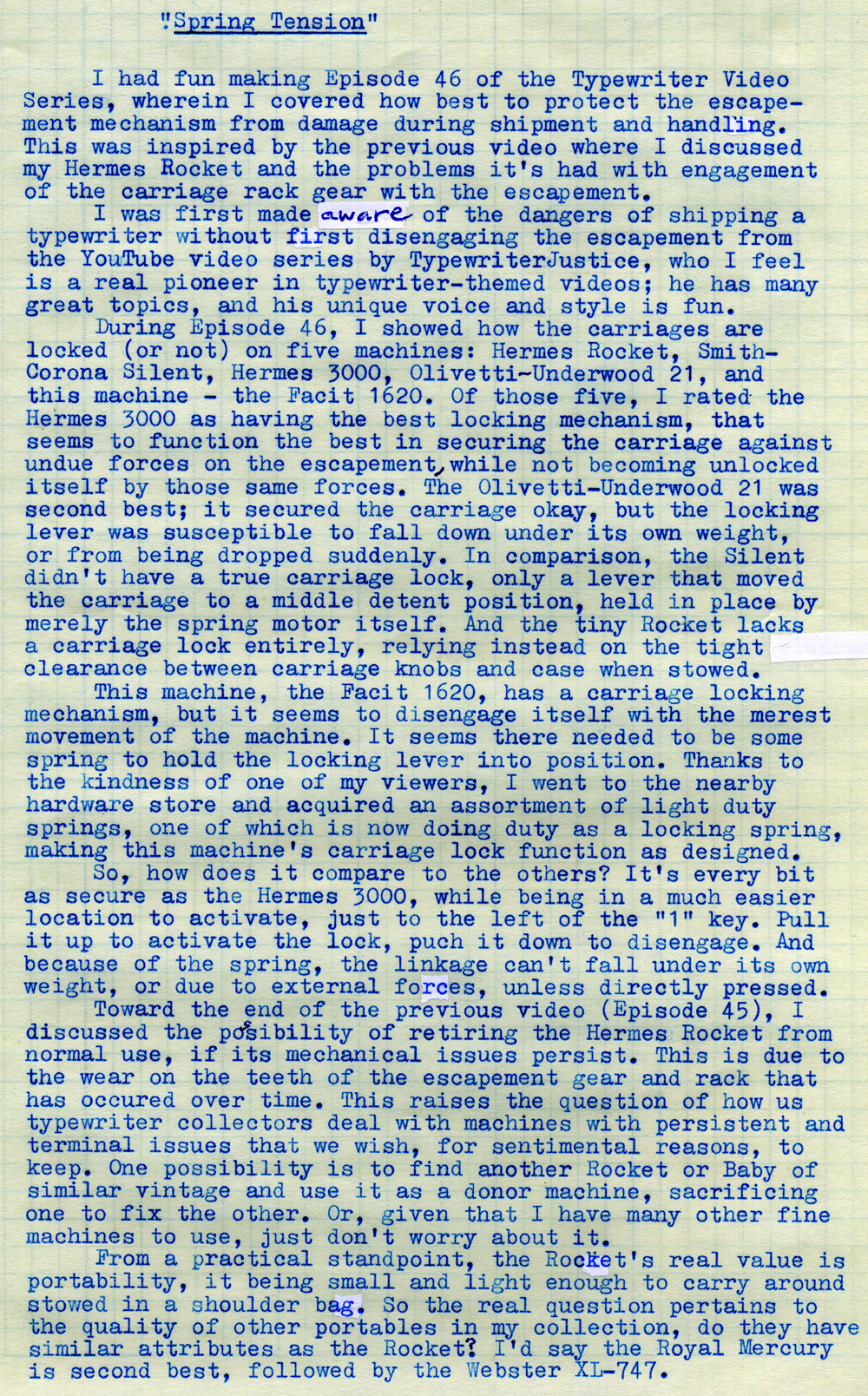
Spring Tension

DSCF5142a
Typecast267

Post-Script: Here are links to the videos mentioned above:

Episode 45, Hermes Rocket:


Episode 46, Escapements:


Here's a link to the TypewriterJustice channel on YouTube, a great typewriter resource.

Photo via Fujifilm X10. Typecast via Facit 1620.

Labels: , , , , , , , , , , ,

Sunday, October 30, 2016

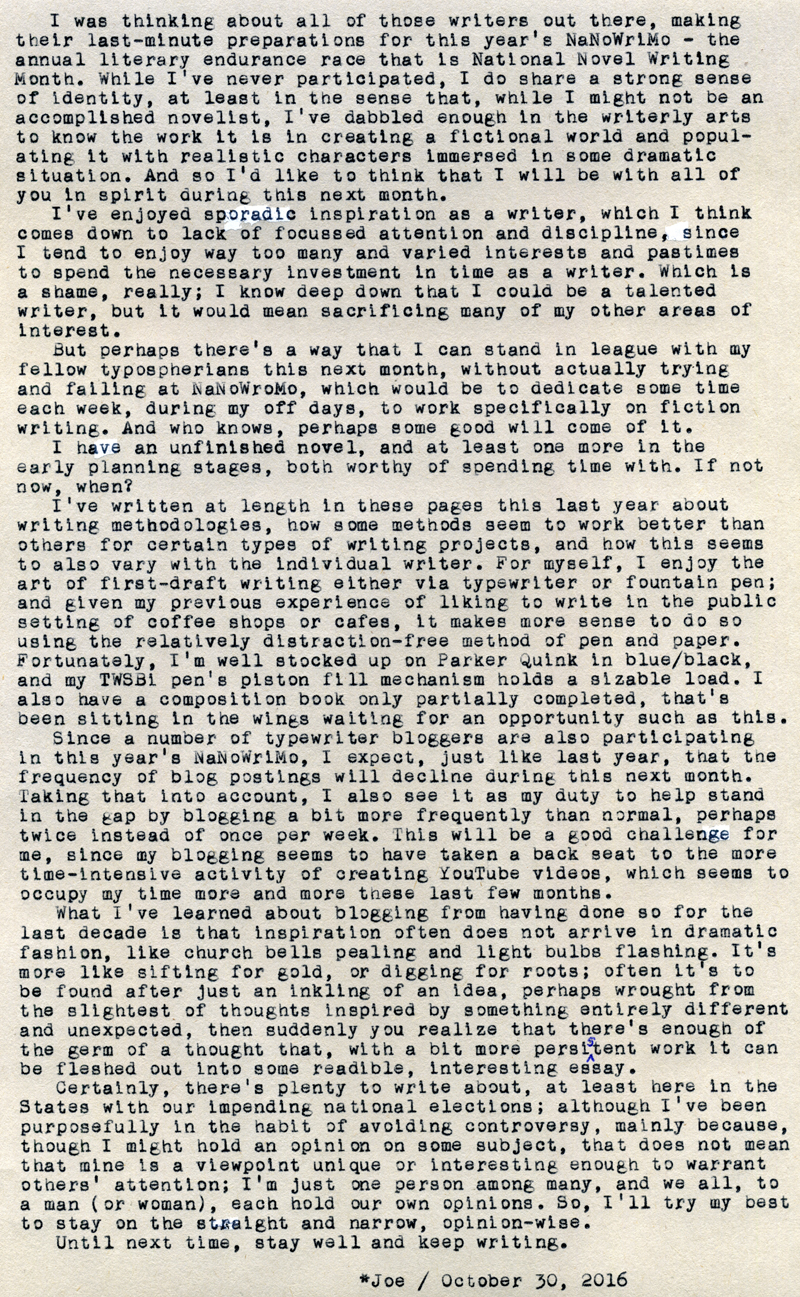
To Stay on the Straight and Narrow

Poised to Write

Typecast195

Post-Script: Do you remember, just a month or two ago, all the time I spent cleaning, adjusting, typing and typecasting with my more recently acquired Smith-Corona Silent Super? Well, this is its older stablemate, the venerable non-Super Silent, the one with the fixed tabs, and a bit more drab color scheme but in better mechanical condition. In terms of "haptics," this one feels every bit as good as the best mechanical typewriter, but is more compact in size than the larger Galaxy 12s or Hermes 3000s. And, being of elite-sized (smaller, 12 characters per inch), it just works better for me as a first-draft typer, especially with the seemingly endless roll of teletype paper threaded up. It is because of machines like this, situated in my patio room upon the tray table, ready to type up a storm, that I can, at a moment's notice, be creating words upon paper. An imminently practical, pleasurable writing instrument.

I've been taking a liking to this teletype paper. No, it's not a fine quality foolscap of rich vellum, it's instead more like rough, leathery, thicker newsprint. But I like the look it gives to printed words. They're meaty and physical. You can more easily see the ink impressed upon the paper's fibers. The paper's off-white tone looks like it's already aged half a century, like these freshly typed words could have been from a previous era; some sort of typewriter time machine at work, words from the present appearing as if they've come from the past.

The best part of using the roll of teletype paper is not having to thread up a fresh sheet of paper after an all-too-brief session of typing. No interruptions, just pure, nonstop writing pleasure.

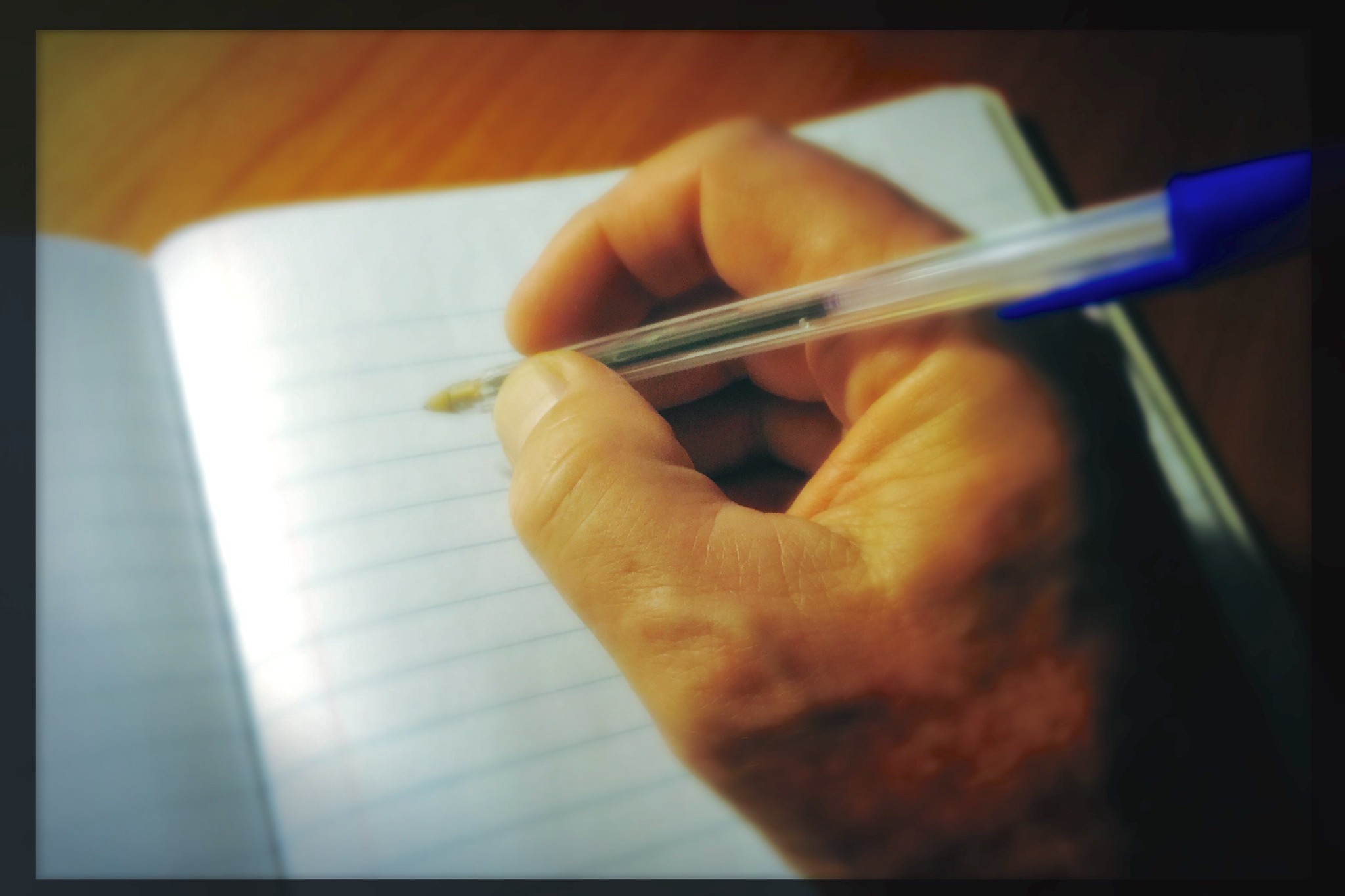
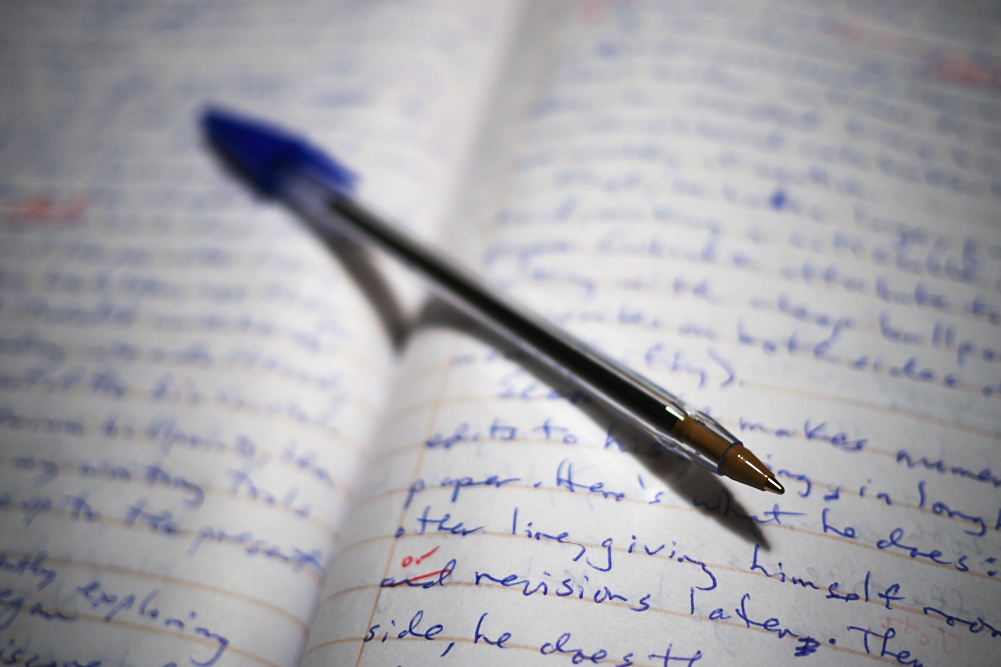
The top photo shows a Bic Cristal medium-point in blue ink, one of my all-time favorite writing instruments. If it weren't for fountain pens, this is what I'd be writing with. I've taken to liking these pens so much that I go out of my way to stay stocked up on them; the larger 1.6mm tip versions are also very nice writers. Oddly, they're rather hard to find at my local big-box retail stores. Luckily there's Amazon to the rescue.

Labels: , , , , , , , ,

Tuesday, October 11, 2016

The Changing of the Guard

Hermes 3000

Typecast193

Post-Script: I like these kinds of simple pieces. They're conversational, like sharing to a larger audience just a little bit of how typewriters fit into one's day. Nothing fancy or presumed, merely about rotating one's typewriter usage. I wonder if Jay Leno does this, tweeting about taking some car from his collection out for an afternoon spin.

As a typewriter fanatic, I think it's important to type frequently, even if it's nothing profound or earth-shattering. Just get one's fingers on those keys, hear the snap of the type slugs hitting paper, hear the ding of that little bell at the end of the line, smell the machine oil exude from that shiny instrument of literary creativity. Keep in touch, even if it is just about swapping machines, or some other mundane part of one's life.

Others might think differently. They might ask of us why would we go to the trouble, especially with something so ordinary and relatively unimportant as this little one-pager sent off into the aether. I think it's most important to answer the question of "Why type?" by the simple response of "Because." Because I can, certainly. Because I have a selection of functional, beautiful machines to choose from. Because it's "Me-Powered." Because it's fun: we are far enough removed from the days of typists toiling away at their typewriters in the drudgery of the mid-20th century office environment that bringing one of these to life by the animation of our fingers somehow brings us to life, too.

I think typecasting makes blogging more satisfying. It's one thing to bang out a little nothing note to the world directly on one's computer, but quite another to do so with a scan of a paper artifact that reveals so much more than the mere words themselves. And it takes some effort, more so than hitting the "enter" key. So, to paraphrase that old Hallmark greeting card slogan, "When you care enough to send the very best, send them a typecast."

Labels: , , , , ,

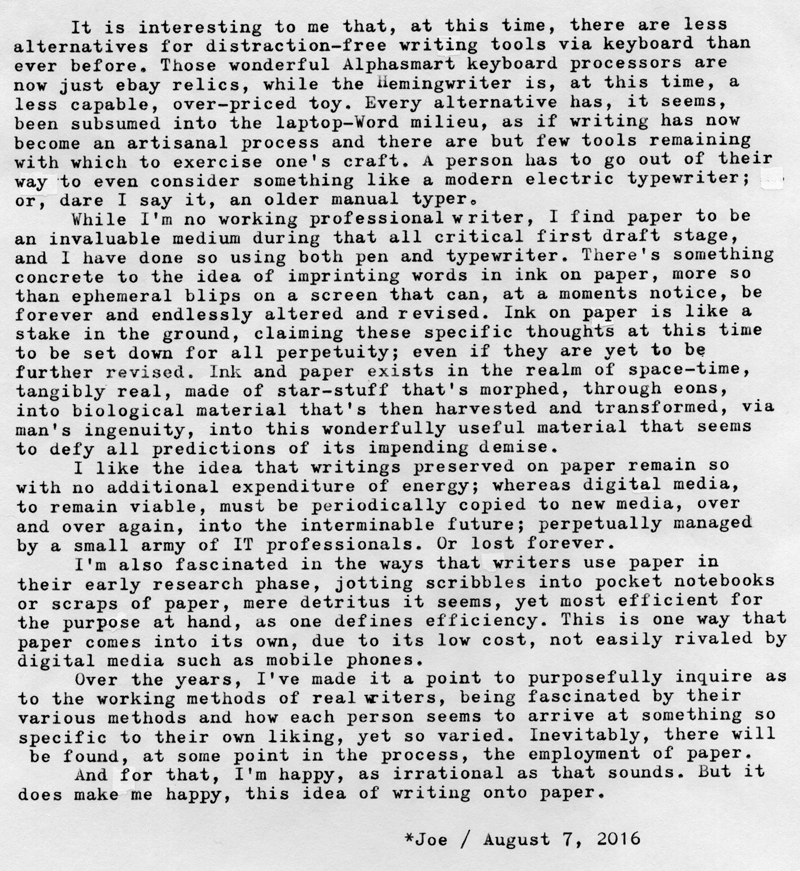
Sunday, August 07, 2016

First Draft Writing

P1080148a
Typecast187
P1010508a
Typecast188

Post-Script: I'm reminded that there are a number of writing applications that purport to make the writing process via laptop computer less distractive. Yet at the same time I can't help but think that it's not a problem with Microsoft Word, but rather with the computing platform itself, wirelessly and incessantly connected to the World Wide Web.

Alternatively, since I'm not a working writer, perhaps I don't know what I'm talking about. But the times I've been the most creative have been those times when I've purposed myself to sit down and write. It's a specific decision a person makes, despite the risk of so-called writer's block. To sit down and put words on paper. Yes, on paper. I do think the paper helps to make the thoughts tangible, though that might be a mere psychological trick. But whatever works.

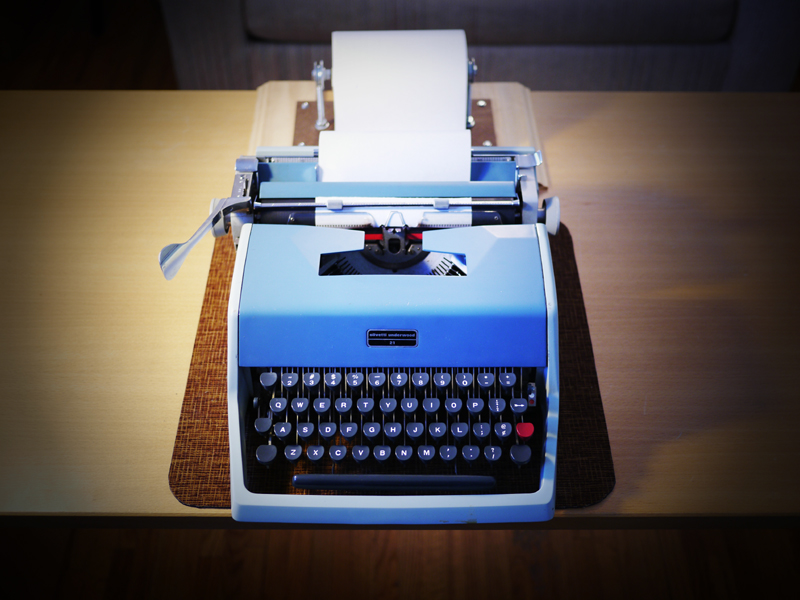
I've included as the second photo my old Underwood Olivetti 21 and the L.A.R.O.P. - Little Ass Roll Of Paper, the junior-sized version of the Jack Kerouac-inspired endless scroll. I had to find this narrower (6" wide) white paper at Napa Auto Parts, used for masking cars prior to being painted. It's white, but isn't letter-writing perfect for taking typewriter ink; but for first-draft writing it's sufficient, if you need the narrower size; and the first-draft writing process with the endless roll of paper is remarkable. Set your machine to double line spacing, set the margins about one character in from either edge, and start typing. And don't stop. Just keep putting words on paper and slinging the carriage back and forth, and before you know it, there's a long tail of paper hanging off the back of the machine, piling up on the floor, and you find yourself with a sizable amount of words written to paper. When you're done, either accordion-fold the scroll into page-sized pieces or cut it up and bind it together; whatever works for you. The double spacing means you can immediately begin proof-reading and revising what you've typed, via pen or pencil. I've found this to be the most efficient way to get words down on paper using a manual typewriter; and the narrower size makes it easier for the scroll to slide back and forth sideways with the carriage motion, compared to a full-width scroll of paper.

Labels: , , , , ,

Tuesday, July 19, 2016

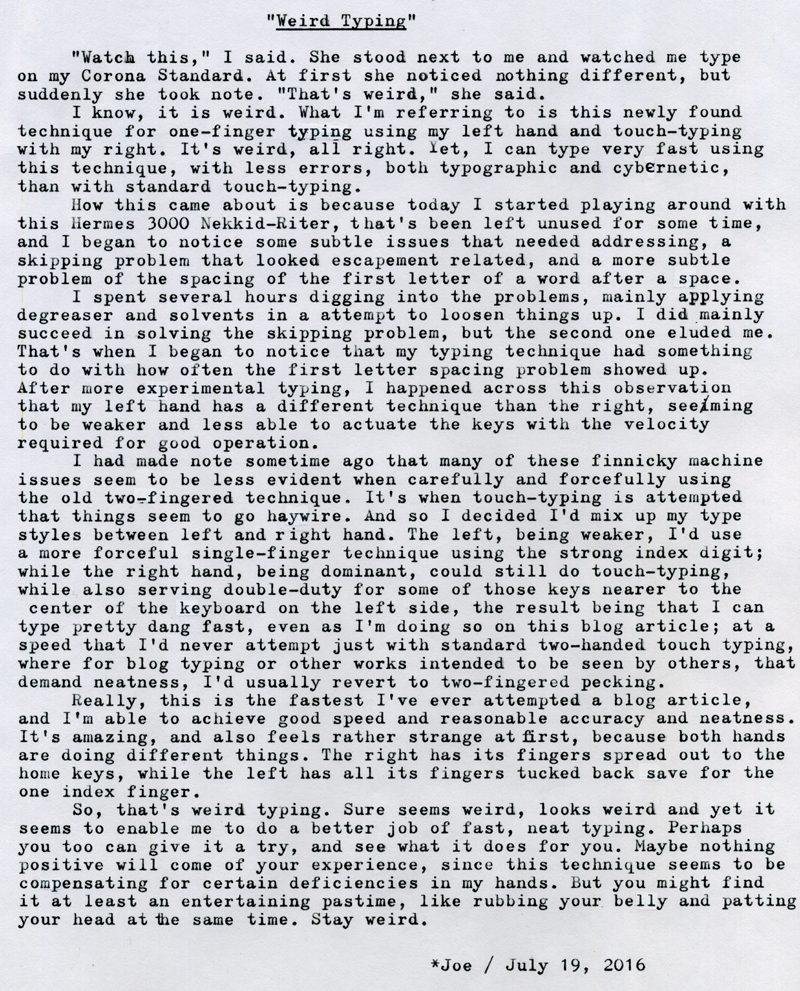
Weird Typing

DSCF5055a
Typecast182

Post-Script: I think this weird typing discovery came out of some intensive typing sessions this last week, during which I was purposefully touch-typing a lot on my newly acquired Corona Standard, whose ergonomics are wonderful and exhibit none of the issues the Hermes 3K showed. Wanting also to rapidly type on the Nekkid-Riter led to my discovering these subtle problems needing fixing, which in turn led to the fact that, at least for mechanical typewriters, I'm now weird typing. Interestingly enough, when I try this same weird typing technique on my PC keyboard I get none of the good effects. It's certainly a mechanical issue between my hands and the machine; something I've come to term "cybernetic," since manual typewriters are one of those few devices that truly operate as an intimately connected system of body and machine.

Regarding the last blog article, about Type-Texting, I haven't yet taken the time to practice, as I've been consumed in my spare time with YouTube videos and some film photography. But I've finished the book "Track Changes," an authoritative history of the word processor, and I garnered lots of thoughts along the way about typewriters and their place in the modern writer's work-flow; which I might write about in the coming weeks. Some of those touch-typing session, alluded to earlier, involved brainstorming some of my thoughts on this subject.

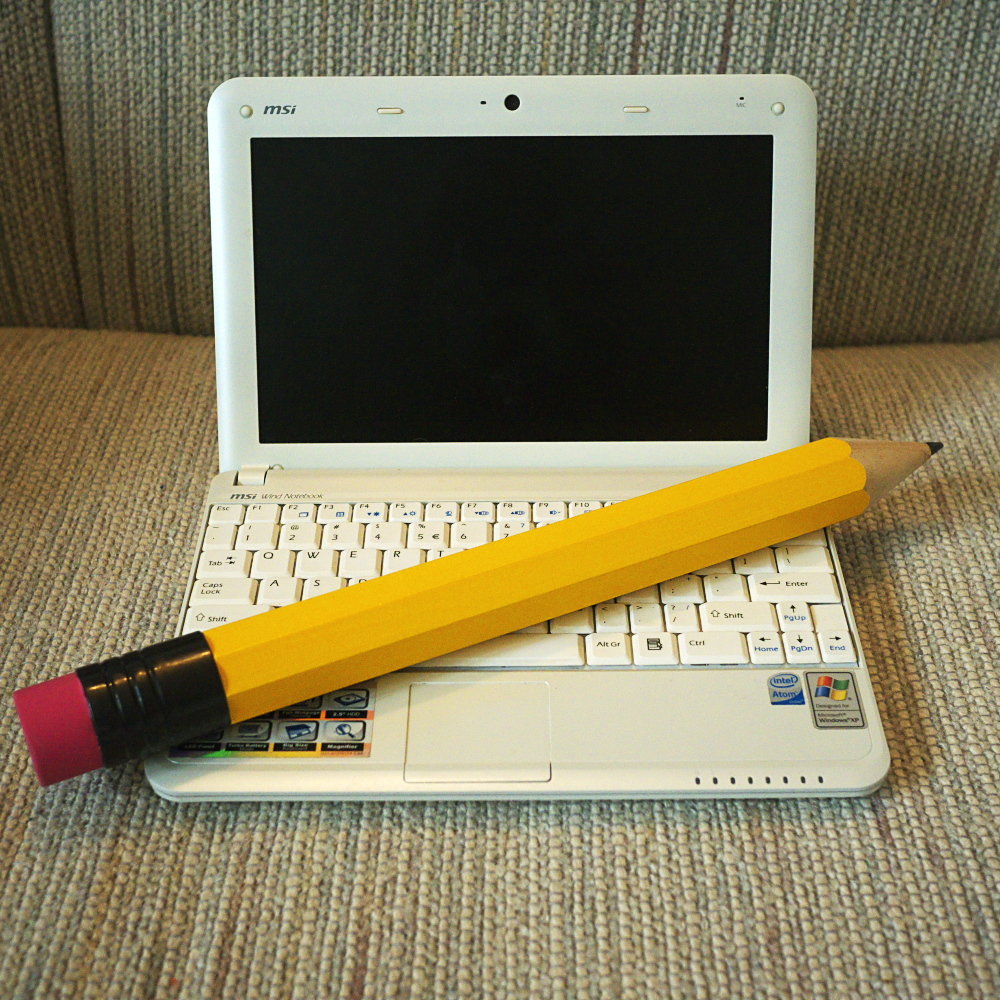
Inspired by the book on word processors, I dug out an old MSI Wind netbook computer that's been sitting in a cabinet for the last five or six years. Its WiFi is essentially nonfunctional, but it does have installed a version of Open Office, so it's essentially a non-Internet connected word processor. I did a bit of writing with it too, fleshing out some of those manually-typed pieces done on the Corona, and so I've used this as an opportunity to experiment with combining typescript into an otherwise all-digital writing process.

Labels: , , , , ,

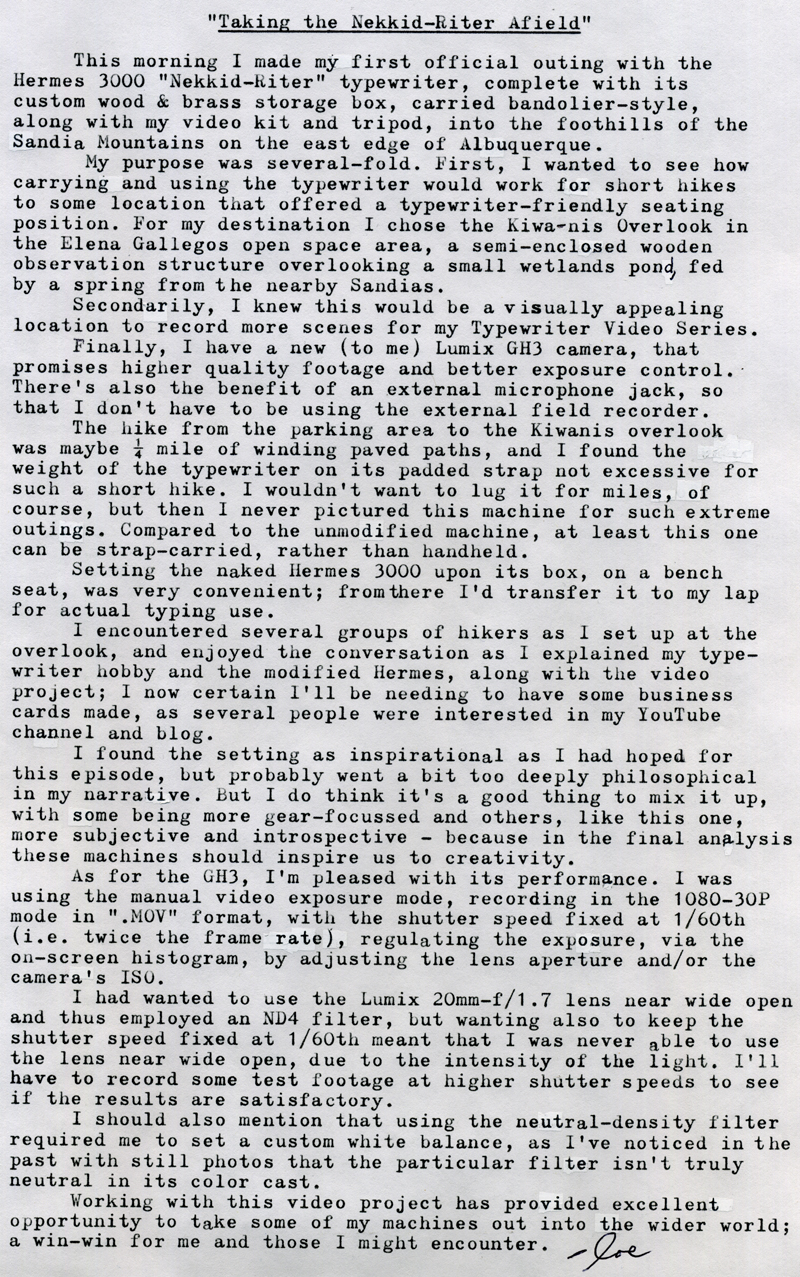
Tuesday, May 24, 2016

Taking the Nekkid-Riter Afield

DSCF4845a
Typecast172

Post-Script: Because of a technical glitch, this video didn't include any footage of me actually typing. I had attempted a time-lapse sequence of me typing, set to record a frame once every ten seconds. It seemed to have recorded the sequence correctly, since it played back in-camera as I intended; but once I imported the footage to the iPad it was merely a large set of still images. I obviously haven't done my homework regarding how these things work. Instead, I should have used the camera's 300% speed mode, which would have accomplished nearly the same effect but rendered as a conventional video clip.

Overall, I'm still satisfied with using the iPad as an editing platform, but am aware of the need to expand my library of background music, since I'm currently stuck with iMovie's default theme music selection. I need to find a good free-ware music source.

Here's a link to this week's video. I hope you enjoy it.


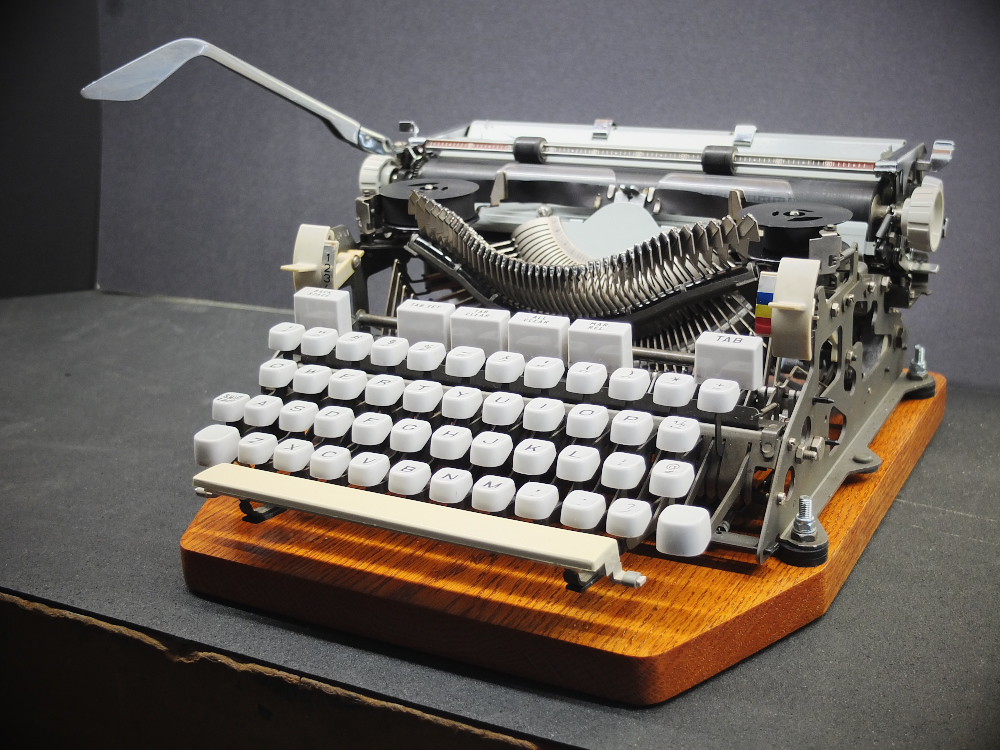
Typecast via Hermes 3000 Nekkid-Riter. I attempted some touch-typing with this article, which might be obvious due to numerous typos and general sloppiness. Near the end of the piece I set the touch selector from "2" to "3" and noticed, with this particular machine, that it seemed to perform better on a heavier setting. Obviously I'm not going to become a better manual touch-typist without more practice, but having the machine properly set up is also important.

Labels: , , , , , , ,

Monday, May 16, 2016

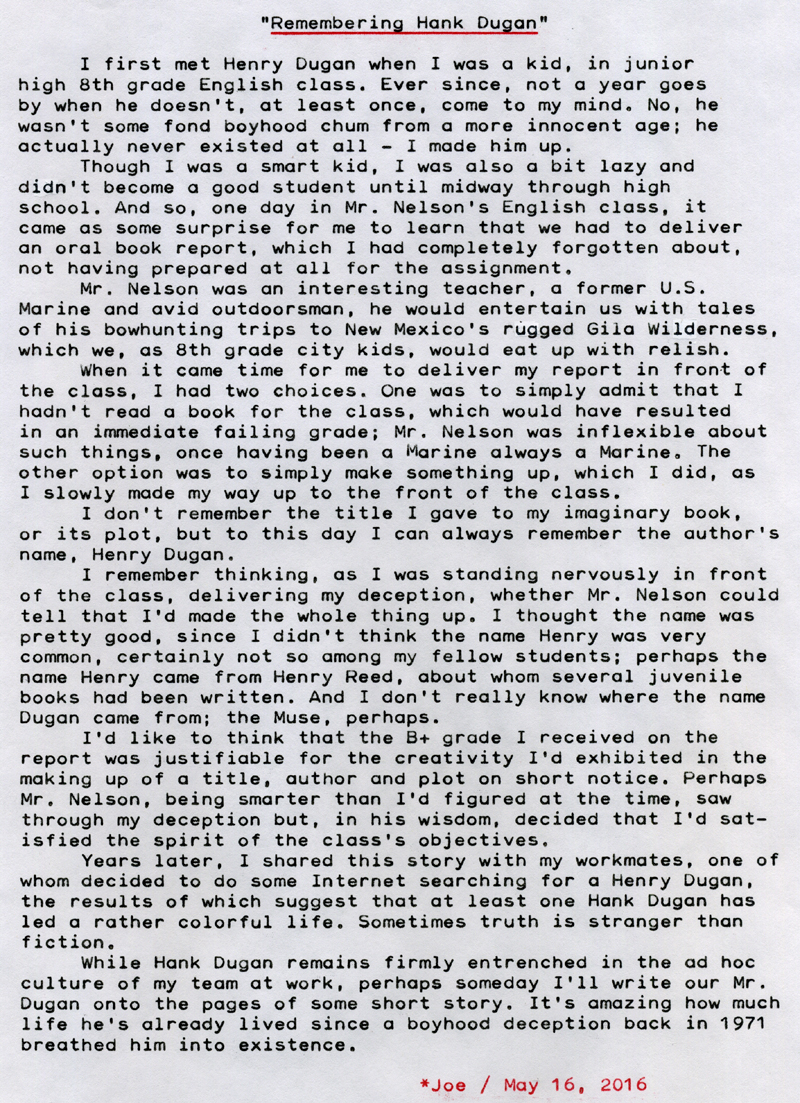
Remembering Hank Dugan

P1080143a
Typecast171

Post-Script: I didn't develop an extracurricular interest in story writing until midway through high school, though I'd like to think that somehow the genesis of Hank Dugan was the start of it all. A person often doesn't see such patterns in life until, years later, you stop to reflect.

I made and uploaded another episode of the Typewriter Video Series, this one about an outing I made to a local coffee shop, Humble Coffee. I realize, as I stated in the video's epilogue, how boring my last few videos must seem to the average viewer, and so I've embarked on an attempt at making them a bit more interesting; though I'm not certain I've succeeded, it's all a work in progress. Here's an embedded link:


Typecast via (fully clothed) Hermes 3000.

Labels: , , , , ,

Tuesday, May 10, 2016

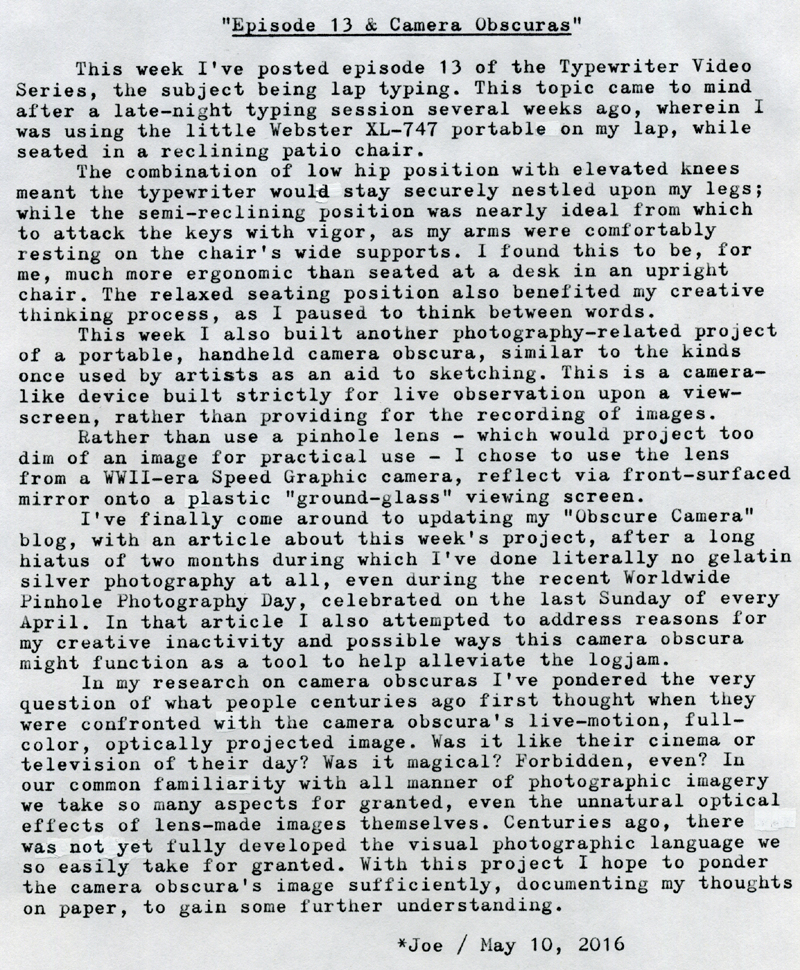
Episode 13 & Camera Obscuras


Typecast170

Post-Script: My Obscure Camera blog article is here.

Here's the website for Worldwide Pinhole Photography Day. Be sure to check out all the gallery images from pinhole photographers around the world.

Typecast via Hermes 3000 "Nekkid-Riter."

Labels: , , , , , , ,

Sunday, May 01, 2016

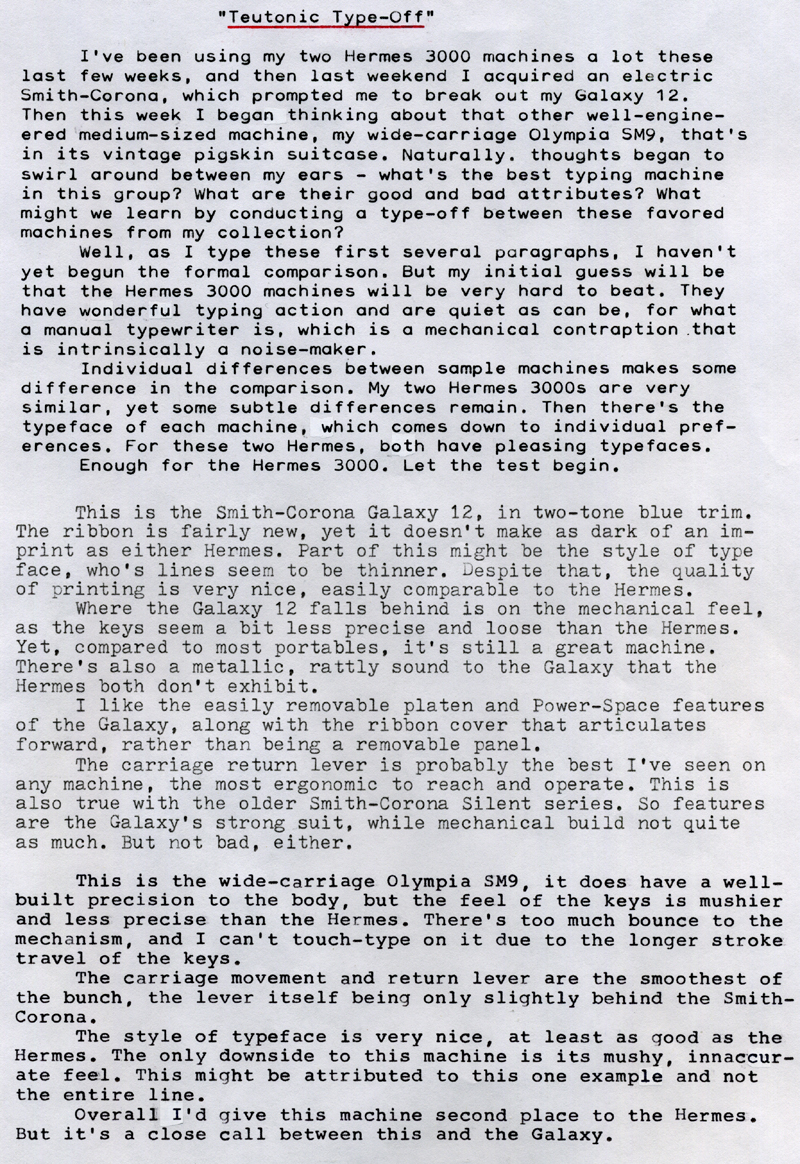
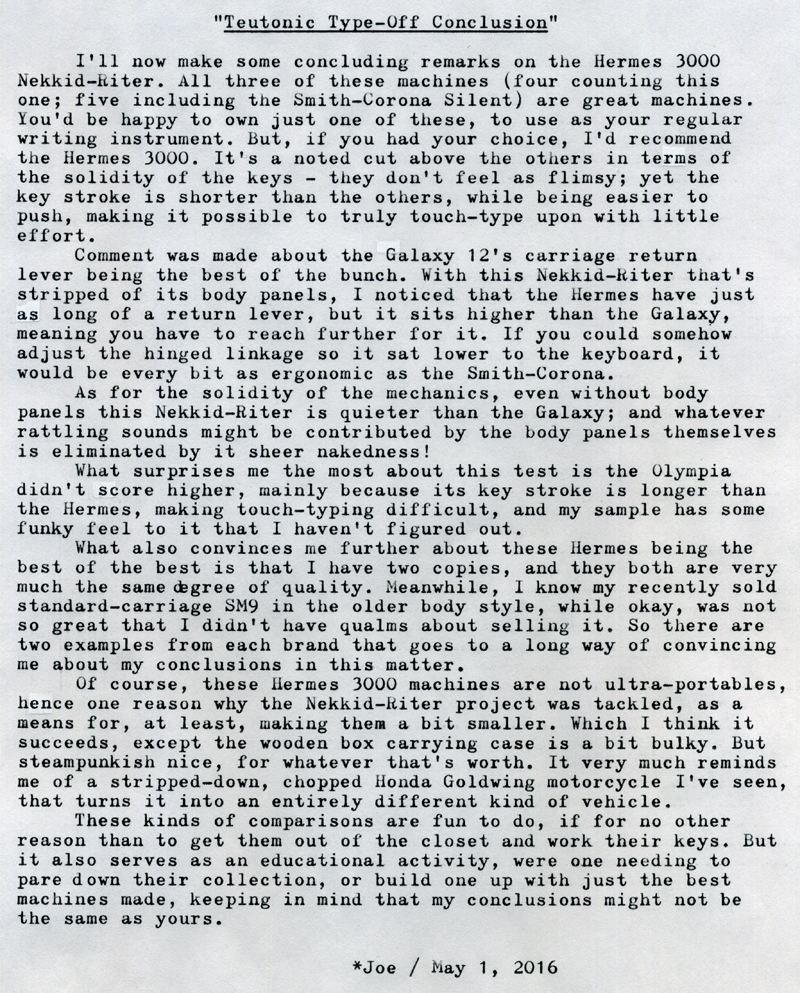
Teutonic Type-Off

P1110922a
DSCF2499a
P1110647a
Typecast167
DSCF4845a
Typecast168

Post-Script: Yes, I know the title's inaccurate, since neither the Hermes nor Smith-Corona can accurately be termed "Teutonic;" but I needed an alliterative title and that was the first thing that came to mind. This was a fun comparison to do on a windy and cold Sunday morning. As I indicated in the concluding remarks above, it serves as an informational test that might help me decide for or against any potential future typewriter purchase I might consider. I don't see myself buying another Galaxy-series machine, for example; not because they're bad machines, but because I already have a nice one, and they're rather large - and both H3Ks are more preferable. I'd rather, if the opportunity presented itself, consider another Silent or Silent Super model, in a different typeface and body color, since these are smaller, more portable machines. And should another Hermes 3000 come my way, I'd be hard pressed to pass it up, especially if it had a different typeface.

Another thing to consider in conclusion are the sample-to-sample variations between otherwise nearly identical machines. While there are subtle differences between my two Hermes 3000s, they're pretty close together in quality, which is as one would expect of a machine made to exacting standards - as long as they've been treated gently throughout the years. The Nekkid-Riter, it should be noted, came to me in much worse condition than the blue H3K, which was purchased from a typewriter shop some years ago. Despite those differences in condition and provenance, both machines type very nicely, which says something significant of their design and construction.

Typefaces are another point of comparison, even between identical models, as evidenced by my two Hermes presented herein. This becomes another reason to consider purchasing what would otherwise become a redundant member of one's collection, if the typeface were more pleasing as compared to a machine already in one's possession. This was one main reason why I decided to sell off the older, standard-carriage Olympia SM9, as the typeface was less pleasing to me.

This might be a fun test to do with my ultra-portable machines, so look forward to that in the coming days.

Labels: , , , , , , ,

Wednesday, April 27, 2016

TWVS Episode 10 & Taking a Spill


This week's episode of the Typewriter Video Series covers the subject of fitting typewriters into a larger writing lifestyle, and especially with handwritten notes and rough drafts.

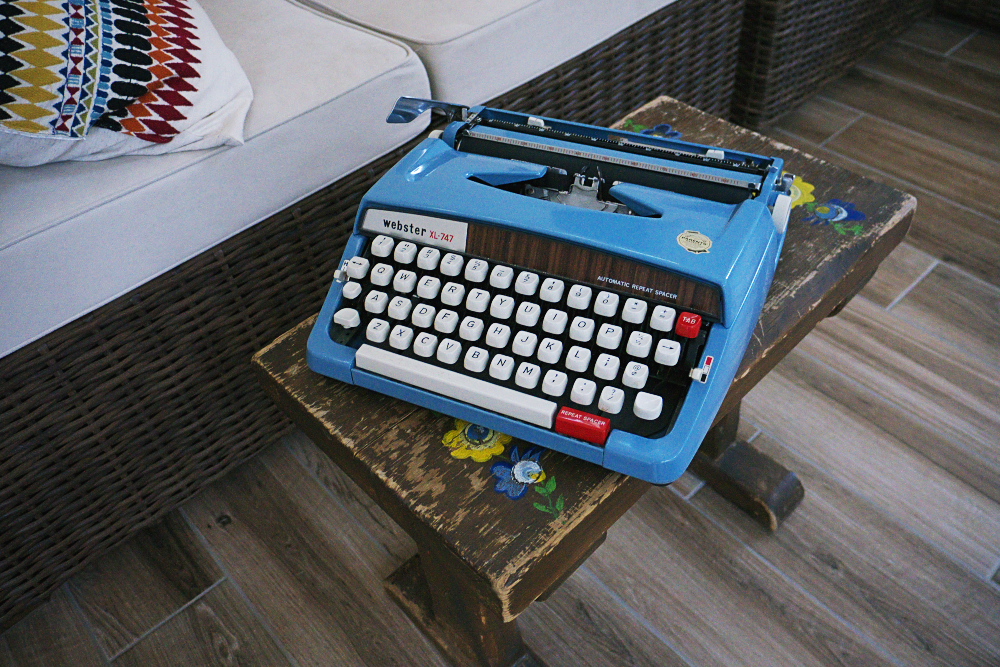
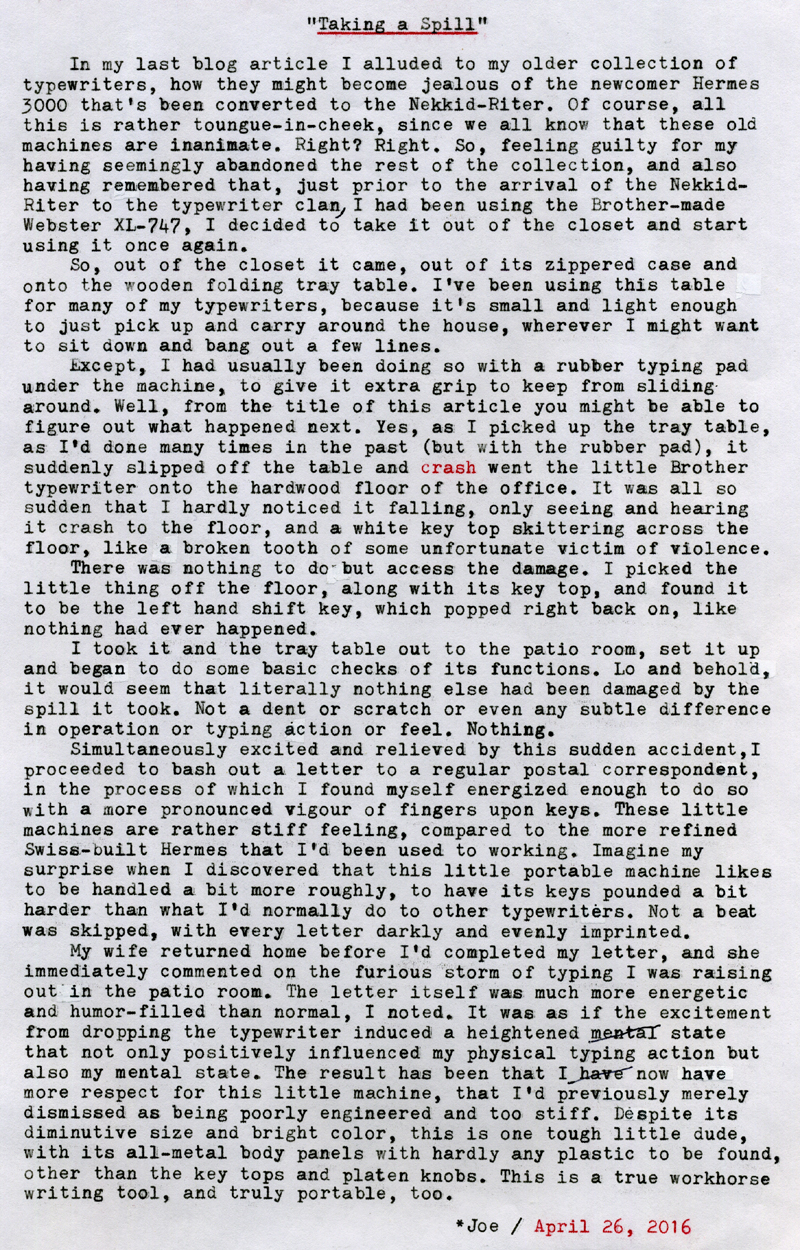
Meanwhile, the following blog article was inspired by a little incident last night involving my Webster XL-747 portable typewriter.

P1100763a
Typecast166

Post-Script: Certainly those Hermes and Olympias are more refined writing tools than the diminutive ultra-portables like the Webster. What matters most importantly to me are typing action and quality of imprint. While the Webster has a nice, dark imprint, its typing action was much stiffer than the bigger machines, yet I kept wanting to make it a favorite among my collection because of its small size, bright color and that it has the repeat spacer feature. Now, after last night's episode, I really do have a newfound respect for it. While those European models mentioned previously might be more refined, they would not have survived a drop to the floor without suffering extensive damage, I'm almost certain, if for no other reason than their heavier weight and, in the case of the newer body style of Hermes 3000, the extensive use of plastics in the body panels.

My enthused typing that followed was a watershed moment for me in my relationship with typewriters as writing tools. Never before had I experienced an excited, emotional period that also had with it an exuberant physical response. It was that more energetic typing action on my part that fueled my mind to break free from convention and write more spontaneously, almost conversationally. Since the letter was private, and has already been posted, I can't share it with you; but perhaps at some point in the future I'll get in the same frame of mind and post a typecast in the same vein.

While recording practice scenes in my Man Cave shed for this latest video, I happened upon the idea of writing sheds and their relationship with typewriters. This I think will be excellent subject matter for a future video in the series.

Typecast via Webster XL-747.

Labels: , , , , , , , ,

Monday, April 25, 2016

Nekkid-Riter Storage Box + More

DSCF4925a
Typecast164

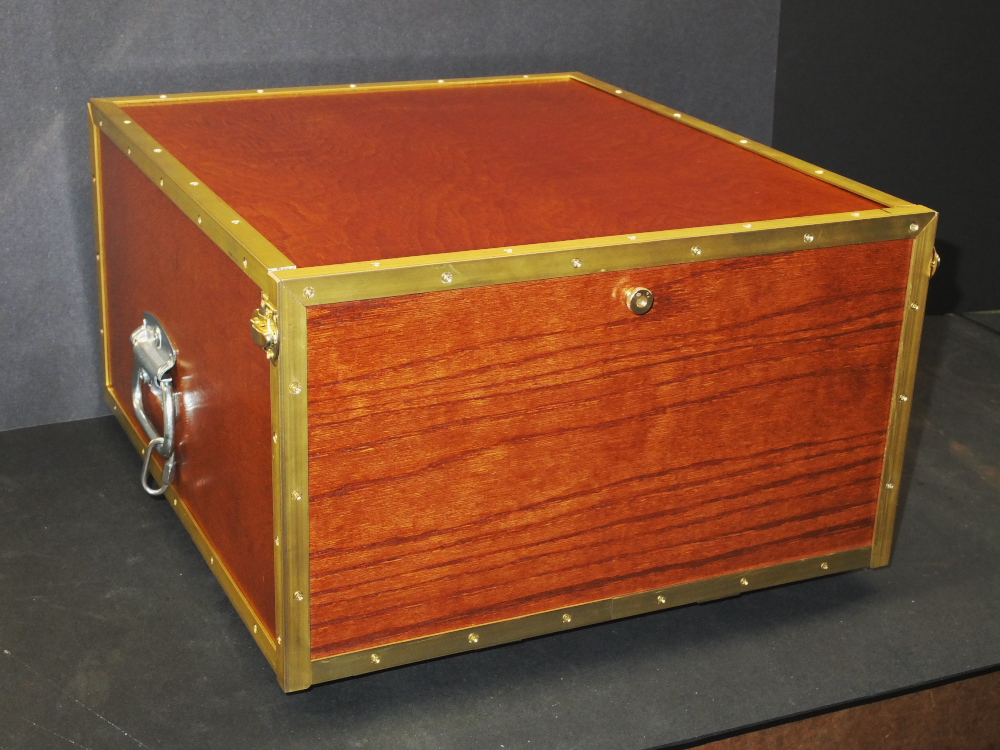
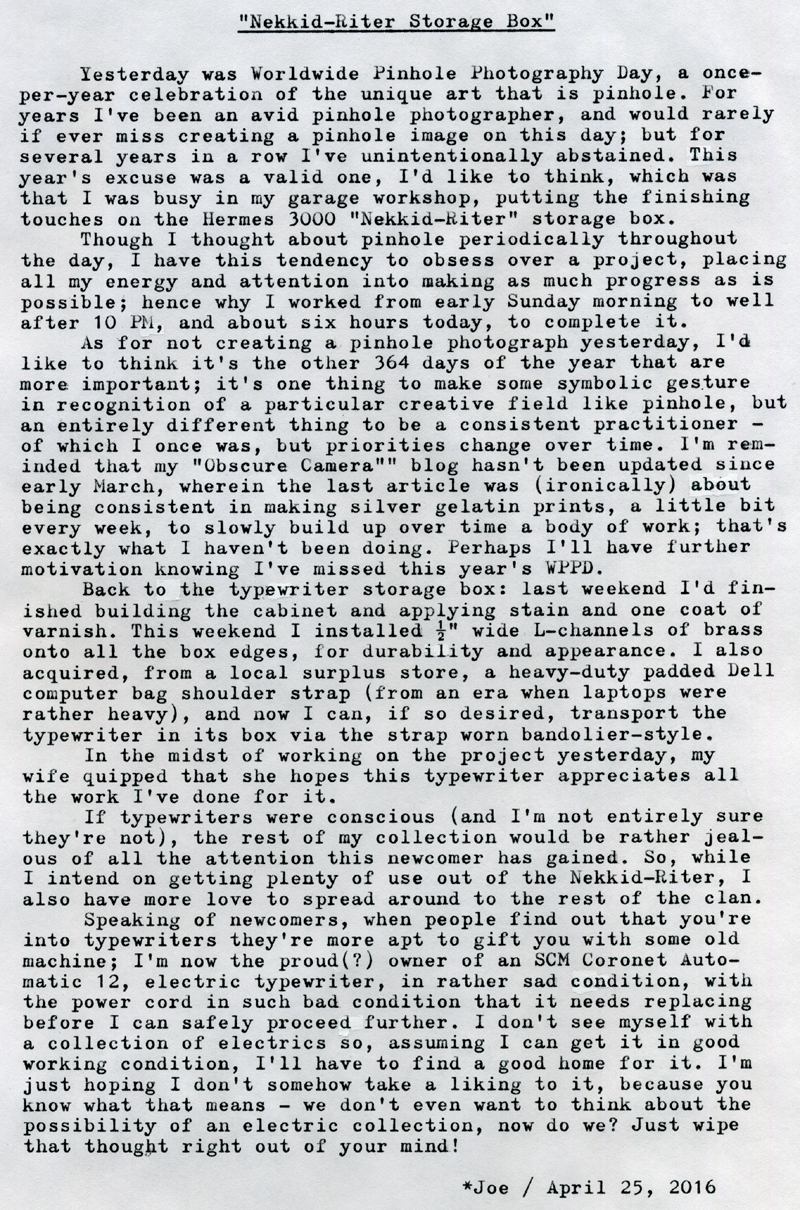
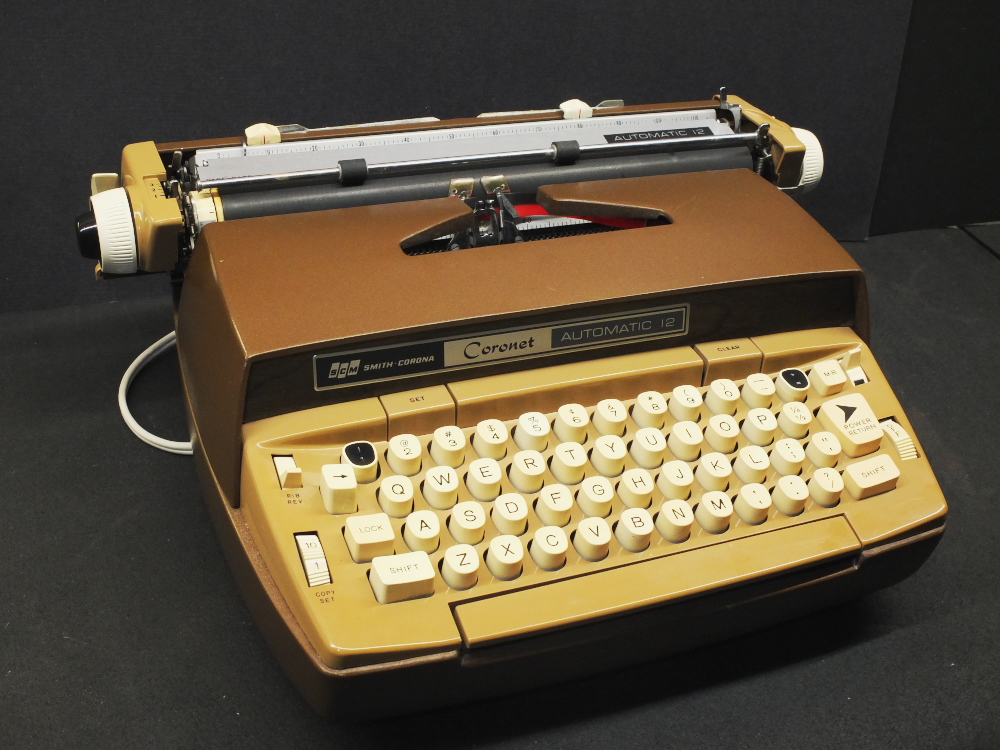
Post-Script: Typecast via Hermes 3000 Nekkid-Riter. I wrote that last paragraph partly in jest, earlier today after having completed the storage box for the Nekkid-Riter. But later on, I decided to take a look at the electric Coronet Automatic 12. I used an old extension cord to replace its original power cord (that was spliced in two places, badly frayed and with an intermittent open near the plug). Upon powering it on, lo and behold it works! I spent the next hour or two cleaning, degreasing and lubricating. The insides are still not entirely clean, since I only hit the critical areas where debris and residue might affect the machine's operation, rather than spotlessly cleaning every surface.

The carriage rails were grinding, so a thorough cleaning, degreasing and re-oiling has smoothed it out nicely. I spent a lot of time cleaning the type slugs with alcohol, swabs and toothpicks, the result being that, with its new ribbon, it types very nicely. The body and storage case were filthy, so plenty of window cleaner, swabs and paper towels were consumed, but the results are enticing.

I'm not certain I like the chocolate-brown color, but I suppose it's less drab than that of my older Smith-Corona Silent. I was originally thinking about calling it the "Brown Streak," from its speedy operation and color, but my wife, in her wisdom, convinced me that this term might be misconstrued as being somewhat scatological. Yes, it's a fast typer; darned if I can't throw words on paper at a speedy clip. This is certainly an office workhorse machine, but it's rather loud; I can only imagine what an office of these machines sounded like, back in the mid-20th century. I suppose if the room were clouded in cigarette smoke (which they often were), it might dampen the racket. Actually, it's not quite as loud as my brother's Hermes 10 electric (that, you might recall, is on permanent loan to the Guild Cinema).

The rear, hinge-side of the case is badly rusted. It looks like it sat up on end in a wet environment. This is one of the few circumstances where I had no qualms about applying some WD-40, followed by a wire brush and plenty of paper towels. It's better than it was, certainly.

So, am I going to keep it? I suppose ... if someone were to twist my arm ... perhaps. I can imagine if, needing to put some high volume of words down on paper at a speedy clip, and the noise were no objection, having one electric typewriter wouldn't be so bad, especially one having the wide carriage and ergonomics of this series of SCM, and with a standard cloth ribbon. But that's it! No electric collection for me, no sir!

Here's a glamor shot of the new clan member. I still need a name for it, something combining its chocolate appearance with speedy operation. It does have that two-tone espresso/coffee look, so perhaps some caffeine-themed name would be appropriate. Jitters? Hmm ... I'll think more about it.

DSCF4927a

Labels: , , , , , , , , , , ,

Tuesday, April 19, 2016

Typing Paper Musings

DSCF4916a
Typecast162
Mead001
Typecast163

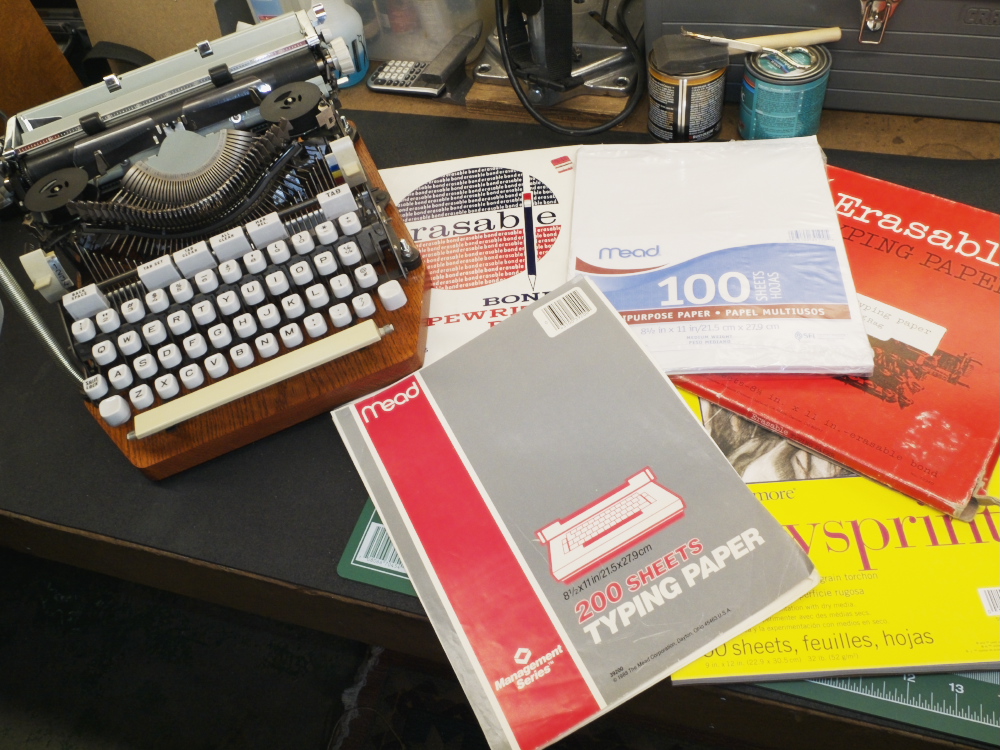
Post-Script: I'm certain that most every contemporary user of manual typewriters has some favored kind of paper, and can brag about its specific qualities. But until you've found, as I have, a pack of legacy-era "genuine" typing paper, in some thrift store perhaps, you don't know that most other kinds of paper pale in comparison. Know too that I'm not referring to "erasable bond" typing paper.

The typing papers I've found receive ribbon ink remarkably well; so well that they can transform an otherwise faint-printing machine into a bold typer - which thus serves to further reinforce my contention that the quality of paper is important to the typing experience.

These papers, while receiving ink so well, do so without being excessively thick or ragged. They appear thin and crisp, and thus roll through a typewriter's platen and rollers with ease.

I'm really surprised that quality typing paper has not received more attention from manufacturers looking for new niche markets to exploit. Imagine if film photographers enjoyed fondling their mechanical cameras but could care less what kind of film they used (read some posting on Rangefinder Forum, for example, and you'll see that photographers are a picky bunch). Most typists seem a bit more laid back, as if "whatever paper I find is okay with me" were the mantra.

Perhaps this serves as proof that typewriters are not as much a hipster affectation as we might expect, for if they were, we'd see a plethora of artisan-crafted typing papers to choose from. And that wouldn't be such a bad thing.

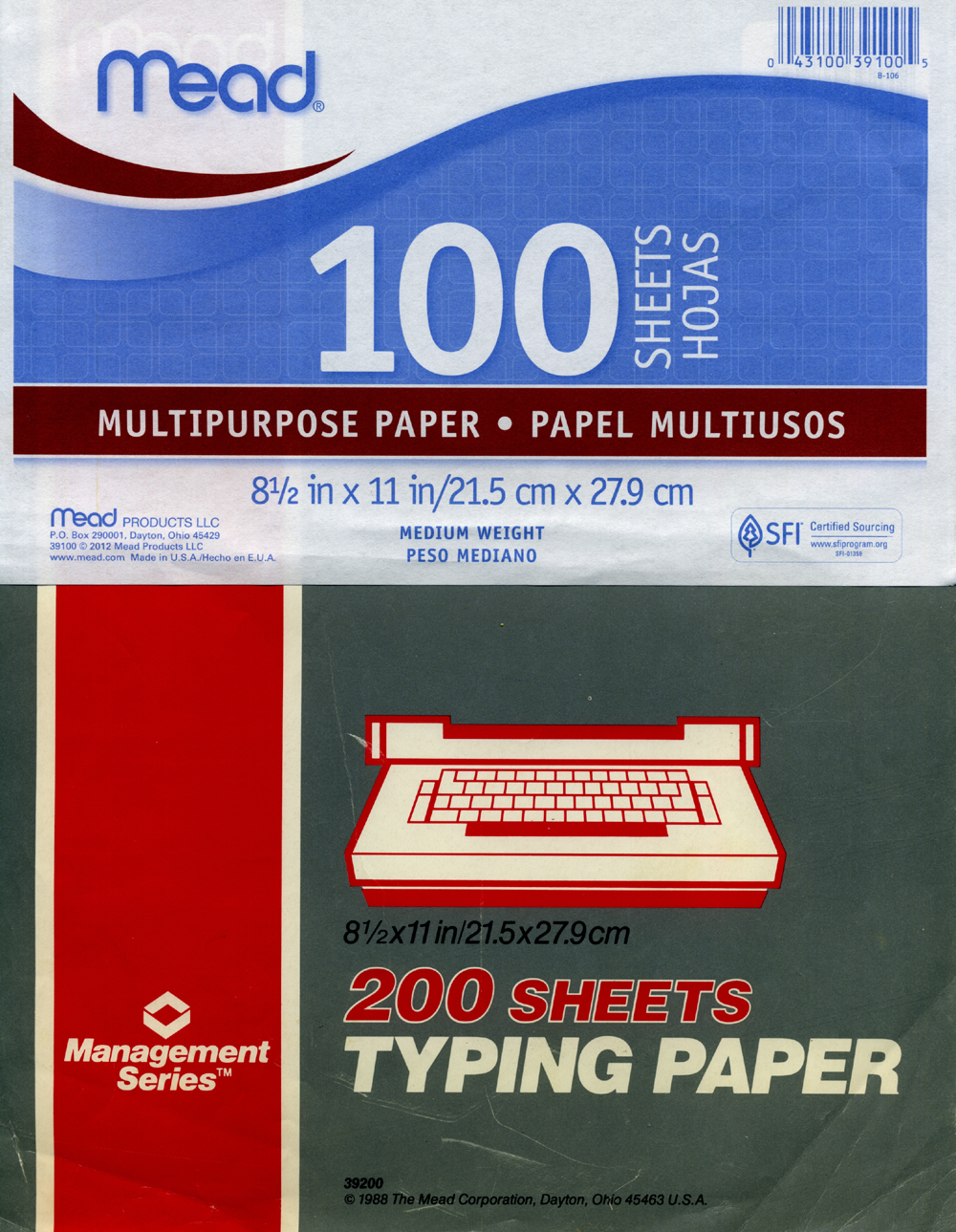
In the second photo, I've scanned the new Mead multipurpose paper, while below it is the lower half of the legacy Mead typing paper. Note the UPC code for both products differ only by one digit. If you search online for the new paper, most websites list results whose photos are actually of the older paper's label, which indicates to me that the product has only recently been re-branded.

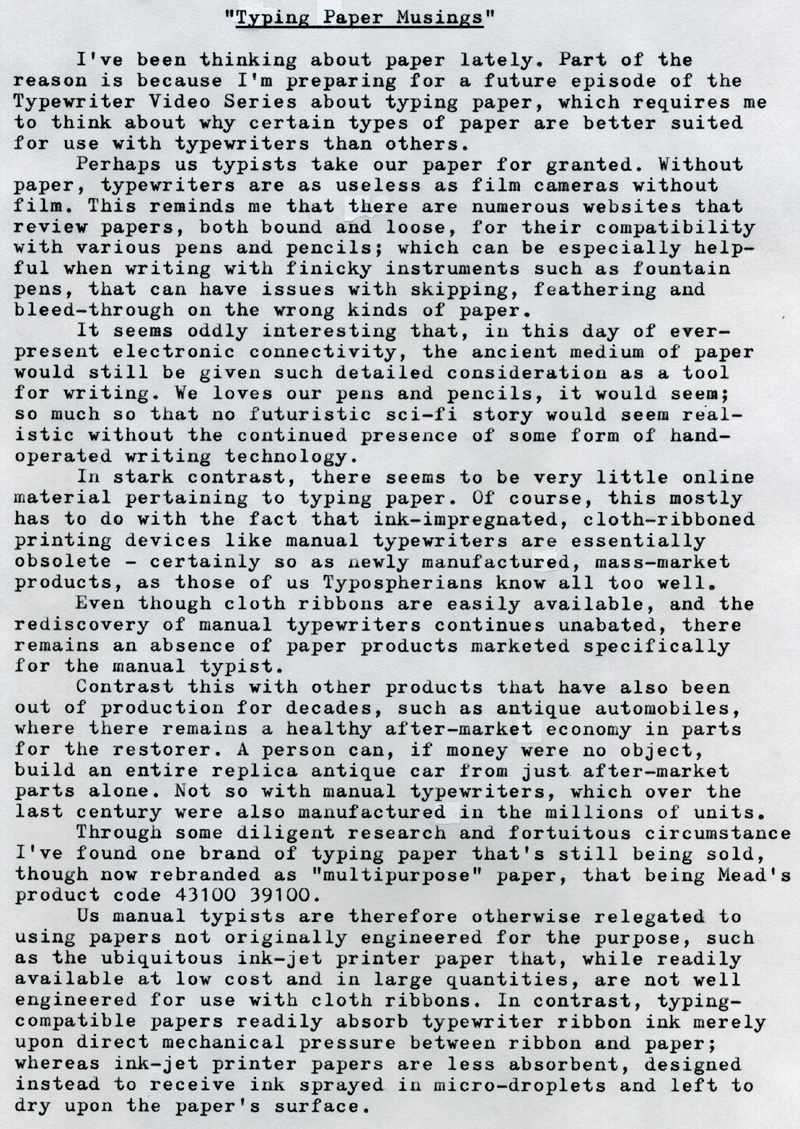
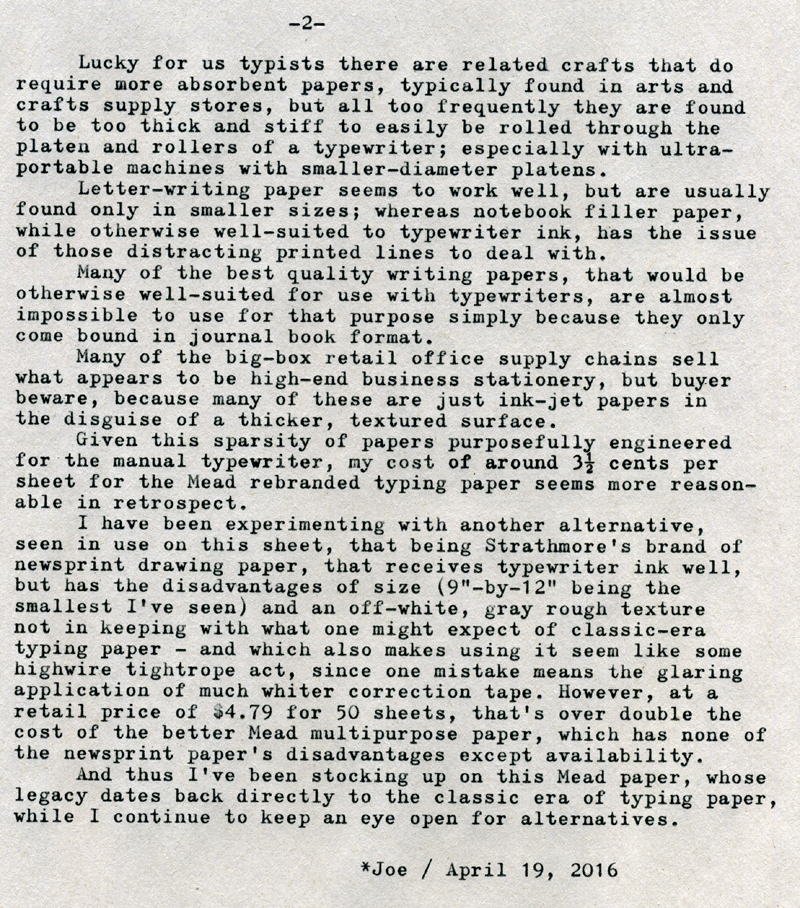
The first page of the piece was typed using the newer Mead paper, while the second page was typed using the Strathmore Newsprint art paper. It's a bit more gray than the scan might indicate, but seems to take ribbon ink rather well; and its toothiness seems to actually keep the type slugs clean, so it has that going for it. The downsides are the cost, the gray color which makes it difficult to hide any corrections, and the size.

Typecast via Hermes 3000 Nekkid-Riter. The storage box is essentially complete, so I'll post an article next week about it.

Labels: , , , ,