Sunday, September 30, 2018

Olympus Microcassette Dictaphone

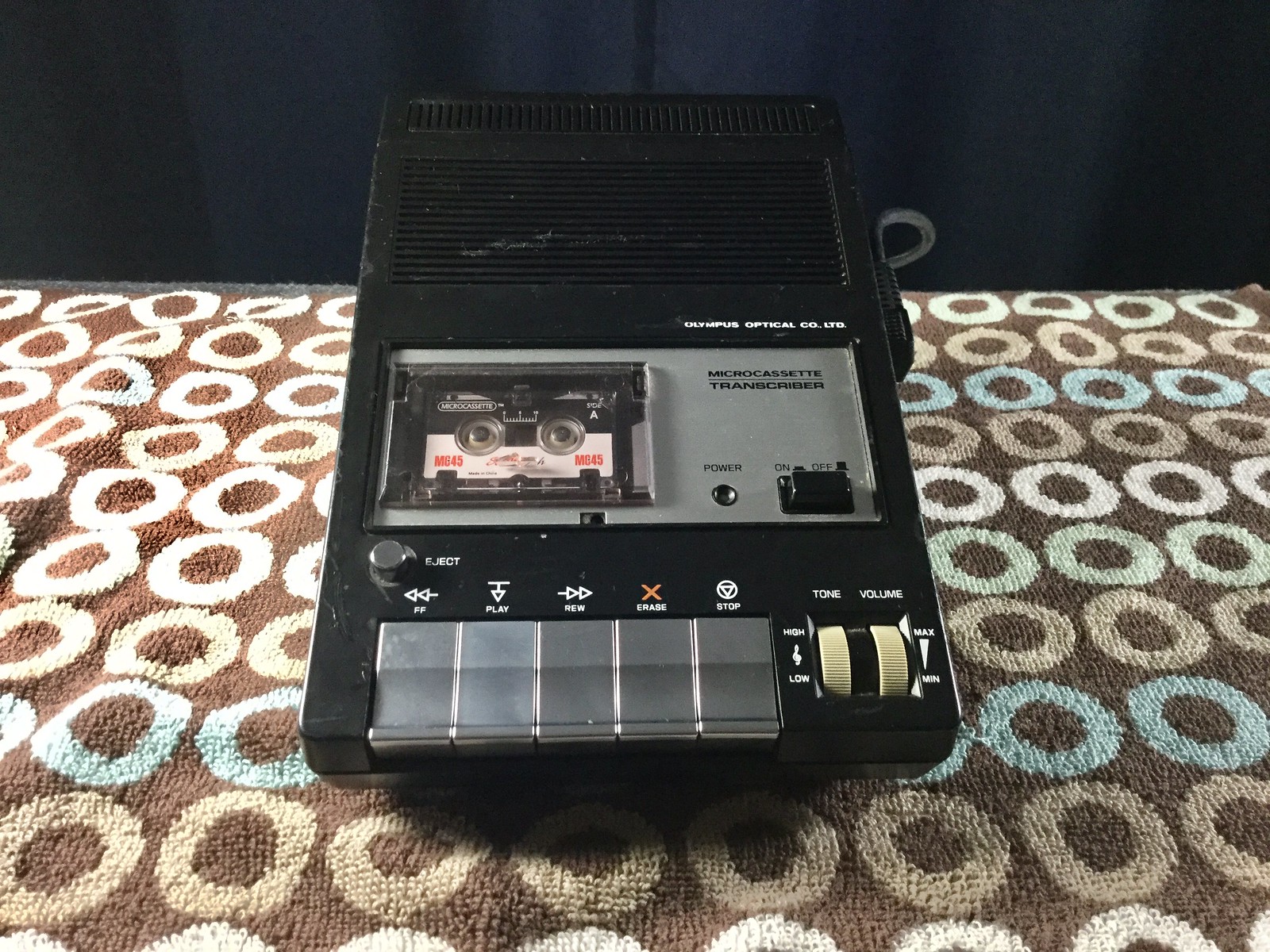
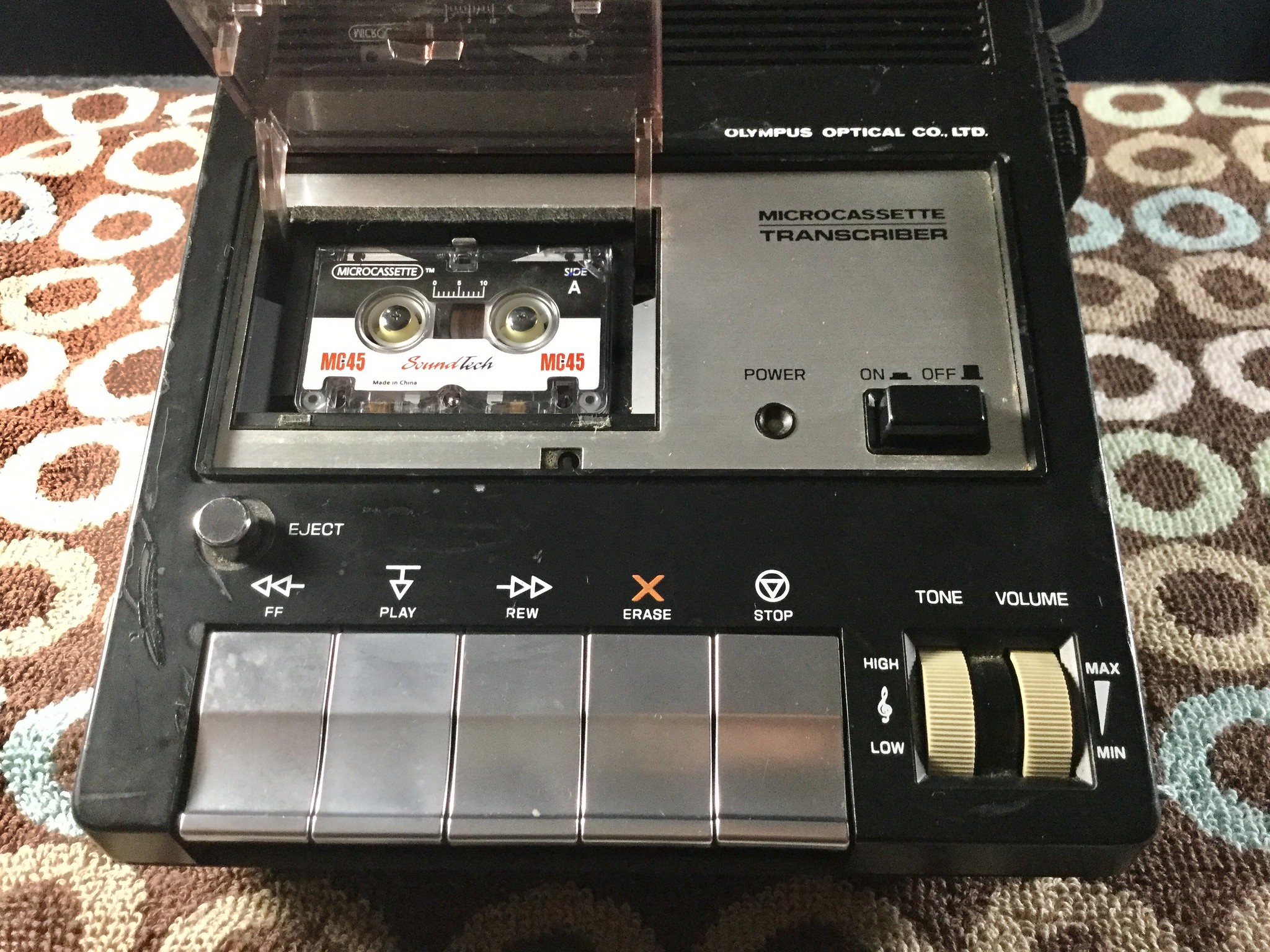
Olympus T500 Microcassette Transcriber
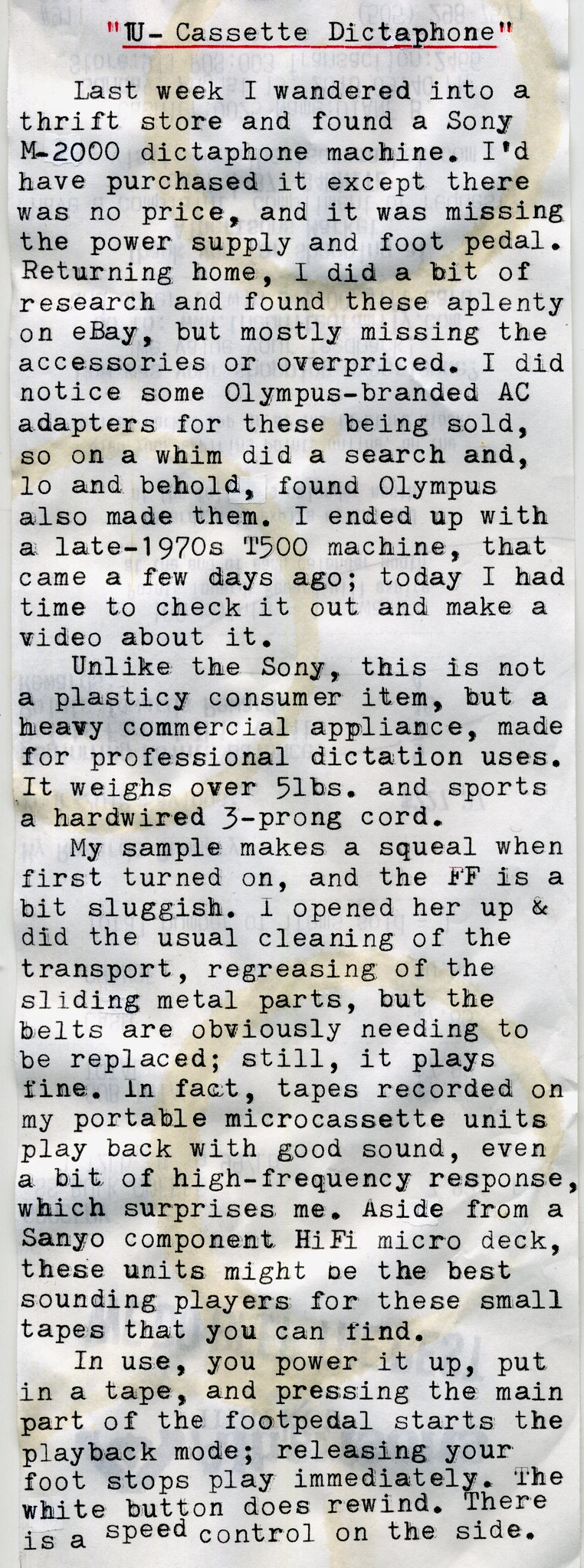
Typecast051
Olympus T500 Microcassette Transcriber
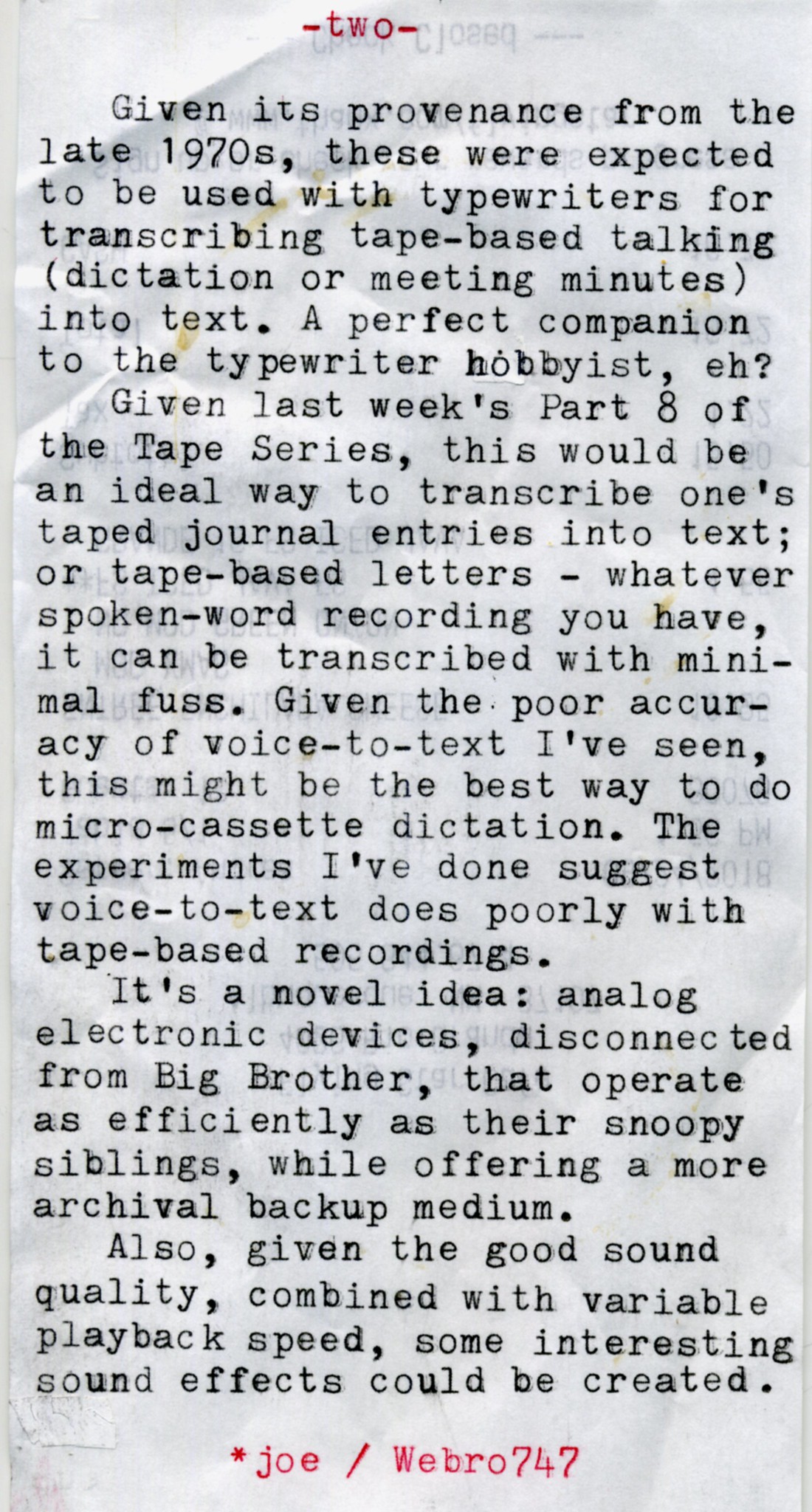
Typecast052

Post-Script: Though this is a ruggedly-built machine, its Achilles heel might prove to be that small triangular cross-section belt, which I understand is well nigh impossible to acquire. Hopefully it'll continue to function for a while longer. Perhaps I should look into one of those Sony M-2000 units - for research purposes only, of course!

I was surprised by the frequency response of the tapes played in this device, even though they were recorded in a handheld microcassette recorder. Perhaps it's more than just the bigger speaker of the Olympus, maybe the playback amplifier has better response? Sounds like (pun alert) I should record some music into a microcassette, then play it through this machine and compare the results.

Those Sound Tech MC-45 tapes look and sound pretty good, especially considering the price I paid on Amazon, just over $2 per tape. Good to know new tapes are still available, especially if one wants to do some tape-based journals and letters.

Here's the video about this dictaphone.


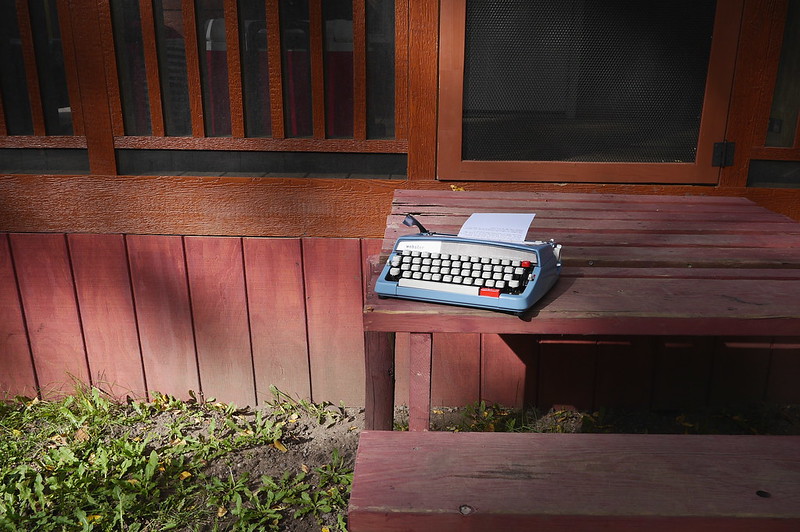
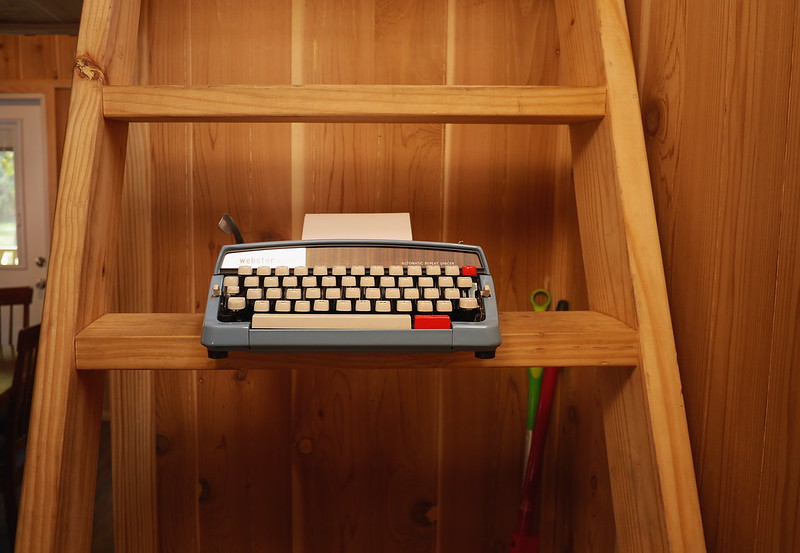
Typecast via Webster XL-747 (aka Webro), sporting a silk ribbon from Ribbons Unlimited.

Labels: , , , ,

Monday, September 24, 2018

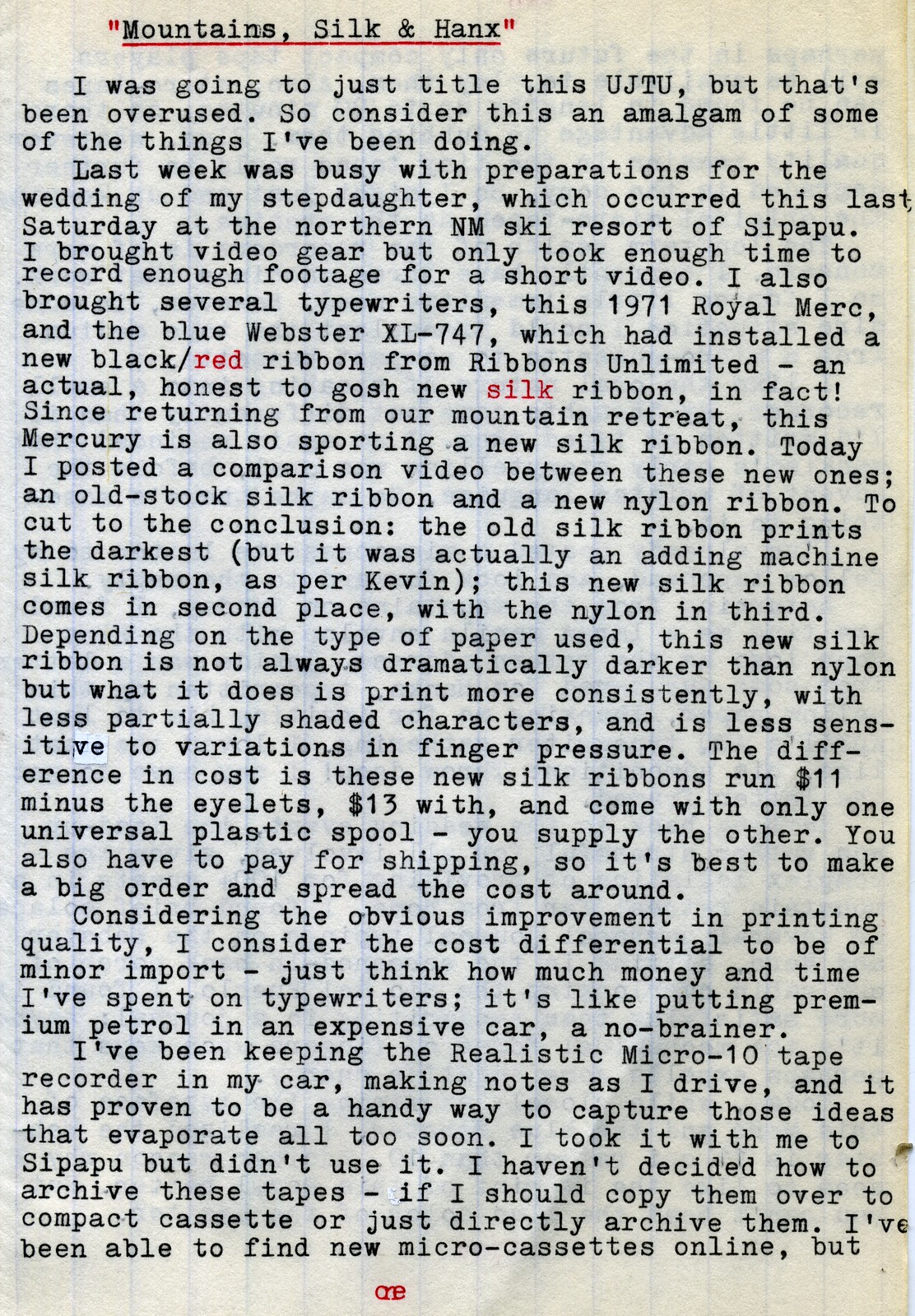
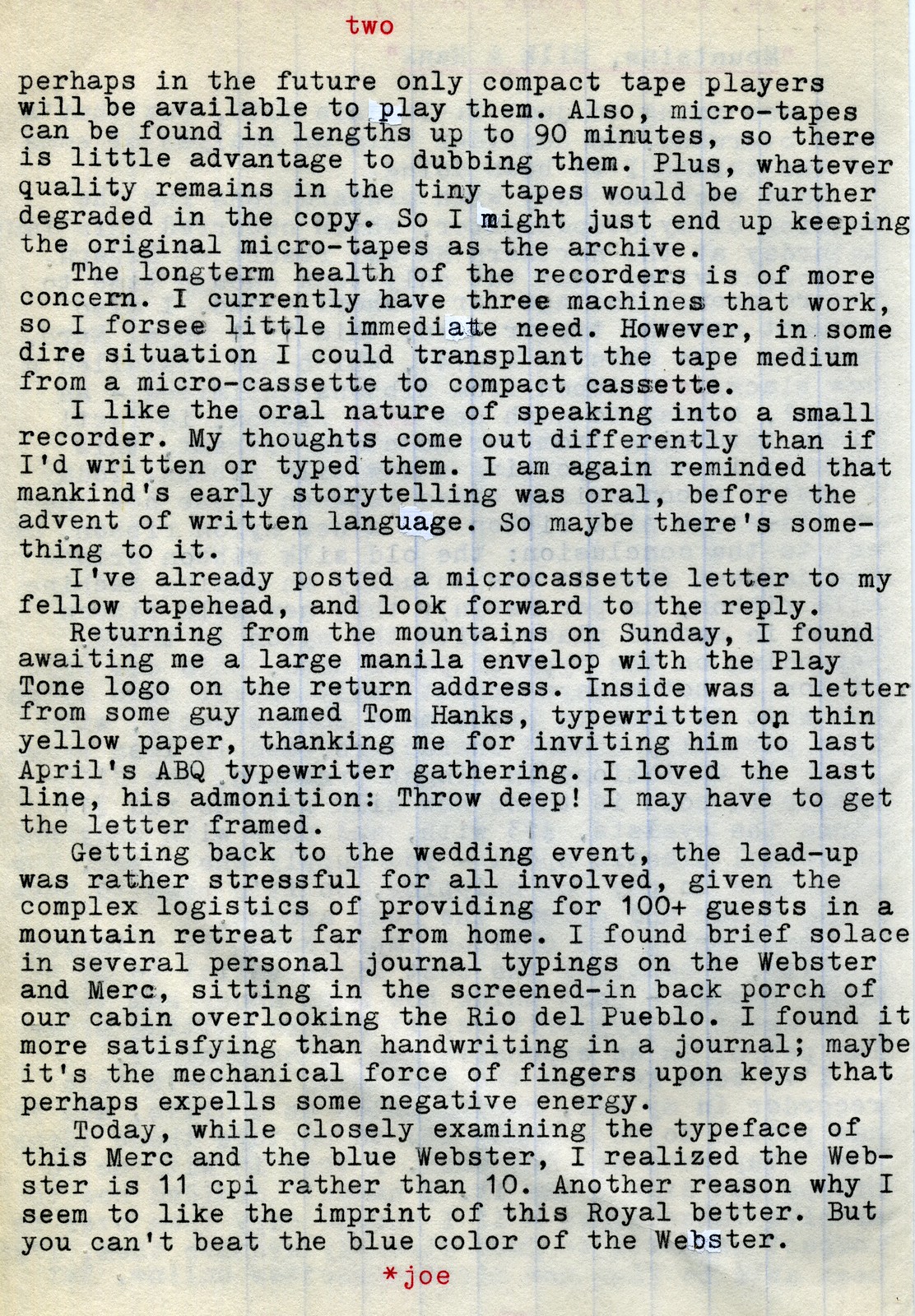
Mountains, Silk & Hanx

P1040432a
Typecast048
P1040433a
Typecast049

Post-Script: The wedding event was wonderful, a huge affair that involved lots of planning and last-minute stress, as these kinds of things often do, but worked out great. The staff at Sipapu Ski Resort did a great job in hosting the event, and the bride and groom, along with their friends, were instrumental in tailoring the wedding to their individual taste.

Here's a short video about me taking several typewriters on the trip:


And here's a video about the new silk ribbons now being used in both the Webster XL-747 and Royal Mercury, purchased from Ribbons Unlimited:


Labels: , , , , ,

Sunday, July 01, 2018

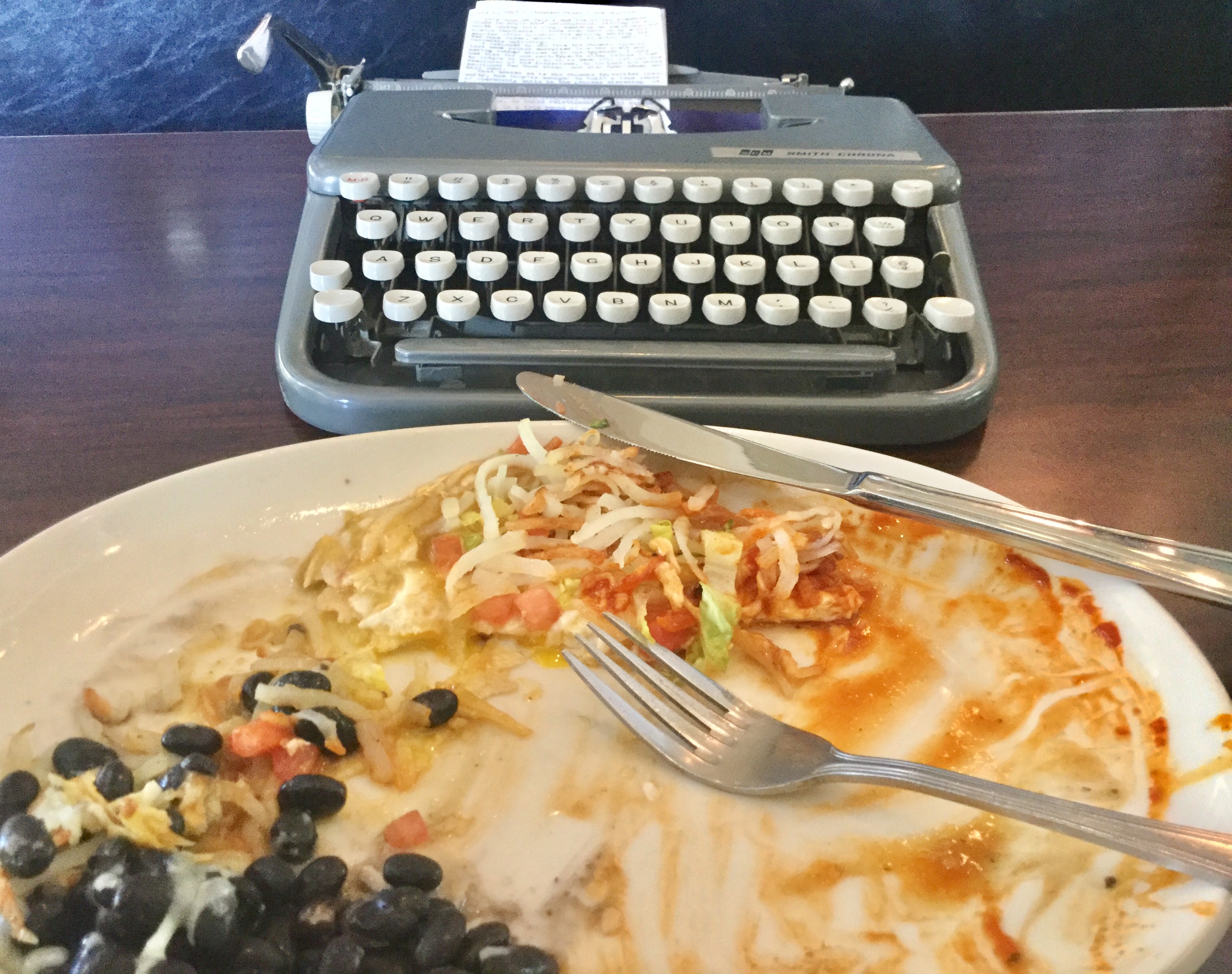
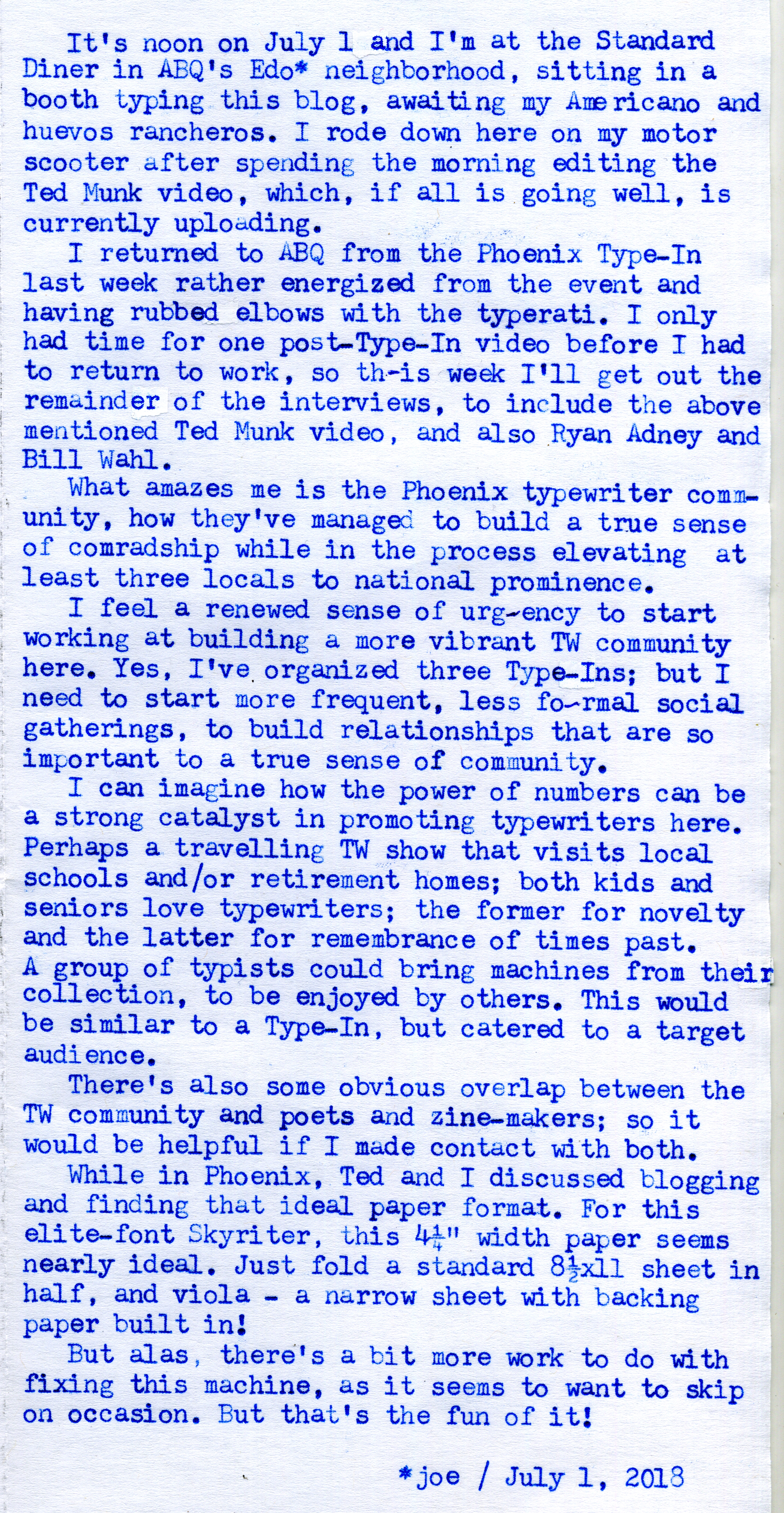
Skyriting at The Standard Diner

Skyriting at The Standard Diner
Typecast024

Post-Script: I carried the Skyriter in my green shoulder bag that normally holds the blue Webster XL-747; I can easily tell the Skyriter is lighter than either the Webster or my other shoulder bag typer, the Olympia SF. While the wide cloth strap is okay when motor-scootering, I'd prefer the padded computer bag strap I use for the Nekkid Hermes 3000 carrying box. It was a warm day, so wearing a summer shirt and shorts felt pretty good on the scooter.

I've liked eating at the Range Cafe for years, so it's nice to know that The Standard Diner is owned and operated by the same family. While my favorite breakfast at the Range has been their huevos rancheros, made with blue corn tortilla and featuring pinto beans, white cheese and fried/baked potatoes (and ordered with red & green Chile - what we call "Christmas"), The Standard Diner's version has a white corn tortilla, black beans and hash browns. I really loved it, especially mixing both chile sauces into the hash browns and breaking the eggs over it. Yes; you can blame me for your sudden appetite.

Sitting in the high-backed, padded booth, I didn't find the Skyriter's noise especially bad; although I think I grasped a bit of conversation across the room involving the word "typewriter," so perhaps they were talking about me? Hmm...

Regarding this issue of narrow-width typecasting, so as to make the words more prominent on-screen, Ted has mentioned the use of 3-1/8" wide thermal paper as a good medium. I'd like to try it, but will wait until I can find some cheap rolls at the thrift stores; otherwise I'd have to spend lots more money on a 6-pack of rolls, enough paper to probably last me a lifetime. For elite-sized font machines, this range of 3-4 inches seems almost ideal for the purpose.

I also remember reading on their menu that The Standard Diner has an old typewriter back by the restrooms, though I didn't take an opportunity to check it out. Which gives me reason to return once again, perhaps with better video equipment than the little iPod Touch. Even so, perhaps that makes this venue a bit more typewriter-friendly.

Now, regarding motor-scootering. Yes, riding two-wheeled vehicles is intrinsically riskier than being enclosed in a metal cage, especially in today's world of phone-distracted drivers. What would be a fender-bender crash in a car can easily become a trip to the hospital, or morgue, on a motorcycle. Even so, there's a particular enjoyment to riding. Always wearing a helmet is an essential habit, even in hot weather; though I find the helmet keeps the sun off the fair skin of my ears and face; while in the winter it keeps my head and neck warm.

There are also some good defensive driving habits to invoke when riding, that you normally wouldn't consider if in a car. Visibility is a primary issue, especially when passing cars or going through intersections. Staying out of blind spots is something I'm always conscious of, which involves momentary speed changes to put myself in a more visible position relative to neighboring vehicles. Watching a neighboring vehicle's lane position and speed can give you clues as to their intent to suddenly change lanes. Even on such a diminutive vehicle like my Honda PCX-150 scooter, my head height relative to the road is easily as high as a medium-sized SUV. Regardless, when being followed by a vehicle I try to stay in the left side of the lane, so I'm directly in front of them, in their central zone of vision. When passing through intersections where there's a left-turning vehicle in the opposite turn lane, I will adjust my lane position to the right side so they can see me as early as possible. And watching for cars jumping out from side streets is easier if you watch the spoked rims of their front wheels, where you can more easily detect slight rotational motion indicating they're beginning to roll forward. All these are tactics I've learned that help me stay safe.

If I ever feel especially nervous about riding in traffic (which I usually don't, since I learned to ride on scooters in city traffic), I have the advantage, in northeast ABQ, of taking side streets to almost anywhere else in this part of town, like I would if on a bicycle. That is the essential advantage of living in a grid-like city, the network of side streets between major roadways.

Here's the Ted Munk interview video. Stay tuned on my YouTube channel for the upcoming interviews with Ryan Adney and Bill Wahl.


*About downtown Albuquerque. My grandparents' old house in on Edith near Central, just two blocks up from The Standard Diner.

Labels: , , , , , , , , , , ,

Wednesday, March 28, 2018

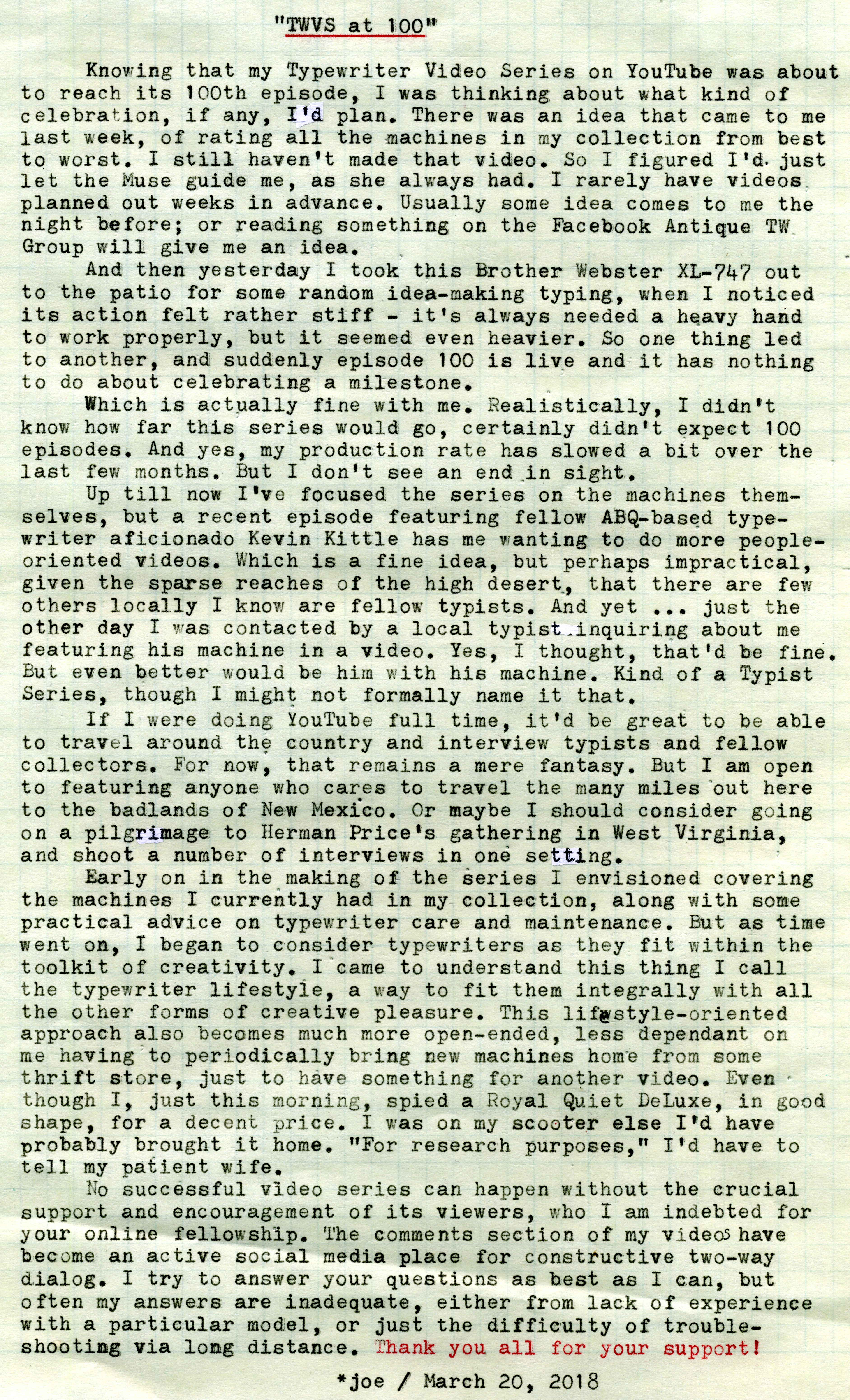
TWVS at 100

Monday, February 26, 2018

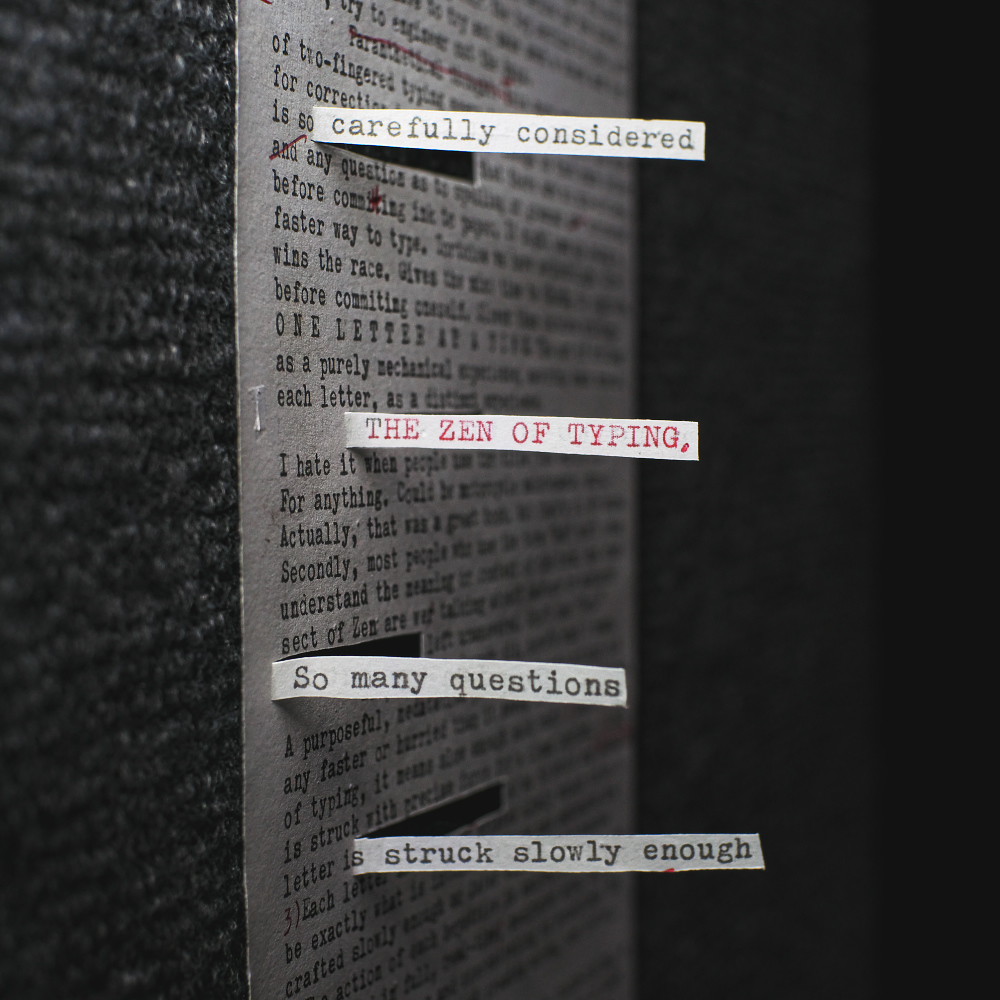
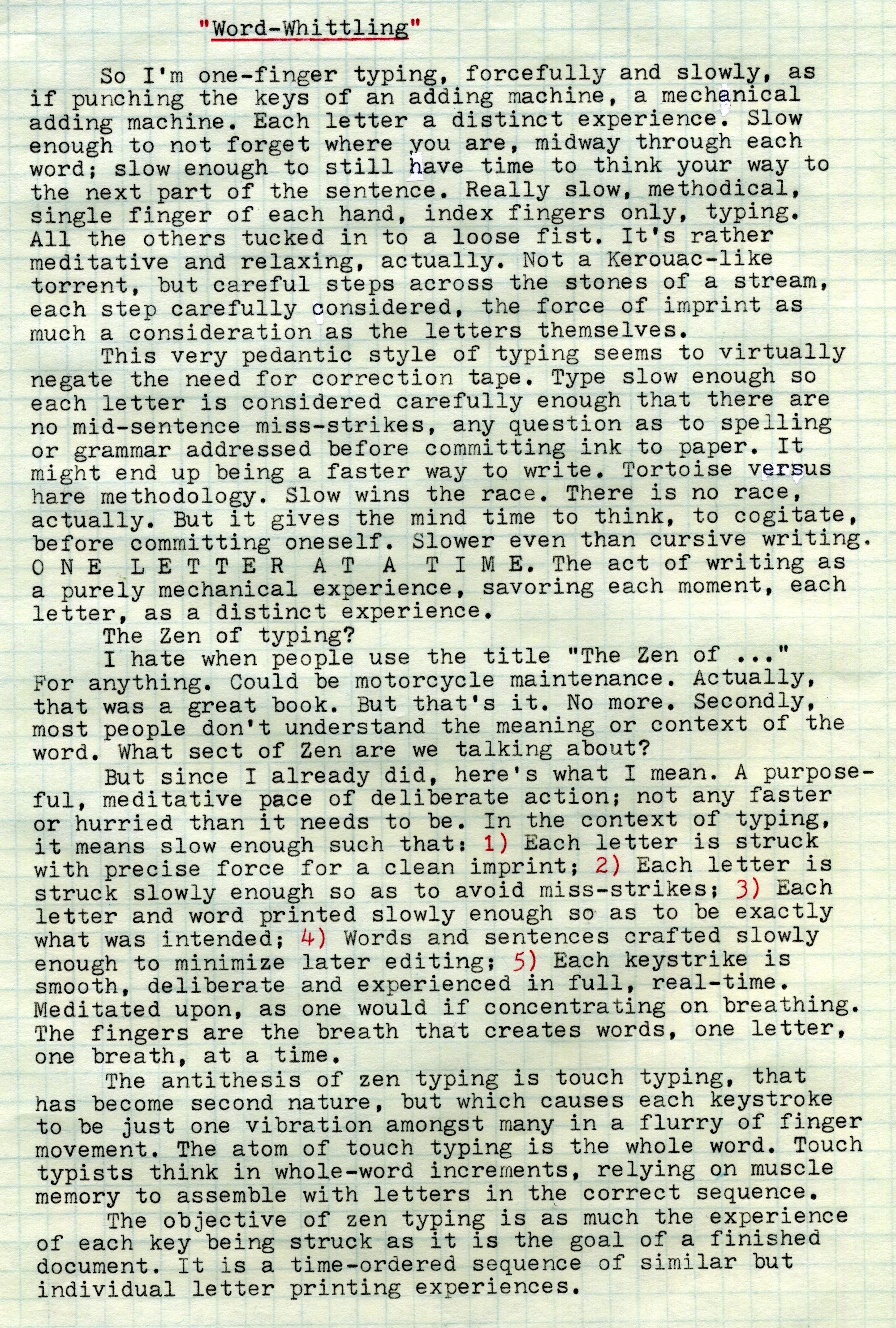
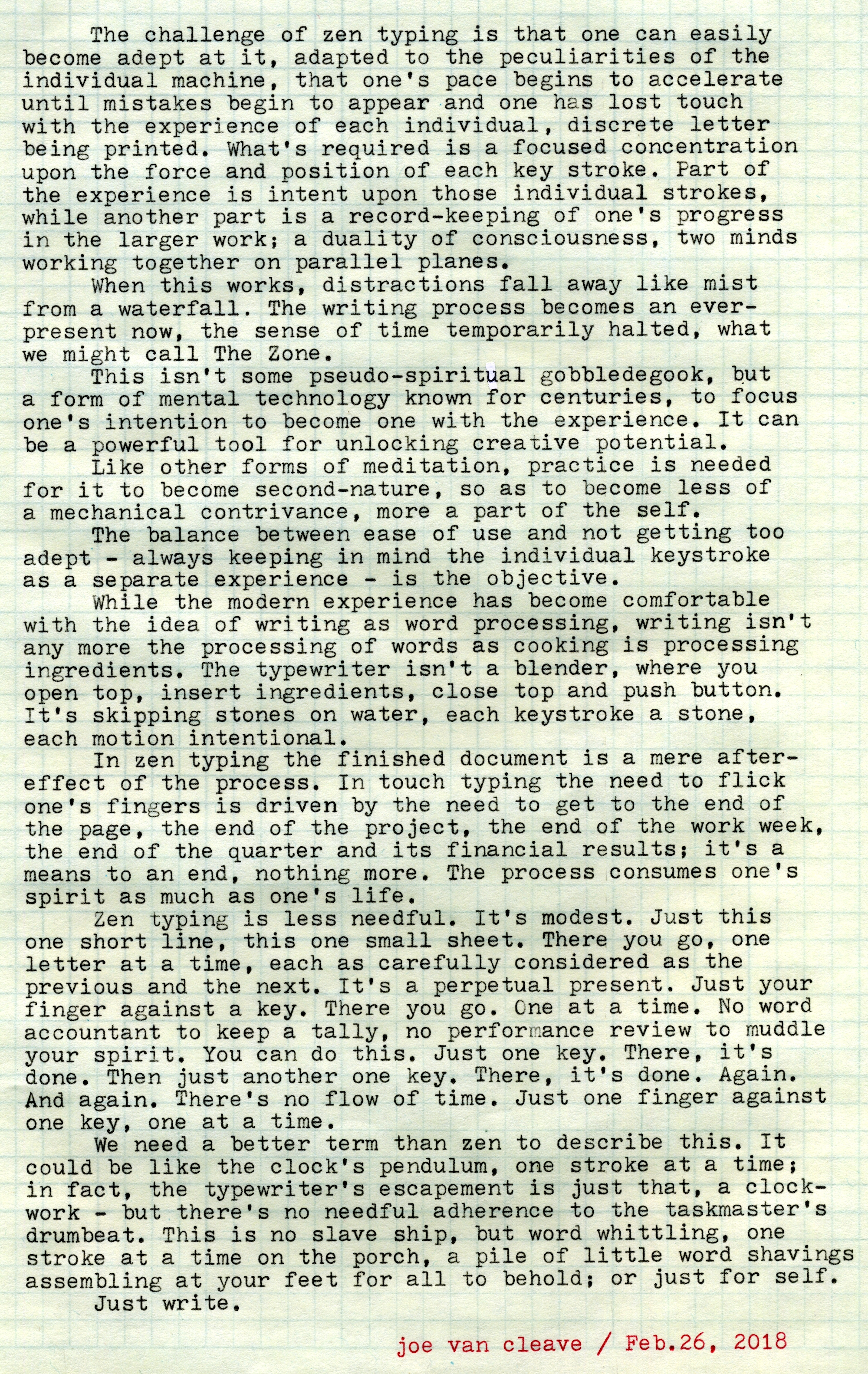
Word-Whittling

P1000801
Typecast015
Typecast016

Post-Script: Word-whittled on the front porch, on a cold but sunny day, with the little Brother Webster XL-747. An assemblage of individual keystroke experiences piling up at my feet, along with cigar ash.

This piece was transcribed (i.e. retyped) via SCM Galaxie Twelve. Transcribing isn't writing. It's mechanical. Errors will be made. Errors were made, evidenced by subtle but obvious white correction tape markings on the yellow-green paper. I obviously need more meditative word-whittling practice.

Top photo inspired by artist and writer Austin Kleon.

Labels: , ,

Sunday, January 22, 2017

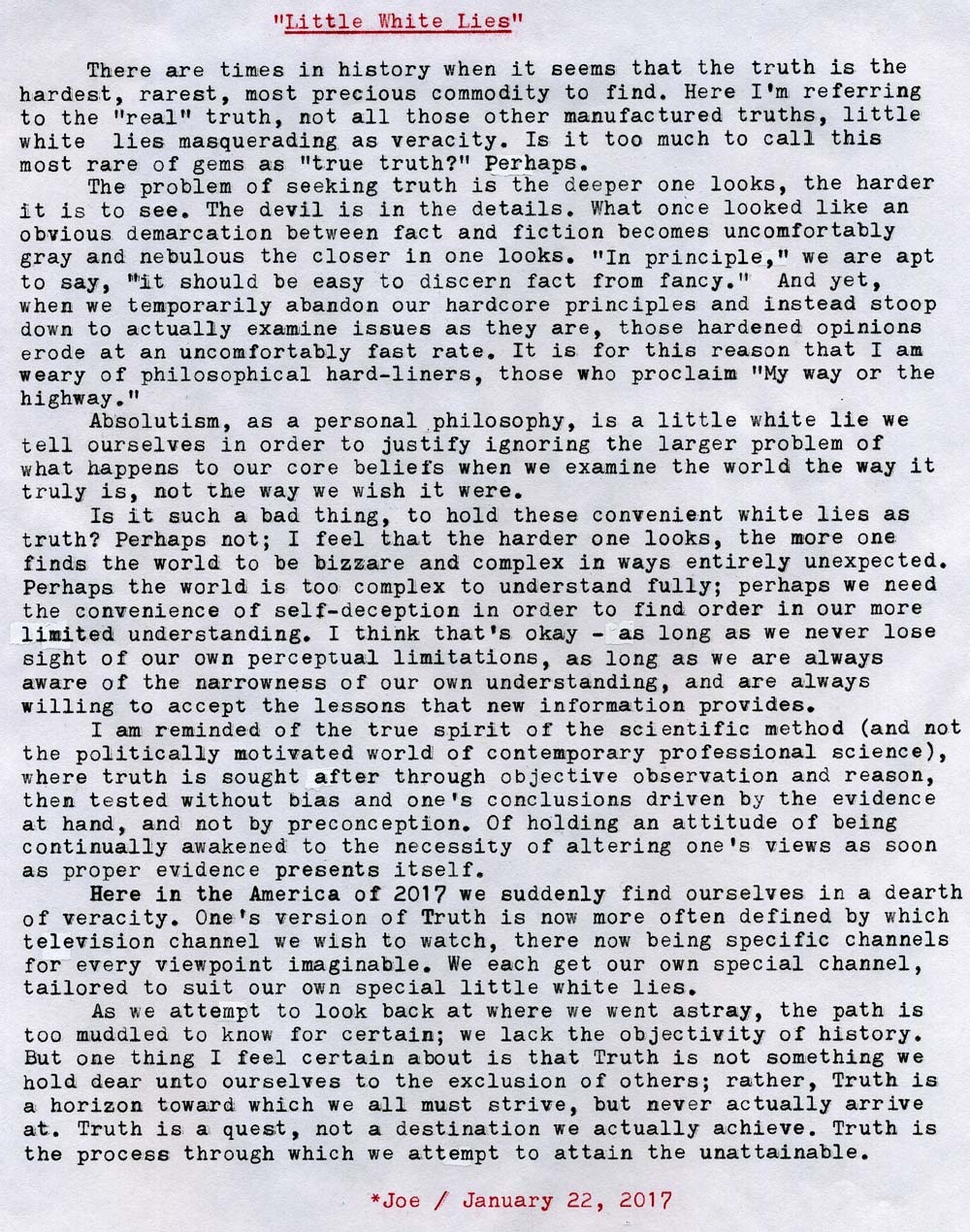
Little White Lies

P1120473a
Typecast272

Post-Script: Typecast via Webster XL-747.

Labels: ,

Wednesday, January 04, 2017

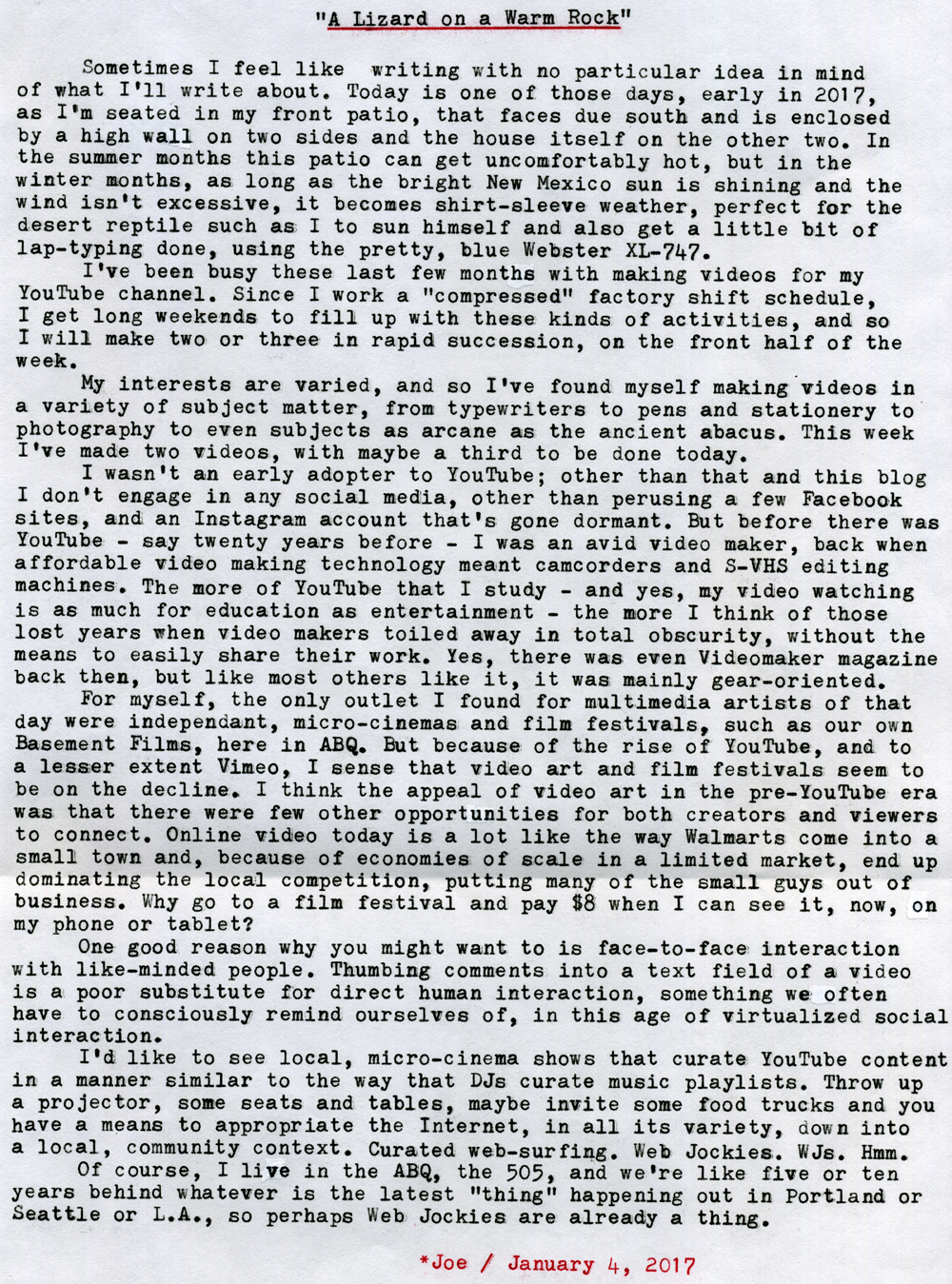
A Lizard on a Warm Rock

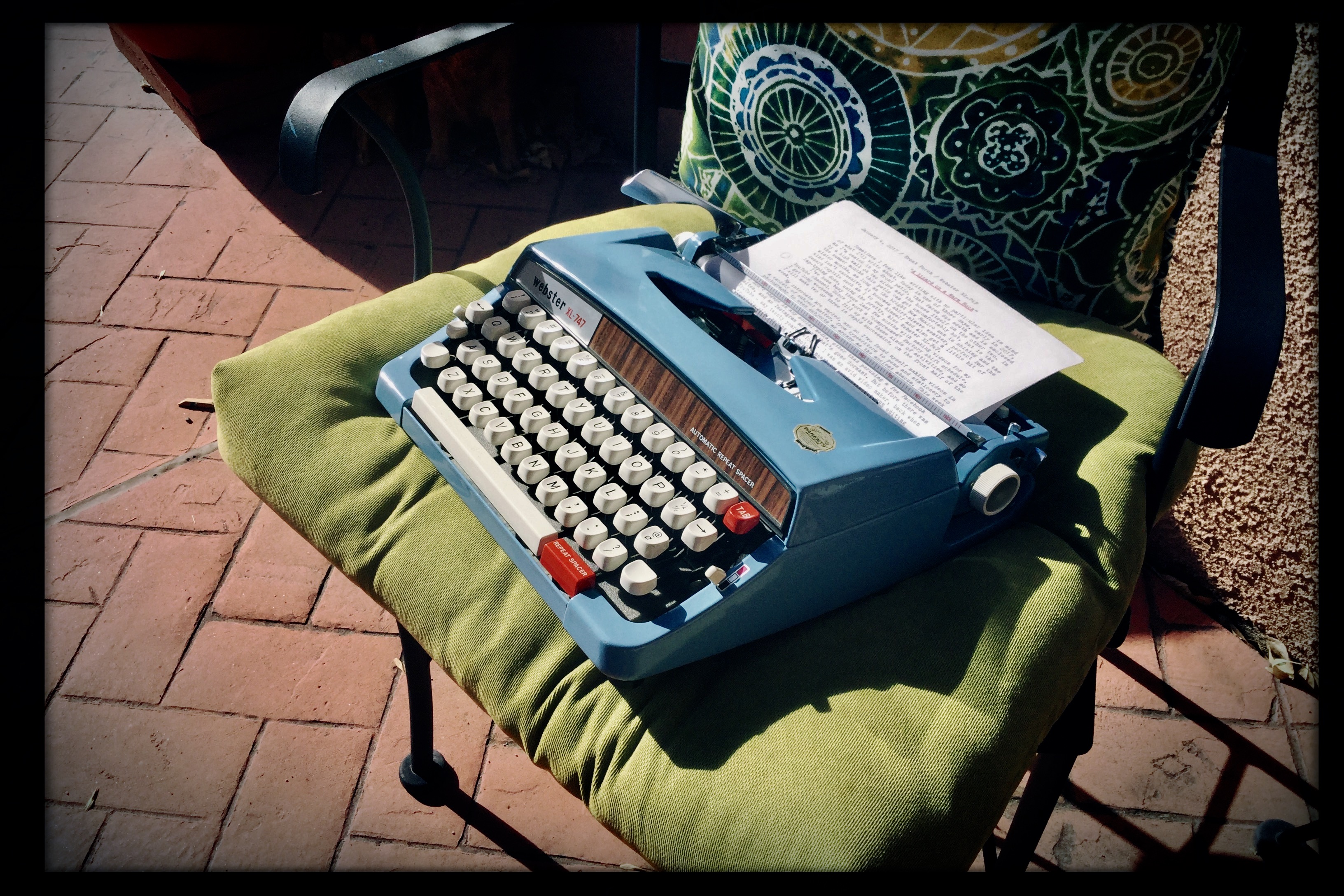
Winter Sunny Patio Typing
Typecast270

Post-Script: I love these kinds of blog articles, however crude or unpolished they might seem. The idea of being able to spontaneously sit down with a typewriter on your lap and bash out a thought or two with no ulterior motive or agenda is a compelling reason for blogging, like sitting down with a friend for no reason whatsoever except to spend time in idle chitchat. Separated by the miles via the interwebz, this is our version of spending time together. I enjoy reading others' blogs, and try to comment as much as I can.

I know many people find it difficult to continue blogging, with the busyness of life getting in the way. Part of this is a misconception, that we have to compose carefully polished prose, edited and revised multiple times before it can be seen by the public. Ideally that would be true, but sometimes time is a luxury, and yet to put blogging in some kind of priority in our lives means that people get to see us in all our private messiness; warts, typos, misspellings and all. As is fitting with friends.

Photo via Apple iPod Touch. Typecast via Brother-made Webster XL-747.

Labels: , , , , ,

Saturday, December 31, 2016

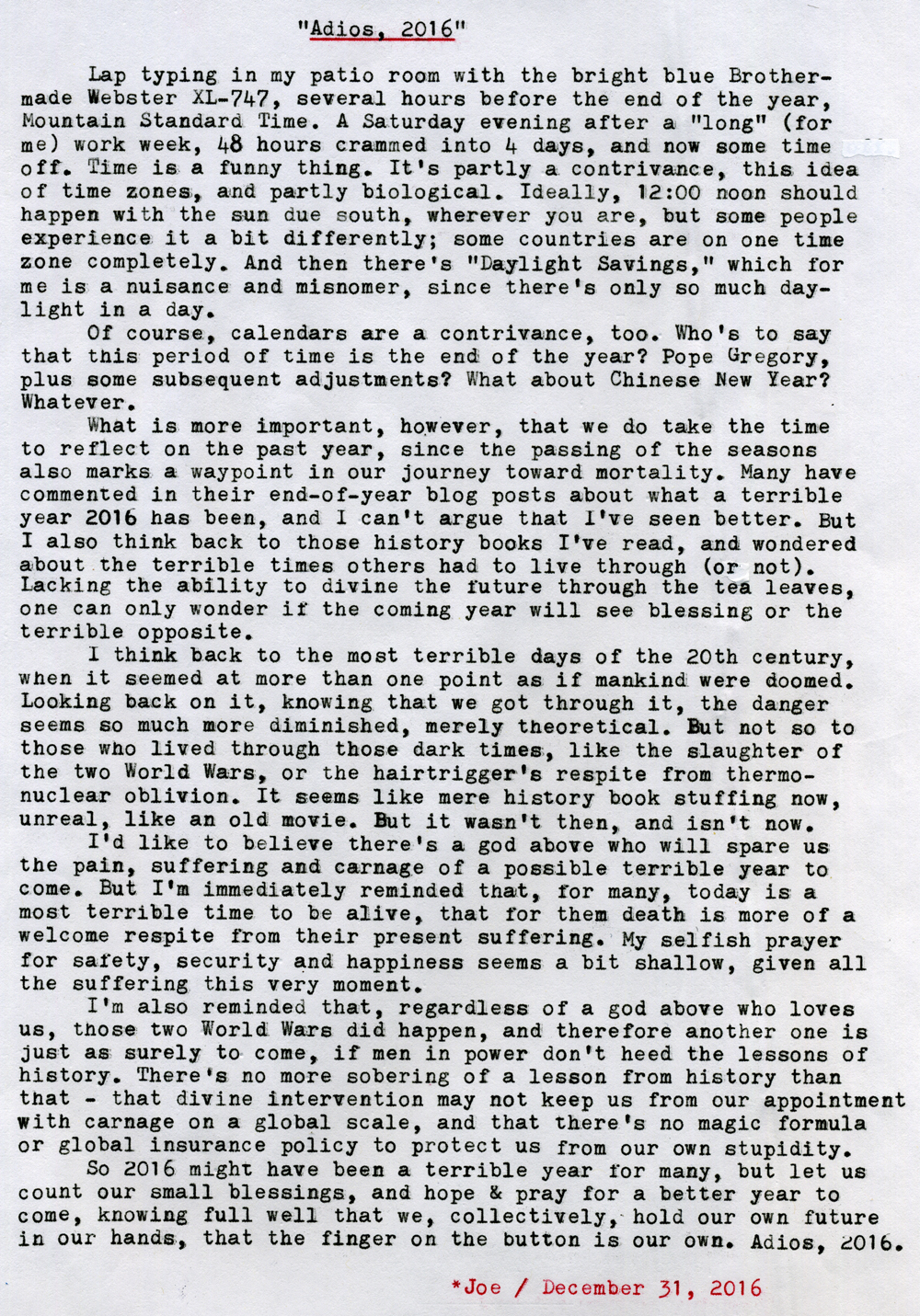
Adios, 2016

Bulletin of the Atomic Scientists - Logo


"You are young and life is long and there is time to kill today."


Time, Pink Floyd


Typecast269

Post-Script: Downer. Bummer. Sorry to p*ss in everyone's Cheerios. Reality.

I hadn't intended to write this sobering of a piece, especially for the New Year, when people are supposed to be celebrating Out With the Old, In With the New, and all that. But then I sat down at this pretty blue typewriter, expecting some flowery prose to emanate forth.

Imagine my surprise when, instead of pablum, this startling, apocalyptic-sounding screed finds itself printed to paper. Imagine my further surprise when I go ahead and scan & post it.

I'd like to blame the typewriter. I have this theory that's been percolating for a while on the back burner of my mind, which is that typewriters are cybernetic extensions of our mind, being directly, mechanically connected to our fingers, ligaments, tendons and nerves, providing feedback, back to our central cortex. Like Robot Cop. And thus, there's a bit of personality coloration that comes from this mechanical contrivance at the end of my fingertips. I would theorize that various machines might yield different affects upon our psyche and the resulting writings that emanate forth. I should be more careful, henceforth, when writing with this bright, cheery machine, whose bright colors might deceive one into the pretext of thinking the words spilling out the back of the platen are just as harmless as its appearance. A dangerous little vixen, that; the pen being mightier than the sword, supposedly.

Be safe, keep your peace and joy; love everyone. The future is ours to make.

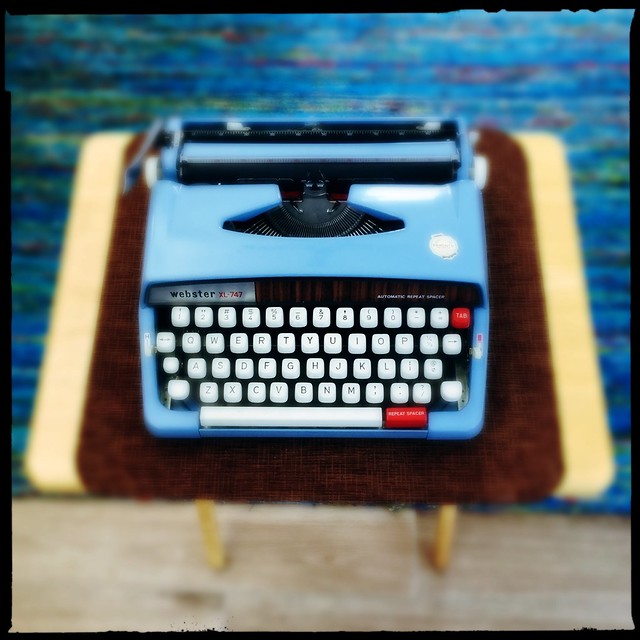
Webster XL-747

Labels:

Tuesday, December 27, 2016

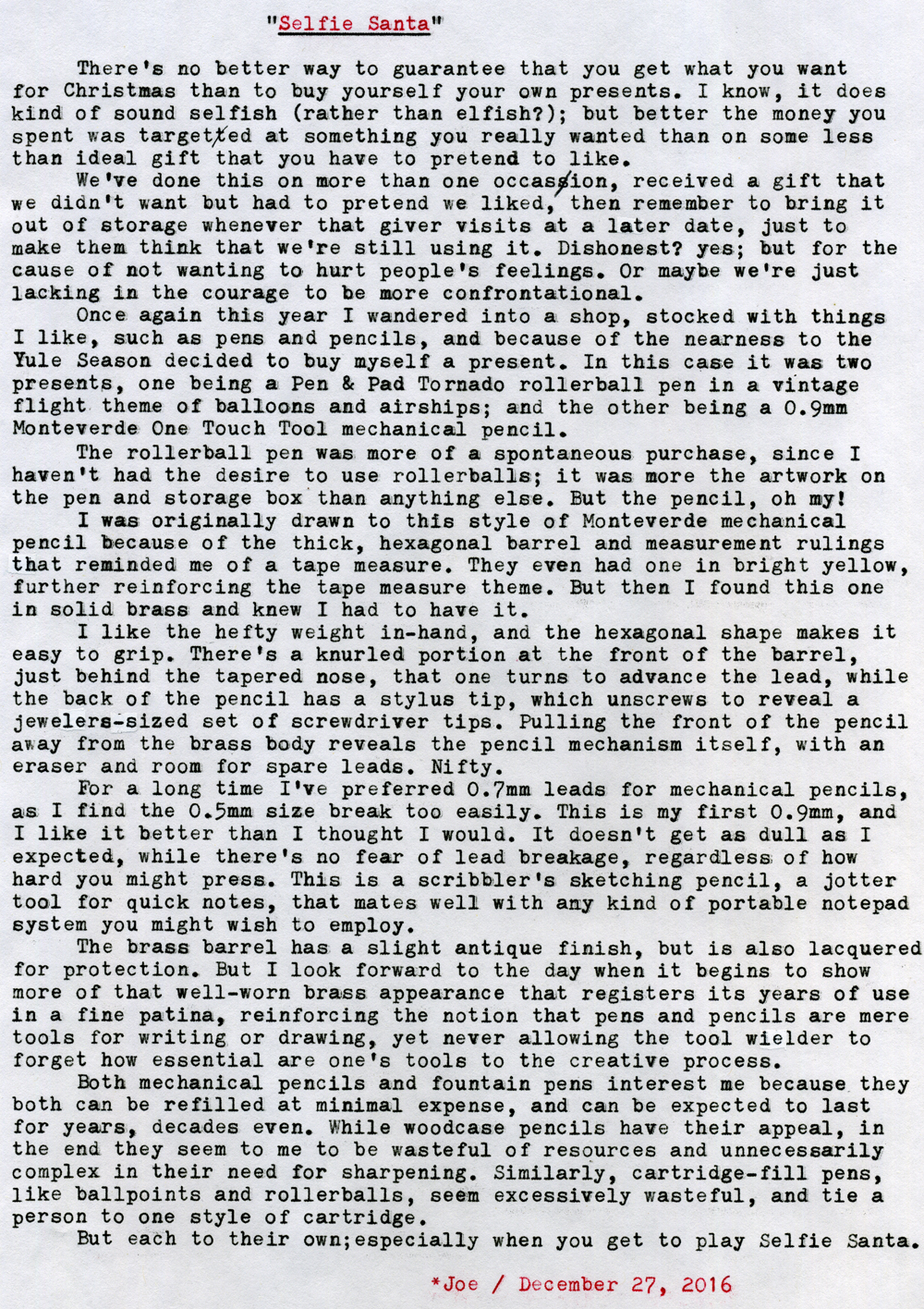
Selfie Santa

P1120512a
Typecast268

Post-Script: In comparing fountain pens (specifically bottle-filled) and mechanical pencils with cartridge pens (like ballpoints, rollerballs and gel), I'm also reminded of the business model embodied by instant film, inkjet printer and shaving cartridges, where the money is made in refills, and also ties the consumer into a dependency upon a manufacturer's supply chain. I like the idea of a bottle of ink, that can be appropriated from most any supplier, lasting a great long while and able to work in most any fountain pen with suitable converter. Similarly with mechanical pencil refills. I was just at my local office supply retailer yesterday to buy more leads for the Monteverde brass pencil, and ended up with a small package comprising only five refill containers, each with 15 leads apiece, that's equivalent to, say, 75 woodcase pencils. And they had much larger packs of refills. I felt almost guilty for even considering purchasing a larger quantity, not knowing if I'd even still be alive by the time they ran out.

I like this idea of a pencil or pen being a tool that can last decades, with readily available refills.

Typecast via Webster XL-747. In case you haven't seen it, episode 49 of the Typewriter Video Series starred this pretty blue portable. In the video, I made mention of the end-of-line bell, that on this machine sounded more like a clunk than a chime. This morning I took the bottom of the machine off to inspect the bell mechanism. I'd expected an off-center mounting screw on the bell itself, like on many American-made machines, where the screw can be loosened and the bell's position readjusted. Not so on this Japanese-designed machine, where the linkages operating the bell, and the bell itself, are permanently mounted to a common bracket with no adjustment screws available. It turned out that the problem was the bell clapper arm was resting against the bell itself while at rest, such that when it was made to strike the bell it wouldn't let the bell freely resonate. I ended up "reforming" (i.e. bending) a small bracket on the other end of that clapper arm, such that while at rest the clapper is just shy of touching the bell. Now it makes a bright yet dainty chime at end-of-line.

I enjoyed using this machine for today's typecast. Yes, it has a heavier feel to the keys than some other portables. But the length of the key stroke is short, and the action snappy, making for a pleasing experience. Best of all is its reliability, and easy access to the escapement mechanism underneath, if need be; which I haven't needed.

Labels: , , , , , , , ,

Wednesday, December 07, 2016

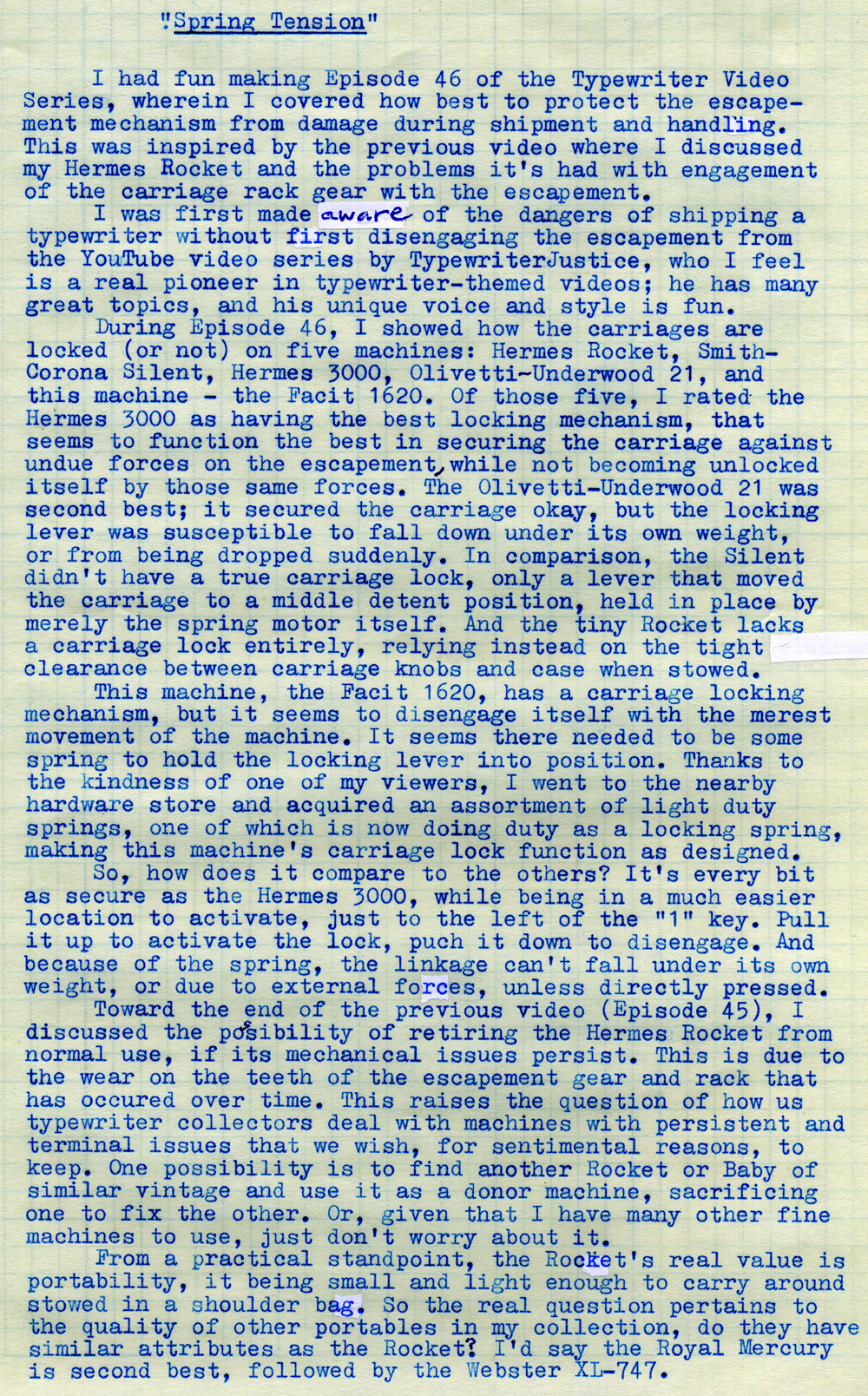
Spring Tension

DSCF5142a
Typecast267

Post-Script: Here are links to the videos mentioned above:

Episode 45, Hermes Rocket:


Episode 46, Escapements:


Here's a link to the TypewriterJustice channel on YouTube, a great typewriter resource.

Photo via Fujifilm X10. Typecast via Facit 1620.

Labels: , , , , , , , , , , ,

Tuesday, October 04, 2016

Pre-Typosphere Typewriter Collecting

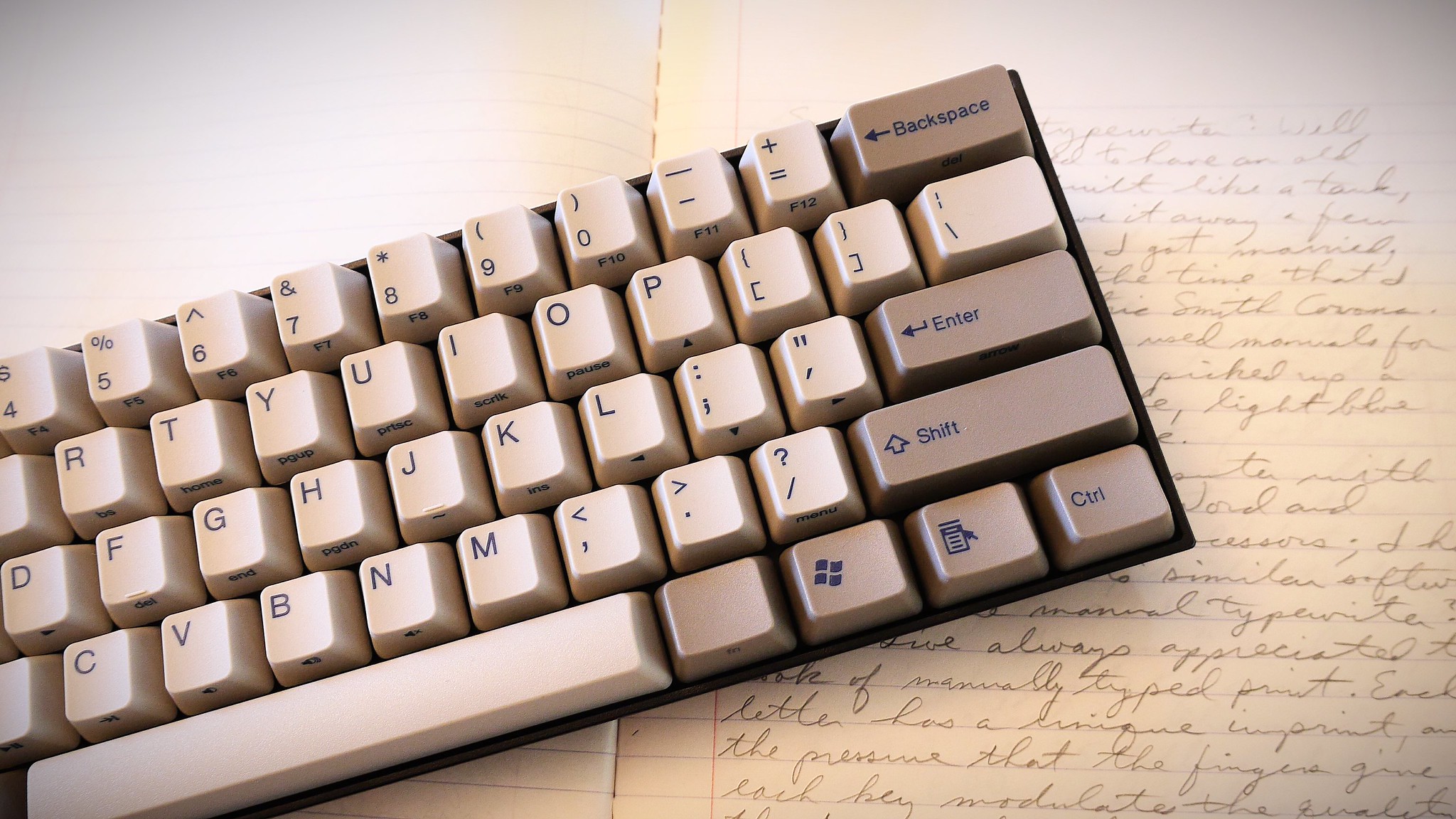
KB Paradise V60 Mechanical Keyboard and Journal Book

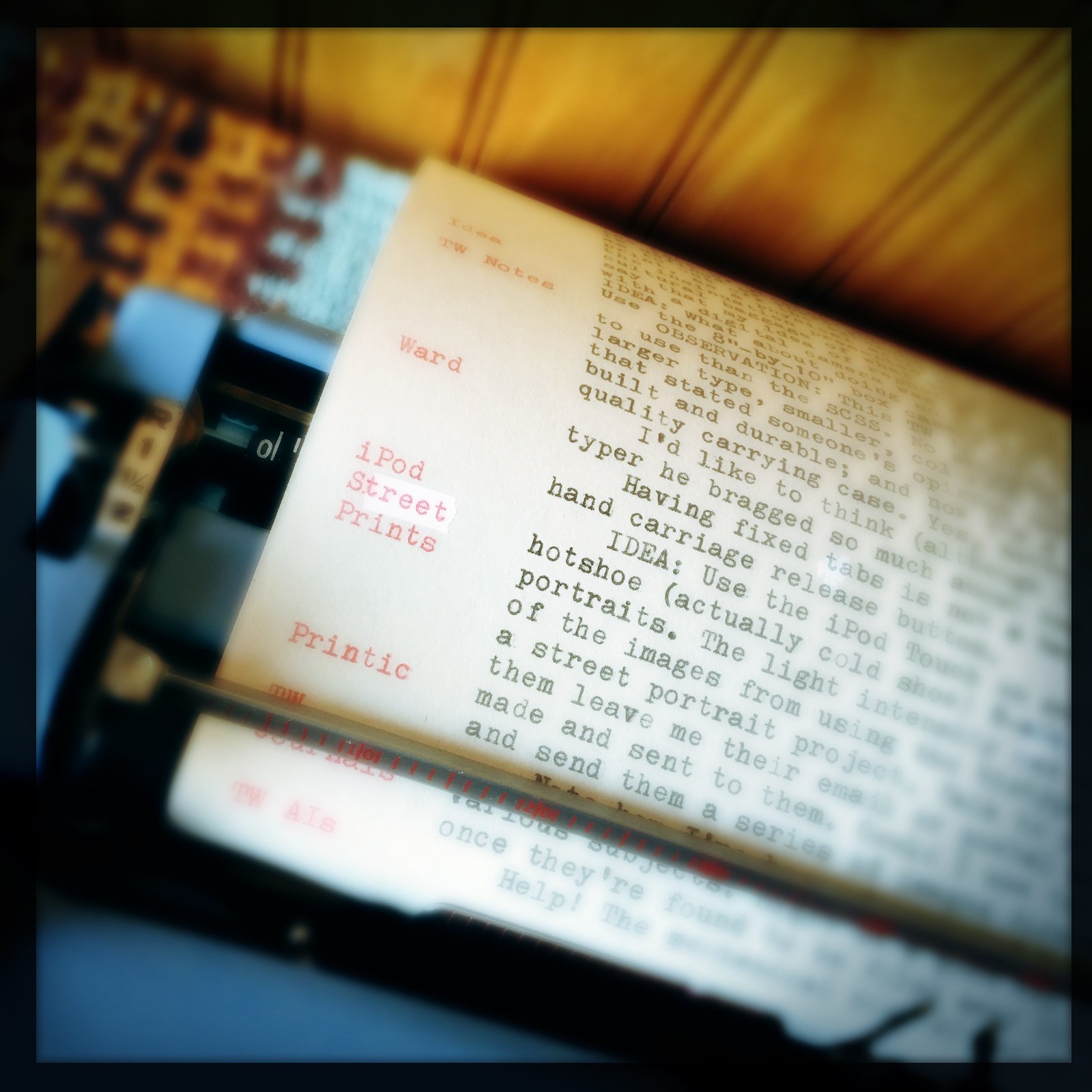
While researching material for my latest "Agent 51" video, I came across a journal entry I'd written on October 28, 1998, the first entry in a new composition journal book. This had been written in mechanical pencil, and what I found worth sharing with you was that it included the subject of typewriters, and alluded to a revival of interest in manual typewriters as far back as 1998, well before the current era of blogging and what we have come to know as the Typosphere.

So, without further ado, here is the transcription of that article.

10-28-98

This opening entry in this, the second volume of my journal series, begins with me having purchased a manual typewriter.

I don't believe that I've ever seriously entertained any ambition of becoming a writer. The closest thing I've come to is when I was on a poety writing kick while in the Navy and afterward. Upon thinking about it, I recall that, because of the volume of work I produced, I gained a self-identity as "poet," which I reinforced by surrounding myself with creative people - artist types, if you will.

But to be a "real" writer - a composer of "prose" - I have never identified with. And not to take anything away from these pages, but this journal is definitely not aimed toward public consumption, although some of my thoughts in the previous journal concerning video, film and photographic images constitutes a good framework around which writings for public consumption could be built upon, or perhaps worked into the upcoming seminar.


(Note: the seminar mentioned was an upcoming Basement Films presentation I made on low-budget analog video production techniques. - Joe)

So, why the typewriter? Well, for starters, I used to have an old Royal manual, built like a tank, but I think I gave it away a few years ago, before I got married, maybe around the time that I bought the electric Smith-Corona. My friend Worden has used manuals for years, and recently picked up a mint little portable, light blue with a carrying case.

(Note: Worden passed away a few years ago, but he self-published many small books of stories and poems on portable manual typers. That blue machine of his I only later realized was perhaps nearly identical to my Brother-made Webster XL-747, also blue and with a carrying case; further reason why I value it so much. - Joe)

So I have a computer with the latest Microsoft Word and Word Perfect word processors; I have access at work to similar software. So why the manual typewriter? Well, I've always appreciated the look of manually typed print. Each letter has a unique imprint, and the pressure that the fingers give to each key modulates the quality of the typed character in a direct, analogous fashion. You can tell when a computer typist is trying to touch-type on a manual, for the letters which are on the far left and right ends of the keyboard, struck by the weakest ring and little fingers, show up on paper as noticeably lighter in tone.

Last week I roamed around town, and visited several typewriter places. The one on Menaul
(John Lewis's shop - Joe) had an interesting museum, including old calculating, tabulating and other office equipment, as well as an abacus collection.

I engaged into an interesting discussion with the proprietor, and we covered an interesting gamut of things. He finally showed me an Adler manual typewriter, not quite as compact as the Hermes Rocket but, according to him, built to last a long, long time. It was built in "Western Germany," and supposedly has a high grade of corrosion-resistant steel in the mechanism. He knocked off 35 dollars, but I threw in for trade an old adding machine which he dated at before 1925. The end result is a nice, durable, well-built typewriter, which should last for a long, long time (I hope).

He asked me if I had planned to write a book, as many UNM-types come in and look for old Smith-Coronas that resemble the one that Hemingway used. Kind of like photographers who buy Leicas because they hope that they will immediately become more like Cartier-Bresson or Winogrand.

I never thought that a typewriter could actually influence one's writing style until I noticed that in order to type successfully on a manual you have to jab at the keys. The requirement of the fingers is not an increased strength, just a quick jab or punch at each key. It's the speed of the jab, not the pressure of the finger against the key. My thought is that perhaps the quick-jab style of typing could change the tone of the writer's voice from mellow word processor-smooth-clicky-clack into an aggressive, angry street-smart voice, matter-of-fact and no-nonsense, a kind of sparring session with the machine, the result imprinted upon paper, artifacts left behind from the interaction of human mechanics with antiquated technology. As the finished image is affected by the uniqueness of the lens in use, so is the typewriter able to focus the writer's thought in a peculiar way.


Did you catch those hints? Keep in mind that this was in 1998, before Facebook, Twitter or YouTube; when AOL was the dominant Internet provider and laptop computers were bulky devices. And it was certainly before the time that we commonly recognize as the revival of interest in the manual typewriter, before the Typosphere was formally identified. Yet there it is, John Lewis the typewriter repairman telling me that, even back then, university students were interested in those machines as writing tools.

Notice too that I've already gained some understanding of how a person should interact with a typewriter, that it's more about the speed of one's fingers than the pressure applied to the keys. I was certainly a neophyte at that time, but yet I had some understanding.

There is this mysterious reference in the piece to a comparison between the Adler and a Hermes Rocket. I didn't think, until I read this today, that I even knew of the existence of Hermes Rockets. Had I been suddenly educated that day by my visit to John Lewis, already had some subtle yearning for those little portable machines? Perhaps; only a few years later I'd return to his shop and trade in the Adler for a Royal Mercury portable, which I have to this day.

I am also amused by the idea that in 1998 someone like me was roaming around town on the lookout for typewriters; the more things change, the more they stay the same, even then the typewriter bug had already bitten hard, apparently.

For me, this journal entry is a bit of personal history unearthed; but for you out there in the Typosphere this might serve as some source material for the prehistory of the typewriter revival that was yet to come. I'd like to hear from others of you, if you have any personal anecdote or story pertaining to your pre-Typospherian interaction with typewriters.

Post-Script: Transcribed via KB Paradise V60 mechanical keyboard into iPad 2 with iAWriter. Wow, was this fun to type. Very AlphaSmart-like. But with a much bigger screen - a touch screen. No, it's not a "real" typewriter (and I apologize to those of you who might have been put off by the last two blog articles that have been overly enthusiastic about mechanical computer keyboards and tablet devices), but a very pleasant, focused writing experience.

Labels: , , , , ,

Tuesday, September 20, 2016

Compact, Colorful Computer Keyboard Craziness

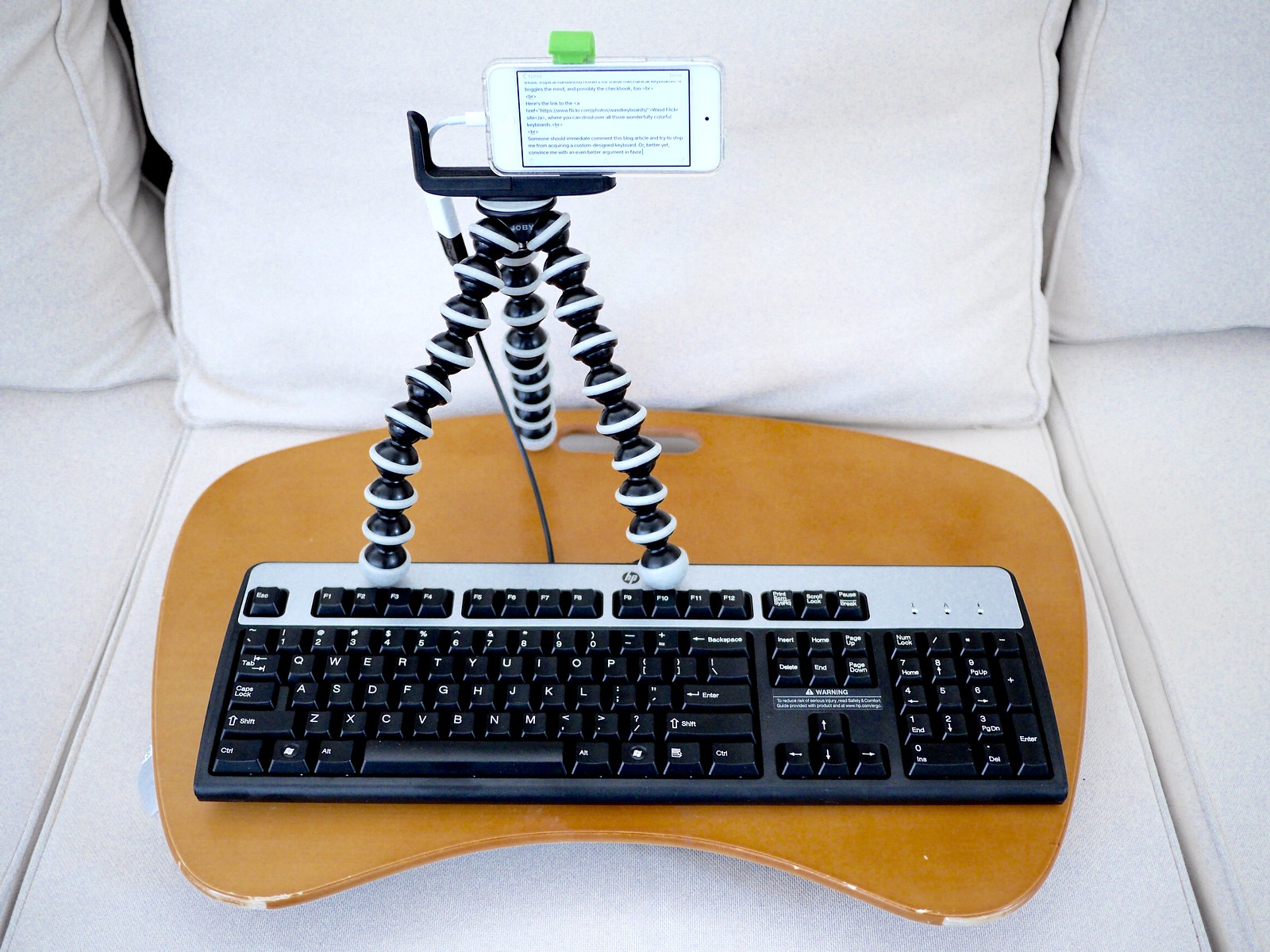
PC Keyboard and iPod Touch: The Replacement Alphasmart?

I'm doing this crazy techno-mashup that's not supposed to work, and that's likely to infuriate both the digerati and the Typosphere, which is to plug a standard USB-wired PC keyboard - one of those wide decks that's about the size of a miniature skateboard, minus the wheels and trucks, that has the function keys and ten-key-pad off to the right, so far off to the right that if you were using a mouse with your right hand your right elbow would be in the next county, and you'd certainly be showing signs of carpel tunnel - into my little iPod Touch, via its standard USB adapter.

No, it's not one of those sleek, Apple-looking wireless keyboards with those rubbery chicklet keys, that advertises you're somewhere in the 21st century; no sir, this is one of those clacky desktop keyboards that shouts "1980." Actually, it's not that cool; just a standard HP keyboard from the last decade. But where to mount the tiny iPod Touch so as to make this a practical writing rig?

My wife, smart as she is, immediately knew the solution, which was to employ the lap desk. So now I'm seated in the backyard, under our big tree, on a cloudy, late Summer's day, with this big keyboard and the tiny Joby Gorilla Pod holding the dinky iPod Touch. At least the black-and-white theme of the HP keyboard matches the tripod's. Not that fashion statements matter at this late date.

This little iPod has a very small battery, smaller than an iPhone's, so battery life is an issue. When I'm not actually needing to be connected to WiFi I set it to airplane mode; and now with this wired keyboard I also don't need to be wasting more battery juice with blue tooth turned on.

How I found out about using a standard USB keyboard on an iOS device is because I was on one of those Internet fixations the other day, researching so-called "60%" mechanical keyboards, and came across a keyboard discussion forum (you knew there'd be such a thing, right?) where this was mentioned.

I have this hate/hate relationship with full-sized keyboards, the ones with 110 or so keys and all those extra keys off to the right; that, if you're a touch-typist like me, with your fingers on the home row, your hands are centered about 1/3 of the way over from the left side of the keyboard. Which is an issue with certain workstation setups, like just about every one in the factory where I work, that equip each station with just enough room for one of these wide behemoths, and position the monitor over the middle of the thing, so that us touch-typists can't have the alphanumeric keys and monitor centered in front of them; and also us right-handed mouse users are relegated to a very non-ergonomic position. I've taken to mousing left-handed while at work, just to take the strain off my right shoulder and wrist.

I don't use those ten-key-pads off to the right; I never worked in a grocery store as a clerk, back in the days before barcode scanners, when the clerks would pick up the can of beans out of your cart with one hand, read the price on the little sticky paper label and, without looking, key in the price on the cash register with the other hand. I remember in high school the math department had classes that taught students how to be fluent in touch entry on adding machines and cash registers and such. It would be only a decade or two after that and such skills would be entirely obsolete.

The desk in my office is one of those big cherrywood colored, Scandinavian-styled corner units. You'd think I'd have plenty of room, but with all the clutter I like to accumulate, such as scanner, printer and a plethora of books and papers, a full-sized keyboard is kind of a nuisance. There's also a typewriter on the desk, but that doesn't count as clutter, of course. What I really want is a smaller keyboard.

A practical person would go down to the nearest big-box retailer and pick up for cheap a medium-sized keyboard, one without the ten-key-pad off to the right, but one that still has the top row of function keys and the navigation keys on the right. But I'm not a practical person; especially after I discovered so-called "60%" keyboards, ones that only have the alphanumeric keys and the few additional ones immediately adjacent, no function or navigation keys; instead, they use a program key that accesses three other key mapping layers.

These tiny keyboards seem to be popular with geeks who like to attend gaming conferences and don't want to travel with their full-sized keyboards, that are as big as their skateboards. Also, there's this popular fascination with mechanical keyboards, that I suspect any typewriter fanatic could appreciate, much like the way a film photographer can appreciate Fuji digital cameras that appear somewhat film-camera-like.

While IBM model-M keyboards enjoy a legacy of being the standard in mechanical keyboards, the big name in mechanical keyboard switches these days has been Cherry, and they have a full line of such switches, each with a different kind of feel (detent or linear, with a variety of force settings), that are identified by color. Cherry Blue switches are the most clicky feeling, and the loudest, with the Cherry Browns being more subtle, followed by the Cherry Clear switches. Since keyboard touch, as any typewriter fanatic can tell you, is such a personal thing, buying into such an exotic keyboard should not be done without first a bit of research. Luckily, there are sample switches you can buy. I just ordered, from Wasd Keyboards, a 6-key Cherry sampler, that I hope will give me more information before I embark down the road of acquiring a custom mechanical keyboard to my liking.

There is also, as with any technological field of interest, more exotic keyboards and switches. Some of these Japanese magnetic reed switch keyboards have attracted interest, like the way that denizens of local coffee shops like to denigrate Starbucks as being "so corporate." The more exotic the better, like small lines of exotic Japanese denim jeans, ones that are so pricey that you can't afford to wash them. There's also an interest in legacy keyboards by many young folks, with pre-PC mainframe keyboards and early Apple models in high demand.

Stylistically, I'm somewhat attracted to the control consoles of nuclear command centers and other military computer systems, like what you'd see in the film "War Games," or what we saw, earlier this year, when we visited the Titan II Missile Museum, south of Tucson, Arizona. "Don't press the red key, that launches the missile." It would be so cool to have a keyboard with a red key that said "Launch," or maybe "Apocalypse Now."

I'll probably buy my keyboard from Wasd, because they offer this spectacularly personalizable 61-key keyboard where you can choose the color of each key - yes, think about that for a second: each key can be customized with whatever color you choose, even artwork - along with your choice of labels. They have a Flickr account where you can view, in jaw-dropping color schemes, all the hundreds of custom keyboards they've fashioned for customers.

Some of these color schemes directly remind me of the pre-Personal Computer era, when mainframes were controlled by these colorful banks of switches. Certainly, some of the designs are a bit too much, like alternating the color of every other key, just to be different; but other color schemes seem simultaneously practical and beautiful.
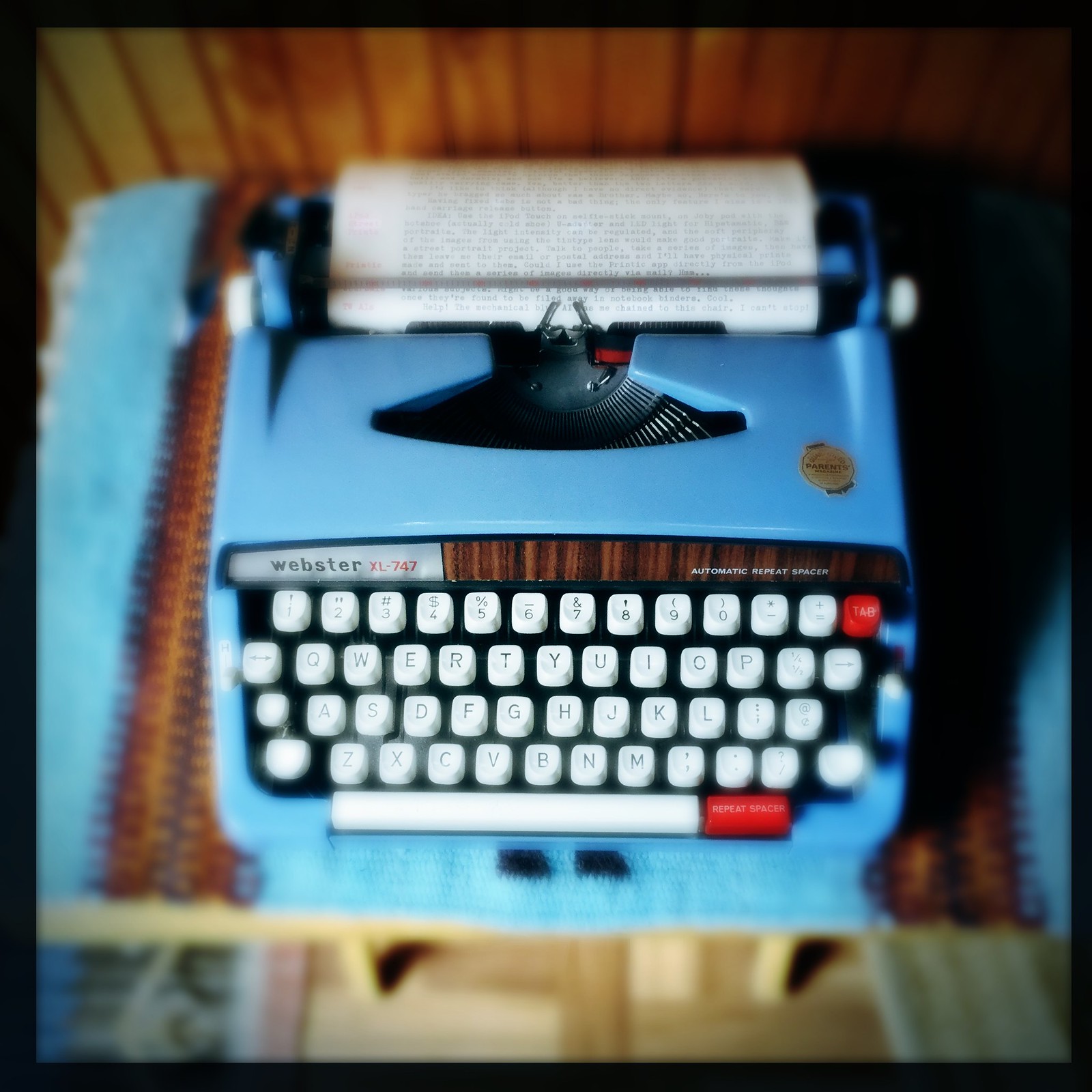
The Blue Mechanical AI

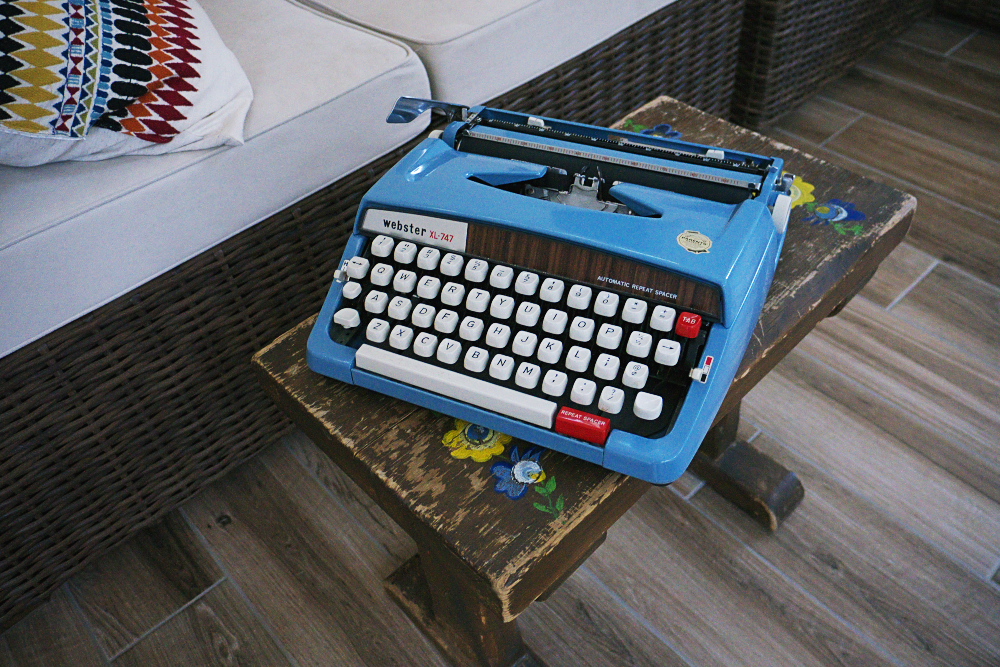
I was seated at this same spot in the backyard yesterday, typing on my robins egg-blue Webster XL-747 typewriter, with white keys, bold black labels and the red tab and repeat spacer keys, when it struck me that this would make a dandy color scheme for a custom keyboard. I'm thinking the letter keys would be white with large, black labels centered on the keys; the number row would be robins egg blue and the surrounding keys (control, shift, caps, tab, escape, enter, backspace) would be bright red. Not red, white and blue for patriotic reasons, but in honor of this wonderfully pretty typewriter from the 1970s.

I must not be alone in my appreciation of the color schemes of manual typewriter keys, because I also saw a photo of an all-green 60% keyboard, inspired by the Hermes 2000/3000 line of typewriters.

This fascinates me, that manual typewriters could serve as design inspiration for modern-day, tech-savvy computer geeks and gamers; people who are decidedly not part of the Typosphere and typewriter blogging community. Sometimes you have to step outside of your own cultural community to see the wider picture of how much typewriters have inspired and informed the culture at large.

Which reminds me, on a side note, that I walked into a Goodwill store about ten minutes after someone found an Olympus SM-3, in burgundy trim, for $5. She was kind enough to let me take a peek inside that wonderfully round carrying case, but I couldn't talk her out of her intended purchase. Which is fine, since I have 11 typewriters, and this will be her first. Spread the wealth. But still, such a nice machine for five bucks. It boggles the mind, thinking about all those potential great bargains I've missed by not being on constant patrol of the thrift stores. Best not to think of it, since I've been reminded repeatedly, by She-Who-Must-Be-Obeyed, that I have enough typewriters for now. Uh huh.

This combination of clacky keyboard and iPod Touch reminds me so much of the Alphasmart line of word processing keyboards. I've visited their Flickr site many times, and read many of the discussion threads, but can't recall mention of this easy way to simulate an Alphasmart system with an iOS device and standard USB keyboard.

I'm thinking that another way to incorporate a miniature 61-key keyboard, in a personalized color scheme, with an iOS device would be to build some little bracket device that attaches the iPod Touch right behind the keyboard, elevated at a convenient viewing angle.

Oh, did I mention that there are also wooden (yes, wooden - think exotic tropical hardwood) holders for these mechanical keyboards? It boggles the mind, and possibly the checkbook, too.

Here's the link to the Wasd Flickr site, where you can drool over all those wonderfully colorful keyboards.

Someone should immediate comment this blog article and try to stop me from acquiring a custom-designed keyboard. Or, better yet, convince me with an even better argument in favor.

Labels: , , , , , ,

Wednesday, September 14, 2016

The Blue Mechanical AI

The Blue Mechanical AI

Help! I am being held captive by a blue mechanical AI. No, it's not some advanced artificial intelligence of the kind being developed by leading tech industry titans, but was something evidently created decades earlier, and made of all mechanical parts, like some steampunk automaton.

I know what you're thinking, that there's not enough complexity in a typewriter to account for its abilities I've observed this afternoon, while engaged in an extended typing session with the roll of teletype paper threaded up, to keep me chained to my chair, banging the keys and slinging the carriage back, a roll of intelligent prose (or nearly so) falling back behind onto the floor. But I have no better explanation to offer.

This Brother-made Webster XL-747 has even offered me a meaning to its name: Writing Enjoyment By Simply Typing Endless Randomness. At least, that's what came out on the paper roll. Who am I to argue?


Margin Notation

Now, there's something else it revealed to me: a way to organize these diverse scrolls of random writing by using the margin release button and red ribbon to make marginal notes along the lefthand edge, so that once filed away I can still easily locate individual topics.

I've been using Smitty, the Smith-Corona Silent Super, for a few weeks and, while it has a softer touch than this Brother, I've found I can type at least as fast, maybe faster. Yes, the touch of the keys is heavier, and it's carriage shift, but with my weird typing technique and my right elbow supported on the armchair I can accurately hit the keys harder, with great accuracy.

This little blue AI also is smaller, lighter, has the repeat spacer and a nice carrying case. This is one of those things about typewriter collecting that I hoped to achieve, to narrow down the collection to just those machines I really enjoy using. While at the Phoenix Type-In last month I sold both Olivetti Lettera 22s, which were both similar enough to this Brother in size and color but weren't as pleasing to use. I think I made a good choice, as this machine has essentially no mechanical issues whatsoever. It's a joy to type with despite its heavier touch because I don't have to pause for corrections like with other, more trouble-prone typers.

Now that this blue AI has used me for its own purposes of announcing itself to the world, I'm hoping it will have the kindness to permit me a good nights sleep before I return to work early tomorrow morning. But they're sneaky, these AIs are, so I must be on my toes.

Labels: , , , , , ,

Tuesday, May 31, 2016

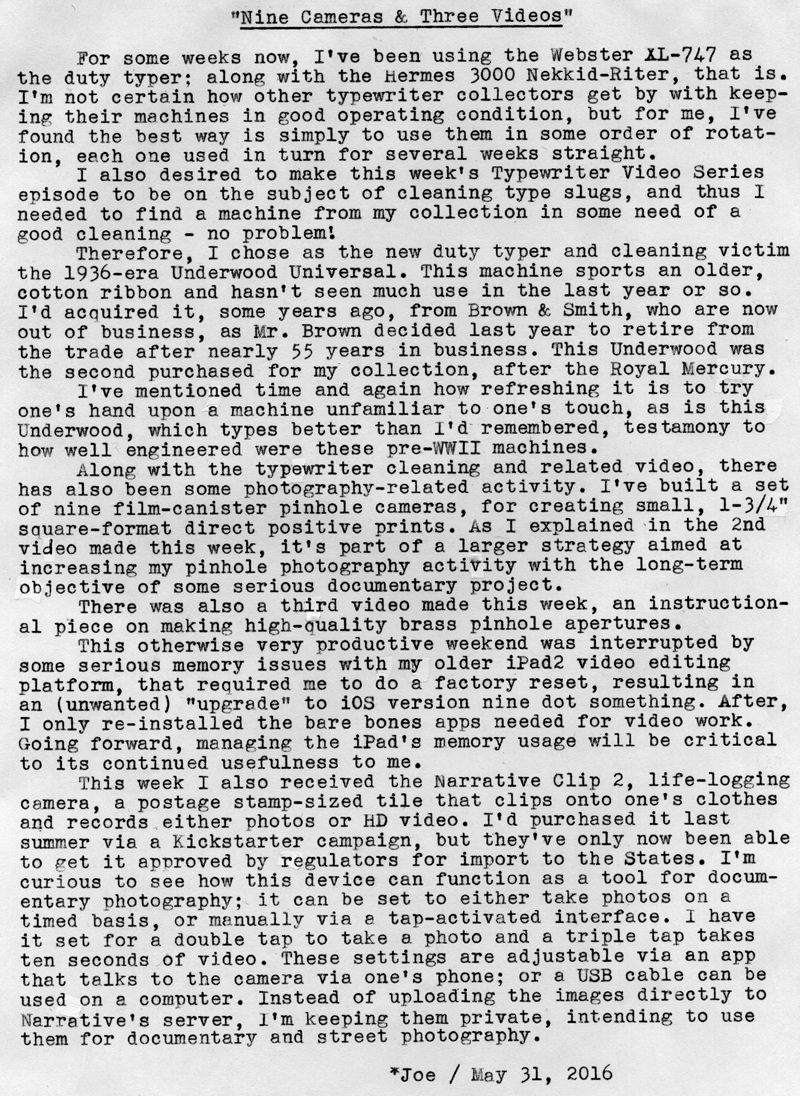
Nine Cameras & Three Videos


TWVS Episode 16: Cleaning Type Slugs


Making Pinhole Camera Apertures


Film Canister Pinhole Camera Project
Typecast173

Post-Script: I suppose, counting the Clip 2, it would be ten cameras.

I did an initial round of test-exposures for the nine little pinhole cameras, and everything worked as expected. My hand-fashioned pinholes are close enough in size to each other that I don't need a different focal ratio (and hence exposure time) for each camera; which was my objective.

The Narrative Clip 2 is really designed for life-logging by people who are always connected via smart phone; whereas my objective is more purposeful. I also don't want all those many photos uploading to someone else's server, I'd rather sort through them myself, delete the junk files (because a life-logging camera will produce a ton of junk images, at a rate of one per every 30 or 60 seconds, for example), and keep (and control the usage of) the rest. But the app enables one to also control the settings of the camera, including how often pictures are automatically recorded, and the length of video clips, etc. Though I haven't tried it with the new iOS version 9-dot-something on my iPad 2, I couldn't download the Narrative app with the older version 7-dot-something; nor was the Android app version compatible with my Dell tablet; hence why I'm for now using the PC version and downloading the images via USB straight to my hard drives.

And just in case you were wondering, I don't carry a "smart" phone, instead opting for a "dumb" (i.e. "flip") phone, whose service plan only costs me $15 per month. Not because I'm a Luddite but because, one, I'm cheap; and two, I have a "smart" phone for work, and detest the thing's constant desire to be fondled and caressed, like some poor, neglected child with psychological issues. Also, I enjoy ending calls by slamming the flip-phone shut, with that satisfying, tactile ker-thwack; much better than poking at a smudgy glass screen.

Typecast via Underwood Universal.

Labels: , , , , , , , , ,

Tuesday, May 10, 2016

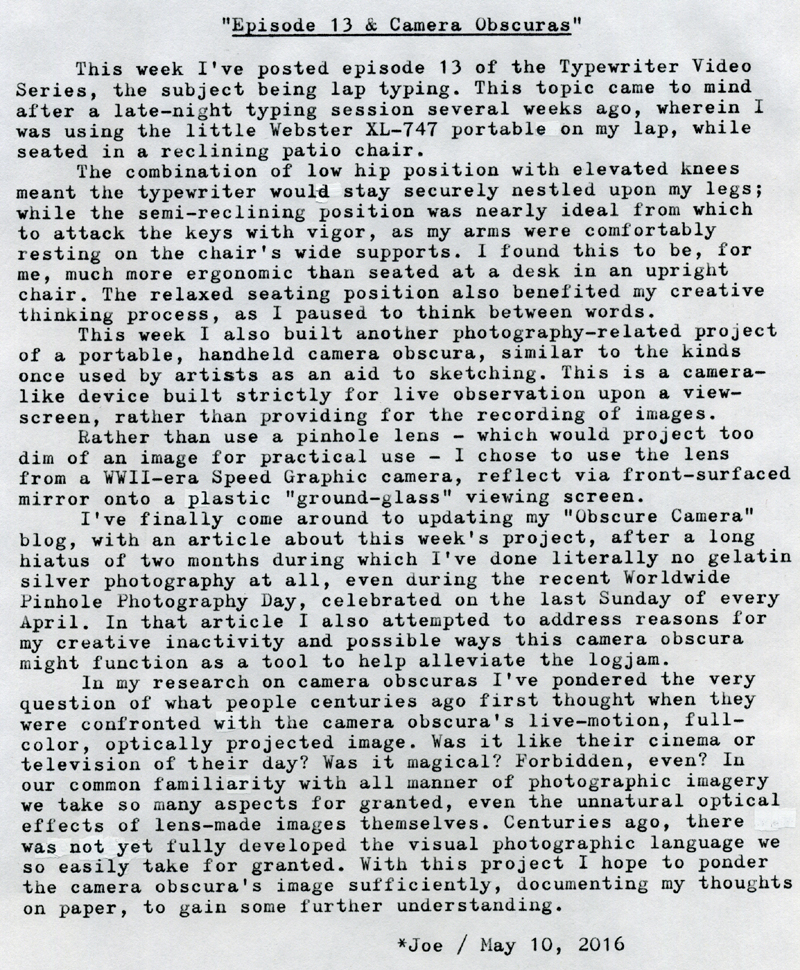
Episode 13 & Camera Obscuras


Typecast170

Post-Script: My Obscure Camera blog article is here.

Here's the website for Worldwide Pinhole Photography Day. Be sure to check out all the gallery images from pinhole photographers around the world.

Typecast via Hermes 3000 "Nekkid-Riter."

Labels: , , , , , , ,

Tuesday, May 03, 2016

TWVS Update - Episodes 11 & 12


Typewriter Video Series, Episode 11

Typewriter Video Series, Episode 12
Typecast169

Post-Script: This blog post was typed out in one pass, without any first-drafting, as I do some of my articles. This little Brother-made Webster XL-747 typewriter makes for a great "lap typer," a category of typewriter that perhaps deserves its own future episode of the video series. It does require noticeably more finger force to get a dark imprint, as compared to those Swiss-made Hermes machines that I bragged about in the last article; but then I noticed that sitting in my low-slung patio chair, in a slightly reclined position with this small machine on my lap, offered me a better wrist position with which to attach the keys, making it suddenly easier to get the force required for a dark imprint. So perhaps the "low-rider" is a sub-category of lap typers.

My Panasonic Lumix G5, which I use on all these videos, is starting to have some issues with its flip-out LCD screen. This is a great feature to have on a camera intended to be used for self-made videos, since the flip-out screen enables you to see yourself while in front of the lens. But the screen hinge has been getting loose, and now there's some flaky issue happening with the picture in the LCD itself. Perhaps I see a replacement Lumix micro-4/3 camera in my future? My personal finance manager doesn't seem to be as thrilled about that idea as myself, however.

Labels: , , , ,

Wednesday, April 27, 2016

TWVS Episode 10 & Taking a Spill


This week's episode of the Typewriter Video Series covers the subject of fitting typewriters into a larger writing lifestyle, and especially with handwritten notes and rough drafts.

Meanwhile, the following blog article was inspired by a little incident last night involving my Webster XL-747 portable typewriter.

P1100763a
Typecast166

Post-Script: Certainly those Hermes and Olympias are more refined writing tools than the diminutive ultra-portables like the Webster. What matters most importantly to me are typing action and quality of imprint. While the Webster has a nice, dark imprint, its typing action was much stiffer than the bigger machines, yet I kept wanting to make it a favorite among my collection because of its small size, bright color and that it has the repeat spacer feature. Now, after last night's episode, I really do have a newfound respect for it. While those European models mentioned previously might be more refined, they would not have survived a drop to the floor without suffering extensive damage, I'm almost certain, if for no other reason than their heavier weight and, in the case of the newer body style of Hermes 3000, the extensive use of plastics in the body panels.

My enthused typing that followed was a watershed moment for me in my relationship with typewriters as writing tools. Never before had I experienced an excited, emotional period that also had with it an exuberant physical response. It was that more energetic typing action on my part that fueled my mind to break free from convention and write more spontaneously, almost conversationally. Since the letter was private, and has already been posted, I can't share it with you; but perhaps at some point in the future I'll get in the same frame of mind and post a typecast in the same vein.

While recording practice scenes in my Man Cave shed for this latest video, I happened upon the idea of writing sheds and their relationship with typewriters. This I think will be excellent subject matter for a future video in the series.

Typecast via Webster XL-747.

Labels: , , , , , , , ,

Monday, March 07, 2016

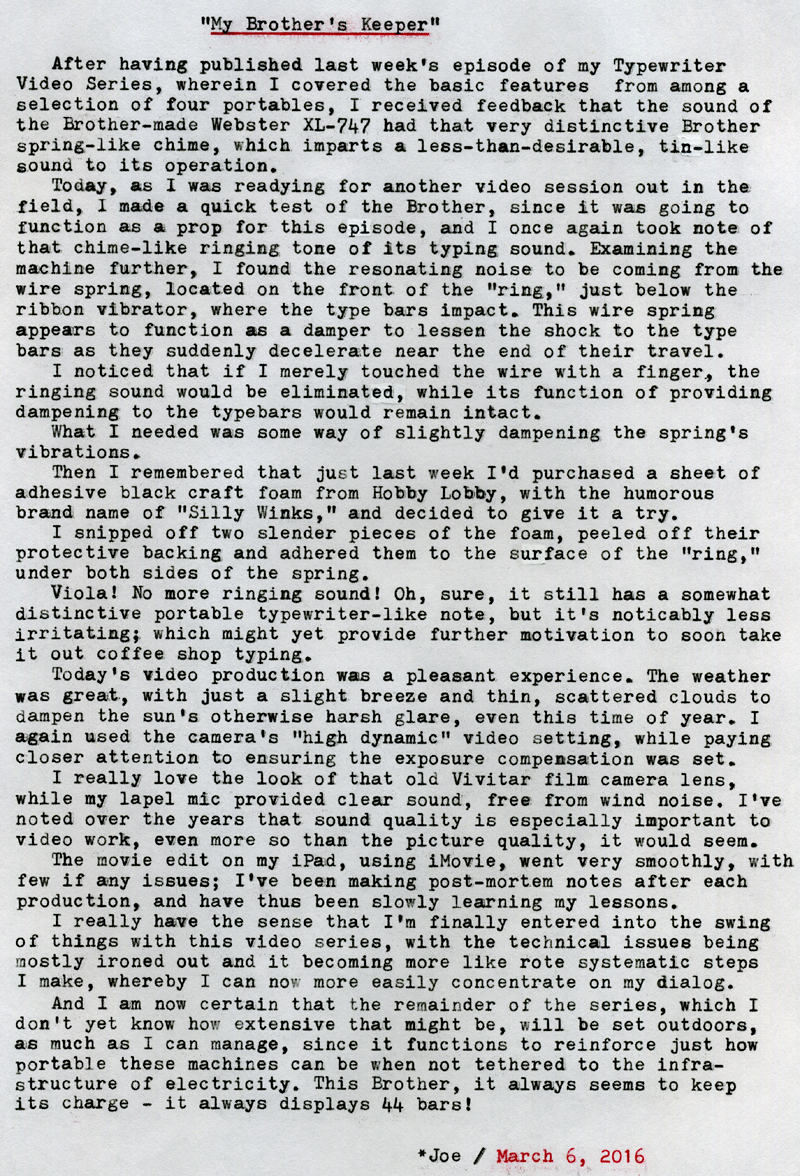
My Brother's Keeper

DSCF4589a
Typecast150

Here's part 3 of the Typewriter Video Series:


Post-Script: I had a blast doing yesterday's production, everything seemed to go very smoothly.

It's always interesting to get a glimpse of what happens behind-the-scenes with video production. I have two lapel mics, one being an older model, purchased years ago from Radio Shack, while the newer one has much better audio quality but also has a 16 foot wire, which I struggle with keeping properly stowed away in my jacket or pants pocket. The older mic is only monaural, and I had recently acquired a mono to stereo adapter, in the hopes of using it for this project, but with this adapter in place it doesn't seat fully into the mic jack of audio recorder, and as a result makes an intermittent buzzing sound. So I'm relegated to using the newer mic with longer wire. Both mics are powered by small "watch" batteries, and I have spares on hand, should they be needed.

As usual, I love to talk, and thus the first cut of this production went well over 16 minutes in length, too long for You Tube, so more cutting and trimming was required. But I think the end result was better for it. Just like as in writing, cutting down is essential for good results.
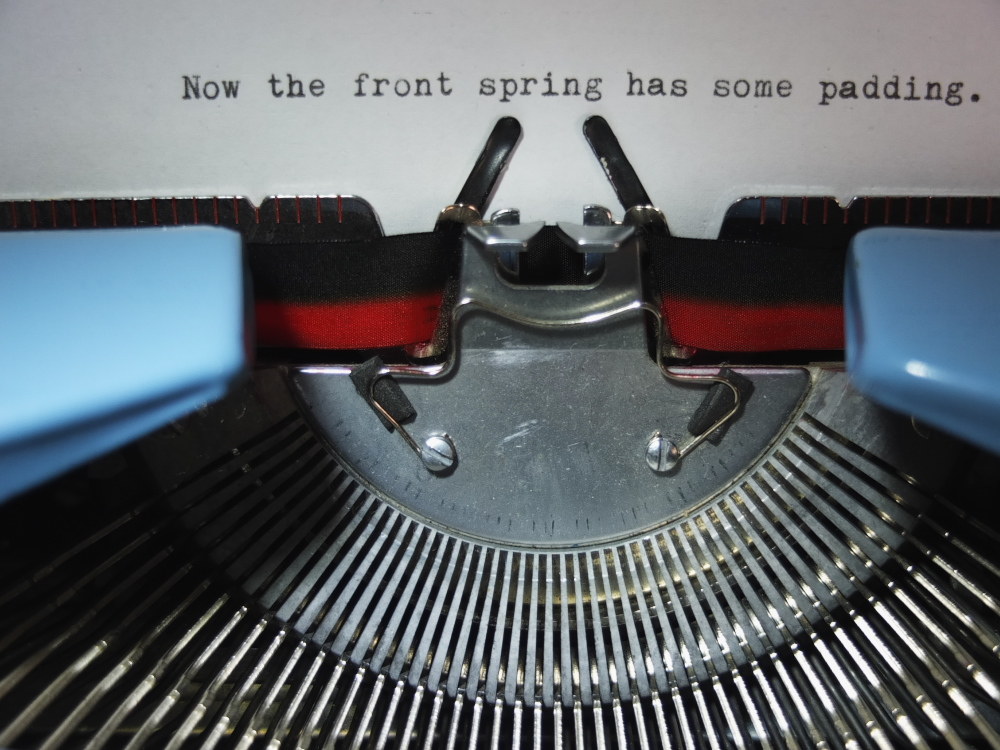
Getting back to the main subject of this blog article, dampening the sound of the Brother, I wonder why I never thought of tracking down this irritating sound before, because the addition of those two little pieces of black foam certainly makes this machine sound much better. It's indeed funny how the typewriter over the decades has experienced a usage change. In their heyday perhaps no one would have thought much about the peculiarities of the sounds made by specific models, since all typewriters are essentially noise-makers; but now that they've been rediscovered and repurposed into more recreational writing machines, their aesthetics become more evident.

Photos via Fujifilm X10. Typecast via Brother-made Webster XL-747.

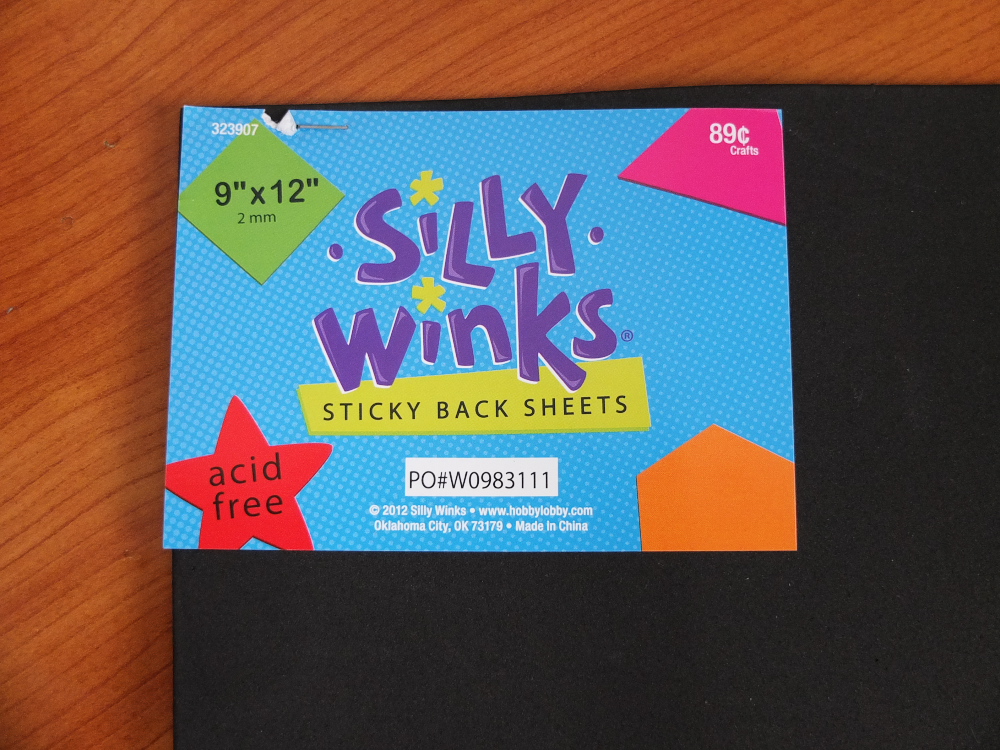
If you're interested, here's the type of adhesive craft foam I used:
DSCF4590a

Labels: , , ,

Monday, February 22, 2016

Typewriter Video Series Intro


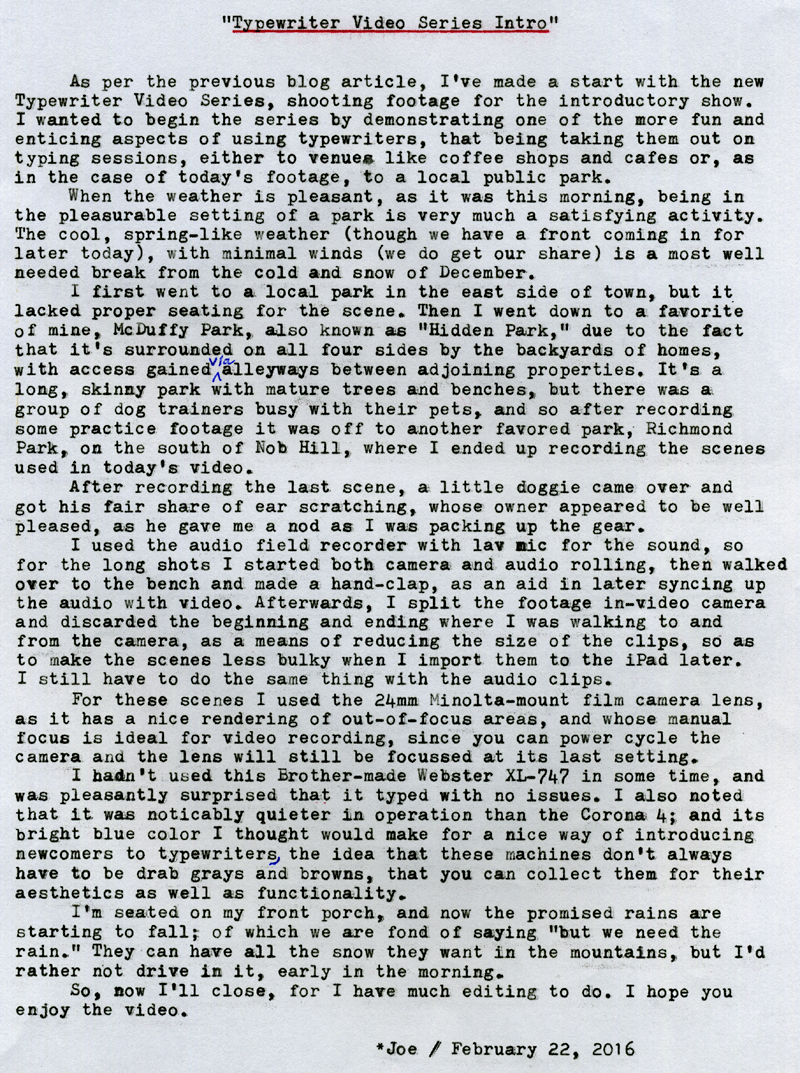
Typecast145

Post-Script: This video production went rather smoothly. I was especially pleased with the audio, using the digital field recorder and lavaliere microphone. And the manual focus film-camera lens renders very nicely, though it's not quite as sharp as the Lumix digitally-corrected lenses.

Some of my videos have gone upwards of 15 minutes in length. This one was just a tad under nine, and therefore didn't take nearly as long to upload to You Tube. I also feel that having these slightly shorter videos makes them more watchable.

I have not yet decided on the content of the next video in the series, but most likely I'll be showing the major features of manual typewriters, and thus I'll probably be doing close-ups of a number of machines from my collection. The idea will be to help show the major differences between portables and mid-sized machines, so a potential buyer can decide for themselves what category of machine to go hunting for, and what features may or may not be important. It's also a good time to introduce to the neophyte the major differences in operation between manual typewriters and computer word processors. For us oldsters these concepts are virtually back-of-the-hand familiar, but for many younger people they might be altogether entirely foreign.

This raises the point that I don't have a full-sized upright machine in my collection, nor anything older than the Corona 4, and so I won't be able to demonstrate their features; nor do I have access to exotic machines like Olivers and such. But I think I have enough of a selection to familiarize the neophyte in what he or she might find commonly available at their local thrift or charity shops. Once they get more familiar with the world of typewriters they can discover for themselves the exotics and collectibles, if that be their forte.

I remember when I first acquired the Brother/Webster XL-747, used in this video and typecast, and how I fussed over it for several weeks, addressing little issues and slowly improving its performance. Taking it down from the closet shelf after several months of disuse, I was pleased with the way in which it performs, as compared to the Corona 4; which itself is not that bad. This serves as reinforcement to my hopes that it was a valuable addition to my collection; and you can't beat its diminutive size and snazzy color; and the carrying case is in much better condition than any Lettera 22 I've ever owned, making its portability entirely practical.

Did you notice how my outfit and the typewriter were entirely color coordinated? Yes, that was entirely by accident, I can assure you.

Labels: , ,